FXEA365 Volatility Squeeze BB Keltner MT4
- Indicators
-
Kenichiro Sakamoto
 I'm Kenichiro Sakamoto, the developer behind FXEA365 — a studio building transparent, rule-based Expert Advisors for MetaTrader 5.
 - Version: 1.1
- Updated: 20 September 2026
FREE — the volatility squeeze: orange dots while the Bollinger band is compressed inside the Keltner channel, and an arrow when the compression releases.
Want this kind of rule traded automatically? See our paid EA Gold Viper Breakout MT4 (free demo in the Strategy Tester): https://www.mql5.com/en/market/product/182520
100% free, no limitations. If it earns a place on your charts, a short review is the one thing that helps us most — it takes 30 seconds and it is what lets other traders find this tool.
Platform: MetaTrader 4 (this page). MetaTrader 5 edition: https://www.mql5.com/en/market/product/187032
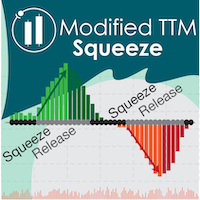
Big directional moves tend to start from low volatility, but a chart does not show "low volatility" directly. This indicator marks it: when the Bollinger band sits fully inside the Keltner channel, volatility is compressed — the squeeze. When the band pushes back outside, the squeeze has released, and the arrow shows the direction the closed bars were already moving.
=== WHAT IT DRAWS ===
- Bollinger band (blue) and Keltner channel (grey, dotted), both computed from closed bars.
- Orange dots on the middle band while the squeeze is on (Bollinger fully inside Keltner).
- A green arrow when the squeeze releases with upward closed-bar momentum, a red arrow with downward momentum.
=== NO REPAINTING ===
Both channels, the squeeze state and the release are computed from closed bars only. An arrow appears on the bar right after the release is confirmed and never moves or disappears later. You can scroll back and trust what you see.
=== SETTINGS ===
- BBPeriod (default 20) / BBDev (2.0): Bollinger band.
- KCPeriod (20) / KCMultATR (1.5): Keltner channel (EMA middle + ATR multiple width).
- ATRPeriod (14).
- MomLookback (4): closed-bar momentum window that decides the arrow direction.
- ShowArrows: turn the release arrows on or off.
Defaults are the classic squeeze configuration. A setting that suits one market rarely transfers to another — watch it on the instrument and timeframe you actually trade.
=== HONEST NOTE ===
This is a visualisation tool, not a signal service. Most squeezes resolve as fakeouts: the release arrow only tells you which way momentum pointed when volatility expanded, not whether the move will continue. In ranging markets the release arrows will not work — compression releases into chop and the move dies immediately. Watch how squeezes resolve on your instrument before you trade the idea, and never trade a release without a stop-loss.
=== WHO THIS IS FOR / NOT FOR ===
Right fit: breakout traders who want to be watching before the move rather than chasing it, anyone who wants "low volatility" made visible instead of guessed at, and anyone willing to sit through a lot of failed releases for the few that run.
Not a fit: anyone who will treat a release arrow as a trade signal — most squeezes resolve as fakeouts — range traders, and anyone who would enter a release without a stop-loss.
=== 5-MINUTE CHART CHECK ===
1) Attach it to the instrument and timeframe you actually trade, at the default classic settings.
2) Find a stretch of orange dots and confirm by eye that the blue Bollinger band really does sit fully inside the dotted Keltner channel there. That is the whole definition of the squeeze.
3) Take a release arrow and check the bars before it: the arrow's direction reflects where closed-bar momentum already pointed. It is a description, not a forecast.
4) Now do the honest count. Scroll back over several months and tally how many release arrows ran and how many died immediately. On most instruments the failures dominate — see that number for yourself before risking anything on it.
5) Compare a trending stretch against a ranging one. Releases into chop fail almost every time; that is the known limit of the idea, not a setting to tune away.
Never trade a release without a stop-loss.
More free tools from us (FXEA365):
- Donchian Trend Engine MT4 (EA): https://www.mql5.com/en/market/product/185537
- Donchian ATR Trailing Stop MT4 (indicator): https://www.mql5.com/en/market/product/185552
- Crypto Trend Channel Donchian MT4 (indicator): https://www.mql5.com/en/market/product/185645
- Pivot Trend ZigZag Swing MT4 (indicator): https://www.mql5.com/en/market/product/185646
- Dip Buyer Zones RSI Pullback MT4 (indicator): https://www.mql5.com/en/market/product/185649
All our products: https://www.mql5.com/en/users/app.develop.sk/seller
How the squeeze is calculated, with chart examples: https://www.mql5.com/en/blogs/post/773323
=== IF YOU WANT THIS AS AN AUTOMATED SYSTEM ===
This indicator shows the idea; it does not trade. If you want the same kind of rule executed automatically on gold, with a stop on every position group and figures you can reproduce in the Strategy Tester yourself, this is the EA we built for it:
- Gold Viper Breakout MT4 (XAUUSD M30): https://www.mql5.com/en/market/product/182520
The MetaTrader 4 build of our gold breakout EA: same core entry logic, a group stop on every basket, no martingale. Our published figures were measured on the MetaTrader 5 build; the MT4 build will differ, so compare on its own page before you decide.
Every EA above has a free demo. Run it in the Strategy Tester with the settings listed at the top of its page before you decide. These are backtest figures, not live trading results, and they do not guarantee future performance.
If this tool is useful in your trading, a short review on this page would help, good or bad, including anything you would like improved. It helps other traders decide and tells us what to fix next.
Want this kind of rule traded automatically? See our paid EA Gold Viper Breakout MT4 (free demo in the Strategy Tester): https://www.mql5.com/en/market/product/182520
100% free, no limitations. If it earns a place on your charts, a short review is the one thing that helps us most — it takes 30 seconds and it is what lets other traders find this tool.
Platform: MetaTrader 4 (this page). MetaTrader 5 edition: https://www.mql5.com/en/market/product/187032
Big directional moves tend to start from low volatility, but a chart does not show "low volatility" directly. This indicator marks it: when the Bollinger band sits fully inside the Keltner channel, volatility is compressed — the squeeze. When the band pushes back outside, the squeeze has released, and the arrow shows the direction the closed bars were already moving.
=== WHAT IT DRAWS ===
- Bollinger band (blue) and Keltner channel (grey, dotted), both computed from closed bars.
- Orange dots on the middle band while the squeeze is on (Bollinger fully inside Keltner).
- A green arrow when the squeeze releases with upward closed-bar momentum, a red arrow with downward momentum.
=== NO REPAINTING ===
Both channels, the squeeze state and the release are computed from closed bars only. An arrow appears on the bar right after the release is confirmed and never moves or disappears later. You can scroll back and trust what you see.
=== SETTINGS ===
- BBPeriod (default 20) / BBDev (2.0): Bollinger band.
- KCPeriod (20) / KCMultATR (1.5): Keltner channel (EMA middle + ATR multiple width).
- ATRPeriod (14).
- MomLookback (4): closed-bar momentum window that decides the arrow direction.
- ShowArrows: turn the release arrows on or off.
Defaults are the classic squeeze configuration. A setting that suits one market rarely transfers to another — watch it on the instrument and timeframe you actually trade.
=== HONEST NOTE ===
This is a visualisation tool, not a signal service. Most squeezes resolve as fakeouts: the release arrow only tells you which way momentum pointed when volatility expanded, not whether the move will continue. In ranging markets the release arrows will not work — compression releases into chop and the move dies immediately. Watch how squeezes resolve on your instrument before you trade the idea, and never trade a release without a stop-loss.
=== WHO THIS IS FOR / NOT FOR ===
Right fit: breakout traders who want to be watching before the move rather than chasing it, anyone who wants "low volatility" made visible instead of guessed at, and anyone willing to sit through a lot of failed releases for the few that run.
Not a fit: anyone who will treat a release arrow as a trade signal — most squeezes resolve as fakeouts — range traders, and anyone who would enter a release without a stop-loss.
=== 5-MINUTE CHART CHECK ===
1) Attach it to the instrument and timeframe you actually trade, at the default classic settings.
2) Find a stretch of orange dots and confirm by eye that the blue Bollinger band really does sit fully inside the dotted Keltner channel there. That is the whole definition of the squeeze.
3) Take a release arrow and check the bars before it: the arrow's direction reflects where closed-bar momentum already pointed. It is a description, not a forecast.
4) Now do the honest count. Scroll back over several months and tally how many release arrows ran and how many died immediately. On most instruments the failures dominate — see that number for yourself before risking anything on it.
5) Compare a trending stretch against a ranging one. Releases into chop fail almost every time; that is the known limit of the idea, not a setting to tune away.
Never trade a release without a stop-loss.
More free tools from us (FXEA365):
- Donchian Trend Engine MT4 (EA): https://www.mql5.com/en/market/product/185537
- Donchian ATR Trailing Stop MT4 (indicator): https://www.mql5.com/en/market/product/185552
- Crypto Trend Channel Donchian MT4 (indicator): https://www.mql5.com/en/market/product/185645
- Pivot Trend ZigZag Swing MT4 (indicator): https://www.mql5.com/en/market/product/185646
- Dip Buyer Zones RSI Pullback MT4 (indicator): https://www.mql5.com/en/market/product/185649
All our products: https://www.mql5.com/en/users/app.develop.sk/seller
How the squeeze is calculated, with chart examples: https://www.mql5.com/en/blogs/post/773323
=== IF YOU WANT THIS AS AN AUTOMATED SYSTEM ===
This indicator shows the idea; it does not trade. If you want the same kind of rule executed automatically on gold, with a stop on every position group and figures you can reproduce in the Strategy Tester yourself, this is the EA we built for it:
- Gold Viper Breakout MT4 (XAUUSD M30): https://www.mql5.com/en/market/product/182520
The MetaTrader 4 build of our gold breakout EA: same core entry logic, a group stop on every basket, no martingale. Our published figures were measured on the MetaTrader 5 build; the MT4 build will differ, so compare on its own page before you decide.
Every EA above has a free demo. Run it in the Strategy Tester with the settings listed at the top of its page before you decide. These are backtest figures, not live trading results, and they do not guarantee future performance.
If this tool is useful in your trading, a short review on this page would help, good or bad, including anything you would like improved. It helps other traders decide and tells us what to fix next.