Articles with examples of trading robots developed in MQL5

An Expert Advisor is the 'pinnacle' of programming and the desired goal of every automated trading developer. Read the articles in this section to create your own trading robot. By following the described steps you will learn how to create, debug and test automated trading systems.
The articles not only teach MQL5 programming, but also show how to implement trading ideas and techniques. You will learn how to program a trailing stop, how to apply money management, how to get the indicator values, and much more.
Add a new article

You are missing trading opportunities:
- Free trading apps
- Over 8,000 signals for copying
- Economic news for exploring financial markets
Registration
Log in
You agree to website policy and terms of use
If you do not have an account, please register


Creating a Trading Administrator Panel in MQL5 (Part IX): Code Organization (III): Communication Module
Join us for an in-depth discussion on the latest advancements in MQL5 interface design as we unveil the redesigned Communications Panel and continue our series on building the New Admin Panel using modularization principles. We'll develop the CommunicationsDialog class step by step, thoroughly explaining how to inherit it from the Dialog class. Additionally, we'll leverage arrays and ListView class in our development. Gain actionable insights to elevate your MQL5 development skills—read through the article and join the discussion in the comments section!


Category Theory in MQL5 (Part 10): Monoid Groups
This article continues the series on category theory implementation in MQL5. Here we look at monoid-groups as a means normalising monoid sets making them more comparable across a wider span of monoid sets and data types..


Neural networks made easy (Part 65): Distance Weighted Supervised Learning (DWSL)
In this article, we will get acquainted with an interesting algorithm that is built at the intersection of supervised and reinforcement learning methods.


Neural Networks in Trading: Contrastive Pattern Transformer (Final Part)
In the previous last article within this series, we looked at the Atom-Motif Contrastive Transformer (AMCT) framework, which uses contrastive learning to discover key patterns at all levels, from basic elements to complex structures. In this article, we continue implementing AMCT approaches using MQL5.


Creating a Trading Administrator Panel in MQL5 (Part III): Extending Built-in Classes for Theme Management (II)
In this discussion, we will carefully extend the existing Dialog library to incorporate theme management logic. Furthermore, we will integrate methods for theme switching into the CDialog, CEdit, and CButton classes utilized in our Admin Panel project. Continue reading for more insightful perspectives.

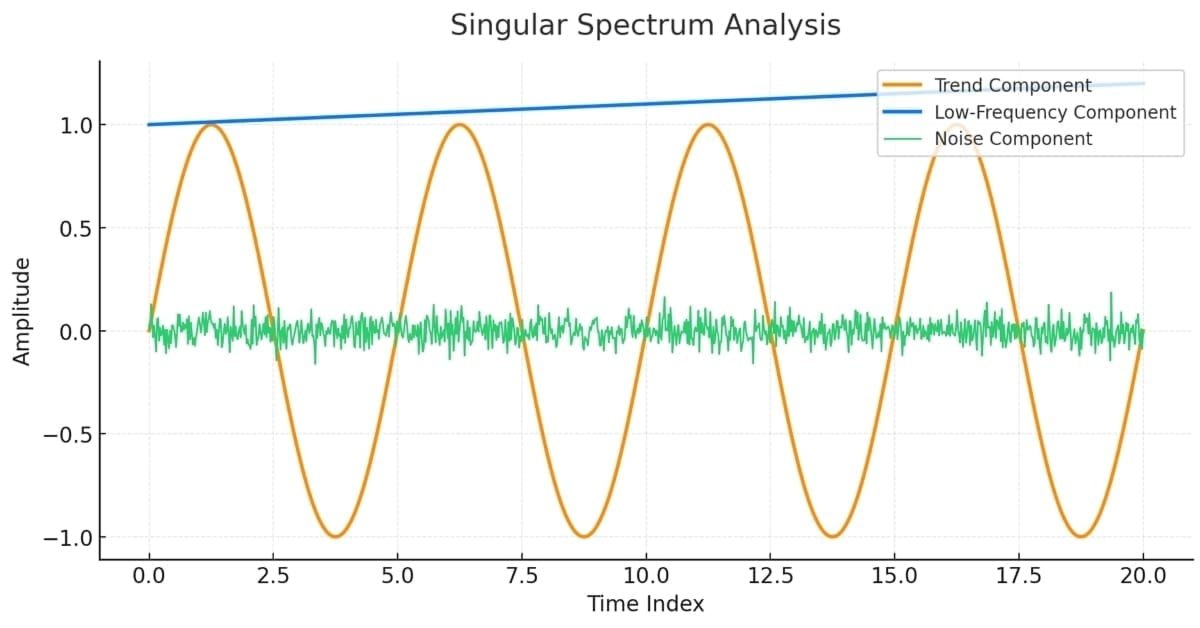
Singular Spectrum Analysis in MQL5
This article is meant as a guide for those unfamiliar with the concept of Singular Spectrum Analysis and who wish to gain enough understanding to be able to apply the built-in tools available in MQL5.


MQL5 Trading Tools (Part 26): Integrating Frequency Binning, Entropy, and Chi-Square in Visual Analyzer
In this article, we develop a frequency analysis tool in MQL5 that bins price data into histograms, computes entropy for information content, and applies chi-square tests for distribution goodness-of-fit, with interactive logs and statistical panels for market insights. We integrate per-bar or per-tick computation modes, supersampled rendering for smooth visuals, and draggable/resizable canvases with auto-scrolling logs to enhance usability in trading analysis.


Neural networks made easy (Part 52): Research with optimism and distribution correction
As the model is trained based on the experience reproduction buffer, the current Actor policy moves further and further away from the stored examples, which reduces the efficiency of training the model as a whole. In this article, we will look at the algorithm of improving the efficiency of using samples in reinforcement learning algorithms.


Neural Networks in Trading: Hierarchical Feature Learning for Point Clouds
We continue to study algorithms for extracting features from a point cloud. In this article, we will get acquainted with the mechanisms for increasing the efficiency of the PointNet method.


Trend Criteria. Conclusion
In this article, we will consider the specifics of applying some trend criteria in practice. We will also try to develop several new criteria. The focus will be on the efficiency of applying these criteria to market data analysis and trading.


From Novice to Expert: Developing a Geographic Market Awareness with MQL5 Visualization
Trading without session awareness is like navigating without a compass—you're moving, but not with purpose. Today, we're revolutionizing how traders perceive market timing by transforming ordinary charts into dynamic geographical displays. Using MQL5's powerful visualization capabilities, we'll build a live world map that illuminates active trading sessions in real-time, turning abstract market hours into intuitive visual intelligence. This journey sharpens your trading psychology and reveals professional-grade programming techniques that bridge the gap between complex market structure and practical, actionable insight.


Neural Networks in Trading: Time Series Forecasting Using Adaptive Modal Decomposition (ACEFormer)
We invite you to explore the ACEFormer architecture — a modern solution that combines the effectiveness of probabilistic attention with adaptive time series decomposition. This article will be useful for those seeking a balance between computational performance and forecast accuracy in financial markets.


Creating a Trading Administrator Panel in MQL5 (Part IV): Login Security Layer
Imagine a malicious actor infiltrating the Trading Administrator room, gaining access to the computers and the Admin Panel used to communicate valuable insights to millions of traders worldwide. Such an intrusion could lead to disastrous consequences, such as the unauthorized sending of misleading messages or random clicks on buttons that trigger unintended actions. In this discussion, we will explore the security measures in MQL5 and the new security features we have implemented in our Admin Panel to safeguard against these threats. By enhancing our security protocols, we aim to protect our communication channels and maintain the trust of our global trading community. Find more insights in this article discussion.


Neural Networks in Trading: Hierarchical Vector Transformer (Final Part)
We continue studying the Hierarchical Vector Transformer method. In this article, we will complete the construction of the model. We will also train and test it on real historical data.


Visual assessment and adjustment of trading in MetaTrader 5
The strategy tester allows you to do more than just optimize your trading robot's parameters. I will show how to evaluate your account's trading history post-factum and make adjustments to your trading in the tester by changing the stop-losses of your open positions.


MQL5 Trading Tools (Part 22): Graphing the Histogram and Probability Mass Function (PMF) of the Binomial Distribution
This article develops an interactive MQL5 plot for the binomial distribution, combining a histogram of simulated outcomes with the theoretical probability mass function. It implements mean, standard deviation, skewness, kurtosis, percentiles, and confidence intervals, along with configurable themes and labels, and supports dragging, resizing, and live parameter changes. Use it to assess expected wins, likely drawdowns, and confidence ranges when validating trading strategies.


MQL5 Trading Tools (Part 23): Camera-Controlled, DirectX-Enabled 3D Graphs for Distribution Insights
In this article, we advance the binomial distribution graphing tool in MQL5 by integrating DirectX for 3D visualization, enabling switchable 2D/3D modes with camera-controlled rotation, zoom, and auto-fitting for immersive analysis. We render 3D histogram bars, ground planes, and axes alongside the theoretical probability mass function curve, while preserving 2D elements like statistics panels, legends, and customizable themes, gradients, and labels

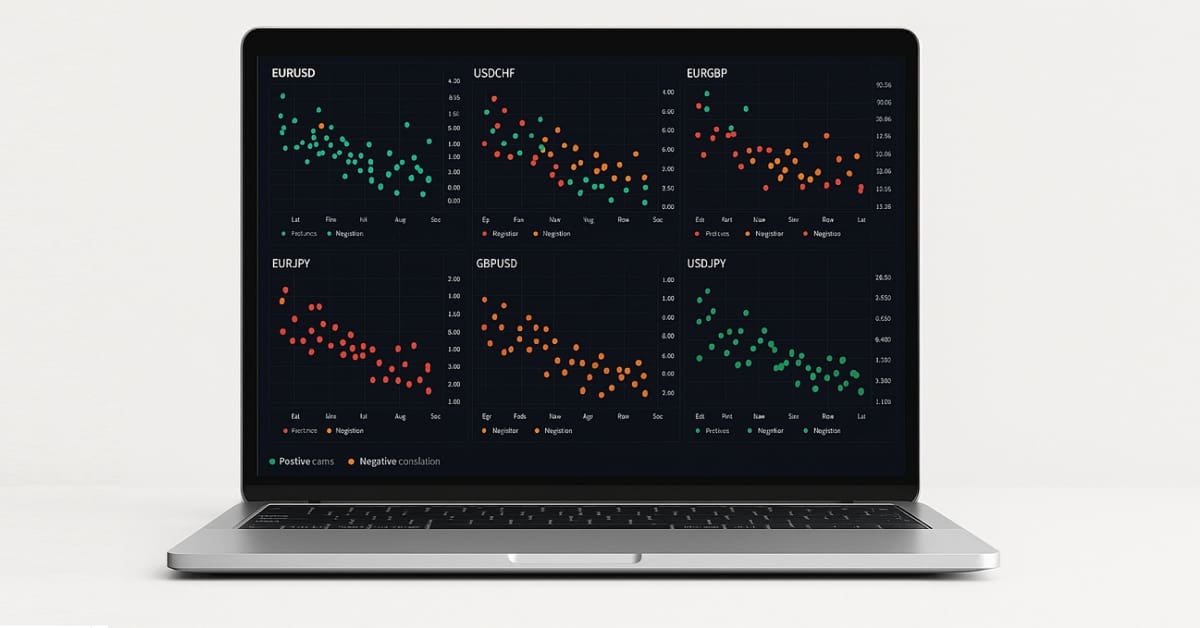
From Novice to Expert: Animated News Headline Using MQL5 (XI)—Correlation in News Trading
In this discussion, we will explore how the concept of Financial Correlation can be applied to improve decision-making efficiency when trading multiple symbols during major economic events announcement. The focus is on addressing the challenge of heightened risk exposure caused by increased volatility during news releases.


Neural Networks in Trading: An End-to-End Multivariate Time Series Forecasting Model (GinAR)
We invite you to explore an innovative approach to forecasting time series with missing data using the GinAR framework. The article demonstrates the implementation of key components using OpenCL, which ensures high performance. In our next publication, we will take a detailed look at how to integrate these solutions into MQL5. This will help understand how to apply the method in practice in trading.


Step-by-Step Implementation of a Local Stop Loss System in MQL5
This article shows how to build a local stop-loss system in an MQL5 Expert Advisor that keeps stop levels on the terminal side. It walks through the execution logic, event handlers, inputs, and an OOP design using CTrade, CPositionInfo, CHashMap/CHashSet, and chart objects. You will implement multi-position tracking, draggable stops, visual spacers and labels, plus cleanup and disconnection behavior to create a practical risk-control utility.


Neural Networks Made Easy (Part 81): Context-Guided Motion Analysis (CCMR)
In previous works, we always assessed the current state of the environment. At the same time, the dynamics of changes in indicators always remained "behind the scenes". In this article I want to introduce you to an algorithm that allows you to evaluate the direct change in data between 2 successive environmental states.


Neural networks made easy (Part 79): Feature Aggregated Queries (FAQ) in the context of state
In the previous article, we got acquainted with one of the methods for detecting objects in an image. However, processing a static image is somewhat different from working with dynamic time series, such as the dynamics of the prices we analyze. In this article, we will consider the method of detecting objects in video, which is somewhat closer to the problem we are solving.


Neural Networks in Trading: A Hybrid Trading Framework with Predictive Coding (Final Part)
We continue our examination of the StockFormer hybrid trading system, which combines predictive coding and reinforcement learning algorithms for financial time series analysis. The system is based on three Transformer branches with a Diversified Multi-Head Attention (DMH-Attn) mechanism that enables the capturing of complex patterns and interdependencies between assets. Previously, we got acquainted with the theoretical aspects of the framework and implemented the DMH-Attn mechanisms. Today, we will talk about the model architecture and training.


Larry Williams Market Secrets (Part 16): Detecting and Trading the Oops Gap Reversal Pattern
Learn how to build an MQL5 Expert Advisor that detects and trades Larry Williams’ Oops Gap Reversal pattern using objective gap rules and later-bar confirmation. The EA tracks setup expiration, prepares stop-loss and take-profit levels, supports manual or risk-based position sizing, executes market orders, and is evaluated through historical testing.


Neural Networks in Trading: Models Using Wavelet Transform and Multi-Task Attention
We invite you to explore a framework that combines wavelet transforms and a multi-task self-attention model, aimed at improving the responsiveness and accuracy of forecasting in volatile market conditions. The wavelet transform allows asset returns to be decomposed into high and low frequencies, carefully capturing long-term market trends and short-term fluctuations.


Neural Networks in Trading: Detecting Anomalies in the Frequency Domain (CATCH)
The CATCH framework combines Fourier transform and frequency patching to accurately identify market anomalies beyond the reach of traditional methods. Let us examine how this approach reveals hidden patterns in financial data.


MQL5 Trading Tools (Part 14): Pixel-Perfect Scrollable Text Canvas with Antialiasing and Rounded Scrollbar
In this article, we enhance the canvas-based price dashboard in MQL5 by adding a pixel-perfect scrollable text panel for usage guides, overcoming native scrolling limitations through custom antialiasing and a rounded scrollbar design with hover-expand functionality. The text panel supports themed backgrounds with opacity, dynamic line wrapping for content like instructions and contacts, and interactive navigation via up/down buttons, slider dragging, and mouse wheel scrolling within the body area.


Using the MQL5 Economic Calendar for News Filter (Part 3): Surviving Terminal Restarts During News Window
The article introduces a restart-safe storage model for news-time stop removal. Suspension state and original SL/TP per position are written to terminal global variables, reconstructed on OnInit, and cleaned after restoration. This lets the EA resume an active suspension window after recompiles or restarts and restore stops only when the news window ends.


Category Theory in MQL5 (Part 6): Monomorphic Pull-Backs and Epimorphic Push-Outs
Category Theory is a diverse and expanding branch of Mathematics which is only recently getting some coverage in the MQL5 community. These series of articles look to explore and examine some of its concepts & axioms with the overall goal of establishing an open library that provides insight while also hopefully furthering the use of this remarkable field in Traders' strategy development.


Engineering a Self-Healing Expert Advisor in MQL5 (Part 1): Persistent Trade State Architecture
This article demonstrates how to build the persistence foundation of a self-healing Expert Advisor in MQL5 using SQLite. Readers will learn how to create a permanent trade-state storage layer capable of surviving terminal restarts, shutdowns, and unexpected interruptions. The article covers SQLite integration in MetaTrader 5, database lifecycle management, persistent trade-state structures, and runtime state recovery using practical MQL5 implementations.


MQL5 Trading Tools (Part 24): Depth-Perception Upgrades with 3D Curves, Pan Mode, and ViewCube Navigation
In this article, we enhance the 3D binomial distribution graphing tool in MQL5 by adding a segmented 3D curve for improved depth perception of the probability mass function, integrating pan mode for view target shifting, and implementing an interactive view cube with hover zones and animations for quick orientation changes. We incorporate clickable sub-zones on the view cube for faces, edges, and corners to animate camera transitions to standard views, while maintaining switchable 2D/3D modes, real-time updates, and customizable parameters for immersive probabilistic analysis in trading.


Introduction to MQL5 (Part 30): Mastering API and WebRequest Function in MQL5 (IV)
Discover a step-by-step tutorial that simplifies the extraction, conversion, and organization of candle data from API responses within the MQL5 environment. This guide is perfect for newcomers looking to enhance their coding skills and develop robust strategies for managing market data efficiently.


Neural Networks in Trading: Mask-Attention-Free Approach to Price Movement Forecasting
In this article, we will discuss the Mask-Attention-Free Transformer (MAFT) method and its application in the field of trading. Unlike traditional Transformers that require data masking when processing sequences, MAFT optimizes the attention process by eliminating the need for masking, significantly improving computational efficiency.


Neural Networks in Trading: Memory Augmented Context-Aware Learning for Cryptocurrency Markets (Final Part)
The MacroHFT framework for high-frequency cryptocurrency trading uses context-aware reinforcement learning and memory to adapt to dynamic market conditions. At the end of this article, we will test the implemented approaches on real historical data to assess their effectiveness.


Neural Networks in Trading: Piecewise Linear Representation of Time Series
This article is somewhat different from my earlier publications. In this article, we will talk about an alternative representation of time series. Piecewise linear representation of time series is a method of approximating a time series using linear functions over small intervals.


Forecasting exchange rates using classic machine learning methods: Logit and Probit models
In the article, an attempt is made to build a trading EA for predicting exchange rate quotes. The algorithm is based on classical classification models - logistic and probit regression. The likelihood ratio criterion is used as a filter for trading signals.


Neural networks made easy (Part 61): Optimism issue in offline reinforcement learning
During the offline learning, we optimize the Agent's policy based on the training sample data. The resulting strategy gives the Agent confidence in its actions. However, such optimism is not always justified and can cause increased risks during the model operation. Today we will look at one of the methods to reduce these risks.


Neural Networks in Trading: A Cross-Domain Time Series Forecasting Framework (TimeFound)
In this article, we build the core of the TimeFound intelligent model step by step, adapting it to real-world time series forecasting tasks. If you are interested in the practical implementation of neural network patching algorithms in MQL5, you have come to the right place.


Automating Classic Market Methods in MQL5 (Part 4): Mark Minervini's Trend Template
This article presents TrendTemplateEA, an Expert Advisor implementing Mark Minervini's eight-condition trend template for daily forex charts. It evaluates all conditions on every bar and enters only when they are simultaneously satisfied, using RSI above 50 in place of the stock market RS rating. The entry trigger is a 20-bar high breakout on expanding volume, with all rules coded and testable in MQL5.


Feature Engineering With Python And MQL5 (Part III): Angle Of Price (2) Polar Coordinates
In this article, we take our second attempt to convert the changes in price levels on any market, into a corresponding change in angle. This time around, we selected a more mathematically sophisticated approach than we selected in our first attempt, and the results we obtained suggest that our change in approach may have been the right decision. Join us today, as we discuss how we can use Polar coordinates to calculate the angle formed by changes in price levels, in a meaningful way, regardless of which market you are analyzing.