

Creating Custom Indicators in MQL5 (Part 8): Adding Volume Integration for Deeper Market Profile Analysis
 4 097
4 097
 0
0

Introduction
In our previous article (Part 7), we developed a hybrid Time Price Opportunity (TPO) market profile indicator in MetaQuotes Language 5 (MQL5) that supported multiple session timeframes including intraday, daily, weekly, monthly, and fixed periods with timezone adjustments, quantizing prices into a grid, tracking session data for highs, lows, opens, and closes, calculating the point of control and value area from TPO counts, and providing visual rendering on the chart with customizable colors for detailed session analysis.
In Part 8, we enhance this indicator by adding volume integration to enable deeper market profile insights, including volume-based point of control, value areas, and volume-weighted average price calculations with highlighting options. This upgrade incorporates advanced features such as initial balance detection, key level extension lines, split profiles, alternative TPO characters like squares or circles, border lines, background rectangles for fixed ranges, and dynamic volume labels, all while maintaining flexibility across timeframes. We will cover the following topics:
- Integrating Volume and Advanced Features into Hybrid Time Price Opportunity Market Profiles>/a>
- Implementation in MQL5
- Backtesting
- Conclusion
By the end, you’ll have an advanced MQL5 indicator for hybrid Time Price Opportunity market profiles with volume-enhanced analysis, ready for customization—let’s dive in!
Integrating Volume and Advanced Features into Hybrid Time Price Opportunity Market Profiles
The integration of volume data into hybrid Time Price Opportunity (TPO) market profiles elevates traditional price-time analysis by incorporating trading volume at each price level, allowing for the identification of volume-based point of control where the highest volume occurred, and adjusting value areas to reflect actual market participation rather than just time spent. This enhancement provides us with insights into market conviction, such as distinguishing between high-volume fair value zones for potential support or resistance and low-volume areas indicating weak interest or possible breakouts, while features like volume-weighted average price offer a dynamic reference for intraday bias.
We will extend the core session management with volume accumulation per price level, compute volume point of control and weighted average price optionally, detect initial balance from early periods, add extension rendering for key levels like highs, lows, value area boundaries, and midpoint, incorporate character variations and marking options for opens, and enable split views with padding for clearer alphabetic displays, all while supporting fixed-range backgrounds and volume labels for comprehensive profile visualization. In brief, here is a visual representation of our objectives.

Implementation in MQL5
To begin the enhancements implementation, we will first extend the indicator enumerations, inputs, and global variables to support the new volume metrics.
//+------------------------------------------------------------------+
//|                             Hybrid TPO Market Profile PART 2.mq5 |
//|                           Copyright 2026, Allan Munene Mutiiria. |
//|                                   https://t.me/Forex_Algo_Trader |
//+------------------------------------------------------------------+
#property copyright "Copyright 2026, Allan Munene Mutiiria."
#property link "https://t.me/Forex_Algo_Trader"
#property version "1.00"
#property strict

#property indicator_chart_window
#property indicator_buffers 0
#property indicator_plots 0

//+------------------------------------------------------------------+
//| Enums                                                            |
//+------------------------------------------------------------------+
enum MarketProfileTimeframe { // Define market profile timeframe enum
   INTRADAY,                  // Intraday
   DAILY,                     // Daily
   WEEKLY,                    // Weekly
   MONTHLY,                   // Monthly
   FIXED                      // Fixed
};

enum TpoCharacterType {      // Define TPO character type enum
   SQUARE,                   // ■ Square
   CIRCLE,                   // ● Circle
   ALPHABETIC                // A-Za-z
};

enum MidpointAlgorithm {     // Define midpoint algorithm enum
   HIGH_LOW_MID,             // High/Low mid
   TPO_COUNT_BASED           // Number of TPOs
};

enum MarkPeriodOpens {       // Define mark period opens enum
   NONE,                     // No
   SWAP_CASE,                // Swap case
   USE_ZERO                  // Use '0'
};

enum TextSize {              // Define text size enum
   TINY,                     // Tiny
   SMALL,                    // Small
   NORMAL                    // Normal
};

//+------------------------------------------------------------------+
//| Inputs                                                           |
//+------------------------------------------------------------------+
sinput group "Settings"
input double ticksPerTpoLetter = 10;             // Ticks per letter
input bool highlightVolumeProfilePoc = true;     // Highlight POC based on VP?
input bool useVolumeProfilePocForValueArea = true; // Use VP POC for Value Area?
input bool highlightSessionVwap = false;         // Highlight session VWAP?
input bool showExtensionLines = false;           // Show extension lines?
input bool splitProfile = false;                 // Split MP?

sinput group "Time"
input MarketProfileTimeframe profileTimeframe = DAILY; // Timeframe
input string timezone = "Exchange";              // Timezone
input string dailySessionRange = "0830-1500";    // Daily session
input int intradayProfileLengthMinutes = 60;     // Profile length in minutes (Intraday)
input datetime fixedTimeRangeStart = D'2026.02.01 08:30'; // From (Fixed)
input datetime fixedTimeRangeEnd = D'2026.02.02 15:00'; // Till (Fixed)
input bool renderVolumes = true;                 // Render volume numbers? (Fixed)

sinput group "Rendering"
input TpoCharacterType tpoCharacterType = SQUARE; // TPO characters
input int valueAreaPercent = 70;                 // Value Area Percent
input int initialBalancePeriods = 2;             // IB periods
input int initialBalanceLineWidth = 2;           // IB line width
input int priceMarkerWidth = 2;                  // Price marker width
input int priceMarkerLength = 1;                 // Price marker length
input TextSize textSize = NORMAL;                // Font size
input MarkPeriodOpens markPeriodOpens = NONE;    // Mark period open?
input MidpointAlgorithm midpointAlgorithm = HIGH_LOW_MID; // Midpoint algo

sinput group "Colors"
input color defaultTpoColor = clrGray;           // Default
input color singlePrintColor = 0xd56a6a;         // Single Print
input color valueAreaColor = clrBlack;           // Value Area
input color pointOfControlColor = 0x3f7cff;      // POC
input color volumeProfilePocColor = 0x87c74c;    // VP POC
input color openColor = clrDodgerBlue;           // Open
input color closeColor = clrRed;                 // Close
input color initialBalanceHighlightColor = clrDodgerBlue; // IB
input color initialBalanceBackgroundColor = 0x606D79;     // IB background
input color sessionVwapColor = 0xFF9925;                  // Session VWAP
input color pocExtensionColor = 0x87c74c;                 // POC extension
input color valueAreaHighExtensionColor = clrBlack;       // VAH extension
input color valueAreaLowExtensionColor = clrBlack;        // VAL extension
input color highExtensionColor = clrRed;                  // High extension
input color lowExtensionColor = clrGreen;                 // Low extension
input color midpointExtensionColor = 0x7649ff;            // Midpoint extension
input color fixedRangeBackgroundColor = 0x3179f5;         // Fixed range background

//+------------------------------------------------------------------+
//| Constants                                                        |
//+------------------------------------------------------------------+
#define MAX_BARS_BACK 5000
#define TPO_CHARACTERS_STRING "ABCDEFGHIJKLMNOPQRSTUVWXYZabcdefghijklmnopqrstuvwxyz"

//+------------------------------------------------------------------+
//| Structures                                                       |
//+------------------------------------------------------------------+
struct TpoPriceLevel {       // Define TPO price level structure
   double price;             // Store price level
   string tpoString;         // Store TPO string
   int tpoCount;             // Store TPO count
   double volume;            // Store volume
};

struct ProfileSessionData {  // Define profile session data structure
   datetime startTime;       // Store start time
   datetime endTime;         // Store end time
   double sessionOpen;       // Store session open price
   double sessionClose;      // Store session close price
   double sessionHigh;       // Store session high price
   double sessionLow;        // Store session low price
   double initialBalanceHigh;// Store initial balance high
   double initialBalanceLow; // Store initial balance low
   double vwap;              // Store VWAP
   int pointOfControlIndex;  // Store point of control index
   int volumeProfilePocIndex;// Store volume profile POC index
   TpoPriceLevel levels[];   // Store array of price levels
   int periodCount;          // Store period count
   double periodHighs[];     // Store array of period highs
   double periodLows[];      // Store array of period lows
   double periodOpens[];     // Store array of period opens
   double volumeProfilePrices[]; // Store array of volume profile prices
   double volumeProfileVolumes[]; // Store array of volume profile volumes
};

//+------------------------------------------------------------------+
//| Global Variables                                                 |
//+------------------------------------------------------------------+
string objectPrefix = "HTMP_";     //--- Set object prefix
ProfileSessionData sessions[];     //--- Declare sessions array
int activeSessionIndex = -1;       //--- Initialize active session index
double tpoPriceGridStep = 0;       //--- Initialize TPO price grid step
string tpoCharacterSet[];          //--- Declare TPO character set array
datetime previousBarTime = 0;      //--- Initialize previous bar time
datetime lastCompletedBarTime = 0; //--- Initialize last completed bar time
bool isNewSession = false;         //--- Initialize new session flag
int labelFontSize = 10;            //--- Set label font size
int maxSessionHistory = 20;        //--- Set maximum session history
int timezoneOffsetSeconds = 0;     //--- Initialize timezone offset in seconds
We begin the implementation by defining additional enumerations to expand configuration options for the enhanced hybrid Time Price Opportunity market profile. The "TpoCharacterType" enumeration offers choices like "SQUARE" for block symbols, "CIRCLE" for dot representations, and "ALPHABETIC" for letter-based labeling to suit different visual preferences, instead of the only label option that we had. Next, "MidpointAlgorithm" provides algorithms for midpoint calculation, such as "HIGH_LOW_MID" based on session range or "TPO_COUNT_BASED" using accumulated Time Price Opportunity counts. We add "MarkPeriodOpens" with options including "NONE" to skip marking, "SWAP_CASE" to toggle letter casing for opens, and "USE_ZERO" to denote them with a zero character. Finally, "TextSize" allows scaling text with "TINY", "SMALL", or "NORMAL" settings.
We extend user inputs grouped under sections, incorporating new settings like "highlightVolumeProfilePoc" and "useVolumeProfilePocForValueArea" to toggle volume-based point of control features, "highlightSessionVwap" for weighted average price emphasis, "showExtensionLines" for projecting key levels, and "splitProfile" for separated alphabetic displays. The time group adds "renderVolumes" to control fixed-range volume labels. In rendering, we include selections for Time Price Opportunity character type, initial balance periods, and line width, price marker dimensions, text size, period open marking, and midpoint method. The colors group expands with inputs for volume profile point of control, open markers, initial balance highlights and background, session weighted average price, various extension lines, and fixed-range backgrounds.
We update structures to support volume integration: "TpoPriceLevel" now includes a volume field alongside price, Time Price Opportunity string, and count; "ProfileSessionData" adds initial balance high and low, weighted average price, volume profile point of control index, arrays for period highs and lows, and separate arrays for volume profile prices and volumes. Global variables are adjusted accordingly, introducing "isNewSession" as a flag and setting "labelFontSize" dynamically later, while retaining elements like object prefix, sessions array, active index, grid step, character set, timestamps, history limit, and timezone offset. Next, we will update the initialization event handler by setting the font size as follows. We have highlighted the specific changes for clarity.
//+------------------------------------------------------------------+
//| Initialize custom indicator                                      |
//+------------------------------------------------------------------+
int OnInit() {
   IndicatorSetString(INDICATOR_SHORTNAME, "Hybrid TPO Market Profile"); //--- Set indicator short name

   tpoPriceGridStep = ticksPerTpoLetter * _Point; //--- Calculate TPO price grid step

   ArrayResize(tpoCharacterSet, 52);              //--- Resize TPO character set array
   for(int i = 0; i < 52; i++) {                  //--- Loop through characters
      tpoCharacterSet[i] = StringSubstr(TPO_CHARACTERS_STRING, i, 1); //--- Assign character to array
   }

   switch(textSize) {                             //--- Switch on text size
      case TINY: labelFontSize = 7; break;        //--- Set tiny font size
      case SMALL: labelFontSize = 9; break;       //--- Set small font size
      case NORMAL: labelFontSize = 11; break;     //--- Set normal font size
   }

   if(timezone != "Exchange") {                    //--- Check if timezone is not exchange
      string tzString = StringSubstr(timezone, 3); //--- Extract timezone string
      int offset = (int)StringToInteger(tzString); //--- Convert offset to integer
      timezoneOffsetSeconds = offset * 3600;       //--- Calculate timezone offset in seconds
   }

   ArrayResize(sessions, 0);                       //--- Resize sessions array to zero

   return(INIT_SUCCEEDED);                         //--- Return initialization success
}
Setting the font size here will enable us to adjust the text size for better visibility on different charts. The next thing we will do is adjust the session creation function to handle the new storage arrays and delete the expired ones, for easier management.
//+------------------------------------------------------------------+
//| Delete session objects                                           |
//+------------------------------------------------------------------+
void DeleteSessionObjects(datetime sessionTime) {
   string sessionString = IntegerToString(sessionTime); //--- Convert session time to string

   int total = ObjectsTotal(0, 0, -1);            //--- Get total number of objects
   for(int i = total - 1; i >= 0; i--) {          //--- Loop through objects in reverse
      string name = ObjectName(0, i, 0, -1);      //--- Get object name
      if(StringFind(name, objectPrefix) == 0 && StringFind(name, sessionString) > 0) //--- Check if matches session
         ObjectDelete(0, name);                   //--- Delete object
   }
}

//+------------------------------------------------------------------+
//| Create new session                                               |
//+------------------------------------------------------------------+
int CreateNewSession() {
   int size = ArraySize(sessions);                //--- Get size of sessions array

   if(size >= maxSessionHistory) {                //--- Check if size exceeds history limit
      DeleteSessionObjects(sessions[0].startTime); //--- Delete old session objects

      for(int i = 0; i < size - 1; i++) {         //--- Loop to shift sessions
         sessions[i] = sessions[i + 1];           //--- Copy next session to current
      }
      ArrayResize(sessions, size - 1);            //--- Resize sessions array
      size = size - 1;                            //--- Update size
   }

   ArrayResize(sessions, size + 1);               //--- Resize sessions array for new session
   int newIndex = size;                           //--- Set new index

   sessions[newIndex].startTime = 0;              //--- Initialize start time
   sessions[newIndex].endTime = 0;                //--- Initialize end time
   sessions[newIndex].sessionOpen = 0;            //--- Initialize session open
   sessions[newIndex].sessionClose = 0;           //--- Initialize session close
   sessions[newIndex].sessionHigh = 0;            //--- Initialize session high
   sessions[newIndex].sessionLow = 0;             //--- Initialize session low
   sessions[newIndex].initialBalanceHigh = 0;     //--- Initialize initial balance high
   sessions[newIndex].initialBalanceLow = 0;      //--- Initialize initial balance low
   sessions[newIndex].vwap = 0;                   //--- Initialize VWAP
   sessions[newIndex].pointOfControlIndex = -1;   //--- Initialize point of control index
   sessions[newIndex].volumeProfilePocIndex = -1; //--- Initialize volume profile POC index
   sessions[newIndex].periodCount = 0;            //--- Initialize period count
   ArrayResize(sessions[newIndex].levels, 0);     //--- Resize levels array
   ArrayResize(sessions[newIndex].periodHighs, 0);//--- Resize period highs array
   ArrayResize(sessions[newIndex].periodLows, 0); //--- Resize period lows array
   ArrayResize(sessions[newIndex].periodOpens, 0);//--- Resize period opens array
   ArrayResize(sessions[newIndex].volumeProfilePrices, 0); //--- Resize volume profile prices array
   ArrayResize(sessions[newIndex].volumeProfileVolumes, 0); //--- Resize volume profile volumes array

   return newIndex;                               //--- Return new index
}
First, we introduce the "DeleteSessionObjects" function to remove chart objects tied to a specific session, converting the session time to a string with IntegerToString, then looping backward through all objects obtained via ObjectsTotal, fetching names using ObjectName, and deleting those that start with the prefix and include the session string as checked by the StringFind function.
Then, we enhance the "CreateNewSession" function for managing new profiles, retrieving the current sessions array size with ArraySize; if at the history limit, we call "DeleteSessionObjects" on the oldest session's start time to clear visuals, shift remaining sessions forward, and resize downward. We then expand the array for the new entry, initialize its fields, including new ones like initial balance, highs, and lows, weighted average price, volume profile point of control index, and reset counts and indices, while resizing additional arrays for period highs, lows, volume profile prices, and volumes, before returning the new index. With that done, we will need helper functions to change letter casing, which we will use to mark the period openings.
//+------------------------------------------------------------------+
//| Convert string to upper case                                     |
//+------------------------------------------------------------------+
string ConvertToUpperCase(string str) {
   string result = str;                           //--- Copy string
   StringToUpper(result);                         //--- Convert to upper case
   return result;                                 //--- Return result
}

//+------------------------------------------------------------------+
//| Convert string to lower case                                     |
//+------------------------------------------------------------------+
string ConvertToLowerCase(string str) {
   string result = str;                           //--- Copy string
   StringToLower(result);                         //--- Convert to lower case
   return result;                                 //--- Return result
}

//+------------------------------------------------------------------+
//| Check if character is upper case                                 |
//+------------------------------------------------------------------+
bool IsUpperCaseCharacter(string character) {
   return character == ConvertToUpperCase(character) && character != ConvertToLowerCase(character); //--- Check and return if upper case
}
Here, we add utility functions for handling string casing to support features like marking period opens with case swaps. The "ConvertToUpperCase" function copies the input string and applies StringToUpper to transform it entirely to uppercase before returning. Similarly, "ConvertToLowerCase" duplicates the string and uses StringToLower for full lowercase conversion. To detect casing, "IsUpperCaseCharacter" checks if a single character matches its uppercase version via "ConvertToUpperCase" while differing from its lowercase form through "ConvertToLowerCase", returning true for uppercase letters. Next, we will change how the TPO characters are added to the levels since we now have options for the dots and square characters.
//+------------------------------------------------------------------+
//| Add TPO character to level                                       |
//+------------------------------------------------------------------+
void AddTpoCharacterToLevel(int sessionIndex, int levelIndex, int periodIndex) {
   if(sessionIndex < 0 || sessionIndex >= ArraySize(sessions)) return; //--- Return if session index invalid
   if(levelIndex < 0 || levelIndex >= ArraySize(sessions[sessionIndex].levels)) return; //--- Return if level index invalid

   string tpoCharacter = "";                      //--- Initialize TPO character

   switch(tpoCharacterType) {                     //--- Switch on TPO character type
      case SQUARE:                                //--- Handle square case
         tpoCharacter = "■";                      //--- Set square character
         break;                                   //--- Exit case
      case CIRCLE:                                //--- Handle circle case
         tpoCharacter = "●";                      //--- Set circle character
         break;                                   //--- Exit case
      case ALPHABETIC:                            //--- Handle alphabetic case
         tpoCharacter = tpoCharacterSet[periodIndex % 52]; //--- Get alphabetic character

         if(markPeriodOpens != NONE && periodIndex < ArraySize(sessions[sessionIndex].periodOpens)) { //--- Check if mark opens and valid index
            double periodOpen = sessions[sessionIndex].periodOpens[periodIndex]; //--- Get period open
            double levelPrice = sessions[sessionIndex].levels[levelIndex].price; //--- Get level price

            if(MathAbs(levelPrice - periodOpen) < tpoPriceGridStep / 2) { //--- Check if matches open
               if(markPeriodOpens == SWAP_CASE) {                         //--- Check swap case
                  if(IsUpperCaseCharacter(tpoCharacter))                  //--- Check if upper
                     tpoCharacter = ConvertToLowerCase(tpoCharacter);     //--- Convert to lower
                  else                                                    //--- Handle lower
                     tpoCharacter = ConvertToUpperCase(tpoCharacter);     //--- Convert to upper
               } else if(markPeriodOpens == USE_ZERO) {                   //--- Check use zero
                  tpoCharacter = "0";                                     //--- Set zero character
               }
            }
         }
         break;                                                           //--- Exit case
   }

   sessions[sessionIndex].levels[levelIndex].tpoString += tpoCharacter;   //--- Append character to TPO string
   sessions[sessionIndex].levels[levelIndex].tpoCount++;                  //--- Increment TPO count
}
Here, we enhance the "AddTpoCharacterToLevel" function to incorporate customizable Time Price Opportunity representations and open marking, starting with index validations for the session and level using ArraySize to exit early if invalid. We initialize an empty Time Price Opportunity character string, then use a switch on the "tpoCharacterType" enum: for "SQUARE" or "CIRCLE", assign fixed symbols like a block or dot; for "ALPHABETIC", select from the character set with modulo 52 on the period index. For the characters, we decided to use the hard-coded ones because they rendered better than the ones in Wingdings symbols, but you can still use them for dynamicity.
If alphabetic and "markPeriodOpens" is not "NONE" with a valid period opens array size, we compare the level price to the period open using MathAbs within half the grid step tolerance; if matching, apply "SWAP_CASE" by checking with "IsUpperCaseCharacter" and toggling via "ConvertToLowerCase" or "ConvertToUpperCase", or set to zero for "USE_ZERO". Finally, append the character to the level's string and increment the Time Price Opportunity count to build the profile. We will now define another helper function to add spaces to TPO strings for splitting profiles if enabled, which will create a split view of the profile for clearer separation of periods when using letters.
//+------------------------------------------------------------------+
//| Pad levels for split profile                                     |
//+------------------------------------------------------------------+
void PadLevelsForSplitProfile(int sessionIndex) {
   if(!splitProfile || tpoCharacterType != ALPHABETIC) return;         //--- Return if not split or not alphabetic
   if(sessionIndex < 0 || sessionIndex >= ArraySize(sessions)) return; //--- Return if index invalid

   int periodCount = sessions[sessionIndex].periodCount;               //--- Get period count
   int levelCount = ArraySize(sessions[sessionIndex].levels);          //--- Get level count

   for(int i = 0; i < levelCount; i++) {                               //--- Loop through levels
      int currentLength = StringLen(sessions[sessionIndex].levels[i].tpoString); //--- Get current length
      if(currentLength < periodCount) {                                //--- Check if needs padding
         for(int j = currentLength; j < periodCount; j++) {            //--- Loop to pad
            sessions[sessionIndex].levels[i].tpoString += " ";         //--- Add space
         }
      }
   }
}
We introduce the "PadLevelsForSplitProfile" function to prepare alphabetic Time Price Opportunity strings for split profile views, exiting early if split mode is disabled or the character type is not alphabetic, or if the session index is invalid against the sessions array size. We retrieve the period count and level count, then loop through each level to check the current string length with StringLen; if shorter than the period count, we pad it by appending spaces in an inner loop to align all strings to the same length, ensuring consistent spacing for visual separation in the rendered profile. Next, we will need to build a function to create a volume profile from levels and find the volume-based POC.
//+------------------------------------------------------------------+
//| Build volume profile and find POC                                |
//+------------------------------------------------------------------+
void BuildVolumeProfileAndFindPoc(int sessionIndex) {
   if(!highlightVolumeProfilePoc) {                //--- Check if not highlight VP POC
      if(sessionIndex >= 0 && sessionIndex < ArraySize(sessions)) //--- Check valid session
         sessions[sessionIndex].volumeProfilePocIndex = -1; //--- Reset VP POC index
      return;                                     //--- Return
   }

   if(sessionIndex < 0 || sessionIndex >= ArraySize(sessions)) return; //--- Return if index invalid
   if(sessions[sessionIndex].startTime == 0) return; //--- Return if no start time

   ENUM_TIMEFRAMES lowerTimeframe = PERIOD_M1;    //--- Set default lower timeframe
   int currentTimeframeSeconds = PeriodSeconds(_Period); //--- Get current timeframe seconds

   if(currentTimeframeSeconds < 30 * 60) {        //--- Check for M1 lower
      lowerTimeframe = PERIOD_M1;                 //--- Set M1
   } else if(currentTimeframeSeconds < 60 * 60) { //--- Check for M3 lower
      lowerTimeframe = PERIOD_M3;                 //--- Set M3
   } else if(currentTimeframeSeconds == 60 * 60) {//--- Check for M10 lower
      lowerTimeframe = PERIOD_M10;                //--- Set M10
   } else {                                       //--- Default to H1
      lowerTimeframe = PERIOD_H1;                 //--- Set H1
   }

   if(PeriodSeconds(_Period) <= 60) {             //--- Check for 1-minute timeframe
      int size = ArraySize(sessions[sessionIndex].levels); //--- Get levels size
      for(int i = 0; i < size; i++) {             //--- Loop through levels
         int volumeProfileIndex = -1;             //--- Initialize VP index
         for(int j = 0; j < ArraySize(sessions[sessionIndex].volumeProfilePrices); j++) { //--- Loop through VP prices
            if(MathAbs(sessions[sessionIndex].volumeProfilePrices[j] - sessions[sessionIndex].levels[i].price) < _Point / 2) { //--- Check match
               volumeProfileIndex = j;            //--- Set index
               break;                             //--- Exit loop
            }
         }

         if(volumeProfileIndex == -1) {         //--- Check if new
            int volumeProfileSize = ArraySize(sessions[sessionIndex].volumeProfilePrices); //--- Get VP size
            ArrayResize(sessions[sessionIndex].volumeProfilePrices, volumeProfileSize + 1); //--- Resize prices
            ArrayResize(sessions[sessionIndex].volumeProfileVolumes, volumeProfileSize + 1); //--- Resize volumes
            sessions[sessionIndex].volumeProfilePrices[volumeProfileSize] = sessions[sessionIndex].levels[i].price; //--- Set price
            sessions[sessionIndex].volumeProfileVolumes[volumeProfileSize] = sessions[sessionIndex].levels[i].volume; //--- Set volume
         } else {                                 //--- Handle existing
            sessions[sessionIndex].volumeProfileVolumes[volumeProfileIndex] += sessions[sessionIndex].levels[i].volume; //--- Add volume
         }
      }
   } else {                                       //--- Handle higher timeframes
      datetime sessionEnd = (sessions[sessionIndex].endTime > 0) ? sessions[sessionIndex].endTime : TimeCurrent(); //--- Get session end

      int startBar = iBarShift(_Symbol, lowerTimeframe, sessions[sessionIndex].startTime); //--- Get start bar
      int endBar = iBarShift(_Symbol, lowerTimeframe, sessionEnd); //--- Get end bar

      if(startBar < 0 || endBar < 0) return;      //--- Return if invalid bars

      int barCount = startBar - endBar + 1;       //--- Calculate bar count
      if(barCount <= 0) return;                   //--- Return if no bars

      double highs[], lows[];                     //--- Declare highs and lows arrays
      long volumes[];                             //--- Declare volumes array

      ArraySetAsSeries(highs, true);              //--- Set highs as series
      ArraySetAsSeries(lows, true);               //--- Set lows as series
      ArraySetAsSeries(volumes, true);            //--- Set volumes as series

      if(CopyHigh(_Symbol, lowerTimeframe, endBar, barCount, highs) <= 0) return; //--- Copy highs
      if(CopyLow(_Symbol, lowerTimeframe, endBar, barCount, lows) <= 0) return; //--- Copy lows
      if(CopyTickVolume(_Symbol, lowerTimeframe, endBar, barCount, volumes) <= 0) return; //--- Copy volumes

      for(int i = 0; i < barCount; i++) {         //--- Loop through bars
         double quantizedHigh = QuantizePriceToGrid(highs[i]); //--- Quantize high
         double quantizedLow = QuantizePriceToGrid(lows[i]); //--- Quantize low

         int priceCount = (int)MathMax(1, (quantizedHigh - quantizedLow) / tpoPriceGridStep + 1); //--- Calculate price count
         double volumePerLevel = (double)volumes[i] / priceCount; //--- Calculate volume per level

         for(double price = quantizedLow; price <= quantizedHigh; price += tpoPriceGridStep) { //--- Loop through prices
            int volumeProfileIndex = -1;          //--- Initialize VP index
            for(int j = 0; j < ArraySize(sessions[sessionIndex].volumeProfilePrices); j++) { //--- Loop through VP prices
               if(MathAbs(sessions[sessionIndex].volumeProfilePrices[j] - price) < _Point / 2) { //--- Check match
                  volumeProfileIndex = j;         //--- Set index
                  break;                          //--- Exit loop
               }
            }

            if(volumeProfileIndex == -1) {      //--- Check if new
               int volumeProfileSize = ArraySize(sessions[sessionIndex].volumeProfilePrices); //--- Get VP size
               ArrayResize(sessions[sessionIndex].volumeProfilePrices, volumeProfileSize + 1); //--- Resize prices
               ArrayResize(sessions[sessionIndex].volumeProfileVolumes, volumeProfileSize + 1); //--- Resize volumes
               sessions[sessionIndex].volumeProfilePrices[volumeProfileSize] = price; //--- Set price
               sessions[sessionIndex].volumeProfileVolumes[volumeProfileSize] = volumePerLevel; //--- Set volume
            } else {                              //--- Handle existing
               sessions[sessionIndex].volumeProfileVolumes[volumeProfileIndex] += volumePerLevel; //--- Add volume
            }
         }
      }
   }

   double maxVolume = 0;                          //--- Initialize max volume
   double volumeProfilePocPrice = 0;              //--- Initialize VP POC price

   for(int i = 0; i < ArraySize(sessions[sessionIndex].volumeProfileVolumes); i++) { //--- Loop through volumes
      if(sessions[sessionIndex].volumeProfileVolumes[i] > maxVolume) { //--- Check if max
         maxVolume = sessions[sessionIndex].volumeProfileVolumes[i]; //--- Update max
         volumeProfilePocPrice = sessions[sessionIndex].volumeProfilePrices[i]; //--- Update price
      }
   }

   sessions[sessionIndex].volumeProfilePocIndex = -1; //--- Reset VP POC index
   for(int i = 0; i < ArraySize(sessions[sessionIndex].levels); i++) { //--- Loop through levels
      if(MathAbs(sessions[sessionIndex].levels[i].price - volumeProfilePocPrice) < tpoPriceGridStep / 2) { //--- Check match
         sessions[sessionIndex].volumeProfilePocIndex = i; //--- Set index
         break;                                    //--- Exit loop
      }
   }
}
We implement the "BuildVolumeProfileAndFindPoc" function to construct a separate volume profile for highlighting the volume-based point of control, first checking if the feature is enabled via "highlightVolumeProfilePoc"; if not, we reset the index for valid sessions and exit early. After validating the session index with "ArraySize" and ensuring a start time exists, we select a lower timeframe dynamically using PeriodSeconds on the current period: setting it to PERIOD_M1 for under 30 minutes, "PERIOD_M3" for under an hour, "PERIOD_M10" for exactly an hour, or "PERIOD_H1" otherwise, to access finer-grained data for accurate volume distribution. If the current period is 60 seconds or less, we loop through existing levels, searching for matching prices in the volume profile arrays with MathAbs tolerance of half a point; if not found, resize the arrays via ArrayResize and add the price and volume, or accumulate volume if matching.
For higher timeframes, we determine the session end as the set end time or current time from TimeCurrent, get start and end bar indices with iBarShift on the lower timeframe, and if valid with a positive count, declare and set series arrays for highs, lows, and volumes. We copy data using CopyHigh, "CopyLow", and CopyTickVolume from the end bar onward, then iterate through bars: quantize high and low via "QuantizePriceToGrid", calculate price steps ensuring at least one, divide bar volume evenly per level, and loop through the price range to add or accumulate in the volume profile arrays similarly, using tolerance checks.
To identify the volume point of control, we initialize max volume and price to zero, scan the volume array to update for the highest value, reset the index, and map the max price back to the closest level index with tolerance, storing it if found, enabling volume-driven highlighting in rendering. We can now compute VWAP from price levels' volumes. Like finding the average price weighted by how much was traded.
//+------------------------------------------------------------------+
//| Calculate session VWAP                                           |
//+------------------------------------------------------------------+
void CalculateSessionVwap(int sessionIndex) {
   if(!highlightSessionVwap) return;              //--- Return if not highlight VWAP
   if(sessionIndex < 0 || sessionIndex >= ArraySize(sessions)) return; //--- Return if index invalid

   double sumPriceVolume = 0;                     //--- Initialize sum price volume
   double sumVolume = 0;                          //--- Initialize sum volume

   int size = ArraySize(sessions[sessionIndex].levels); //--- Get levels size
   for(int i = 0; i < size; i++) {                //--- Loop through levels
      sumPriceVolume += sessions[sessionIndex].levels[i].price * sessions[sessionIndex].levels[i].volume; //--- Accumulate price volume
      sumVolume += sessions[sessionIndex].levels[i].volume; //--- Accumulate volume
   }

   if(sumVolume > 0)                              //--- Check if volume positive
      sessions[sessionIndex].vwap = sumPriceVolume / sumVolume; //--- Calculate VWAP
}
To determine the volume-weighted average price for a session, we implement the "CalculateSessionVwap" function, returning early if not or if the session index falls outside valid bounds. We set up accumulators for the sum of price-volume products and total volume, then iterate through the levels to multiply each price by its volume for the product sum and add up the volumes. Provided the total volume exceeds zero, we compute and store the weighted average in the session's vwap field as the product sum divided by the volume sum. With that done, we have all the helpers to aid in computations; we just need to take care of the visual rendering now, for data presentation. First, we will add a function to highlight the open TPO character if alphabetic. Like putting a spotlight on the starting letter. Not necessary, but will enhance quick visual identification.
//+------------------------------------------------------------------+
//| Render open TPO highlight                                        |
//+------------------------------------------------------------------+
void RenderOpenTpoHighlight(int sessionIndex, int openLevelIndex, string &displayStrings[]) {
   if(tpoCharacterType != ALPHABETIC) return;                          //--- Return if not alphabetic
   if(sessionIndex < 0 || sessionIndex >= ArraySize(sessions)) return; //--- Return if session invalid
   if(openLevelIndex < 0 || openLevelIndex >= ArraySize(sessions[sessionIndex].levels)) return; //--- Return if level invalid

   string fullString = displayStrings[openLevelIndex];                 //--- Get full display string
   if(StringLen(fullString) == 0) return;                              //--- Return if empty string

   string openCharacter = StringSubstr(fullString, 0, 1);              //--- Extract open character
   string remainingCharacters = StringSubstr(fullString, 1);           //--- Extract remaining characters

   string objectName = objectPrefix + "OpenTPO_" + IntegerToString(sessions[sessionIndex].startTime); //--- Create object name
   int barIndex = iBarShift(_Symbol, _Period, sessions[sessionIndex].startTime); //--- Get bar index
   if(barIndex < 0) return;                                            //--- Return if invalid bar index

   datetime labelTime = iTime(_Symbol, _Period, barIndex);             //--- Get label time
   int x, y;                                                           //--- Declare coordinates
   ChartTimePriceToXY(0, 0, labelTime, sessions[sessionIndex].levels[openLevelIndex].price, x, y); //--- Convert to XY

   if(ObjectFind(0, objectName) < 0) {                                 //--- Check if object not found
      ObjectCreate(0, objectName, OBJ_LABEL, 0, 0, 0);                 //--- Create label object
   }

   ObjectSetInteger(0, objectName, OBJPROP_XDISTANCE, x);              //--- Set X distance
   ObjectSetInteger(0, objectName, OBJPROP_YDISTANCE, y);              //--- Set Y distance
   ObjectSetInteger(0, objectName, OBJPROP_CORNER, CORNER_LEFT_UPPER); //--- Set corner
   ObjectSetInteger(0, objectName, OBJPROP_ANCHOR, ANCHOR_LEFT);       //--- Set anchor
   ObjectSetInteger(0, objectName, OBJPROP_COLOR, openColor);          //--- Set color
   ObjectSetInteger(0, objectName, OBJPROP_FONTSIZE, labelFontSize);   //--- Set font size
   ObjectSetString(0, objectName, OBJPROP_FONT, "Arial");              //--- Set font
   ObjectSetString(0, objectName, OBJPROP_TEXT, openCharacter);        //--- Set text
   ObjectSetInteger(0, objectName, OBJPROP_SELECTABLE, false);         //--- Set selectable false
   ObjectSetInteger(0, objectName, OBJPROP_HIDDEN, true);              //--- Set hidden true

   if(StringLen(remainingCharacters) > 0) {                            //--- Check if remaining
      displayStrings[openLevelIndex] = " " + remainingCharacters;      //--- Prepend space
   } else {                                                            //--- Handle no remaining
      displayStrings[openLevelIndex] = " ";                            //--- Set space
   }
}
Here, we add the "RenderOpenTpoHighlight" function to visually emphasize the opening Time Price Opportunity character in alphabetic mode, returning early if the character type is not alphabetic or if session and open level indices are invalid against array sizes. We fetch the display string for the open level, exiting if empty per StringLen, then extract the first character as the open marker using StringSubstr and the rest as remaining. An object name is built combining the prefix with the session start time via IntegerToString, and we get the bar index with "iBarShift", returning if invalid. We obtain the label time through "iTime", convert time-price to coordinates using ChartTimePriceToXY, and if the object is missing per "ObjectFind", create a label with ObjectCreate and OBJ_LABEL.
We set its position, corner, anchor, input open color, dynamic font size, Arial font, open character text, and non-selectable/hidden properties via ObjectSetInteger and "ObjectSetString". Finally, update the display string by prepending a space to remaining characters if any, or setting a single space otherwise, to maintain alignment in the profile rendering. Next thing we will do is render the profile border lines, initial balance lines, and key level extensions.
//+------------------------------------------------------------------+
//| Render profile border line                                       |
//+------------------------------------------------------------------+
void RenderProfileBorderLine(int sessionIndex, int barIndex) {
   if(sessionIndex < 0 || sessionIndex >= ArraySize(sessions)) return; //--- Return if index invalid
   if(sessions[sessionIndex].sessionHigh == 0 || sessions[sessionIndex].sessionLow == 0) return; //--- Return if no high low

   datetime startTime = iTime(_Symbol, _Period, barIndex);             //--- Get start time

   color backgroundEdgeColor = 0x606D79;                               //--- Set background edge color
   color initialBalanceEdgeColor = initialBalanceHighlightColor;       //--- Set IB edge color

   if(initialBalancePeriods > 0 && sessions[sessionIndex].initialBalanceHigh > 0 && sessions[sessionIndex].initialBalanceLow > 0) { //--- Check IB

      string edge1Name = objectPrefix + "Edge1_" + IntegerToString(sessions[sessionIndex].startTime); //--- Create edge1 name
      if(ObjectFind(0, edge1Name) < 0) {                               //--- Check if not found
         ObjectCreate(0, edge1Name, OBJ_TREND, 0, startTime, sessions[sessionIndex].sessionLow,
                      startTime, sessions[sessionIndex].initialBalanceLow); //--- Create trend
         ObjectSetInteger(0, edge1Name, OBJPROP_RAY_RIGHT, false);     //--- Set ray right false
         ObjectSetInteger(0, edge1Name, OBJPROP_SELECTABLE, false);    //--- Set selectable false
         ObjectSetInteger(0, edge1Name, OBJPROP_HIDDEN, true);         //--- Set hidden true
      }
      ObjectSetDouble(0, edge1Name, OBJPROP_PRICE, 0, sessions[sessionIndex].sessionLow); //--- Set price 0
      ObjectSetDouble(0, edge1Name, OBJPROP_PRICE, 1, sessions[sessionIndex].initialBalanceLow); //--- Set price 1
      ObjectSetInteger(0, edge1Name, OBJPROP_COLOR, backgroundEdgeColor); //--- Set color
      ObjectSetInteger(0, edge1Name, OBJPROP_WIDTH, 3);                //--- Set width
      ObjectSetInteger(0, edge1Name, OBJPROP_STYLE, STYLE_SOLID);      //--- Set style

      string edge2Name = objectPrefix + "Edge2_" + IntegerToString(sessions[sessionIndex].startTime); //--- Create edge2 name
      if(ObjectFind(0, edge2Name) < 0) {                               //--- Check if not found
         ObjectCreate(0, edge2Name, OBJ_TREND, 0, startTime, sessions[sessionIndex].initialBalanceLow,
                      startTime, sessions[sessionIndex].initialBalanceHigh); //--- Create trend
         ObjectSetInteger(0, edge2Name, OBJPROP_RAY_RIGHT, false);     //--- Set ray right false
         ObjectSetInteger(0, edge2Name, OBJPROP_SELECTABLE, false);    //--- Set selectable false
         ObjectSetInteger(0, edge2Name, OBJPROP_HIDDEN, true);         //--- Set hidden true
      }
      ObjectSetDouble(0, edge2Name, OBJPROP_PRICE, 0, sessions[sessionIndex].initialBalanceLow);  //--- Set price 0
      ObjectSetDouble(0, edge2Name, OBJPROP_PRICE, 1, sessions[sessionIndex].initialBalanceHigh); //--- Set price 1
      ObjectSetInteger(0, edge2Name, OBJPROP_COLOR, initialBalanceEdgeColor);                     //--- Set color
      ObjectSetInteger(0, edge2Name, OBJPROP_WIDTH, 3);                //--- Set width
      ObjectSetInteger(0, edge2Name, OBJPROP_STYLE, STYLE_SOLID);      //--- Set style

      string edge3Name = objectPrefix + "Edge3_" + IntegerToString(sessions[sessionIndex].startTime); //--- Create edge3 name
      if(ObjectFind(0, edge3Name) < 0) {                               //--- Check if not found
         ObjectCreate(0, edge3Name, OBJ_TREND, 0, startTime, sessions[sessionIndex].initialBalanceHigh,
                      startTime, sessions[sessionIndex].sessionHigh);  //--- Create trend
         ObjectSetInteger(0, edge3Name, OBJPROP_RAY_RIGHT, false);     //--- Set ray right false
         ObjectSetInteger(0, edge3Name, OBJPROP_SELECTABLE, false);    //--- Set selectable false
         ObjectSetInteger(0, edge3Name, OBJPROP_HIDDEN, true);         //--- Set hidden true
      }
      ObjectSetDouble(0, edge3Name, OBJPROP_PRICE, 0, sessions[sessionIndex].initialBalanceHigh);   //--- Set price 0
      ObjectSetDouble(0, edge3Name, OBJPROP_PRICE, 1, sessions[sessionIndex].sessionHigh);          //--- Set price 1
      ObjectSetInteger(0, edge3Name, OBJPROP_COLOR, backgroundEdgeColor);                           //--- Set color
      ObjectSetInteger(0, edge3Name, OBJPROP_WIDTH, 3);                                             //--- Set width
      ObjectSetInteger(0, edge3Name, OBJPROP_STYLE, STYLE_SOLID);                                   //--- Set style

   } else {                                                                                         //--- Handle no IB
      string edgeName = objectPrefix + "Edge_" + IntegerToString(sessions[sessionIndex].startTime); //--- Create edge name
      if(ObjectFind(0, edgeName) < 0) {                                                             //--- Check if not found
         ObjectCreate(0, edgeName, OBJ_TREND, 0, startTime, sessions[sessionIndex].sessionLow,
                      startTime, sessions[sessionIndex].sessionHigh);                               //--- Create trend
         ObjectSetInteger(0, edgeName, OBJPROP_RAY_RIGHT, false);                                   //--- Set ray right false
         ObjectSetInteger(0, edgeName, OBJPROP_SELECTABLE, false);                                  //--- Set selectable false
         ObjectSetInteger(0, edgeName, OBJPROP_HIDDEN, true);                                       //--- Set hidden true
      }
      ObjectSetDouble(0, edgeName, OBJPROP_PRICE, 0, sessions[sessionIndex].sessionLow);            //--- Set price 0
      ObjectSetDouble(0, edgeName, OBJPROP_PRICE, 1, sessions[sessionIndex].sessionHigh);           //--- Set price 1
      ObjectSetInteger(0, edgeName, OBJPROP_COLOR, backgroundEdgeColor);                            //--- Set color
      ObjectSetInteger(0, edgeName, OBJPROP_WIDTH, 3);                                              //--- Set width
      ObjectSetInteger(0, edgeName, OBJPROP_STYLE, STYLE_SOLID);                                    //--- Set style
   }
}

//+------------------------------------------------------------------+
//| Render initial balance lines                                     |
//+------------------------------------------------------------------+
void RenderInitialBalanceLines(int sessionIndex, int barIndex) {
   if(sessionIndex < 0 || sessionIndex >= ArraySize(sessions)) return;       //--- Return if index invalid
   if(sessions[sessionIndex].initialBalanceHigh == 0 || sessions[sessionIndex].initialBalanceLow == 0) return; //--- Return if no IB

   datetime startTime = iTime(_Symbol, _Period, barIndex);                   //--- Get start time

   string initialBalanceHighName = objectPrefix + "IB_High_" + IntegerToString(sessions[sessionIndex].startTime); //--- Create IB high name
   if(ObjectFind(0, initialBalanceHighName) < 0) { //--- Check if not found
      ObjectCreate(0, initialBalanceHighName, OBJ_TREND, 0, startTime, sessions[sessionIndex].initialBalanceHigh,
                   startTime, sessions[sessionIndex].initialBalanceHigh);     //--- Create trend
      ObjectSetInteger(0, initialBalanceHighName, OBJPROP_RAY_RIGHT, false);  //--- Set ray right false
      ObjectSetInteger(0, initialBalanceHighName, OBJPROP_SELECTABLE, false); //--- Set selectable false
      ObjectSetInteger(0, initialBalanceHighName, OBJPROP_HIDDEN, true);      //--- Set hidden true
   }
   ObjectSetInteger(0, initialBalanceHighName, OBJPROP_COLOR, initialBalanceHighlightColor); //--- Set color
   ObjectSetInteger(0, initialBalanceHighName, OBJPROP_WIDTH, initialBalanceLineWidth);      //--- Set width

   string initialBalanceLowName = objectPrefix + "IB_Low_" + IntegerToString(sessions[sessionIndex].startTime); //--- Create IB low name
   if(ObjectFind(0, initialBalanceLowName) < 0) { //--- Check if not found
      ObjectCreate(0, initialBalanceLowName, OBJ_TREND, 0, startTime, sessions[sessionIndex].initialBalanceLow,
                   startTime, sessions[sessionIndex].initialBalanceLow);      //--- Create trend
      ObjectSetInteger(0, initialBalanceLowName, OBJPROP_RAY_RIGHT, false);   //--- Set ray right false
      ObjectSetInteger(0, initialBalanceLowName, OBJPROP_SELECTABLE, false);  //--- Set selectable false
      ObjectSetInteger(0, initialBalanceLowName, OBJPROP_HIDDEN, true);       //--- Set hidden true
   }
   ObjectSetInteger(0, initialBalanceLowName, OBJPROP_COLOR, initialBalanceHighlightColor); //--- Set color
   ObjectSetInteger(0, initialBalanceLowName, OBJPROP_WIDTH, initialBalanceLineWidth);      //--- Set width
}

//+------------------------------------------------------------------+
//| Render key level extensions                                      |
//+------------------------------------------------------------------+
void RenderKeyLevelExtensions(int sessionIndex, int barIndex, int valueAreaUpperIndex, int valueAreaLowerIndex) {
   if(sessionIndex < 0 || sessionIndex >= ArraySize(sessions)) return; //--- Return if index invalid
   if(ArraySize(sessions[sessionIndex].levels) == 0) return;           //--- Return if no levels

   datetime startTime = iTime(_Symbol, _Period, barIndex);             //--- Get start time

   bool isCurrentSession = (sessionIndex == ArraySize(sessions) - 1);  //--- Check if current session

   datetime endTime;                                                   //--- Declare end time
   bool rayRight;                                                      //--- Declare ray right

   if(isCurrentSession) {                                              //--- Handle current session
      endTime = startTime + PeriodSeconds(_Period) * 100;              //--- Set end time
      rayRight = true;                                                 //--- Set ray right true
   } else {                                                            //--- Handle past session
      if(sessionIndex + 1 < ArraySize(sessions)) {                     //--- Check next session
         int nextBarIndex = iBarShift(_Symbol, _Period, sessions[sessionIndex + 1].startTime); //--- Get next bar
         endTime = iTime(_Symbol, _Period, nextBarIndex);              //--- Set end time
      } else {                                                         //--- Handle last
         endTime = startTime + PeriodSeconds(_Period) * 100;           //--- Set end time
      }
      rayRight = false;                                                //--- Set ray right false
   }

   if(sessions[sessionIndex].volumeProfilePocIndex >= 0 && sessions[sessionIndex].volumeProfilePocIndex < ArraySize(sessions[sessionIndex].levels)) { //--- Check VP POC
      double pocPrice = sessions[sessionIndex].levels[sessions[sessionIndex].volumeProfilePocIndex].price; //--- Get POC price
      string pocExtensionName = objectPrefix + "POC_Ext_" + IntegerToString(sessions[sessionIndex].startTime); //--- Create POC ext name
      if(ObjectFind(0, pocExtensionName) < 0) {                             //--- Check if not found
         ObjectCreate(0, pocExtensionName, OBJ_TREND, 0, startTime, pocPrice, endTime, pocPrice); //--- Create trend
         ObjectSetInteger(0, pocExtensionName, OBJPROP_SELECTABLE, false);  //--- Set selectable false
         ObjectSetInteger(0, pocExtensionName, OBJPROP_HIDDEN, true);       //--- Set hidden true
      } else {                                    //--- Handle existing
         ObjectSetInteger(0, pocExtensionName, OBJPROP_TIME, 0, startTime); //--- Set time 0
         ObjectSetDouble(0, pocExtensionName, OBJPROP_PRICE, 0, pocPrice);  //--- Set price 0
         ObjectSetInteger(0, pocExtensionName, OBJPROP_TIME, 1, endTime);   //--- Set time 1
         ObjectSetDouble(0, pocExtensionName, OBJPROP_PRICE, 1, pocPrice);  //--- Set price 1
      }
      ObjectSetInteger(0, pocExtensionName, OBJPROP_RAY_RIGHT, rayRight);   //--- Set ray right
      ObjectSetInteger(0, pocExtensionName, OBJPROP_COLOR, pocExtensionColor); //--- Set color
      ObjectSetInteger(0, pocExtensionName, OBJPROP_WIDTH, 2);              //--- Set width
      ObjectSetInteger(0, pocExtensionName, OBJPROP_STYLE, STYLE_SOLID);    //--- Set style
   }

   if(valueAreaUpperIndex >= 0 && valueAreaUpperIndex < ArraySize(sessions[sessionIndex].levels)) { //--- Check VAH
      double valueAreaHighPrice = sessions[sessionIndex].levels[valueAreaUpperIndex].price;         //--- Get VAH price
      string valueAreaHighExtensionName = objectPrefix + "VAH_Ext_" + IntegerToString(sessions[sessionIndex].startTime); //--- Create VAH ext name
      if(ObjectFind(0, valueAreaHighExtensionName) < 0) {                                           //--- Check if not found
         ObjectCreate(0, valueAreaHighExtensionName, OBJ_TREND, 0, startTime, valueAreaHighPrice, endTime, valueAreaHighPrice); //--- Create trend
         ObjectSetInteger(0, valueAreaHighExtensionName, OBJPROP_SELECTABLE, false);                //--- Set selectable false
         ObjectSetInteger(0, valueAreaHighExtensionName, OBJPROP_HIDDEN, true);                     //--- Set hidden true
      } else {                                    //--- Handle existing
         ObjectSetInteger(0, valueAreaHighExtensionName, OBJPROP_TIME, 0, startTime);               //--- Set time 0
         ObjectSetDouble(0, valueAreaHighExtensionName, OBJPROP_PRICE, 0, valueAreaHighPrice);      //--- Set price 0
         ObjectSetInteger(0, valueAreaHighExtensionName, OBJPROP_TIME, 1, endTime);                 //--- Set time 1
         ObjectSetDouble(0, valueAreaHighExtensionName, OBJPROP_PRICE, 1, valueAreaHighPrice);      //--- Set price 1
      }
      ObjectSetInteger(0, valueAreaHighExtensionName, OBJPROP_RAY_RIGHT, rayRight);                 //--- Set ray right
      ObjectSetInteger(0, valueAreaHighExtensionName, OBJPROP_COLOR, valueAreaHighExtensionColor);  //--- Set color
      ObjectSetInteger(0, valueAreaHighExtensionName, OBJPROP_WIDTH, 1);                            //--- Set width
      ObjectSetInteger(0, valueAreaHighExtensionName, OBJPROP_STYLE, STYLE_DOT);                    //--- Set style
   }

   if(valueAreaLowerIndex >= 0 && valueAreaLowerIndex < ArraySize(sessions[sessionIndex].levels)) { //--- Check VAL
      double valueAreaLowPrice = sessions[sessionIndex].levels[valueAreaLowerIndex].price;          //--- Get VAL price
      string valueAreaLowExtensionName = objectPrefix + "VAL_Ext_" + IntegerToString(sessions[sessionIndex].startTime); //--- Create VAL ext name
      if(ObjectFind(0, valueAreaLowExtensionName) < 0) {                                            //--- Check if not found
         ObjectCreate(0, valueAreaLowExtensionName, OBJ_TREND, 0, startTime, valueAreaLowPrice, endTime, valueAreaLowPrice); //--- Create trend
         ObjectSetInteger(0, valueAreaLowExtensionName, OBJPROP_SELECTABLE, false);                 //--- Set selectable false
         ObjectSetInteger(0, valueAreaLowExtensionName, OBJPROP_HIDDEN, true);                      //--- Set hidden true
      } else {                                                                                      //--- Handle existing
         ObjectSetInteger(0, valueAreaLowExtensionName, OBJPROP_TIME, 0, startTime);                //--- Set time 0
         ObjectSetDouble(0, valueAreaLowExtensionName, OBJPROP_PRICE, 0, valueAreaLowPrice);        //--- Set price 0
         ObjectSetInteger(0, valueAreaLowExtensionName, OBJPROP_TIME, 1, endTime);                  //--- Set time 1
         ObjectSetDouble(0, valueAreaLowExtensionName, OBJPROP_PRICE, 1, valueAreaLowPrice);        //--- Set price 1
      }
      ObjectSetInteger(0, valueAreaLowExtensionName, OBJPROP_RAY_RIGHT, rayRight);                  //--- Set ray right
      ObjectSetInteger(0, valueAreaLowExtensionName, OBJPROP_COLOR, valueAreaLowExtensionColor);    //--- Set color
      ObjectSetInteger(0, valueAreaLowExtensionName, OBJPROP_WIDTH, 1);                             //--- Set width
      ObjectSetInteger(0, valueAreaLowExtensionName, OBJPROP_STYLE, STYLE_DOT);                     //--- Set style
   }

   string highExtensionName = objectPrefix + "High_Ext_" + IntegerToString(sessions[sessionIndex].startTime); //--- Create high ext name
   if(ObjectFind(0, highExtensionName) < 0) {                                                       //--- Check if not found
      ObjectCreate(0, highExtensionName, OBJ_TREND, 0, startTime, sessions[sessionIndex].sessionHigh,
                   endTime, sessions[sessionIndex].sessionHigh);                                    //--- Create trend
      ObjectSetInteger(0, highExtensionName, OBJPROP_SELECTABLE, false);                            //--- Set selectable false
      ObjectSetInteger(0, highExtensionName, OBJPROP_HIDDEN, true);                                 //--- Set hidden true
      ObjectSetInteger(0, highExtensionName, OBJPROP_STYLE, STYLE_DOT);                             //--- Set style
   } else {                                                                                         //--- Handle existing
      ObjectSetInteger(0, highExtensionName, OBJPROP_TIME, 0, startTime);                           //--- Set time 0
      ObjectSetDouble(0, highExtensionName, OBJPROP_PRICE, 0, sessions[sessionIndex].sessionHigh);  //--- Set price 0
      ObjectSetInteger(0, highExtensionName, OBJPROP_TIME, 1, endTime);                             //--- Set time 1
      ObjectSetDouble(0, highExtensionName, OBJPROP_PRICE, 1, sessions[sessionIndex].sessionHigh);  //--- Set price 1
   }
   ObjectSetInteger(0, highExtensionName, OBJPROP_RAY_RIGHT, rayRight);       //--- Set ray right
   ObjectSetInteger(0, highExtensionName, OBJPROP_COLOR, highExtensionColor); //--- Set color
   ObjectSetInteger(0, highExtensionName, OBJPROP_WIDTH, 1);                  //--- Set width

   string lowExtensionName = objectPrefix + "Low_Ext_" + IntegerToString(sessions[sessionIndex].startTime); //--- Create low ext name
   if(ObjectFind(0, lowExtensionName) < 0) {                                                                //--- Check if not found
      ObjectCreate(0, lowExtensionName, OBJ_TREND, 0, startTime, sessions[sessionIndex].sessionLow,
                   endTime, sessions[sessionIndex].sessionLow);                                             //--- Create trend
      ObjectSetInteger(0, lowExtensionName, OBJPROP_SELECTABLE, false);                                     //--- Set selectable false
      ObjectSetInteger(0, lowExtensionName, OBJPROP_HIDDEN, true);                                          //--- Set hidden true
      ObjectSetInteger(0, lowExtensionName, OBJPROP_STYLE, STYLE_DOT);                                      //--- Set style
   } else {                                                                                                 //--- Handle existing
      ObjectSetInteger(0, lowExtensionName, OBJPROP_TIME, 0, startTime);                                    //--- Set time 0
      ObjectSetDouble(0, lowExtensionName, OBJPROP_PRICE, 0, sessions[sessionIndex].sessionLow);            //--- Set price 0
      ObjectSetInteger(0, lowExtensionName, OBJPROP_TIME, 1, endTime);                                      //--- Set time 1
      ObjectSetDouble(0, lowExtensionName, OBJPROP_PRICE, 1, sessions[sessionIndex].sessionLow);            //--- Set price 1
   }
   ObjectSetInteger(0, lowExtensionName, OBJPROP_RAY_RIGHT, rayRight);      //--- Set ray right
   ObjectSetInteger(0, lowExtensionName, OBJPROP_COLOR, lowExtensionColor); //--- Set color
   ObjectSetInteger(0, lowExtensionName, OBJPROP_WIDTH, 1);                 //--- Set width

   double midpointPrice = 0;                      //--- Initialize midpoint price
   if(midpointAlgorithm == HIGH_LOW_MID) {        //--- Check high low mid
      midpointPrice = sessions[sessionIndex].sessionHigh - (sessions[sessionIndex].sessionHigh - sessions[sessionIndex].sessionLow) / 2; //--- Calculate midpoint
   } else {                                       //--- Handle TPO count based
      int totalTpoCount = GetTotalTpoCount(sessionIndex); //--- Get total TPO
      int targetTpoCount = totalTpoCount / 2;     //--- Calculate target
      int currentTpoCount = 0;                    //--- Initialize current

      for(int i = 0; i < ArraySize(sessions[sessionIndex].levels); i++) { //--- Loop through levels
         currentTpoCount += sessions[sessionIndex].levels[i].tpoCount; //--- Accumulate TPO
         if(currentTpoCount >= targetTpoCount) {  //--- Check if reached
            midpointPrice = sessions[sessionIndex].levels[i].price; //--- Set midpoint
            break;                                //--- Exit loop
         }
      }
   }

   if(midpointPrice > 0) {                        //--- Check if midpoint set
      string midpointExtensionName = objectPrefix + "Mid_Ext_" + IntegerToString(sessions[sessionIndex].startTime); //--- Create mid ext name
      if(ObjectFind(0, midpointExtensionName) < 0) { //--- Check if not found
         ObjectCreate(0, midpointExtensionName, OBJ_TREND, 0, startTime, midpointPrice, endTime, midpointPrice); //--- Create trend
         ObjectSetInteger(0, midpointExtensionName, OBJPROP_SELECTABLE, false);  //--- Set selectable false
         ObjectSetInteger(0, midpointExtensionName, OBJPROP_HIDDEN, true);       //--- Set hidden true
         ObjectSetInteger(0, midpointExtensionName, OBJPROP_STYLE, STYLE_DOT);   //--- Set style
      } else {                                                                   //--- Handle existing
         ObjectSetInteger(0, midpointExtensionName, OBJPROP_TIME, 0, startTime); //--- Set time 0
         ObjectSetDouble(0, midpointExtensionName, OBJPROP_PRICE, 0, midpointPrice); //--- Set price 0
         ObjectSetInteger(0, midpointExtensionName, OBJPROP_TIME, 1, endTime);   //--- Set time 1
         ObjectSetDouble(0, midpointExtensionName, OBJPROP_PRICE, 1, midpointPrice); //--- Set price 1
      }
      ObjectSetInteger(0, midpointExtensionName, OBJPROP_RAY_RIGHT, rayRight);   //--- Set ray right
      ObjectSetInteger(0, midpointExtensionName, OBJPROP_COLOR, midpointExtensionColor); //--- Set color
      ObjectSetInteger(0, midpointExtensionName, OBJPROP_WIDTH, 1);              //--- Set width
   }
}
We introduce the "RenderProfileBorderLine" function to draw vertical border lines outlining the session's price range on the chart, validating the session index, and ensuring high and low prices exist before proceeding. We retrieve the start time with iTime and set colors for background edges and initial balance highlights. If initial balance periods are positive and values are set, we create or update three trend line segments using "ObjectCreate" with OBJ_TREND: one from session low to initial balance low with background color, another from initial balance low to high with the highlight color, and the last from initial balance high to session high with background color, each configured via ObjectFind, "ObjectSetDouble" for prices, ObjectSetInteger for no ray extension, non-selectable, hidden, solid style, and width 3. Otherwise, for no initial balance, we draw a single trend line from low to high with the background color and the same properties.
Next, the "RenderInitialBalanceLines" function visualizes the initial balance range if values are available, fetching the start time and creating or updating two horizontal trend lines for high and low via ObjectCreate with "OBJ_TREND" at the same coordinates, setting no ray, non-selectable, hidden, input highlight color, and line width.
To project important levels forward, we implement the "RenderKeyLevelExtensions" function, first checking validity and getting the start time, then determining if it's the current session to set an extended end time with ray enabled or use the next session's start for past ones without ray, using PeriodSeconds, "TimeCurrent", and "iBarShift" for calculations. For the volume profile point of control, if valid, we draw a solid line at its price with input extension color and width 2. Similarly, for value area high and low, if indices are in range, create dotted lines with their respective colors and a width of 1.
We always add dotted extensions for session high and low with input colors. For the midpoint, calculate it based on the "midpointAlgorithm" enumeration—either simple range midpoint or by accumulating Time Price Opportunity counts via "GetTotalTpoCount" to find the halfway level—and if positive, render a dotted line with the midpoint color, all using "ObjectSetInteger" for times, ObjectSetDouble for prices, ray, style, and other properties after checking or creating it using same approach as the others. The next thing we will need to do is define a logic to show volume numbers next to levels in fixed mode, colored by intensity. Like labeling how busy each price was.
//+------------------------------------------------------------------+
//| Render fixed range volume labels                                 |
//+------------------------------------------------------------------+
void RenderFixedRangeVolumeLabels(int sessionIndex, int barIndex) {
   if(sessionIndex < 0 || sessionIndex >= ArraySize(sessions)) return;     //--- Return if index invalid
   if(ArraySize(sessions[sessionIndex].volumeProfilePrices) == 0) return;  //--- Return if no VP prices

   double maxVolume = 0;                                                   //--- Initialize max volume
   for(int i = 0; i < ArraySize(sessions[sessionIndex].volumeProfileVolumes); i++) { //--- Loop through volumes
      if(sessions[sessionIndex].volumeProfileVolumes[i] > maxVolume)       //--- Check if max
         maxVolume = sessions[sessionIndex].volumeProfileVolumes[i];       //--- Update max
   }

   if(maxVolume == 0) return;                                              //--- Return if no volume

   datetime labelTime = iTime(_Symbol, _Period, barIndex);                 //--- Get label time

   for(int i = 0; i < ArraySize(sessions[sessionIndex].volumeProfilePrices); i++) { //--- Loop through VP prices
      double price = sessions[sessionIndex].volumeProfilePrices[i];        //--- Get price
      double volumeValue = sessions[sessionIndex].volumeProfileVolumes[i]; //--- Get volume
      double ratio = volumeValue / maxVolume;     //--- Calculate ratio

      color volumeColor;                          //--- Declare color
      int percent = (int)(100 * ratio);           //--- Calculate percent

      if(percent <= 8) {                          //--- Check low percent
         volumeColor = singlePrintColor;          //--- Set single print color
      } else {                                    //--- Handle higher
         int transparency = (int)MathMax(0, 80 - percent);                     //--- Calculate transparency
         volumeColor = ApplyTransparencyToColor(valueAreaColor, transparency); //--- Apply transparency
      }

      string objectName = objectPrefix + "Vol_" + IntegerToString(sessions[sessionIndex].startTime) + "_" + IntegerToString(i); //--- Create object name

      int x, y;                                           //--- Declare coordinates
      ChartTimePriceToXY(0, 0, labelTime, price, x, y);   //--- Convert to XY

      if(ObjectFind(0, objectName) < 0) {                 //--- Check if not found
         ObjectCreate(0, objectName, OBJ_LABEL, 0, 0, 0); //--- Create label
      }

      ObjectSetInteger(0, objectName, OBJPROP_XDISTANCE, x - 50);         //--- Set X distance
      ObjectSetInteger(0, objectName, OBJPROP_YDISTANCE, y);              //--- Set Y distance
      ObjectSetInteger(0, objectName, OBJPROP_CORNER, CORNER_LEFT_UPPER); //--- Set corner
      ObjectSetInteger(0, objectName, OBJPROP_ANCHOR, ANCHOR_RIGHT);      //--- Set anchor
      ObjectSetInteger(0, objectName, OBJPROP_COLOR, volumeColor);        //--- Set color
      ObjectSetInteger(0, objectName, OBJPROP_FONTSIZE, labelFontSize);   //--- Set font size
      ObjectSetString(0, objectName, OBJPROP_FONT, "Arial");              //--- Set font
      ObjectSetString(0, objectName, OBJPROP_TEXT, IntegerToString((int)MathRound(volumeValue))); //--- Set text
      ObjectSetInteger(0, objectName, OBJPROP_SELECTABLE, false);         //--- Set selectable false
      ObjectSetInteger(0, objectName, OBJPROP_HIDDEN, true);              //--- Set hidden true
   }
}

//+------------------------------------------------------------------+
//| Apply transparency to color                                      |
//+------------------------------------------------------------------+
color ApplyTransparencyToColor(color baseColor, int transparency) {
   int red = (int)(baseColor & 0xFF);             //--- Extract red
   int green = (int)((baseColor >> 8) & 0xFF);    //--- Extract green
   int blue = (int)((baseColor >> 16) & 0xFF);    //--- Extract blue

   transparency = (int)MathMin(100, MathMax(0, transparency)); //--- Clamp transparency
   int alpha = 255 - (transparency * 255 / 100); //--- Calculate alpha

   return (color)((alpha << 24) | (blue << 16) | (green << 8) | red); //--- Return color with alpha
}
We implement the "RenderFixedRangeVolumeLabels" function to display volume values as labels next to the profile in fixed timeframe mode, first validating the session index and ensuring volume profile prices exist before proceeding. We determine the maximum volume by iterating through the volume array and updating for the highest value, exiting if zero to avoid division issues. After fetching the label time via iTime, we loop through each volume profile entry: calculate the ratio to max, derive a percentage, and set the label color—using single print color for 8% or less, or applying transparency to the value area color with "ApplyTransparencyToColor" for higher, where transparency scales inversely from 0 to 80 based on percent via the MathMax function.
For each, we construct a unique object name combining prefix, start time, and index through IntegerToString, convert time-price to coordinates using "ChartTimePriceToXY", create a label with "ObjectCreate" and "OBJ_LABEL" if missing per ObjectFind, and configure it with offset X position to the left, upper-left corner, right anchor, computed color, dynamic font size, Arial font, rounded volume text from MathRound and "IntegerToString", and non-selectable/hidden properties set by the ObjectSetInteger" and "ObjectSetString" functions.
To support variable opacity in visuals, we define the "ApplyTransparencyToColor" function, extracting red, green, and blue components from the base color using bitwise AND and shifts. We clamp the input transparency between 0 and 100 with MathMin and "MathMax", compute alpha as 255 minus the scaled percentage, and return a new color by shifting alpha left 24 bits and OR-ing with the blue-green-red arrangement. Finally, we can draw a colored background rectangle for fixed timeframes to visually distinguish fixed range profiles on the chart.
//+------------------------------------------------------------------+
//| Render fixed range background rectangle                          |
//+------------------------------------------------------------------+
void RenderFixedRangeBackgroundRectangle(int sessionIndex) {
   if(profileTimeframe != FIXED) return;                               //--- Return if not fixed
   if(sessionIndex < 0 || sessionIndex >= ArraySize(sessions)) return; //--- Return if index invalid

   string objectName = objectPrefix + "FixedBG_" + IntegerToString(sessions[sessionIndex].startTime); //--- Create object name

   if(ObjectFind(0, objectName) < 0) {                                 //--- Check if not found
      ObjectCreate(0, objectName, OBJ_RECTANGLE, 0, sessions[sessionIndex].startTime, sessions[sessionIndex].sessionHigh,
                   sessions[sessionIndex].endTime > 0 ? sessions[sessionIndex].endTime : TimeCurrent(),
                   sessions[sessionIndex].sessionLow);                 //--- Create rectangle
      ObjectSetInteger(0, objectName, OBJPROP_SELECTABLE, false);      //--- Set selectable false
      ObjectSetInteger(0, objectName, OBJPROP_HIDDEN, true);           //--- Set hidden true
      ObjectSetInteger(0, objectName, OBJPROP_BACK, true);             //--- Set back true
   }

   ObjectSetInteger(0, objectName, OBJPROP_COLOR, fixedRangeBackgroundColor); //--- Set color
   ObjectSetInteger(0, objectName, OBJPROP_FILL, true); //--- Set fill true
}
We add the "RenderFixedRangeBackgroundRectangle" function to draw a filled background for fixed timeframe profiles, enhancing visual separation on the chart, returning early if the timeframe is not "FIXED" or the session index is invalid per array size checks. We construct the object name using the prefix and session start time via IntegerToString, then if missing according to ObjectFind, create a rectangle object with ObjectCreate and OBJ_RECTANGLE spanning from start time at session high to the end time (falling back to TimeCurrent if end time is zero) at session low, setting it non-selectable, hidden, and drawn behind other elements. Regardless, we apply the input fixed range background color and enable solid fill with ObjectSetInteger to provide a colored backdrop for the profile range. We can now call these functions in the profile rendering master function to do the heavy lifting, so we just call all the logic in the tick calculation event handler.
//+------------------------------------------------------------------+
//| Render session profile                                           |
//+------------------------------------------------------------------+
void RenderSessionProfile(int sessionIndex) {
   if(sessionIndex < 0 || sessionIndex >= ArraySize(sessions)) return; //--- Return if index invalid

   int size = ArraySize(sessions[sessionIndex].levels); //--- Get levels size
   if(size == 0 || sessions[sessionIndex].startTime == 0) return; //--- Return if no levels or no start time

   int barIndex = iBarShift(_Symbol, _Period, sessions[sessionIndex].startTime); //--- Get bar index
   if(barIndex < 0) return;                       //--- Return if invalid

   PadLevelsForSplitProfile(sessionIndex);        //--- Pad levels for split
   SortPriceLevelsDescending(sessionIndex);       //--- Sort levels descending
   CalculatePointOfControl(sessionIndex);         //--- Calculate POC
   BuildVolumeProfileAndFindPoc(sessionIndex);    //--- Build VP and find POC

   int totalTpoCount = GetTotalTpoCount(sessionIndex); //--- Get total TPO count
   int pointOfControlIndex = (useVolumeProfilePocForValueArea && sessions[sessionIndex].volumeProfilePocIndex >= 0) ?
                             sessions[sessionIndex].volumeProfilePocIndex : sessions[sessionIndex].pointOfControlIndex; //--- Select POC index

   int valueAreaUpperIndex = pointOfControlIndex; //--- Initialize value area upper index
   int valueAreaLowerIndex = pointOfControlIndex; //--- Initialize value area lower index

   if(pointOfControlIndex >= 0) {                 //--- Check valid POC index
      int targetTpoCount = (int)(totalTpoCount * valueAreaPercent / 100.0); //--- Calculate target TPO count
      int currentTpoCount = sessions[sessionIndex].levels[pointOfControlIndex].tpoCount; //--- Set current TPO count

      while(currentTpoCount < targetTpoCount && (valueAreaUpperIndex > 0 || valueAreaLowerIndex < size - 1)) { //--- Loop to expand value area
         int upperTpoCount = (valueAreaUpperIndex > 0) ? sessions[sessionIndex].levels[valueAreaUpperIndex - 1].tpoCount : 0; //--- Get upper TPO count
         int lowerTpoCount = (valueAreaLowerIndex < size - 1) ? sessions[sessionIndex].levels[valueAreaLowerIndex + 1].tpoCount : 0; //--- Get lower TPO count

         if(upperTpoCount >= lowerTpoCount && valueAreaUpperIndex > 0) { //--- Check upper expansion
            valueAreaUpperIndex--;                //--- Decrement upper index
            currentTpoCount += upperTpoCount;     //--- Add upper TPO
         } else if(valueAreaLowerIndex < size - 1) { //--- Check lower expansion
            valueAreaLowerIndex++;                //--- Increment lower index
            currentTpoCount += lowerTpoCount;     //--- Add lower TPO
         } else if(valueAreaUpperIndex > 0) {     //--- Fallback upper expansion
            valueAreaUpperIndex--;                //--- Decrement upper index
            currentTpoCount += upperTpoCount;     //--- Add upper TPO
         } else {                                 //--- Break if no more
            break;                                //--- Exit loop
         }
      }
   }

   string displayStrings[];                       //--- Declare display strings array
   ArrayResize(displayStrings, size);             //--- Resize display strings
   for(int i = 0; i < size; i++) {                //--- Loop through levels
      displayStrings[i] = sessions[sessionIndex].levels[i].tpoString; //--- Copy TPO string
   }

   int openLevelIndex  = -1;                      //--- Initialize open level index
   int closeLevelIndex = -1;                      //--- Initialize close level index

   if(tpoCharacterType == ALPHABETIC) {           //--- Check alphabetic
      double openPrice  = sessions[sessionIndex].sessionOpen; //--- Get open price
      double closePrice = sessions[sessionIndex].sessionClose; //--- Get close price

      for(int i = 0; i < size; i++) {             //--- Loop to find levels
         if(openLevelIndex < 0  && MathAbs(sessions[sessionIndex].levels[i].price - openPrice)  < tpoPriceGridStep / 2) //--- Check open match
            openLevelIndex = i;                   //--- Set open index
         if(closeLevelIndex < 0 && MathAbs(sessions[sessionIndex].levels[i].price - closePrice) < tpoPriceGridStep / 2) //--- Check close match
            closeLevelIndex = i;                  //--- Set close index
      }

      RenderOpenTpoHighlight(sessionIndex, openLevelIndex, displayStrings); //--- Render open highlight
      RenderCloseTpoHighlight(sessionIndex, closeLevelIndex, displayStrings); //--- Render close highlight
   }

   for(int i = 0; i < size; i++) {                //--- Loop to render levels
      string objectName = objectPrefix + "TPO_" + IntegerToString(sessions[sessionIndex].startTime) + "_" + IntegerToString(i); //--- Create object name

      color textColor = defaultTpoColor;          //--- Set default color

      if(sessions[sessionIndex].levels[i].tpoCount == 1) { //--- Check single print
         textColor = singlePrintColor;            //--- Set single print color
      }

      if(i >= valueAreaUpperIndex && i <= valueAreaLowerIndex) { //--- Check value area
         textColor = valueAreaColor;              //--- Set value area color
      }

      if(i == sessions[sessionIndex].pointOfControlIndex && sessions[sessionIndex].volumeProfilePocIndex != sessions[sessionIndex].pointOfControlIndex) { //--- Check TPO POC
         textColor = pointOfControlColor;         //--- Set POC color
      }

      if(highlightVolumeProfilePoc && i == sessions[sessionIndex].volumeProfilePocIndex) { //--- Check VP POC
         textColor = volumeProfilePocColor;       //--- Set VP POC color
      }

      if(highlightSessionVwap && MathAbs(sessions[sessionIndex].levels[i].price - sessions[sessionIndex].vwap) < tpoPriceGridStep / 2) { //--- Check VWAP
         textColor = sessionVwapColor;            //--- Set VWAP color
      }

      if(ObjectFind(0, objectName) < 0) {         //--- Check if object not found
         ObjectCreate(0, objectName, OBJ_LABEL, 0, 0, 0);       //--- Create label
         ObjectSetInteger(0, objectName, OBJPROP_XDISTANCE, 0); //--- Set X distance
         ObjectSetInteger(0, objectName, OBJPROP_YDISTANCE, 0); //--- Set Y distance
      }

      datetime labelTime = iTime(_Symbol, _Period, barIndex); //--- Get label time
      int x, y;                                               //--- Declare coordinates
      ChartTimePriceToXY(0, 0, labelTime, sessions[sessionIndex].levels[i].price, x, y); //--- Convert to XY

      ObjectSetInteger(0, objectName, OBJPROP_XDISTANCE, x); //--- Set X distance
      ObjectSetInteger(0, objectName, OBJPROP_YDISTANCE, y); //--- Set Y distance
      ObjectSetInteger(0, objectName, OBJPROP_CORNER, CORNER_LEFT_UPPER); //--- Set corner
      ObjectSetInteger(0, objectName, OBJPROP_ANCHOR, ANCHOR_LEFT);       //--- Set anchor
      ObjectSetInteger(0, objectName, OBJPROP_COLOR, textColor);          //--- Set color
      ObjectSetInteger(0, objectName, OBJPROP_FONTSIZE, labelFontSize);   //--- Set font size
      ObjectSetString(0, objectName, OBJPROP_FONT, "Arial");              //--- Set font
      ObjectSetString(0, objectName, OBJPROP_TEXT, displayStrings[i]);    //--- Set text
      ObjectSetInteger(0, objectName, OBJPROP_SELECTABLE, false);         //--- Set selectable false
      ObjectSetInteger(0, objectName, OBJPROP_HIDDEN, true);              //--- Set hidden true
   }

   RenderOpenCloseMarkers(sessionIndex, barIndex);  //--- Render open close markers
   RenderProfileBorderLine(sessionIndex, barIndex); //--- Render profile border

   if(initialBalancePeriods > 0)                    //--- Check if IB periods
      RenderInitialBalanceLines(sessionIndex, barIndex); //--- Render IB lines

   if(showExtensionLines)                           //--- Check if show extensions
      RenderKeyLevelExtensions(sessionIndex, barIndex, valueAreaUpperIndex, valueAreaLowerIndex); //--- Render extensions

   if(profileTimeframe == FIXED && renderVolumes)   //--- Check fixed and render volumes
      RenderFixedRangeVolumeLabels(sessionIndex, barIndex); //--- Render volume labels

   RenderFixedRangeBackgroundRectangle(sessionIndex); //--- Render fixed background
}
Here, we enhance the "RenderSessionProfile" function to incorporate advanced features in drawing the market profile, beginning with index and data validations to exit if invalid, no levels, or no start time, then fetching the bar index via the iBarShift function. We prepare the profile by calling "PadLevelsForSplitProfile" for alignment in split mode, sorting levels descending with "SortPriceLevelsDescending", computing the Time Price Opportunity point of control using "CalculatePointOfControl", and building the volume profile to find its point of control through "BuildVolumeProfileAndFindPoc".
After obtaining the total Time Price Opportunity count from "GetTotalTpoCount", we select the point of control index conditionally—if "useVolumeProfilePocForValueArea" is true and a volume point of control exists, use that; otherwise, fall back to the Time Price Opportunity one—then initialize and expand value area indices around it, accumulating counts in a loop by preferring the adjacent level with higher Time Price Opportunities until reaching the target based on "valueAreaPercent". To set up visuals, we resize and copy Time Price Opportunity strings into a display array with ArrayResize. If in alphabetic mode, locate open and close level indices by scanning levels with MathAbs tolerance of half the grid step, and render highlights by invoking "RenderOpenTpoHighlight" and "RenderCloseTpoHighlight".
In the main rendering loop for each level, we build a unique object name, start with the default color, and override for single prints, value area range, distinct Time Price Opportunity point of control, highlighted volume point of control, or close matches to the weighted average price using tolerance checks. We create or update labels with "ObjectCreate" and "OBJ_LABEL" if missing per "ObjectFind", convert time-price to coordinates via ChartTimePriceToXY after getting label time from "iTime", and apply position, corner, anchor, color, font size, font, display text, and non-selectable/hidden settings.
Finally, we add supporting elements by calling "RenderOpenCloseMarkers", "RenderProfileBorderLine", "RenderInitialBalanceLines" if periods are set, "RenderKeyLevelExtensions" with value area indices if extensions are enabled, "RenderFixedRangeVolumeLabels" for fixed timeframes with volumes, and "RenderFixedRangeBackgroundRectangle" for backgrounds. Now, we just need to update the tick calculation event handler to store per-period H/L/O, calculate IB if within periods, add volume to levels, and call VWAP for the entire computation.
//+------------------------------------------------------------------+
//| Calculate custom indicator                                       |
//+------------------------------------------------------------------+
int OnCalculate(const int rates_total,
                const int prev_calculated,
                const datetime &time[],
                const double &open[],
                const double &high[],
                const double &low[],
                const double &close[],
                const long &tick_volume[],
                const long &volume[],
                const int &spread[]) {

   if(rates_total < 2) return 0;                              //--- Return if insufficient rates

   datetime currentBarTime = time[rates_total - 1];           //--- Get current bar time
   bool isNewBar = (currentBarTime != lastCompletedBarTime);  //--- Check if new bar

   if(IsNewSessionStarted(currentBarTime, previousBarTime) || previousBarTime == 0) { //--- Check new session
      if(activeSessionIndex >= 0 && activeSessionIndex < ArraySize(sessions)) { //--- Check active session
         sessions[activeSessionIndex].endTime = previousBarTime; //--- Set end time
         RenderSessionProfile(activeSessionIndex);             //--- Render session profile
      }

      activeSessionIndex = CreateNewSession();                 //--- Create new session
      sessions[activeSessionIndex].startTime = currentBarTime; //--- Set start time
      sessions[activeSessionIndex].sessionOpen = open[rates_total - 1]; //--- Set session open
      sessions[activeSessionIndex].sessionHigh = high[rates_total - 1]; //--- Set session high
      sessions[activeSessionIndex].sessionLow = low[rates_total - 1]; //--- Set session low
      lastCompletedBarTime = currentBarTime;                   //--- Update last completed bar time
   }

   previousBarTime = currentBarTime;                           //--- Update previous bar time

   if(isNewBar && IsBarEligibleForProcessing(currentBarTime) && activeSessionIndex >= 0) { //--- Check if process bar
      sessions[activeSessionIndex].sessionHigh = MathMax(sessions[activeSessionIndex].sessionHigh, high[rates_total - 1]); //--- Update session high
      sessions[activeSessionIndex].sessionLow = MathMin(sessions[activeSessionIndex].sessionLow, low[rates_total - 1]); //--- Update session low
      sessions[activeSessionIndex].sessionClose = close[rates_total - 1]; //--- Update session close

      int periodIndex = sessions[activeSessionIndex].periodCount;             //--- Get period index
      ArrayResize(sessions[activeSessionIndex].periodHighs, periodIndex + 1); //--- Resize period highs
      ArrayResize(sessions[activeSessionIndex].periodLows, periodIndex + 1);  //--- Resize period lows
      ArrayResize(sessions[activeSessionIndex].periodOpens, periodIndex + 1); //--- Resize period opens

      sessions[activeSessionIndex].periodHighs[periodIndex] = high[rates_total - 1]; //--- Set period high
      sessions[activeSessionIndex].periodLows[periodIndex] = low[rates_total - 1];   //--- Set period low
      sessions[activeSessionIndex].periodOpens[periodIndex] = open[rates_total - 1]; //--- Set period open
      sessions[activeSessionIndex].periodCount++; //--- Increment period count

      if(periodIndex < initialBalancePeriods) {   //--- Check if within IB periods
         if(periodIndex == 0) {                   //--- Handle first period
            sessions[activeSessionIndex].initialBalanceHigh = high[rates_total - 1]; //--- Set IB high
            sessions[activeSessionIndex].initialBalanceLow = low[rates_total - 1];   //--- Set IB low
         } else {                                 //--- Handle subsequent
            sessions[activeSessionIndex].initialBalanceHigh = MathMax(sessions[activeSessionIndex].initialBalanceHigh, high[rates_total - 1]); //--- Update IB high
            sessions[activeSessionIndex].initialBalanceLow = MathMin(sessions[activeSessionIndex].initialBalanceLow, low[rates_total - 1]); //--- Update IB low
         }
      }

      double quantizedHigh = QuantizePriceToGrid(high[rates_total - 1]); //--- Quantize high
      double quantizedLow = QuantizePriceToGrid(low[rates_total - 1]);   //--- Quantize low

      for(double price = quantizedLow; price <= quantizedHigh; price += tpoPriceGridStep) { //--- Loop through prices
         int levelIndex = GetOrCreatePriceLevel(activeSessionIndex, price);                 //--- Get or create level
         if(levelIndex >= 0) {                    //--- Check valid level
            AddTpoCharacterToLevel(activeSessionIndex, levelIndex, periodIndex);            //--- Add TPO character
            sessions[activeSessionIndex].levels[levelIndex].volume += (double)tick_volume[rates_total - 1] /
                                                       MathMax(1, (quantizedHigh - quantizedLow) / tpoPriceGridStep + 1); //--- Add volume
         }
      }

      CalculateSessionVwap(activeSessionIndex);   //--- Calculate VWAP
      lastCompletedBarTime = currentBarTime;      //--- Update last completed bar time
   }

   if(IsBarEligibleForProcessing(currentBarTime) && activeSessionIndex >= 0) { //--- Check if update session
      sessions[activeSessionIndex].sessionClose = close[rates_total - 1];      //--- Update close
      sessions[activeSessionIndex].sessionHigh = MathMax(sessions[activeSessionIndex].sessionHigh, high[rates_total - 1]); //--- Update high
      sessions[activeSessionIndex].sessionLow = MathMin(sessions[activeSessionIndex].sessionLow, low[rates_total - 1]); //--- Update low
   }

   for(int i = 0; i < ArraySize(sessions); i++) { //--- Loop through sessions
      RenderSessionProfile(i);                    //--- Render profile
   }

   return rates_total;                            //--- Return rates total
}
In the OnCalculate event handler, we update the logic to integrate the new features like initial balance tracking and volume accumulation during data processing, starting by returning zero if insufficient rates exist. We extract the current bar time and check for a new bar, then if a new session starts per "IsNewSessionStarted" or no previous time, finalize the active session's end time and render it with "RenderSessionProfile" if valid within bounds via ArraySize, create a new one using "CreateNewSession", initialize core fields from the current bar, and update the last completed time, just like we did with the prior version.
After setting the previous bar time, if a new eligible bar via "IsBarEligibleForProcessing" and active session exist, we update session extremes with MathMax and MathMin plus close, resize and store period highs, lows, and opens in their arrays, increment the period count, and if within "initialBalancePeriods", set or update initial balance high and low based on the period index. We quantize the bar's high and low, loop through the range to get or create levels with "GetOrCreatePriceLevel", add Time Price Opportunity characters via "AddTpoCharacterToLevel", and accumulate volume proportionally using tick volume divided by price steps ensured at least one with "MathMax", before calculating weighted average price through "CalculateSessionVwap" and updating the last completed time. If the bar is eligible, we refresh the session close, high, and low for live updates, then render all sessions in a loop, and return the total rates. Upon compilation, we get the following outcome.

From the image, we can see that we updated the indicator by adding the volume-based profile logic and enhanced visualization, making it a hybrid version, hence achieving our objectives. The thing that remains is backtesting the program, and that is handled in the next section.
Backtesting
We did the testing, and below is the compiled visualization in a single Graphics Interchange Format (GIF) bitmap image format.
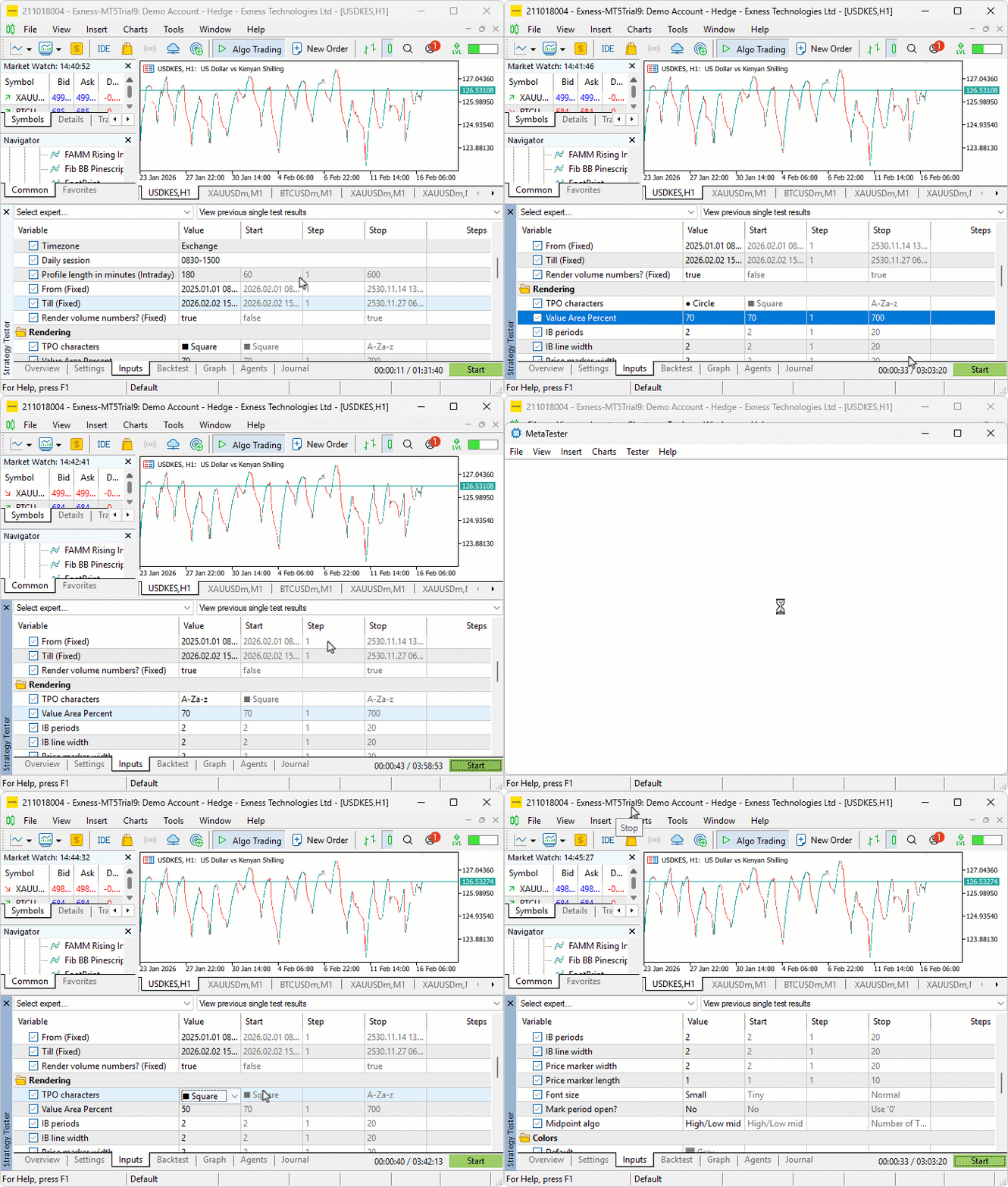
Conclusion
In conclusion, we’ve enhanced the hybrid Time Price Opportunity (TPO) market profile indicator in MQL5 by integrating volume data to compute volume-based point of control, value areas, and volume-weighted average price with customizable highlighting. The system adds advanced capabilities such as initial balance detection, key level extension lines, split profiles, alternative TPO characters like squares or circles, border lines, fixed-range backgrounds, and dynamic volume labels for comprehensive visual analysis across timeframes. With this upgraded hybrid Time Price Opportunity market profile indicator, you’re equipped to gain deeper insights into market structure and volume dynamics, ready for further optimization in your trading journey. Happy trading!
Warning: All rights to these materials are reserved by MetaQuotes Ltd. Copying or reprinting of these materials in whole or in part is prohibited.
This article was written by a user of the site and reflects their personal views. MetaQuotes Ltd is not responsible for the accuracy of the information presented, nor for any consequences resulting from the use of the solutions, strategies or recommendations described.

 Swing Extremes and Pullbacks in MQL5 (Part 1): Developing a Multi-Timeframe Indicator
 MQL5 Trading Tools (Part 20): Canvas Graphing with Statistical Correlation and Regression Analysis
 From Novice to Expert: Extending a Liquidity Strategy with Trend Filters
 MetaTrader 5 Machine Learning Blueprint (Part 7): From Scattered Experiments to Reproducible Results

- Free trading apps
- Over 8,000 signals for copying
- Economic news for exploring financial markets
You agree to website policy and terms of use