MQL5 Programming Articles

Study the MQL5 language for programming trading strategies in numerous published articles mostly written by you - the community members. The articles are grouped into categories to help you quicker find answers to any questions related to programming: Integration, Tester, Trading Strategies, etc.
Follow our new publications and discuss them on the Forum!
Add a new article

You are missing trading opportunities:
- Free trading apps
- Over 8,000 signals for copying
- Economic news for exploring financial markets
Registration
Log in
You agree to website policy and terms of use
If you do not have an account, please register


Introduction to MQL5 (Part 35): Mastering API and WebRequest Function in MQL5 (IX)
Discover how to detect user actions in MetaTrader 5, send requests to an AI API, extract responses, and implement scrolling text in your panel.


Developing a Terminal Manager (Part 2): Running Multiple Terminal Instances
Let's move on to using multiple terminal instances on the server by setting up a simple control panel for starting and stopping them. Now it is time to expand the functionality and move on to the next stages — implementing more complex features, such as managing multiple terminal instances, state persistence, integration with the MetaTrader 5 API, and a web interface with comprehensive information about the terminals.


Automating Trading Strategies in MQL5 (Part 51): The Bread and Butter Judas Swing Model with Premium and Discount
We build a session-based reversal program in MQL5 using the Bread and Butter Judas Swing model. It derives a higher-timeframe daily bias, defines New York kill zones, maps each session's premium and discount from the live range, and requires a sweep before a market structure shift confirms entry. Readers get a ready approach to arm setups only during active sessions and execute in the bias direction with clear, testable rules.


Measuring broker execution quality in MQL5: Why your live account doesn't match the backtest
Live performance often drifts from backtests because of execution friction. We introduce an MQL5 diagnostic EA that records entry and exit slippage, asymmetry, observed spread, requotes, and per-leg latency, using a precise probe mode and an approximate passive mode, and writes every sample to CSV. Use the results to distinguish strategy issues from execution effects across your terminal, network, broker, and liquidity.


Population optimization algorithms: Micro Artificial immune system (Micro-AIS)
The article considers an optimization method based on the principles of the body's immune system - Micro Artificial Immune System (Micro-AIS) - a modification of AIS. Micro-AIS uses a simpler model of the immune system and simple immune information processing operations. The article also discusses the advantages and disadvantages of Micro-AIS compared to conventional AIS.


Non-stationary processes and spurious regression
The article demonstrates spurious regression occurring when attempting to apply regression analysis to non-stationary processes using Monte Carlo simulation.


Reimagining Classic Strategies (Part 22): Ensemble Mean Reverting Strategy
This article will illustrate to the reader how to implement a mean-reverting strategy for the EURUSD pair. The strategy follows contrarian trading rules. Our strategy implements a weekly moving average channel, with one moving average on the high-price feed and the latter on the low-price feed. We enter short positions when the price falls beneath the low moving average and long positions when the price rises above the high moving average. Additionally, we will export daily market data to build a simple ONNX model of the market to provide an additional filter for our entries. This provides the reader with a reproducible template for strategy development and backtesting.


The Disagreement Problem: Diving Deeper into The Complexity Explainability in AI
In this article, we explore the challenge of understanding how AI works. AI models often make decisions in ways that are hard to explain, leading to what's known as the "disagreement problem". This issue is key to making AI more transparent and trustworthy.


Developing a Replay System (Part 64): Playing the service (V)
In this article, we will look at how to fix two errors in the code. However, I will try to explain them in a way that will help you, beginner programmers, understand that things don't always go as you expect. Anyway, this is an opportunity to learn. The content presented here is intended solely for educational purposes. In no way should this application be considered as a final document with any purpose other than to explore the concepts presented.


Neural Networks in Trading: LSTM Optimization for Multivariate Time Series Forecasting (DA-CG-LSTM)
This article introduces the DA-CG-LSTM algorithm, which offers new approaches to time series analysis and forecasting. It explains how innovative attention mechanisms and model flexibility can improve forecast accuracy.


RiskGate: Centralized Risk Management for Multiple EAs
Many MetaTrader 5 setups run several EAs on one account, so risk gets fragmented and correlated exposure slips through. The article introduces RiskGate, a centralized Service that evaluates EA intents account‑wide: EAs send a JSON signal, the Service returns approved, lot and reason. You will see the client/server wiring, example rules (daily loss, exposure and correlation caps), unit‑tested handler design, and an EA example. The result is consistent portfolio‑level risk with simpler EAs.


MQL5 Wizard Techniques you should know (Part 18): Neural Architecture Search with Eigen Vectors
Neural Architecture Search, an automated approach at determining the ideal neural network settings can be a plus when facing many options and large test data sets. We examine how when paired Eigen Vectors this process can be made even more efficient.


Developing a Replay System (Part 30): Expert Advisor project — C_Mouse class (IV)
Today we will learn a technique that can help us a lot in different stages of our professional life as a programmer. Often it is not the platform itself that is limited, but the knowledge of the person who talks about the limitations. This article will tell you that with common sense and creativity you can make the MetaTrader 5 platform much more interesting and versatile without resorting to creating crazy programs or anything like that, and create simple yet safe and reliable code. We will use our creativity to modify existing code without deleting or adding a single line to the source code.


Combining LLM, CatBoost, and Quantum Computing into a Unified Trading System
The article proposes a synthesis of new technologies to overcome the limitations of classical indicators in market data analytics. It shows how language models and quantum encoding can reveal hidden market patterns that traditional methods overlook. The experiment confirms the value of new technologies and proposes an updated analysis methodology aligned with the current state of computational innovation.


Evaluating the Quality of Forex Spread Trading Based on Seasonal Factors in MetaTrader 5
The article examines the quality of a seasonal trading approach on a daily timeframe, both for individual symbols and for spreads. Particular attention is paid to identifying recurring monthly cycles and the possibilities of their application in trading within the current year.


Covariance Matrix Adaptation Evolution Strategy (CMA-ES)
The article explores one of the most interesting non-gradient optimization algorithms, which learns to understand the geometry of the objective function. We will focus on the classical implementation of CMA-ES with a slight modification - replacing the normal distribution with the power one. We will thoroughly examine the math behind the algorithm, as well as practical implementation, and check where CMA-ES is unbeatable and where it should be avoided.

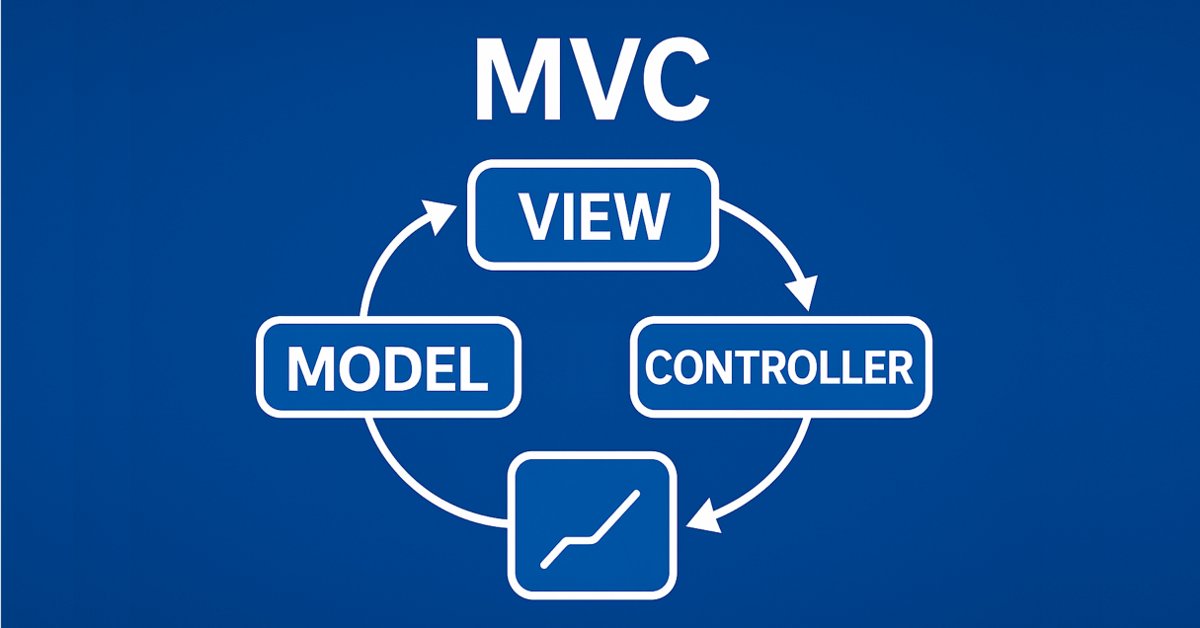
Table and Header Classes based on a table model in MQL5: Applying the MVC concept
This is the second part of the article devoted to the implementation of the table model in MQL5 using the MVC (Model-View-Controller) architectural paradigm. The article discusses the development of table classes and the table header based on a previously created table model. The developed classes will form the basis for further implementation of View and Controller components, which will be discussed in the following articles.


Building a Hierarchical Market Structure Framework (Prototype) in MQL5 Using Modular Architecture and Event-Driven Design
This article describes a prototype reusable market structure framework for MQL5, built with a clean modular architecture and an internal event queue. It shows how to detect swing points, classify break-of-structure and change-of-character events, maintain a deterministic market state, and persist data to CSV. The focus is entirely on software engineering, component separation, and extensibility, not on trading signals. The prototype is a foundation for further development, not a production-ready library.


Overcoming The Limitation of Machine Learning (Part 8): Nonparametric Strategy Selection
This article shows how to configure a black-box model to automatically uncover strong trading strategies using a data-driven approach. By using Mutual Information to prioritize the most learnable signals, we can build smarter and more adaptive models that outperform conventional methods. Readers will also learn to avoid common pitfalls like overreliance on surface-level metrics, and instead develop strategies rooted in meaningful statistical insight.


Measuring What Matters (Part 3): The Reconstruction Engine — Validating Risk Footprints with Matrix Algebra
This article performs a numerical verification of MQL5 eigendecomposition for a covariance matrix using the spectral theorem A = V Λ Vᵀ. It reconstructs the matrix with Diag(), Transpose(), and MatMul(), computes the residual and its Frobenius norm, and shows that deviations remain at floating‑point precision, with results printed to the Experts journal.


Implementing Walk-Forward Efficiency Ratio Scoring in MQL5 to Detect Over-Optimized Strategies
Parameter optimization inside MetaTrader 5's Strategy Tester routinely produces strategies that perform well in-sample and collapse on forward data. This article builds a native MQL5 Walk-Forward Efficiency scoring engine that quantifies how much of a strategy's in-sample Sharpe ratio transfers to each out-of-sample window. The distribution is rendered as a CCanvas histogram and validated against real EURUSD Daily backtest data.


Reimagining Classic Strategies (Part VIII): Currency Markets And Precious Metals on the USDCAD
In this series of articles, we revisit well-known trading strategies to see if we can improve them using AI. In today's discussion, join us as we test whether there is a reliable relationship between precious metals and currencies.


Backtracking Search Algorithm (BSA)
What if an optimization algorithm could remember its past journeys and use that memory to find better solutions? BSA does just that – balancing exploration with revisiting the tried and true. In this article, we reveal the secrets of the algorithm. A simple idea, minimum parameters and a stable result.


Client in Connexus (Part 7): Adding the Client Layer
In this article we continue the development of the connexus library. In this chapter we build the CHttpClient class responsible for sending a request and receiving an order. We also cover the concept of mocks, leaving the library decoupled from the WebRequest function, which allows greater flexibility for users.


Mastering Log Records (Part 10): Avoiding Log Replay by Implementing a Suppression
We created a log suppression system in the Logify library. It details how the CLogifySuppression class reduces console noise by applying configurable rules to avoid repetitive or irrelevant messages. We also cover the external configuration framework, validation mechanisms, and comprehensive testing to ensure robustness and flexibility in log capture during bot or indicator development.


Market Positioning Codex for VGT with Kendall's Tau and Distance Correlation
In this article, we look to explore how a complimentary indicator pairing can be used to analyze the recent 5-year history of Vanguard Information Technology Index Fund ETF. By considering two options of algorithms, Kendall’s Tau and Distance-Correlation, we look to select not just an ideal indicator pair for trading the VGT, but also suitable signal-pattern pairings of these two indicators.


From Basic to Intermediate: Objects (II)
In today's article, we will look at how to control some object properties in a simple way using code. We will also see how a custom application can place more than one object on the same chart. In addition, we will begin to understand the importance of assigning a short name to any indicator we plan to implement.


Formulating Dynamic Multi-Pair EA (Part 10): Asymmetric Stop-Loss Logic Based on Pair-Specific Volatility Signatures
The EA learns each symbol's volatility profile before trading by processing 1000 bars and summarizing candle ranges, bodies and wicks, noise ratio, trend runs, pullback size, and true‑range dispersion. A classifier assigns regime and structure labels per pair. The stop‑loss optimizer maps those labels to a symbol‑specific ATR multiplier, and the risk module sizes lots to maintain constant percentage risk.


Graph Theory: Network Flow of Commodities (Ford-Fulkerson Algorithm), Used as a Liquidity-Capacity Engine
The article presents an MQL5 Expert Advisor that adapts the Ford–Fulkerson max-flow method into a liquidity-capacity filter. Market structures—Swing Highs/Lows, Fair Value Gaps, Order Blocks, and Liquidity Pools—form a directed graph with edge capacities from volume, price reaction, distance, and structure quality. Maximum flow qualifies ICT setups, filters weak paths, and drives dynamic position sizing for a consistent, two-stage decision process.


Low-Frequency Quantitative Strategies in MetaTrader 5 (Part 5): Pre-Backtest Evaluation of Machine-Learning-Generated Signals Through Formulaic Alphas
The article shows how to evaluate machine-learning alphas before a full backtest by expressing them as formulaic alphas. We compute Information Coefficient (IC), Rank IC, Information Ratio (ICIR), and t-statistics to quantify forecasting strength and stability. A MetaTrader 5 backtest illustrates differences versus execution-dependent tests, and a Python parser facilitates reproducible calculations and bulk screening.


MQL5 Wizard Techniques you should know (Part 88): Using Blooms Filter with a Custom Trailing Class
Our next focus in these series on ideas that can be rapidly prototyped with the MQL5 Wizard, is a Custom Trailing class that uses the Blooming Filter. Trailing Stop systems are an optional but very resourceful part to any trading system that we want to explore more in these series besides the traditional Entry Signals.


Neural Networks in Trading: Actor—Director—Critic (Final Part)
The Actor–Director–Critic framework is an evolution of the classic agent learning architecture. The article presents practical experience of its implementation and adaptation to financial market conditions.


Mastering Log Records (Part 9): Implementing the builder pattern and adding default configurations
This article shows how to drastically simplify the use of the Logify library with the Builder pattern and automatic default configurations. It explains the structure of the specialized builders, how to use them with smart auto-completion, and how to ensure a functional log even without manual configuration. It also covers tweaks for MetaTrader 5 build 5100.


Distribution-Free Price Channels in MQL5: Quantile Regression by Iteratively Reweighted Least Squares
We build a rolling price channel by fitting the 0.1, 0.5 and 0.9 conditional quantile lines via IRLS with pinball loss, packaged as a reusable class and two MetaTrader 5 indicators. We verify in-sample coverage, examine quantile crossing, and compare the channel width with ATR, Bollinger and regression widths on matched horizons. Tests in the Strategy Tester show the edges are descriptive, while the normalized width works as a volatility/regime feature.


Risk Manager for Trading Robots (Part I): Risk Control Include File for Expert Advisors
Trading is characterized by high demands on risk management discipline. The article presents an analysis of the main reasons for traders' failures and proposes a technical solution in the form of the CEnhancedRiskManager class for the MQL5 platform. It includes practical testing on an aggressive grid EA.


MetaTrader 5 Machine Learning Blueprint (Part 16): Nested CV for Unbiased Evaluation
The article presents a V-in-V nested cross-validation pipeline for financial data that breaks leakage at three decision points: hyperparameter search, calibration, and final evaluation. A temporal three‑zone split isolates an inner walk‑forward search with the 1‑SE rule from an outer walk‑forward or CPCV evaluation, while OOF isotonic calibration is fitted independently. The resulting UnifiedValidationCalibrator delivers unbiased out‑of‑sample scores and well‑calibrated probabilities for deployment.


Encoding Candlestick Patterns (Part 3): Frequency Analysis for Single Candlestick Type Structure
This article introduces a frequency-analysis framework for encoded candlestick patterns in MQL5. By transforming candlesticks into alphabetic symbols, historical price action can be analyzed as a statistical sequence rather than a visual chart. Using GBPUSD and Gold across multiple timeframes, the study examines the occurrence frequency of individual candlestick types, identifies dominant market structures, and reveals the symmetry between bullish and bearish price movements. The results establish a quantitative foundation for pattern discovery and prepare the way for analyzing multi-candlestick sequences and their predictive potential in algorithmic trading systems.


Neural Networks in Trading: An Intelligent Forecast Pipeline (Sparse Mixture of Experts)
We invite you to explore the practical implementation of a sparse mixture of experts block for time series in the OpenCL computing environment. This article provides a step-by-step explanation of how masked multi-window convolution works, as well as how gradient-based training is organized in the presence of multiple information streams.


MQL5 Wizard Techniques you should know (Part 23): CNNs
Convolutional Neural Networks are another machine learning algorithm that tend to specialize in decomposing multi-dimensioned data sets into key constituent parts. We look at how this is typically achieved and explore a possible application for traders in another MQL5 wizard signal class.


File-Based Versioning of EA Parameters in MQL5
This article explains how to implement parameter versioning in MQL5 using binary files and packed structures. It shows how to write and read fixed-size records with FileWriteStruct and FileReadStruct in FILE_BIN mode, including version numbers, timestamps, and a checksum. You will also see how to detect changes via checksums, append records safely, and load the latest configuration without overwriting prior settings.