MQL5 Programming Articles

Study the MQL5 language for programming trading strategies in numerous published articles mostly written by you - the community members. The articles are grouped into categories to help you quicker find answers to any questions related to programming: Integration, Tester, Trading Strategies, etc.
Follow our new publications and discuss them on the Forum!
Add a new article

You are missing trading opportunities:
- Free trading apps
- Over 8,000 signals for copying
- Economic news for exploring financial markets
Registration
Log in
You agree to website policy and terms of use
If you do not have an account, please register


Hilbert-Schmidt Independence Criterion (HSIC)
The article discusses the non-parametric HSIC (Hilbert-Schmidt Independence Criterion) statistical test designed to identify linear and non-linear dependencies in data. Implementations of two algorithms for calculating HSIC in the MQL5 language are proposed: the exact permutation test and the gamma approximation. The method efficiency is demonstrated on synthetic data modeling a non-linear relationship between features and the target variable.


Neural Networks in Trading: A Cross-Domain Time Series Forecasting Framework (TimeFound)
In this article, we build the core of the TimeFound intelligent model step by step, adapting it to real-world time series forecasting tasks. If you are interested in the practical implementation of neural network patching algorithms in MQL5, you have come to the right place.


Developing a Replay System — Market simulation (Part 16): New class system
We need to organize our work better. The code is growing, and if this is not done now, then it will become impossible. Let's divide and conquer. MQL5 allows the use of classes which will assist in implementing this task, but for this we need to have some knowledge about classes. Probably the thing that confuses beginners the most is inheritance. In this article, we will look at how to use these mechanisms in a practical and simple way.


Population optimization algorithms: Resistance to getting stuck in local extrema (Part II)
We continue our experiment that aims to examine the behavior of population optimization algorithms in the context of their ability to efficiently escape local minima when population diversity is low and reach global maxima. Research results are provided.


Overcoming The Limitation of Machine Learning (Part 1): Lack of Interoperable Metrics
There is a powerful and pervasive force quietly corrupting the collective efforts of our community to build reliable trading strategies that employ AI in any shape or form. This article establishes that part of the problems we face, are rooted in blind adherence to "best practices". By furnishing the reader with simple real-world market-based evidence, we will reason to the reader why we must refrain from such conduct, and rather adopt domain-bound best practices if our community should stand any chance of recovering the latent potential of AI.


MQL5 Wizard Techniques you should know (Part 12): Newton Polynomial
Newton’s polynomial, which creates quadratic equations from a set of a few points, is an archaic but interesting approach at looking at a time series. In this article we try to explore what aspects could be of use to traders from this approach as well as address its limitations.


Reimagining Classic Strategies (Part 14): High Probability Setups
High probability Setups are well known in our trading community, but regrettably they are not well-defined. In this article, we will aim to find an empirical and algorithmic way of defining exactly what is a high probability setup, identifying and exploiting them. By using Gradient Boosting Trees, we demonstrated how the reader can improve the performance of an arbitrary trading strategy and better communicate the exact job to be done to our computer in a more meaningful and explicit manner.


Beyond Maximum Drawdown: Building a Drawdown DNA Analyzer in MQL5
Maximum drawdown is one number that hides what really matters: how often an equity curve declines, how long it stays below a previous peak, and how quickly it recovers. This article builds a native MQL5 tool that reconstructs the underwater curve, breaks it into individual drawdown episodes (depth, duration, recovery time), computes the Ulcer Index, Pain Index, and Recovery Factor, and combines them into a single resilience grade with practical recommendations. No external libraries, no Python, no AI.


Automating Trading Strategies in MQL5 (Part 51): The Bread and Butter Judas Swing Model with Premium and Discount
We build a session-based reversal program in MQL5 using the Bread and Butter Judas Swing model. It derives a higher-timeframe daily bias, defines New York kill zones, maps each session's premium and discount from the live range, and requires a sweep before a market structure shift confirms entry. Readers get a ready approach to arm setups only during active sessions and execute in the bias direction with clear, testable rules.


Adaptive Social Behavior Optimization (ASBO): Schwefel, Box-Muller Method
This article provides a fascinating insight into the world of social behavior in living organisms and its influence on the creation of a new mathematical model - ASBO (Adaptive Social Behavior Optimization). We will examine how the principles of leadership, neighborhood, and cooperation observed in living societies inspire the development of innovative optimization algorithms.


Resampling techniques for prediction and classification assessment in MQL5
In this article, we will explore and implement, methods for assessing model quality that utilize a single dataset as both training and validation sets.


From Basic to Intermediate: Recursion
In this article we will look at a very interesting and quite challenging programming concept, although it should be treated with great caution, as its misuse or misunderstanding can turn relatively simple programs into something unnecessarily complex. But when used correctly and adapted perfectly to equally suitable situations, recursion becomes an excellent ally in solving problems that would otherwise be much more laborious and time-consuming. The materials presented here are intended for educational purposes only. Under no circumstances should the application be viewed for any purpose other than to learn and master the concepts presented.


Overcoming The Limitation of Machine Learning (Part 3): A Fresh Perspective on Irreducible Error
This article takes a fresh perspective on a hidden, geometric source of error that quietly shapes every prediction your models make. By rethinking how we measure and apply machine learning forecasts in trading, we reveal how this overlooked perspective can unlock sharper decisions, stronger returns, and a more intelligent way to work with models we thought we already understood.


MQL5 Wizard Techniques you should know (Part 55): SAC with Prioritized Experience Replay
Replay buffers in Reinforcement Learning are particularly important with off-policy algorithms like DQN or SAC. This then puts the spotlight on the sampling process of this memory-buffer. While default options with SAC, for instance, use random selection from this buffer, Prioritized Experience Replay buffers fine tune this by sampling from the buffer based on a TD-score. We review the importance of Reinforcement Learning, and, as always, examine just this hypothesis (not the cross-validation) in a wizard assembled Expert Advisor.


Engineering Trading Discipline into Code (Part 7): Automating Equity Protection Through Governance Logic
Automated trading systems often focus heavily on signal generation while neglecting the mechanisms required to protect capital during periods of stress. This article presents an Equity Governance Framework in MQL5 that monitors drawdown conditions, evaluates equity pressure, and dynamically controls trading activity through a state-driven risk management model. By combining drawdown analysis, cooldown logic, trade authorization, and execution restrictions, the framework demonstrates how trading discipline can be engineered directly into code using a modular and extensible architecture.


Neural Networks in Trading: Piecewise Linear Representation of Time Series
This article is somewhat different from my earlier publications. In this article, we will talk about an alternative representation of time series. Piecewise linear representation of time series is a method of approximating a time series using linear functions over small intervals.


Overcoming The Limitation of Machine Learning (Part 9): Correlation-Based Feature Learning in Self-Supervised Finance
Self-supervised learning is a powerful paradigm of statistical learning that searches for supervisory signals generated from the observations themselves. This approach reframes challenging unsupervised learning problems into more familiar supervised ones. This technology has overlooked applications for our objective as a community of algorithmic traders. Our discussion, therefore, aims to give the reader an approachable bridge into the open research area of self-supervised learning and offers practical applications that provide robust and reliable statistical models of financial markets without overfitting to small datasets.


MQL5 Bootstrap (IV): Trailing and Break-even Stop Helpers
This article presents reusable MQL5 utilities for managing trailing and break-even stops. It covers fixed-point, moving average, ATR, Parabolic SAR, money-based, and time-periodic trailing, plus break-even by points and by money, with activation thresholds, step logic, reverse-move protection, and broker-level validation. Code examples and Bootstrap classes show how to integrate these helpers into Expert Advisors to standardize position control and reduce duplicate code.


Forecasting exchange rates using classic machine learning methods: Logit and Probit models
In the article, an attempt is made to build a trading EA for predicting exchange rate quotes. The algorithm is based on classical classification models - logistic and probit regression. The likelihood ratio criterion is used as a filter for trading signals.


Introduction to MQL5 (Part 32): Mastering API and WebRequest Function in MQL5 (VI)
This article will show you how to visualize candle data obtained via the WebRequest function and API in candle format. We'll use MQL5 to read the candle data from a CSV file and display it as custom candles on the chart, since indicators cannot directly use the WebRequest function.


Building a Hull Moving Average Momentum Oscillator in MQL5
This article builds a Hull Moving Average Momentum indicator in MQL5 by combining raw price momentum with Hull MA smoothing. We compute momentum as the close-to-close difference over a user-defined length, form 2×Fast WMA − Slow WMA, then apply a final WMA with a square‑root period. The implementation covers inputs, buffers, warm-up/recalculation, and visualization with a color-coded line and zero-line filling, helping interpret positive/negative momentum without treating zero crossings as signals.


Neural Networks in Trading: Memory Augmented Context-Aware Learning for Cryptocurrency Markets (Final Part)
The MacroHFT framework for high-frequency cryptocurrency trading uses context-aware reinforcement learning and memory to adapt to dynamic market conditions. At the end of this article, we will test the implemented approaches on real historical data to assess their effectiveness.


Capital management in trading and the trader's home accounting program with a database
How can a trader manage capital? How can a trader and investor keep track of expenses, income, assets, and liabilities? I am not just going to introduce you to accounting software; I am going to show you a tool that might become your reliable financial navigator in the stormy sea of trading.


Combining LLM, CatBoost, and Quantum Computing into a Unified Trading System
The article proposes a synthesis of new technologies to overcome the limitations of classical indicators in market data analytics. It shows how language models and quantum encoding can reveal hidden market patterns that traditional methods overlook. The experiment confirms the value of new technologies and proposes an updated analysis methodology aligned with the current state of computational innovation.


Building a Trade Analytics System (Part 1): Foundation and System Architecture
We design a simple external trade analytics pipeline for MetaTrader 5 and implement its backend in Python with Flask and SQLite. The article defines the architecture, data model, and versioned API, and shows how to configure the environment, initialize the database, and run the server locally. As a result, you get a clean base to capture closed-trade records from MetaTrader 5 and store them for later analysis.


From Novice to Expert: Candlestick Momentum Confirmation for Classic Crossover Strategies
In this article, we refine a moving average crossover strategy with a momentum candle filter and an immediate retracement bar confirmation. When both conditions are met, a pending stop order is placed using a pivot-based stop loss and a 2R take profit. The complete MQL5 Expert Advisor code, finite-state-machine logic, and chart annotations are detailed.


From Novice to Expert: Systematic Profit Conservation Using Candle Range Theory
A hybrid exit engine for MQL5 replaces static TPs with CRT-derived structural levels. The CRT_ProfitConserve class secures a partial at the first level and then trails the remaining position by structural anchors rather than fixed pips. The article walks through the class API, essential methods, and example usage in EAs, providing a clear path to embed CRT-based exits into existing strategies.


Neural networks made easy (Part 61): Optimism issue in offline reinforcement learning
During the offline learning, we optimize the Agent's policy based on the training sample data. The resulting strategy gives the Agent confidence in its actions. However, such optimism is not always justified and can cause increased risks during the model operation. Today we will look at one of the methods to reduce these risks.


Integrating MQL5 with data processing packages (Part 3): Enhanced Data Visualization
In this article, we will perform Enhanced Data Visualization by going beyond basic charts by incorporating features like interactivity, layered data, and dynamic elements, enabling traders to explore trends, patterns, and correlations more effectively.


Defining your Edge (Part 1): Using a Discrete Fourier Transform and a Spiking Neural Network in a Trading Robot
In this article we make the case for pairing the Discrete Fourier Transform with a Spiking Neural Network in a Trading Robot. The Fourier Transform helps represent data as oscillations instead of its raw values. To govern how we interpret these cycles, we engage a Spiking Neural Network that unlike regular networks, uses time dependent electrical charges to accumulate potential and only "spike" when a target threshold is met. Combining these two engines allows us better control on the timing of discrete market movements, that in theory should give us entry signals with rigorous mathematical confirmation.


Meta-Labeling the Classics (Part 3): Filtering and Sizing Bollinger Band Trades
Bollinger Band mean reversion degrades in trending regimes when ADX is high and bandwidth expands. We separate direction from trade selection with a two‑stage meta‑labeling pipeline: a gradient‑boosted secondary classifier trained with PurgedKFold on band‑specific features (BBP, BBB, bandwidth regime) outputs action probabilities that drive probability‑based bet sizing. The MQL5 implementation loads the ONNX model and applies position sizing within a two‑EA architecture to filter low‑quality band touches.


Biological neuron for forecasting financial time series
We will build a biologically correct system of neurons for time series forecasting. The introduction of a plasma-like environment into the neural network architecture creates a kind of "collective intelligence," where each neuron influences the system's operation not only through direct connections, but also through long-range electromagnetic interactions. Let's see how the neural brain modeling system will perform in the market.

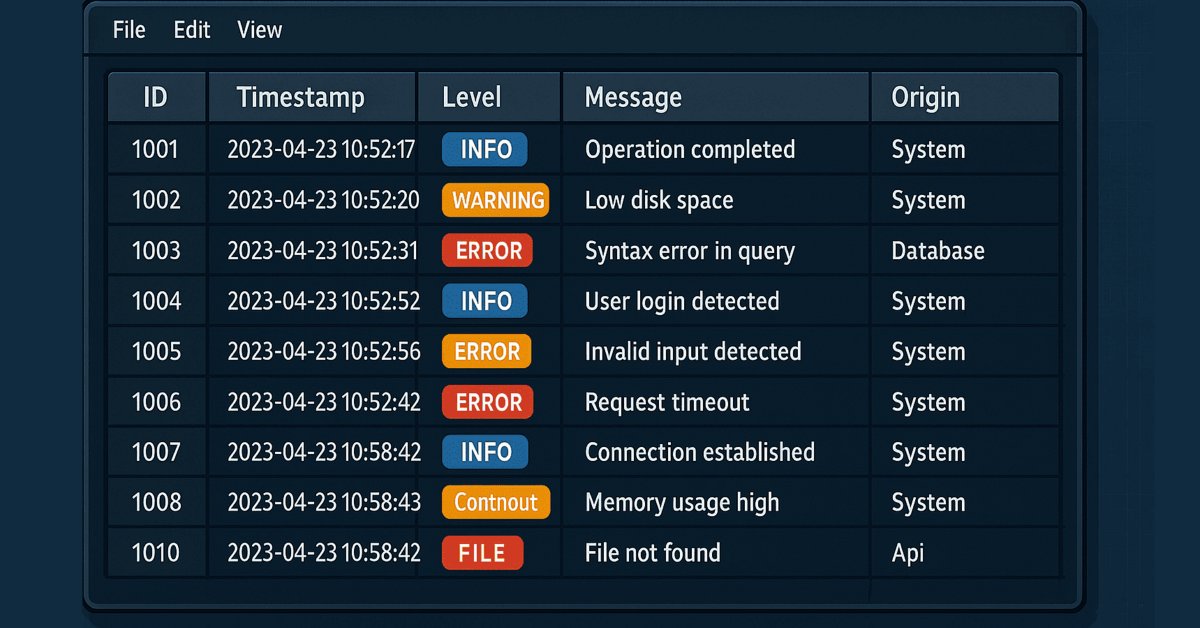
Mastering Log Records (Part 6): Saving logs to database
This article explores the use of databases to store logs in a structured and scalable way. It covers fundamental concepts, essential operations, configuration and implementation of a database handler in MQL5. Finally, it validates the results and highlights the benefits of this approach for optimization and efficient monitoring.


Analyzing the Hourly Movement of Trading Symbols and Their Spreads in MetaTrader 5
The ProSpread seasonality index indicator with a Moving Average is a technical analysis tool that identifies seasonal patterns in price movements, analyzes price behavior during specific trading hours and is able to work with either a single instrument or a spread between two assets. It also visualizes the statistical probability of directional movements.


Beyond the Clock (Part 1): Building Activity and Imbalance Bars in Python and MQL5
The article replaces clock-based sampling with López de Prado's alternative bar types and provides two aligned implementations: a unified Python module for batch tick histories and an object‑oriented MQL5 library for live EAs. It covers Parquet/Dask infrastructure, data cleaning, and a single API. Practical issues are solved explicitly: zero‑tick time‑bar filtering, imbalance threshold initialization, EWM state persistence, and parity between Python and MQL5 outputs.


Developing a Replay System (Part 47): Chart Trade Project (VI)
Finally, our Chart Trade indicator starts interacting with the EA, allowing information to be transferred interactively. Therefore, in this article, we will improve the indicator, making it functional enough to be used together with any EA. This will allow us to access the Chart Trade indicator and work with it as if it were actually connected with an EA. But we will do it in a much more interesting way than before.


Designing a Partial Close Engine in MQL5 with Configurable Profit Ladders
This MQL5 engine applies configurable profit ladders in R‑multiples to manage partial closes reliably. It prevents stranded remainders by rounding to lot step, computes close percentages from the original entry volume, and moves the stop to breakeven when configured. A supported filling mode is chosen automatically, and the download includes seven include files, a demo EA, and a verification script.


Developing a Replay System (Part 62): Playing the service (III)
In this article, we will begin to address the issue of tick excess that can impact application performance when using real data. This excess often interferes with the correct timing required to construct a one-minute bar in the appropriate window.


Analyzing binary code of prices on the exchange (Part II): Converting to BIP39 and writing GPT model
Continuing tries to decipher price movements... What about linguistic analysis of the "market dictionary" that we get by converting the binary price code to BIP39? In this article, we will delve into an innovative approach to exchange data analysis and consider how modern natural language processing techniques can be applied to the market language.


From Basic to Intermediate: Array (II)
In this article, we will look at what a dynamic array and a static array are. Is there a difference between using one or the other? Or are they always the same? When should you use one and when the other type? And what about constant arrays? We will try to understand what they are designed for and consider the risks of not initializing all the values in the array.