MQL5 Programming Articles

Study the MQL5 language for programming trading strategies in numerous published articles mostly written by you - the community members. The articles are grouped into categories to help you quicker find answers to any questions related to programming: Integration, Tester, Trading Strategies, etc.
Follow our new publications and discuss them on the Forum!
Add a new article

You are missing trading opportunities:
- Free trading apps
- Over 8,000 signals for copying
- Economic news for exploring financial markets
Registration
Log in
You agree to website policy and terms of use
If you do not have an account, please register


MQL5 Wizard Techniques you should know (Part 32): Regularization
Regularization is a form of penalizing the loss function in proportion to the discrete weighting applied throughout the various layers of a neural network. We look at the significance, for some of the various regularization forms, this can have in test runs with a wizard assembled Expert Advisor.


Feature Engineering for ML (Part 12): Fractal Features in MQL5
A direct MQL5 port of the fractal detector writes each pattern at its center bar, so a buffer read by an expert advisor holds a value that only existed n bars later. We implement CFractalFeatures.mqh with ProcessBar for bar-by-bar use and Compute for full-series recalculation, covering detection, strength scored against a fixed or volatility-scaled floor, an event-based support/resistance ring, and trend-filtered breakout signals. Output is eighteen buffers published at the confirmation bar, verified against the Python reference to within 1e-13.


Building Volatility models in MQL5 (Part I): The Initial Implementation
In this article, we present an MQL5 library for modeling volatility, designed to function similarly to Python's arch package. The library currently supports the specification of common conditional mean (HAR, AR, Constant Mean, Zero Mean) and conditional volatility (Constant Variance, ARCH, GARCH) models.


Implementing Walk-Forward Efficiency Ratio Scoring in MQL5 to Detect Over-Optimized Strategies
Parameter optimization inside MetaTrader 5's Strategy Tester routinely produces strategies that perform well in-sample and collapse on forward data. This article builds a native MQL5 Walk-Forward Efficiency scoring engine that quantifies how much of a strategy's in-sample Sharpe ratio transfers to each out-of-sample window. The distribution is rendered as a CCanvas histogram and validated against real EURUSD Daily backtest data.


Neural Networks in Trading: Hierarchical Dual-Tower Transformer (Final Part)
We continue to build the Hidformer hierarchical dual-tower transformer model designed for analyzing and forecasting complex multivariate time series. In this article, we will bring the work we started earlier to its logical conclusion — we will test the model on real historical data.


Dolphin Echolocation Algorithm (DEA)
In this article, we take a closer look at the DEA algorithm, a metaheuristic optimization method inspired by dolphins' unique ability to find prey using echolocation. From mathematical foundations to practical implementation in MQL5, from analysis to comparison with classical algorithms, we will examine in detail why this relatively new method deserves a place in the arsenal of researchers facing optimization problems.


Market Simulation (Part 21): First Steps with SQL (IV)
Many of you may have far more experience working with databases than I do, and therefore may have a different opinion. Since it was necessary to explain why databases are designed the way they are, and why SQL has the form it does—especially why primary and foreign keys emerged—some things had to remain somewhat abstract.


Spurious Regressions in Python
Spurious regressions occur when two time series exhibit a high degree of correlation purely by chance, leading to misleading results in regression analysis. In such cases, even though variables may appear to be related, the correlation is coincidental and the model may be unreliable.


MQL5 Wizard Techniques you should know (Part 70): Using Patterns of SAR and the RVI with a Exponential Kernel Network
We follow up our last article, where we introduced the indicator pair of the SAR and the RVI, by considering how this indicator pairing could be extended with Machine Learning. SAR and RVI are a trend and momentum complimentary pairing. Our machine learning approach uses a convolution neural network that engages the Exponential kernel in sizing its kernels and channels, when fine-tuning the forecasts of this indicator pairing. As always, this is done in a custom signal class file that works with the MQL5 wizard to assemble an Expert Advisor.


Neural Networks in Trading: Disentangling Structured Components (SCNN)
We invite you to explore the innovative SCNN framework, which takes time series analysis to a new level by clearly separating data into long-term, seasonal, short-term, and residual components. This approach significantly improves forecasting accuracy by allowing the model to adapt to complex and changing market dynamics.


Neural Networks Made Easy (Part 90): Frequency Interpolation of Time Series (FITS)
By studying the FEDformer method, we opened the door to the frequency domain of time series representation. In this new article, we will continue the topic we started. We will consider a method with which we can not only conduct an analysis, but also predict subsequent states in a particular area.


Neural Networks in Trading: Hierarchical Dual-Tower Transformer (Hidformer)
We invite you to get acquainted with the Hierarchical Double-Tower Transformer (Hidformer) framework, which was developed for time series forecasting and data analysis. The framework authors proposed several improvements to the Transformer architecture, which resulted in increased forecast accuracy and reduced computational resource consumption.


Neural networks are easy (Part 59): Dichotomy of Control (DoC)
In the previous article, we got acquainted with the Decision Transformer. But the complex stochastic environment of the foreign exchange market did not allow us to fully implement the potential of the presented method. In this article, I will introduce an algorithm that is aimed at improving the performance of algorithms in stochastic environments.


From Basic to Intermediate: Struct (I)
Today we will begin to study structures in a simpler, more practical, and comfortable way. Structures are among the foundations of programming, whether they are structured or not. I know many people think of structures as just collections of data, but I assure you that they are much more than just structures. And here we will begin to explore this new universe in the most didactic way.


Neural Networks in Trading: Transformer for the Point Cloud (Pointformer)
In this article, we will talk about algorithms for using attention methods in solving problems of detecting objects in a point cloud. Object detection in point clouds is important for many real-world applications.


Tabu Search (TS)
The article discusses the Tabu Search algorithm, one of the first and most well-known metaheuristic methods. We will go through the algorithm operation in detail, starting with choosing an initial solution and exploring neighboring options, with an emphasis on using a tabu list. The article covers the key aspects of the algorithm and its features.

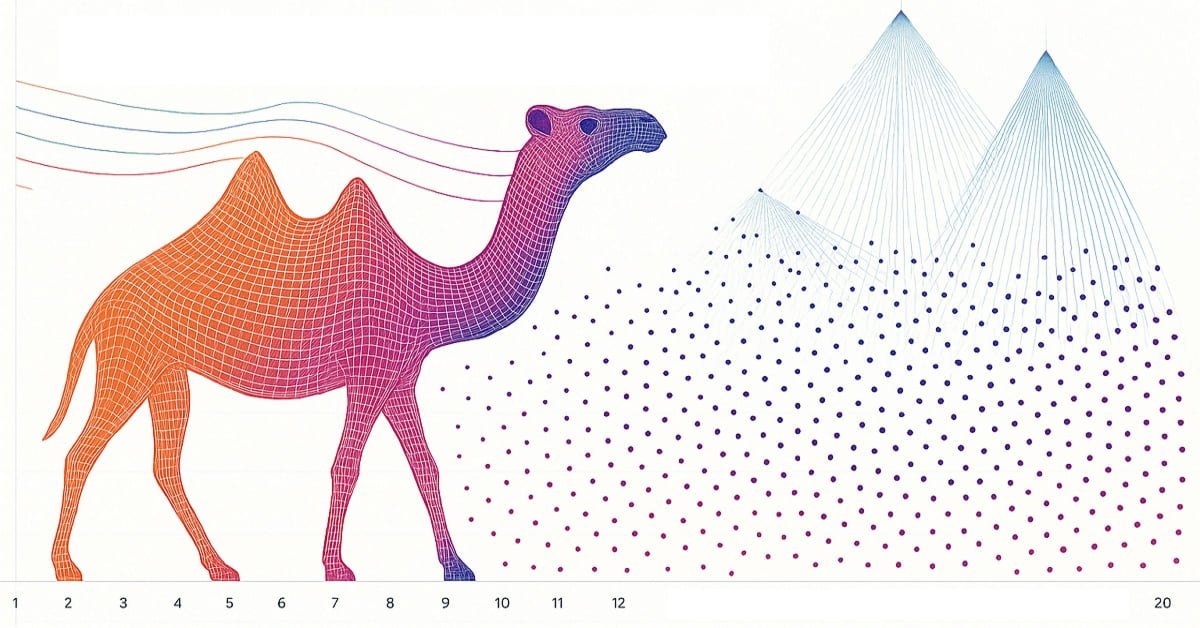
Camel Algorithm (CA)
The Camel Algorithm, developed in 2016, simulates the behavior of camels in the desert to solve optimization problems, taking into account temperature, supply, and endurance. This article also presents a modified version of the algorithm (CAm) with key improvements: the use of a Gaussian distribution in generating solutions and the optimization of the oasis effect parameters.


Neural Networks in Trading: Generalizing Time Series Without Data-Specific Dependence (Mamba4Cast)
In this article, we introduce the Mamba4Cast framework and take a closer look at one of its key components: timestamp-based positional encoding. The article shows shows how time embedding is formed taking into account the calendar structure of the data.


From Basic to Intermediate: Array (III)
In this article, we will look at how to work with arrays in MQL5, including how to pass information between functions and procedures using arrays. The purpose is to prepare you for what will be demonstrated and explained in future materials in the series. Therefore, I strongly recommend that you carefully study what will be shown in this article.

Developing a Replay System (Part 46): Chart Trade Project (V)
Tired of wasting time searching for that very file that you application needs in order to work? How about including everything in the executable? This way you won't have to search for the things. I know that many people use this form of distribution and storage, but there is a much more suitable way. At least as far as the distribution of executable files and their storage is concerned. The method that will be presented here can be very useful, since you can use MetaTrader 5 itself as an excellent assistant, as well as MQL5. Furthermore, it is not that difficult to understand.


Mastering Model Interpretation: Gaining Deeper Insight From Your Machine Learning Models
Machine Learning is a complex and rewarding field for anyone of any experience. In this article we dive deep into the inner mechanisms powering the models you build, we explore the intricate world of features,predictions and impactful decisions unravelling the complexities and gaining a firm grasp of model interpretation. Learn the art of navigating tradeoffs , enhancing predictions, ranking feature importance all while ensuring robust decision making. This essential read helps you clock more performance from your machine learning models and extract more value for employing machine learning methodologies.


African Buffalo Optimization (ABO)
The article presents the African Buffalo Optimization (ABO) algorithm, a metaheuristic approach developed in 2015 based on the unique behavior of these animals. The article describes in detail the stages of the algorithm implementation and its efficiency in finding solutions to complex problems, which makes it a valuable tool in the field of optimization.


Neural Network in Practice: Pseudoinverse (II)
Since these articles are educational in nature and are not intended to show the implementation of specific functionality, we will do things a little differently in this article. Instead of showing how to apply factorization to obtain the inverse of a matrix, we will focus on factorization of the pseudoinverse. The reason is that there is no point in showing how to get the general coefficient if we can do it in a special way. Even better, the reader can gain a deeper understanding of why things happen the way they do. So, let's now figure out why hardware is replacing software over time.


Economic forecasts: Exploring the Python potential
How to use World Bank economic data for forecasts? What happens when you combine AI models and economics?


Population optimization algorithms: Whale Optimization Algorithm (WOA)
Whale Optimization Algorithm (WOA) is a metaheuristic algorithm inspired by the behavior and hunting strategies of humpback whales. The main idea of WOA is to mimic the so-called "bubble-net" feeding method, in which whales create bubbles around prey and then attack it in a spiral motion.


Self Optimizing Expert Advisor With MQL5 And Python (Part VI): Taking Advantage of Deep Double Descent
Traditional machine learning teaches practitioners to be vigilant not to overfit their models. However, this ideology is being challenged by new insights published by diligent researches from Harvard, who have discovered that what appears to be overfitting may in some circumstances be the results of terminating your training procedures prematurely. We will demonstrate how we can use the ideas published in the research paper, to improve our use of AI in forecasting market returns.


Forecasting in Trading Using Grey Models
The article discusses the application of Grey models to forecasting financial time series. We will consider the operating principles of Grey models and the specifics of their application to financial series. We will also discuss the advantages and limitations of using these models in trading.


OrderSend retries and circuit breaker in MQL5
Volatile-market failures such as requotes, connection drops, and partial fills expose a common weakness in EAs: unclassified retries and no cumulative failure control. This article introduces CRetryExecutor with exponential backoff and explicit error classification, plus a three-state CCircuitBreaker with cooldown and half-open probes, unified in CExecutionGateway. You can plug it into an EA to stop futile retries, prevent duplicate submissions, and improve diagnostics.


Integrating External Applications with MQL5 Community OAuth
Learn how to add “Sign in with MQL5” to your Android app using the OAuth 2.0 authorization code flow. The guide covers app registration, endpoints, redirect URI, Custom Tabs, deep-link handling, and a PHP backend that exchanges the code for an access token over HTTPS. You will authenticate real MQL5 users and access profile data such as rank and reputation.


Neural Networks in Trading: Skill Hierarchy for Adaptive Agent Behavior (Final Part)
The article discusses the practical implementation of the HiSSD framework in algorithmic trading tasks. It explains how the skill hierarchy and adaptive architecture can be used to build sustainable trading strategies.


Battle Royale Optimizer (BRO)
The article explores the Battle Royale Optimizer algorithm — a metaheuristic in which solutions compete with their nearest neighbors, accumulate “damage,” are replaced when a threshold is exceeded, and periodically shrink the search space around the current best solution. It presents both pseudocode and an MQL5 implementation of the CAOBRO class, including neighbor search, movement toward the best solution, and an adaptive delta interval. Test results on the Hilly, Forest, and Megacity functions highlight the strengths and limitations of the approach. The reader is provided with a ready-to-use foundation for experimentation and tuning key parameters such as popSize and maxDamage.


Market Simulation (Part 10): Sockets (IV)
In this article, we'll look at what you need to do to start using Excel to manage MetaTrader 5, but in a very interesting way. To do this, we will use an Excel add-in to avoid using built-in VBA. If you don't know what add-in is meant, read this article and learn how to program in Python directly in Excel.


Low-Frequency Quantitative Strategies in MetaTrader 5 (Part 5): Pre-Backtest Evaluation of Machine-Learning-Generated Signals Through Formulaic Alphas
The article shows how to evaluate machine-learning alphas before a full backtest by expressing them as formulaic alphas. We compute Information Coefficient (IC), Rank IC, Information Ratio (ICIR), and t-statistics to quantify forecasting strength and stability. A MetaTrader 5 backtest illustrates differences versus execution-dependent tests, and a Python parser facilitates reproducible calculations and bulk screening.


MQL5 Wizard Techniques you should know (Part 87): Volatility-Scaled Money Management with Monotonic Queue in MQL5
This article presents a custom MQL5 money management class that adapts position sizing to real-time volatility using a monotonic queue for O(N) sliding-window extremes. The class applies inverse volatility scaling and optionally validates risk with an RBF network. We show implementation details in the Optimize method and compare results with the inbuilt Size-Optimized class to assess latency and risk control benefits.


Overcoming The Limitation of Machine Learning (Part 2): Lack of Reproducibility
The article explores why trading results can differ significantly between brokers, even when using the same strategy and financial symbol, due to decentralized pricing and data discrepancies. The piece helps MQL5 developers understand why their products may receive mixed reviews on the MQL5 Marketplace, and urges developers to tailor their approaches to specific brokers to ensure transparent and reproducible outcomes. This could grow to become an important domain-bound best practice that will serve our community well if the practice were to be widely adopted.


A Team of AI Agents with Profit-Based Rotation: The Evolution of a Living Trading System in MQL5
Financial management as an ecosystem: Seven AI traders with different personalities and strategies instead of a single algorithm. They compete for capital, learn from their mistakes, and make decisions collectively. The article explains the principles behind the Modern RL Trader system, in which the code possesses consciousness and emotions, creating a living, evolving trading mind.


Feature Engineering for ML (Part 13): Trend-Scanning Features in Python
Trend-scanning supports both forward and backward windows, and the labeling default is unsafe for features: it looks ahead and boosts next-bar agreement well above chance on random walks. We provide a dedicated wrapper, get trend scanning features, that forces computational causal and returns only window, slope, t value, and rsquared. A second analysis quantifies errors introduced by the default log transform on signed series.


Developing a Replay System (Part 29): Expert Advisor project — C_Mouse class (III)
After improving the C_Mouse class, we can focus on creating a class designed to create a completely new framework fr our analysis. We will not use inheritance or polymorphism to create this new class. Instead, we will change, or better said, add new objects to the price line. That's what we will do in this article. In the next one, we will look at how to change the analysis. All this will be done without changing the code of the C_Mouse class. Well, actually, it would be easier to achieve this using inheritance or polymorphism. However, there are other methods to achieve the same result.


Mutual information as criteria for Stepwise Feature Selection
In this article, we present an MQL5 implementation of Stepwise Feature Selection based on the mutual information between an optimal predictor set and a target variable.


Data Science and ML (Part 44): Forex OHLC Time series Forecasting using Vector Autoregression (VAR)
Explore how Vector Autoregression (VAR) models can forecast Forex OHLC (Open, High, Low, and Close) time series data. This article covers VAR implementation, model training, and real-time forecasting in MetaTrader 5, helping traders analyze interdependent currency movements and improve their trading strategies.