Articles with examples of trading robots developed in MQL5

An Expert Advisor is the 'pinnacle' of programming and the desired goal of every automated trading developer. Read the articles in this section to create your own trading robot. By following the described steps you will learn how to create, debug and test automated trading systems.
The articles not only teach MQL5 programming, but also show how to implement trading ideas and techniques. You will learn how to program a trailing stop, how to apply money management, how to get the indicator values, and much more.
Add a new article

You are missing trading opportunities:
- Free trading apps
- Over 8,000 signals for copying
- Economic news for exploring financial markets
Registration
Log in
You agree to website policy and terms of use
If you do not have an account, please register


MQL5 Trading Tools (Part 22): Graphing the Histogram and Probability Mass Function (PMF) of the Binomial Distribution
This article develops an interactive MQL5 plot for the binomial distribution, combining a histogram of simulated outcomes with the theoretical probability mass function. It implements mean, standard deviation, skewness, kurtosis, percentiles, and confidence intervals, along with configurable themes and labels, and supports dragging, resizing, and live parameter changes. Use it to assess expected wins, likely drawdowns, and confidence ranges when validating trading strategies.

From Novice to Expert: Animated News Headline Using MQL5 (XI)—Correlation in News Trading
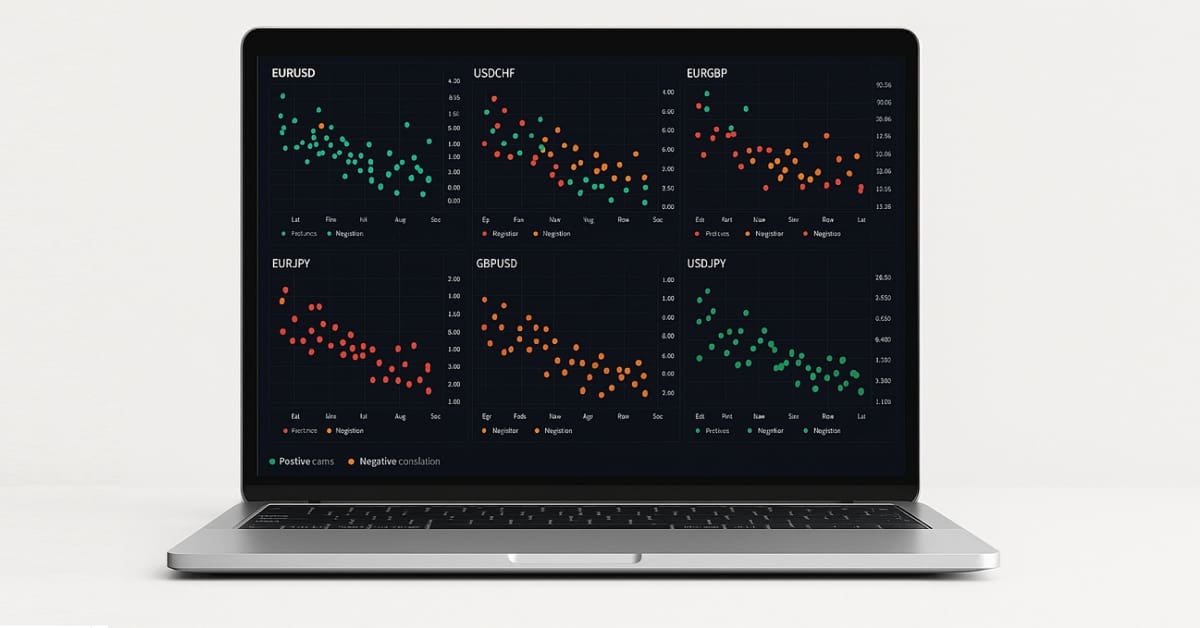
In this discussion, we will explore how the concept of Financial Correlation can be applied to improve decision-making efficiency when trading multiple symbols during major economic events announcement. The focus is on addressing the challenge of heightened risk exposure caused by increased volatility during news releases.


Neural Networks Made Easy (Part 81): Context-Guided Motion Analysis (CCMR)
In previous works, we always assessed the current state of the environment. At the same time, the dynamics of changes in indicators always remained "behind the scenes". In this article I want to introduce you to an algorithm that allows you to evaluate the direct change in data between 2 successive environmental states.


Engineering a Self-Healing Expert Advisor in MQL5 (Part 1): Persistent Trade State Architecture
This article demonstrates how to build the persistence foundation of a self-healing Expert Advisor in MQL5 using SQLite. Readers will learn how to create a permanent trade-state storage layer capable of surviving terminal restarts, shutdowns, and unexpected interruptions. The article covers SQLite integration in MetaTrader 5, database lifecycle management, persistent trade-state structures, and runtime state recovery using practical MQL5 implementations.


Neural networks made easy (Part 79): Feature Aggregated Queries (FAQ) in the context of state
In the previous article, we got acquainted with one of the methods for detecting objects in an image. However, processing a static image is somewhat different from working with dynamic time series, such as the dynamics of the prices we analyze. In this article, we will consider the method of detecting objects in video, which is somewhat closer to the problem we are solving.


Neural Networks in Trading: A Hybrid Trading Framework with Predictive Coding (Final Part)
We continue our examination of the StockFormer hybrid trading system, which combines predictive coding and reinforcement learning algorithms for financial time series analysis. The system is based on three Transformer branches with a Diversified Multi-Head Attention (DMH-Attn) mechanism that enables the capturing of complex patterns and interdependencies between assets. Previously, we got acquainted with the theoretical aspects of the framework and implemented the DMH-Attn mechanisms. Today, we will talk about the model architecture and training.


MQL5 Trading Tools (Part 14): Pixel-Perfect Scrollable Text Canvas with Antialiasing and Rounded Scrollbar
In this article, we enhance the canvas-based price dashboard in MQL5 by adding a pixel-perfect scrollable text panel for usage guides, overcoming native scrolling limitations through custom antialiasing and a rounded scrollbar design with hover-expand functionality. The text panel supports themed backgrounds with opacity, dynamic line wrapping for content like instructions and contacts, and interactive navigation via up/down buttons, slider dragging, and mouse wheel scrolling within the body area.


Using the MQL5 Economic Calendar for News Filter (Part 3): Surviving Terminal Restarts During News Window
The article introduces a restart-safe storage model for news-time stop removal. Suspension state and original SL/TP per position are written to terminal global variables, reconstructed on OnInit, and cleaned after restoration. This lets the EA resume an active suspension window after recompiles or restarts and restore stops only when the news window ends.


Neural Networks in Trading: Models Using Wavelet Transform and Multi-Task Attention
We invite you to explore a framework that combines wavelet transforms and a multi-task self-attention model, aimed at improving the responsiveness and accuracy of forecasting in volatile market conditions. The wavelet transform allows asset returns to be decomposed into high and low frequencies, carefully capturing long-term market trends and short-term fluctuations.


Automating Trading Strategies in MQL5 (Part 52): The tCISD Model with SSMT and Quarterly Theory
We build a tCISD program in MQL5 that pairs Quarterly Theory cycles anchored to New York time with a correlated-symbol SSMT divergence to time reversals. The article shows how to map cycles and quarters, detect the cross-symbol sweep disagreement, and derive the tCISD level whose break confirms the change in delivery. You will get a working entry logic that arms on divergence and executes on a confirmation close or a retest.


Automating Classic Market Methods in MQL5 (Part 4): Mark Minervini's Trend Template
This article presents TrendTemplateEA, an Expert Advisor implementing Mark Minervini's eight-condition trend template for daily forex charts. It evaluates all conditions on every bar and enters only when they are simultaneously satisfied, using RSI above 50 in place of the stock market RS rating. The entry trigger is a 20-bar high breakout on expanding volume, with all rules coded and testable in MQL5.


Neural Networks in Trading: Detecting Anomalies in the Frequency Domain (CATCH)
The CATCH framework combines Fourier transform and frequency patching to accurately identify market anomalies beyond the reach of traditional methods. Let us examine how this approach reveals hidden patterns in financial data.


Introduction to MQL5 (Part 30): Mastering API and WebRequest Function in MQL5 (IV)
Discover a step-by-step tutorial that simplifies the extraction, conversion, and organization of candle data from API responses within the MQL5 environment. This guide is perfect for newcomers looking to enhance their coding skills and develop robust strategies for managing market data efficiently.


Category Theory in MQL5 (Part 6): Monomorphic Pull-Backs and Epimorphic Push-Outs
Category Theory is a diverse and expanding branch of Mathematics which is only recently getting some coverage in the MQL5 community. These series of articles look to explore and examine some of its concepts & axioms with the overall goal of establishing an open library that provides insight while also hopefully furthering the use of this remarkable field in Traders' strategy development.


Implementing Partial Position Closing in MQL5
This article develops a class for managing partial position closing in MQL5 and then integrates it into an Order Blocks Expert Advisor. It also presents test results comparing the strategy with and without partial position closing, and analyzes the conditions under which this approach can help provide and maximize profit. In conclusion, partial position closing can be highly beneficial in trading strategies, especially those focused on wider price movements.


MQL5 Trading Tools (Part 24): Depth-Perception Upgrades with 3D Curves, Pan Mode, and ViewCube Navigation
In this article, we enhance the 3D binomial distribution graphing tool in MQL5 by adding a segmented 3D curve for improved depth perception of the probability mass function, integrating pan mode for view target shifting, and implementing an interactive view cube with hover zones and animations for quick orientation changes. We incorporate clickable sub-zones on the view cube for faces, edges, and corners to animate camera transitions to standard views, while maintaining switchable 2D/3D modes, real-time updates, and customizable parameters for immersive probabilistic analysis in trading.


Neural Networks in Trading: Mask-Attention-Free Approach to Price Movement Forecasting
In this article, we will discuss the Mask-Attention-Free Transformer (MAFT) method and its application in the field of trading. Unlike traditional Transformers that require data masking when processing sequences, MAFT optimizes the attention process by eliminating the need for masking, significantly improving computational efficiency.


Meta-Labeling the Classics (Part 1): Filtering and Sizing RSI Trades
RSI accumulates losses in trending conditions by firing at every threshold crossing regardless of market regime. A Random Forest secondary classifier trained on 12 contextual features — RSI momentum slope, EMA50 trend velocity, ATR-normalised trend stretch, and nine others — filters raw signals and scales position size by classifier confidence on EURUSD H1. Results compare plain RSI, meta-filtered RSI, and bet-sized RSI across a 16-month out-of-sample period with per-trade metrics and drawdown diagnostics.


Custom Indicator Workshop (Part 4) : Automating UT Bot Alerts into a Trading Expert Advisor
This article shows how to build an MQL5 Expert Advisor around the UT Bot Alerts indicator. The EA reads custom indicator signals via iCustom() and CopyBuffer(), evaluates entries only on new bars, using the last closed candle at index 1, and enforces a one-direction-at-a-time model by closing opposite positions before taking new entries. It also adds optional ATR-based stop-losses, reward-to-risk take-profits, dedicated buy/sell execution functions, magic-number tracking, and basic backtesting for repeatable evaluation.


Neural Networks in Trading: A Cross-Domain Time Series Forecasting Framework (TimeFound)
In this article, we build the core of the TimeFound intelligent model step by step, adapting it to real-world time series forecasting tasks. If you are interested in the practical implementation of neural network patching algorithms in MQL5, you have come to the right place.


Engineering Trading Discipline into Code (Part 7): Automating Equity Protection Through Governance Logic
Automated trading systems often focus heavily on signal generation while neglecting the mechanisms required to protect capital during periods of stress. This article presents an Equity Governance Framework in MQL5 that monitors drawdown conditions, evaluates equity pressure, and dynamically controls trading activity through a state-driven risk management model. By combining drawdown analysis, cooldown logic, trade authorization, and execution restrictions, the framework demonstrates how trading discipline can be engineered directly into code using a modular and extensible architecture.


Neural Networks in Trading: Piecewise Linear Representation of Time Series
This article is somewhat different from my earlier publications. In this article, we will talk about an alternative representation of time series. Piecewise linear representation of time series is a method of approximating a time series using linear functions over small intervals.


Forecasting exchange rates using classic machine learning methods: Logit and Probit models
In the article, an attempt is made to build a trading EA for predicting exchange rate quotes. The algorithm is based on classical classification models - logistic and probit regression. The likelihood ratio criterion is used as a filter for trading signals.


Neural Networks in Trading: Memory Augmented Context-Aware Learning for Cryptocurrency Markets (Final Part)
The MacroHFT framework for high-frequency cryptocurrency trading uses context-aware reinforcement learning and memory to adapt to dynamic market conditions. At the end of this article, we will test the implemented approaches on real historical data to assess their effectiveness.


Neural networks made easy (Part 61): Optimism issue in offline reinforcement learning
During the offline learning, we optimize the Agent's policy based on the training sample data. The resulting strategy gives the Agent confidence in its actions. However, such optimism is not always justified and can cause increased risks during the model operation. Today we will look at one of the methods to reduce these risks.


From Novice to Expert: Systematic Profit Conservation Using Candle Range Theory
A hybrid exit engine for MQL5 replaces static TPs with CRT-derived structural levels. The CRT_ProfitConserve class secures a partial at the first level and then trails the remaining position by structural anchors rather than fixed pips. The article walks through the class API, essential methods, and example usage in EAs, providing a clear path to embed CRT-based exits into existing strategies.


Automating Trading Strategies in MQL5 (Part 51): The Bread and Butter Judas Swing Model with Premium and Discount
We build a session-based reversal program in MQL5 using the Bread and Butter Judas Swing model. It derives a higher-timeframe daily bias, defines New York kill zones, maps each session's premium and discount from the live range, and requires a sweep before a market structure shift confirms entry. Readers get a ready approach to arm setups only during active sessions and execute in the bias direction with clear, testable rules.


Feature Engineering With Python And MQL5 (Part III): Angle Of Price (2) Polar Coordinates
In this article, we take our second attempt to convert the changes in price levels on any market, into a corresponding change in angle. This time around, we selected a more mathematically sophisticated approach than we selected in our first attempt, and the results we obtained suggest that our change in approach may have been the right decision. Join us today, as we discuss how we can use Polar coordinates to calculate the angle formed by changes in price levels, in a meaningful way, regardless of which market you are analyzing.


Creating a Trading Administrator Panel in MQL5 (Part X): External resource-based interface
Today, we are harnessing the capabilities of MQL5 to utilize external resources—such as images in the BMP format—to create a uniquely styled home interface for the Trading Administrator Panel. The strategy demonstrated here is particularly useful when packaging multiple resources, including images, sounds, and more, for streamlined distribution. Join us in this discussion as we explore how these features are implemented to deliver a modern and visually appealing interface for our New_Admin_Panel EA.


MQL5 Trading Tools (Part 16): Improved Super-Sampling Anti-Aliasing (SSAA) and High-Resolution Rendering
We add supersampling‑driven anti‑aliasing and high‑resolution rendering to the MQL5 canvas dashboard, then downsample to the target size. The article implements rounded rectangle fills and borders, rounded triangle arrows, and a custom scrollbar with theming for the stats and text panels. These tools help you build smoother, more legible UI components in MetaTrader 5.


MQL5 Bootstrap (IV): Trailing and Break-even Stop Helpers
This article presents reusable MQL5 utilities for managing trailing and break-even stops. It covers fixed-point, moving average, ATR, Parabolic SAR, money-based, and time-periodic trailing, plus break-even by points and by money, with activation thresholds, step logic, reverse-move protection, and broker-level validation. Code examples and Bootstrap classes show how to integrate these helpers into Expert Advisors to standardize position control and reduce duplicate code.


The MQL5 Standard Library Explorer (Part 2): Connecting Library Components
Today, we take an important step toward helping every developer understand how to read class structures and quickly build Expert Advisors using the MQL5 Standard Library. The library is rich and expandable, yet it can feel like being handed a complex toolkit without a manual. Here we share and discuss an alternative integration routine—a concise, repeatable workflow that shows how to connect classes reliably in real projects.


Neural Networks in Trading: Injection of Global Information into Independent Channels (InjectTST)
Most modern multimodal time series forecasting methods use the independent channels approach. This ignores the natural dependence of different channels of the same time series. Smart use of two approaches (independent and mixed channels) is the key to improving the performance of the models.


Reimagining Classic Strategies (Part IV): SP500 and US Treasury Notes
In this series of articles, we analyze classical trading strategies using modern algorithms to determine whether we can improve the strategy using AI. In today's article, we revisit a classical approach for trading the SP500 using the relationship it has with US Treasury Notes.


Neural Networks in Trading: Point Cloud Analysis (PointNet)
Direct point cloud analysis avoids unnecessary data growth and improves the performance of models in classification and segmentation tasks. Such approaches demonstrate high performance and robustness to perturbations in the original data.


Neural Networks in Trading: Exploring the Local Structure of Data
Effective identification and preservation of the local structure of market data in noisy conditions is a critical task in trading. The use of the Self-Attention mechanism has shown promising results in processing such data; however, the classical approach does not account for the local characteristics of the underlying structure. In this article, I introduce an algorithm capable of incorporating these structural dependencies.


Building a Divergence System (Part III): The Adaptive SuperTrend EA
The article implements a self-sufficient Adaptive SuperTrend EA with internal calculations on a selectable timeframe, avoiding external buffers and indicator files. It includes risk-based lot sizing, ATR stops, stepwise RR trailing, optional anti-repainting confirmation, and session control. Practitioners can reuse the structure for consistent new‑bar signal handling and broker‑compliant order validation.


The MQL5 Standard Library Explorer (Part 6): Optimizing a generated Expert Advisor
In this discussion, we follow up on the previously developed multi-signal Expert Advisor with the objective of exploring and applying available optimization methods. The aim is to determine whether the trading performance of the EA can be meaningfully improved through systematic optimization based on historical data.


Neural Networks in Trading: Hierarchical Dual-Tower Transformer (Final Part)
We continue to build the Hidformer hierarchical dual-tower transformer model designed for analyzing and forecasting complex multivariate time series. In this article, we will bring the work we started earlier to its logical conclusion — we will test the model on real historical data.


Neural Networks in Trading: Hierarchical Dual-Tower Transformer (Hidformer)
We invite you to get acquainted with the Hierarchical Double-Tower Transformer (Hidformer) framework, which was developed for time series forecasting and data analysis. The framework authors proposed several improvements to the Transformer architecture, which resulted in increased forecast accuracy and reduced computational resource consumption.