Articles on data analysis and statistics in MQL5

Articles on mathematical models and laws of probability are interesting for many traders. Mathematics is the basis of technical indicators, and statistics is required to analyze trading results and develop strategies.
Read about the fuzzy logic, digital filters, market profile, Kohonen maps, neural gas and many other tools that can be used for trading.
Add a new article

You are missing trading opportunities:
- Free trading apps
- Over 8,000 signals for copying
- Economic news for exploring financial markets
Registration
Log in
You agree to website policy and terms of use
If you do not have an account, please register


Ensemble methods to enhance numerical predictions in MQL5
In this article, we present the implementation of several ensemble learning methods in MQL5 and examine their effectiveness across different scenarios.


Market Simulation (Part 04): Creating the C_Orders Class (I)
In this article, we will start creating the C_Orders class to be able to send orders to the trading server. We'll do this little by little, as our goal is to explain in detail how this will happen through the messaging system.


Creating a Trading Administrator Panel in MQL5 (Part X): External resource-based interface
Today, we are harnessing the capabilities of MQL5 to utilize external resources—such as images in the BMP format—to create a uniquely styled home interface for the Trading Administrator Panel. The strategy demonstrated here is particularly useful when packaging multiple resources, including images, sounds, and more, for streamlined distribution. Join us in this discussion as we explore how these features are implemented to deliver a modern and visually appealing interface for our New_Admin_Panel EA.


Animal Migration Optimization (AMO) algorithm
The article is devoted to the AMO algorithm, which models the seasonal migration of animals in search of optimal conditions for life and reproduction. The main features of AMO include the use of topological neighborhood and a probabilistic update mechanism, which makes it easy to implement and flexible for various optimization tasks.

The Group Method of Data Handling: Implementing the Combinatorial Algorithm in MQL5
In this article we continue our exploration of the Group Method of Data Handling family of algorithms, with the implementation of the Combinatorial Algorithm along with its refined incarnation, the Combinatorial Selective Algorithm in MQL5.


Integrating MQL5 with data processing packages (Part 3): Enhanced Data Visualization
In this article, we will perform Enhanced Data Visualization by going beyond basic charts by incorporating features like interactivity, layered data, and dynamic elements, enabling traders to explore trends, patterns, and correlations more effectively.

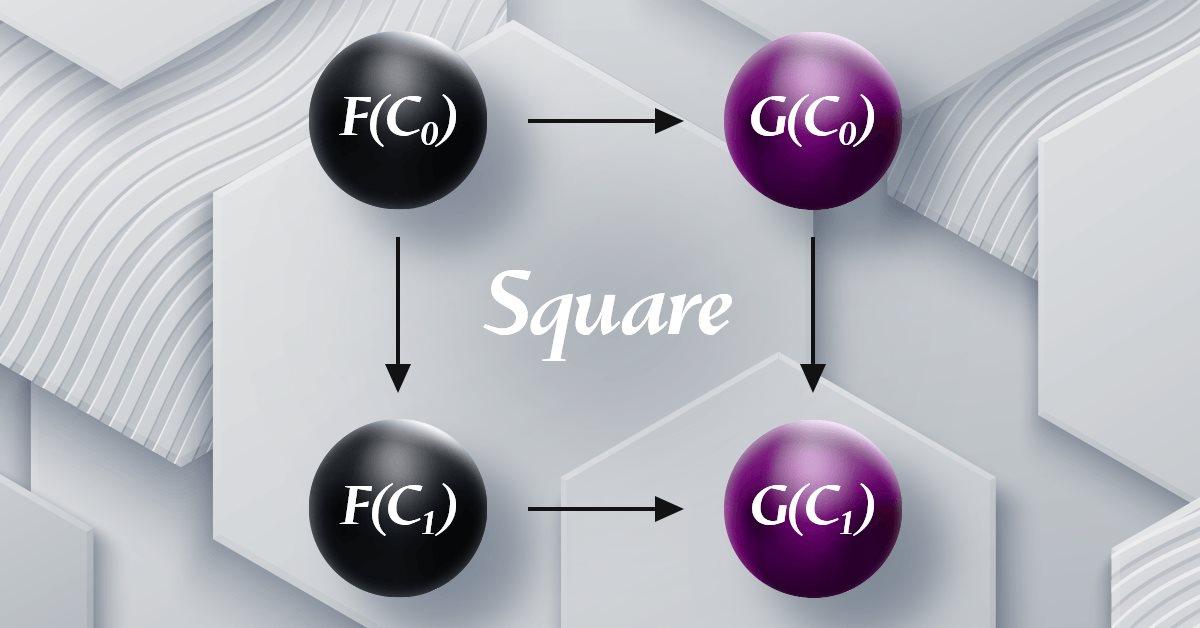
Category Theory in MQL5 (Part 19): Naturality Square Induction
We continue our look at natural transformations by considering naturality square induction. Slight restraints on multicurrency implementation for experts assembled with the MQL5 wizard mean we are showcasing our data classification abilities with a script. Principle applications considered are price change classification and thus its forecasting.


Category Theory in MQL5 (Part 21): Natural Transformations with LDA
This article, the 21st in our series, continues with a look at Natural Transformations and how they can be implemented using linear discriminant analysis. We present applications of this in a signal class format, like in the previous article.


Population optimization algorithms: Spiral Dynamics Optimization (SDO) algorithm
The article presents an optimization algorithm based on the patterns of constructing spiral trajectories in nature, such as mollusk shells - the spiral dynamics optimization (SDO) algorithm. I have thoroughly revised and modified the algorithm proposed by the authors. The article will consider the necessity of these changes.


MQL5 Wizard Techniques you should know (Part 32): Regularization
Regularization is a form of penalizing the loss function in proportion to the discrete weighting applied throughout the various layers of a neural network. We look at the significance, for some of the various regularization forms, this can have in test runs with a wizard assembled Expert Advisor.


Causal inference in time series classification problems
In this article, we will look at the theory of causal inference using machine learning, as well as the custom approach implementation in Python. Causal inference and causal thinking have their roots in philosophy and psychology and play an important role in our understanding of reality.


Market Simulation (Part 21): First Steps with SQL (IV)
Many of you may have far more experience working with databases than I do, and therefore may have a different opinion. Since it was necessary to explain why databases are designed the way they are, and why SQL has the form it does—especially why primary and foreign keys emerged—some things had to remain somewhat abstract.


MQL5 Trading Tools (Part 16): Improved Super-Sampling Anti-Aliasing (SSAA) and High-Resolution Rendering
We add supersampling‑driven anti‑aliasing and high‑resolution rendering to the MQL5 canvas dashboard, then downsample to the target size. The article implements rounded rectangle fills and borders, rounded triangle arrows, and a custom scrollbar with theming for the stats and text panels. These tools help you build smoother, more legible UI components in MetaTrader 5.


Developing a Replay System (Part 40): Starting the second phase (I)
Today we'll talk about the new phase of the replay/simulator system. At this stage, the conversation will become truly interesting and quite rich in content. I strongly recommend that you read the article carefully and use the links provided in it. This will help you understand the content better.


Developing a Replay System (Part 43): Chart Trade Project (II)
Most people who want or dream of learning to program don't actually have a clue what they're doing. Their activity consists of trying to create things in a certain way. However, programming is not about tailoring suitable solutions. Doing it this way can create more problems than solutions. Here we will be doing something more advanced and therefore different.


Spurious Regressions in Python
Spurious regressions occur when two time series exhibit a high degree of correlation purely by chance, leading to misleading results in regression analysis. In such cases, even though variables may appear to be related, the correlation is coincidental and the model may be unreliable.


Analyzing Price Time Gaps in MQL5 (Part I): Building a Basic Indicator
Time gap analysis helps traders identify potential market reversal points. The article discusses what a time gap is, how to interpret it, and how it can be used to detect large volume influxes into the market.


Economic forecasts: Exploring the Python potential
How to use World Bank economic data for forecasts? What happens when you combine AI models and economics?


Developing a Replay System (Part 46): Chart Trade Project (V)
Tired of wasting time searching for that very file that you application needs in order to work? How about including everything in the executable? This way you won't have to search for the things. I know that many people use this form of distribution and storage, but there is a much more suitable way. At least as far as the distribution of executable files and their storage is concerned. The method that will be presented here can be very useful, since you can use MetaTrader 5 itself as an excellent assistant, as well as MQL5. Furthermore, it is not that difficult to understand.


Defining your Edge (Part 1): Using a Discrete Fourier Transform and a Spiking Neural Network in a Trading Robot
In this article we make the case for pairing the Discrete Fourier Transform with a Spiking Neural Network in a Trading Robot. The Fourier Transform helps represent data as oscillations instead of its raw values. To govern how we interpret these cycles, we engage a Spiking Neural Network that unlike regular networks, uses time dependent electrical charges to accumulate potential and only "spike" when a target threshold is met. Combining these two engines allows us better control on the timing of discrete market movements, that in theory should give us entry signals with rigorous mathematical confirmation.


Dolphin Echolocation Algorithm (DEA)
In this article, we take a closer look at the DEA algorithm, a metaheuristic optimization method inspired by dolphins' unique ability to find prey using echolocation. From mathematical foundations to practical implementation in MQL5, from analysis to comparison with classical algorithms, we will examine in detail why this relatively new method deserves a place in the arsenal of researchers facing optimization problems.


Statistical Arbitrage Through Cointegrated Stocks (Part 9): Backtesting Portfolio Weights Updates
This article describes the use of CSV files for backtesting portfolio weights updates in a mean-reversion-based strategy that uses statistical arbitrage through cointegrated stocks. It goes from feeding the database with the results of a Rolling Windows Eigenvector Comparison (RWEC) to comparing the backtest reports. In the meantime, the article details the role of each RWEC parameter and its impact in the overall backtest result, showing how the comparison of the relative drawdown can help us to further improve those parameters.


Building Volatility models in MQL5 (Part I): The Initial Implementation
In this article, we present an MQL5 library for modeling volatility, designed to function similarly to Python's arch package. The library currently supports the specification of common conditional mean (HAR, AR, Constant Mean, Zero Mean) and conditional volatility (Constant Variance, ARCH, GARCH) models.


Beyond Maximum Drawdown: Building a Drawdown DNA Analyzer in MQL5
Maximum drawdown is one number that hides what really matters: how often an equity curve declines, how long it stays below a previous peak, and how quickly it recovers. This article builds a native MQL5 tool that reconstructs the underwater curve, breaks it into individual drawdown episodes (depth, duration, recovery time), computes the Ulcer Index, Pain Index, and Recovery Factor, and combines them into a single resilience grade with practical recommendations. No external libraries, no Python, no AI.


Market Simulation (Part 10): Sockets (IV)
In this article, we'll look at what you need to do to start using Excel to manage MetaTrader 5, but in a very interesting way. To do this, we will use an Excel add-in to avoid using built-in VBA. If you don't know what add-in is meant, read this article and learn how to program in Python directly in Excel.

Camel Algorithm (CA)
The Camel Algorithm, developed in 2016, simulates the behavior of camels in the desert to solve optimization problems, taking into account temperature, supply, and endurance. This article also presents a modified version of the algorithm (CAm) with key improvements: the use of a Gaussian distribution in generating solutions and the optimization of the oasis effect parameters.


Developing a Replay System (Part 29): Expert Advisor project — C_Mouse class (III)
After improving the C_Mouse class, we can focus on creating a class designed to create a completely new framework fr our analysis. We will not use inheritance or polymorphism to create this new class. Instead, we will change, or better said, add new objects to the price line. That's what we will do in this article. In the next one, we will look at how to change the analysis. All this will be done without changing the code of the C_Mouse class. Well, actually, it would be easier to achieve this using inheritance or polymorphism. However, there are other methods to achieve the same result.


An introduction to Receiver Operating Characteristic curves
ROC curves are graphical representations used to evaluate the performance of classifiers. Despite ROC graphs being relatively straightforward, there exist common misconceptions and pitfalls when using them in practice. This article aims to provide an introduction to ROC graphs as a tool for practitioners seeking to understand classifier performance evaluation.


Battle Royale Optimizer (BRO)
The article explores the Battle Royale Optimizer algorithm — a metaheuristic in which solutions compete with their nearest neighbors, accumulate “damage,” are replaced when a threshold is exceeded, and periodically shrink the search space around the current best solution. It presents both pseudocode and an MQL5 implementation of the CAOBRO class, including neighbor search, movement toward the best solution, and an adaptive delta interval. Test results on the Hilly, Forest, and Megacity functions highlight the strengths and limitations of the approach. The reader is provided with a ready-to-use foundation for experimentation and tuning key parameters such as popSize and maxDamage.


Data Science and ML (Part 44): Forex OHLC Time series Forecasting using Vector Autoregression (VAR)
Explore how Vector Autoregression (VAR) models can forecast Forex OHLC (Open, High, Low, and Close) time series data. This article covers VAR implementation, model training, and real-time forecasting in MetaTrader 5, helping traders analyze interdependent currency movements and improve their trading strategies.


Market Microstructure in MQL5 (Part 6): Order Flow
This article adds six order-flow functions and a new OrderFlowAnalysis struct to MicroStructureFoundation.mqh: VPINOHLC, signed flow imbalance, trade intensity versus a 20-session baseline, a late-minus-early smart-money index, flow momentum, and a wrapper that outputs a confidence weight. Flow confidence is gated by noise and jump intensity from Parts 5 and 4. Calibrated on 602 NQ M1 NY sessions, it provides ready-to-use intraday flow signals with documented thresholds.


Developing a Replay System (Part 67): Refining the Control Indicator
In this article, we'll look at what can be achieved with a little code refinement. This refinement is aimed at simplifying our code, making more use of MQL5 library calls and, above all, making it much more stable, secure and easy to use in other projects that we may develop in the future.


Mutual information as criteria for Stepwise Feature Selection
In this article, we present an MQL5 implementation of Stepwise Feature Selection based on the mutual information between an optimal predictor set and a target variable.


Automatic Session Volume Profile Builder in MQL5: Rendering POC and Value Area Without Third-Party Tools
Implement a session-focused volume profile in MQL5: acquire ticks with CopyTicksRange(), bin prices, and compute POC, VAH, and VAL by the 70% approach. The indicator renders directly on the chart as native objects, supports fixed-width scaling for consistent geometry across timeframes, and refreshes on each new session. This provides objective reference levels without external dependencies.


Brain Storm Optimization algorithm (Part I): Clustering
In this article, we will look at an innovative optimization method called BSO (Brain Storm Optimization) inspired by a natural phenomenon called "brainstorming". We will also discuss a new approach to solving multimodal optimization problems the BSO method applies. It allows finding multiple optimal solutions without the need to pre-determine the number of subpopulations. We will also consider the K-Means and K-Means++ clustering methods.


Developing a Replay System (Part 69): Getting the Time Right (II)
Today we will look at why we need the iSpread feature. At the same time, we will understand how the system informs us about the remaining time of the bar when there is not a single tick available for it. The content presented here is intended solely for educational purposes. Under no circumstances should the application be viewed for any purpose other than to learn and master the concepts presented.


Chemical reaction optimization (CRO) algorithm (Part I): Process chemistry in optimization
In the first part of this article, we will dive into the world of chemical reactions and discover a new approach to optimization! Chemical reaction optimization (CRO) uses principles derived from the laws of thermodynamics to achieve efficient results. We will reveal the secrets of decomposition, synthesis and other chemical processes that became the basis of this innovative method.


MQL5 Wizard Techniques you should know (Part 87): Volatility-Scaled Money Management with Monotonic Queue in MQL5
This article presents a custom MQL5 money management class that adapts position sizing to real-time volatility using a monotonic queue for O(N) sliding-window extremes. The class applies inverse volatility scaling and optionally validates risk with an RBF network. We show implementation details in the Optimize method and compare results with the inbuilt Size-Optimized class to assess latency and risk control benefits.


Market Simulation (Part 19): First Steps with SQL (II)
As we explained in the first article about SQL, there is no point in spending time programming procedures to do what is already built into SQL. However, without knowing the basics, you won’t be able to do anything with SQL or take full advantage of everything this tool offers. Therefore, in this article, we will look at how to perform basic tasks in databases.


Most notable Artificial Cooperative Search algorithm modifications (ACSm)
Here we will consider the evolution of the ACS algorithm: three modifications aimed at improving the convergence characteristics and the algorithm efficiency. Transformation of one of the leading optimization algorithms. From matrix modifications to revolutionary approaches regarding population formation.