Alphabet Profile MT5
- Indicators
-
Agus Santoso
 DISCLAIMER ON : The author of EA will not be held responsible for your losses or problems of any kind if the EA is directly or indirectly responsible for any losses.
Our software is provided “as is”, without any warranty or condition of any kind, express, implied or statutory. - Version: 1.0
- Activations: 5
MQL5 Blogs : https://www.mql5.com/en/blogs/post/770682
MT4 Version : https://www.mql5.com/en/market/product/178726
MT5 Version : https://www.mql5.com/en/market/product/178727
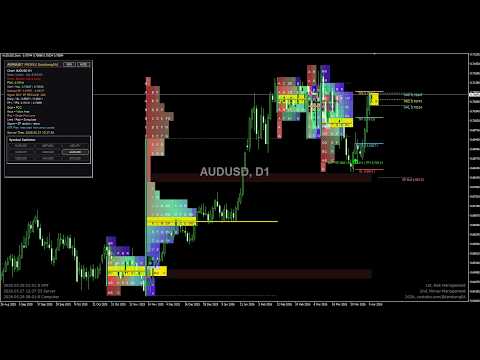
ALPHABET PROFILE [tambangEA] is an advanced chart-based market structure indicator built for traders who want to read price distribution, swing behavior, and potential reaction zones more clearly.
The indicator uses an alphabet-style TPO profile concept to display how price interacts within each swing range. Each letter represents a time-price opportunity area, helping traders identify where the market spent more time and where price moved quickly through low-acceptance zones.
This tool is designed for manual trading analysis. It does not open trades automatically. Instead, it provides visual guidance through profile zones, POC levels, value area levels, single print zones, signal arrows, and ATR-based trade plan lines.
The dashboard is designed in a premium Dark Luxury style and includes important information such as current symbol, timeframe, swing bias, POC, VAH, VAL, nearest single print zone, signal status, Entry/SL/TP levels, server time, and symbol switcher buttons.
Key Features
Alphabet TPO Profile
The indicator draws a visual alphabet profile on the chart. Each letter represents a time segment inside the swing structure. This helps traders understand where price spent more time and where price moved quickly.
Point of Control
The POC marks the price area with the highest TPO concentration. This level can act as a magnet, balance point, or important reaction area.
Value Area
The indicator displays Value Area High and Value Area Low. These levels help traders understand whether the market is trading inside a balanced area or outside the accepted value zone.
Single Print Zones
Single Print zones highlight low-acceptance areas where price moved quickly. These zones can become important retest, rejection, or reclaim areas.
Signal Arrows
The indicator can show bullish or bearish signal arrows when price sweeps and reclaims or rejects a Single Print zone. The signal is designed to help traders identify potential continuation or reversal behavior around imbalance zones.
ATR-Based Trade Plan Lines
When a valid signal appears, the indicator can display Entry, Stop Loss, TP1, and TP2 levels directly on the chart. The SL and TP levels are calculated using ATR-based distance logic, making the trade plan adaptive to current market volatility.
Premium Dashboard
The dashboard shows important live information:
Current chart symbol and timeframe
Render mode
Active swing bias
POC level
Value Area High and Low
Nearest Single Print zone
Current signal status
Entry / SL / TP1 / TP2 levels
Indicator legend
Server time
Symbol switcher
Symbol Switcher
The built-in symbol switcher allows quick chart switching between selected instruments directly from the panel. The active symbol is highlighted for easier navigation.
Draggable Panel
The dashboard can be moved around the chart. This allows traders to place the panel in a comfortable position without blocking important price action.
Minimize and Hide Buttons
The panel includes buttons to minimize or hide the dashboard when a cleaner chart view is needed.
How Traders Can Use It
ALPHABET PROFILE [tambangEA] can be used to:
Identify the current swing profile
Find the most accepted price level through POC
Detect balanced and unbalanced market areas
Monitor Value Area High and Value Area Low
Watch Single Print zones for retest or rejection
Use signal arrows as additional confirmation
Use ATR-based Entry, SL, TP1, and TP2 levels as a structured trading reference
Switch symbols quickly from the dashboard
This indicator is suitable for traders who use market profile, price action, swing analysis, support and resistance, supply and demand, or institutional-style trading concepts.