Articles on the MQL5 programming and use of trading robots

Expert Advisors created for the MetaTrader platform perform a variety of functions implemented by their developers. Trading robots can track financial symbols 24 hours a day, copy deals, create and send reports, analyze news and even provide specific custom graphical interface.
The articles describe programming techniques, mathematical ideas for data processing, tips on creating and ordering of trading robots.
Add a new article

You are missing trading opportunities:
- Free trading apps
- Over 8,000 signals for copying
- Economic news for exploring financial markets
Registration
Log in
You agree to website policy and terms of use
If you do not have an account, please register


Introduction to MQL5 (Part 28): Mastering API and WebRequest Function in MQL5 (II)
This article teaches you how to retrieve and extract price data from external platforms using APIs and the WebRequest function in MQL5. You’ll learn how URLs are structured, how API responses are formatted, how to convert server data into readable strings, and how to identify and extract specific values from JSON responses.


Trading Options Without Options (Part 4): More Complex Option Strategies
In this article, we will examine how to reduce risk (and whether it is even possible to do so) in option strategies where risk is initially unlimited. This applies to strategies based on writing options, i.e., range-bound strategies. We will also consider ways to lock in profits for option strategies based on purchasing options, i.e., trend-following strategies. As always, we will add new useful features to our Expert Advisor (EA) and improve the existing ones.

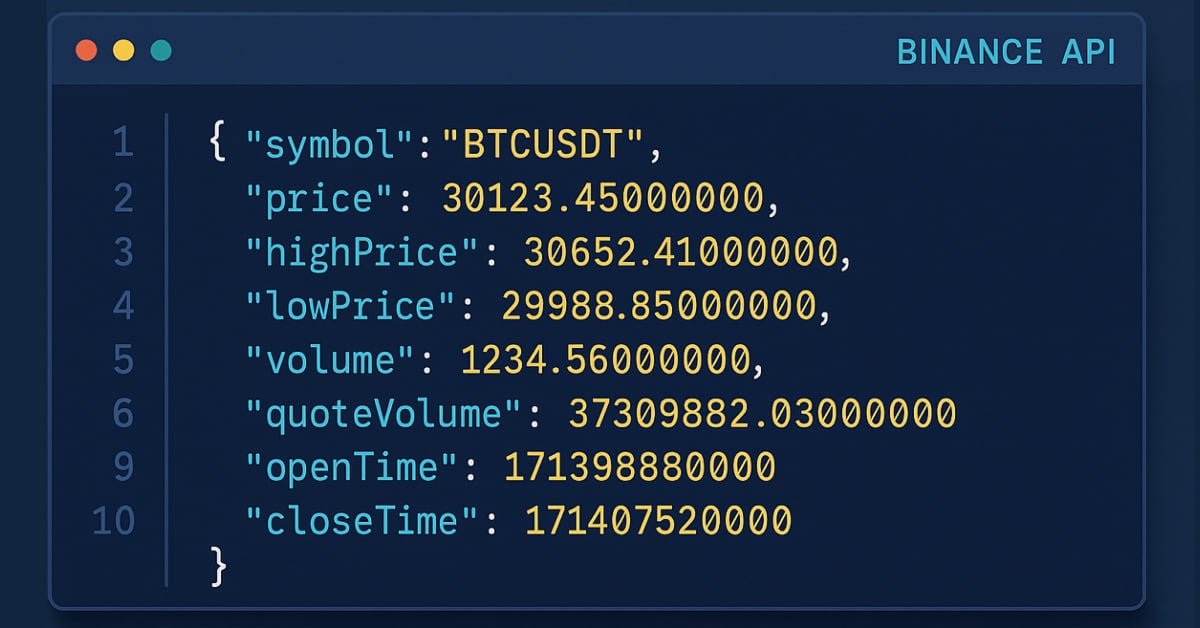
Introduction to MQL5 (Part 31): Mastering API and WebRequest Function in MQL5 (V)
Learn how to use WebRequest and external API calls to retrieve recent candle data, convert each value into a usable type, and save the information neatly in a table format. This step lays the groundwork for building an indicator that visualizes the data in candle format.


Neural networks made easy (Part 41): Hierarchical models
The article describes hierarchical training models that offer an effective approach to solving complex machine learning problems. Hierarchical models consist of several levels, each of which is responsible for different aspects of the task.


Developing a multi-currency Expert Advisor (Part 11): Automating the optimization (first steps)
To get a good EA, we need to select multiple good sets of parameters of trading strategy instances for it. This can be done manually by running optimization on different symbols and then selecting the best results. But it is better to delegate this work to the program and engage in more productive activities.


Formulating Dynamic Multi-Pair EA (Part 7): Cross-Pair Correlation Mapping for Real-Time Trade Filtering
In this part, we will integrate a real-time correlation matrix into a multi-symbol Expert Advisor to prevent redundant or risk-stacked trades. By dynamically measuring cross-pair relationships, the EA will filter entries that conflict with existing exposure, improving portfolio balance, reducing systemic risk, and enhancing overall trade quality.


Building A Candlestick Trend Constraint Model (Part 5): Notification System (Part II)
Today, we are discussing a working Telegram integration for MetaTrader 5 Indicator notifications using the power of MQL5, in partnership with Python and the Telegram Bot API. We will explain everything in detail so that no one misses any point. By the end of this project, you will have gained valuable insights to apply in your projects.


Neural Networks in Trading: Spatio-Temporal Neural Network (STNN)
In this article we will talk about using space-time transformations to effectively predict upcoming price movement. To improve the numerical prediction accuracy in STNN, a continuous attention mechanism is proposed that allows the model to better consider important aspects of the data.


Neural networks made easy (Part 89): Frequency Enhanced Decomposition Transformer (FEDformer)
All the models we have considered so far analyze the state of the environment as a time sequence. However, the time series can also be represented in the form of frequency features. In this article, I introduce you to an algorithm that uses frequency components of a time sequence to predict future states.


Data Science and ML (Part 35): NumPy in MQL5 – The Art of Making Complex Algorithms with Less Code
NumPy library is powering almost all the machine learning algorithms to the core in Python programming language, In this article we are going to implement a similar module which has a collection of all the complex code to aid us in building sophisticated models and algorithms of any kind.


Data Science and ML (Part 39): News + Artificial Intelligence, Would You Bet on it?
News drives the financial markets, especially major releases like Non-Farm Payrolls (NFPs). We've all witnessed how a single headline can trigger sharp price movements. In this article, we dive into the powerful intersection of news data and Artificial Intelligence.


Neural networks made easy (Part 72): Trajectory prediction in noisy environments
The quality of future state predictions plays an important role in the Goal-Conditioned Predictive Coding method, which we discussed in the previous article. In this article I want to introduce you to an algorithm that can significantly improve the prediction quality in stochastic environments, such as financial markets.


Developing a multi-currency Expert Advisor (Part 10): Creating objects from a string
The EA development plan includes several stages with intermediate results being saved in the database. They can only be retrieved from there again as strings or numbers, not objects. So we need a way to recreate the desired objects in the EA from the strings read from the database.


Neural Networks in Trading: Market Analysis Using a Pattern Transformer
When we use models to analyze the market situation, we mainly focus on the candlestick. However, it has long been known that candlestick patterns can help in predicting future price movements. In this article, we will get acquainted with a method that allows us to integrate both of these approaches.

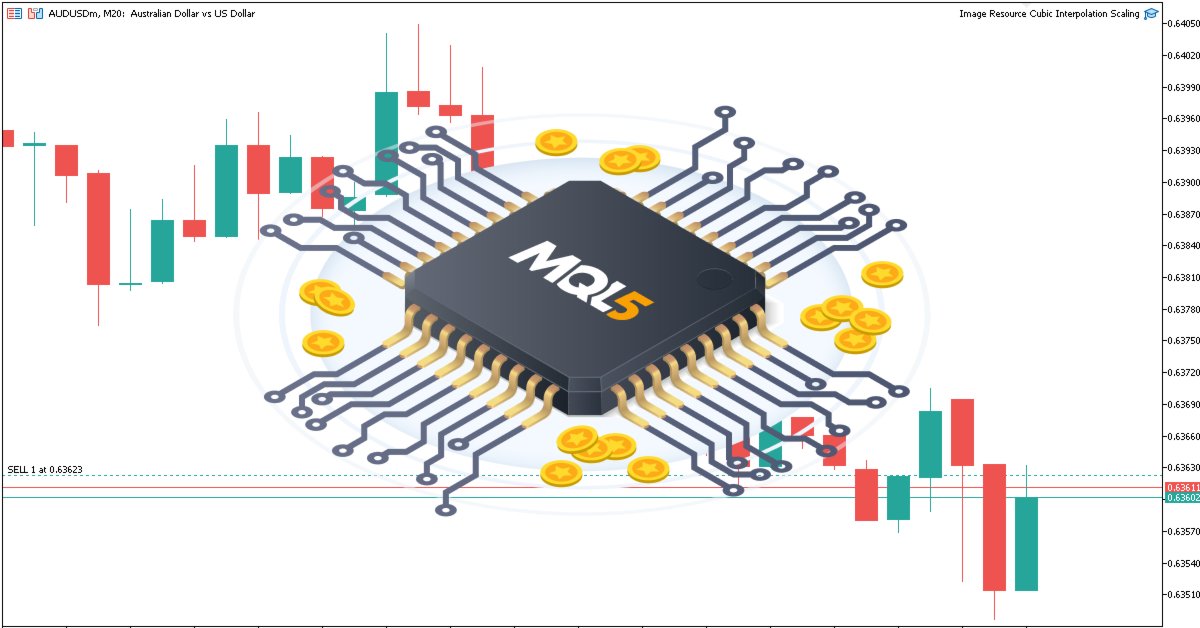
Creating Dynamic MQL5 Graphical Interfaces through Resource-Driven Image Scaling with Bicubic Interpolation on Trading Charts
In this article, we explore dynamic MQL5 graphical interfaces, using bicubic interpolation for high-quality image scaling on trading charts. We detail flexible positioning options, enabling dynamic centering or corner anchoring with custom offsets.


Neural networks made easy (Part 62): Using Decision Transformer in hierarchical models
In recent articles, we have seen several options for using the Decision Transformer method. The method allows analyzing not only the current state, but also the trajectory of previous states and actions performed in them. In this article, we will focus on using this method in hierarchical models.


Neural networks made easy (Part 64): ConserWeightive Behavioral Cloning (CWBC) method
As a result of tests performed in previous articles, we came to the conclusion that the optimality of the trained strategy largely depends on the training set used. In this article, we will get acquainted with a fairly simple yet effective method for selecting trajectories to train models.


Neural Networks in Trading: Superpoint Transformer (SPFormer)
In this article, we introduce a method for segmenting 3D objects based on Superpoint Transformer (SPFormer), which eliminates the need for intermediate data aggregation. This speeds up the segmentation process and improves the performance of the model.


From Novice to Expert: Animated News Headline Using MQL5 (VII) — Post Impact Strategy for News Trading
The risk of whipsaw is extremely high during the first minute following a high-impact economic news release. In that brief window, price movements can be erratic and volatile, often triggering both sides of pending orders. Shortly after the release—typically within a minute—the market tends to stabilize, resuming or correcting the prevailing trend with more typical volatility. In this section, we’ll explore an alternative approach to news trading, aiming to assess its effectiveness as a valuable addition to a trader’s toolkit. Continue reading for more insights and details in this discussion.


Feature Engineering With Python And MQL5 (Part II): Angle Of Price
There are many posts in the MQL5 Forum asking for help calculating the slope of price changes. This article will demonstrate one possible way of calculating the angle formed by the changes in price in any market you wish to trade. Additionally, we will answer if engineering this new feature is worth the extra effort and time invested. We will explore if the slope of the price can improve any of our AI model's accuracy when forecasting the USDZAR pair on the M1.


Neural networks made easy (Part 65): Distance Weighted Supervised Learning (DWSL)
In this article, we will get acquainted with an interesting algorithm that is built at the intersection of supervised and reinforcement learning methods.


Creating a Trading Administrator Panel in MQL5 (Part IX): Code Organization (III): Communication Module
Join us for an in-depth discussion on the latest advancements in MQL5 interface design as we unveil the redesigned Communications Panel and continue our series on building the New Admin Panel using modularization principles. We'll develop the CommunicationsDialog class step by step, thoroughly explaining how to inherit it from the Dialog class. Additionally, we'll leverage arrays and ListView class in our development. Gain actionable insights to elevate your MQL5 development skills—read through the article and join the discussion in the comments section!


MQL5 Wizard Techniques you should know (Part 59): Reinforcement Learning (DDPG) with Moving Average and Stochastic Oscillator Patterns
We continue our last article on DDPG with MA and stochastic indicators by examining other key Reinforcement Learning classes crucial for implementing DDPG. Though we are mostly coding in python, the final product, of a trained network will be exported to as an ONNX to MQL5 where we integrate it as a resource in a wizard assembled Expert Advisor.


Neural Networks Made Easy (Part 91): Frequency Domain Forecasting (FreDF)
We continue to explore the analysis and forecasting of time series in the frequency domain. In this article, we will get acquainted with a new method to forecast data in the frequency domain, which can be added to many of the algorithms we have studied previously.


Developing a multi-currency Expert Advisor (Part 9): Collecting optimization results for single trading strategy instances
Let's outline the main stages of the EA development. One of the first things to be done will be to optimize a single instance of the developed trading strategy. Let's try to collect all the necessary information about the tester passes during the optimization in one place.


Reimagining Classic Strategies (Part 14): Multiple Strategy Analysis
In this article, we continue our exploration of building an ensemble of trading strategies and using the MT5 genetic optimizer to tune the strategy parameters. Today, we analyzed the data in Python, showing our model could better predict which strategy would outperform, achieving higher accuracy than forecasting market returns directly. However, when we tested our application with its statistical models, our performance levels fell dismally. We subsequently discovered that the genetic optimizer unfortunately favored highly correlated strategies, prompting us to revise our method to keep vote weights fixed and focus optimization on indicator settings instead.


Neural Networks in Trading: Contrastive Pattern Transformer (Final Part)
In the previous last article within this series, we looked at the Atom-Motif Contrastive Transformer (AMCT) framework, which uses contrastive learning to discover key patterns at all levels, from basic elements to complex structures. In this article, we continue implementing AMCT approaches using MQL5.


MQL5 Wizard Techniques you should know (Part 53): Market Facilitation Index
The Market Facilitation Index is another Bill Williams Indicator that is intended to measure the efficiency of price movement in tandem with volume. As always, we look at the various patterns of this indicator within the confines of a wizard assembly signal class, and present a variety of test reports and analyses for the various patterns.


MQL5 Trading Tools (Part 26): Integrating Frequency Binning, Entropy, and Chi-Square in Visual Analyzer
In this article, we develop a frequency analysis tool in MQL5 that bins price data into histograms, computes entropy for information content, and applies chi-square tests for distribution goodness-of-fit, with interactive logs and statistical panels for market insights. We integrate per-bar or per-tick computation modes, supersampled rendering for smooth visuals, and draggable/resizable canvases with auto-scrolling logs to enhance usability in trading analysis.


Data label for time series mining (Part 5):Apply and Test in EA Using Socket
This series of articles introduces several time series labeling methods, which can create data that meets most artificial intelligence models, and targeted data labeling according to needs can make the trained artificial intelligence model more in line with the expected design, improve the accuracy of our model, and even help the model make a qualitative leap!


Neural networks made easy (Part 52): Research with optimism and distribution correction
As the model is trained based on the experience reproduction buffer, the current Actor policy moves further and further away from the stored examples, which reduces the efficiency of training the model as a whole. In this article, we will look at the algorithm of improving the efficiency of using samples in reinforcement learning algorithms.


Step-by-Step Implementation of a Local Stop Loss System in MQL5
This article shows how to build a local stop-loss system in an MQL5 Expert Advisor that keeps stop levels on the terminal side. It walks through the execution logic, event handlers, inputs, and an OOP design using CTrade, CPositionInfo, CHashMap/CHashSet, and chart objects. You will implement multi-position tracking, draggable stops, visual spacers and labels, plus cleanup and disconnection behavior to create a practical risk-control utility.


Neural Networks in Trading: Hierarchical Feature Learning for Point Clouds
We continue to study algorithms for extracting features from a point cloud. In this article, we will get acquainted with the mechanisms for increasing the efficiency of the PointNet method.


MQL5 Wizard Techniques you should know (Part 22): Conditional GANs
Generative Adversarial Networks are a pairing of Neural Networks that train off of each other for more accurate results. We adopt the conditional type of these networks as we look to possible application in forecasting Financial time series within an Expert Signal Class.


Price Action Analysis Toolkit Development (Part 18): Introducing Quarters Theory (III) — Quarters Board
In this article, we enhance the original Quarters Script by introducing the Quarters Board, a tool that lets you toggle quarter levels directly on the chart without needing to revisit the code. You can easily activate or deactivate specific levels, and the EA also provides trend direction commentary to help you better understand market movements.


Neural Networks in Trading: Time Series Forecasting Using Adaptive Modal Decomposition (ACEFormer)
We invite you to explore the ACEFormer architecture — a modern solution that combines the effectiveness of probabilistic attention with adaptive time series decomposition. This article will be useful for those seeking a balance between computational performance and forecast accuracy in financial markets.


MQL5 Wizard Techniques you should know (Part 65): Using Patterns of FrAMA and the Force Index
The Fractal Adaptive Moving Average (FrAMA) and the Force Index Oscillator are another pair of indicators that could be used in conjunction within an MQL5 Expert Advisor. These two indicators complement each other a little bit because FrAMA is a trend following indicator while the Force Index is a volume based oscillator. As always, we use the MQL5 wizard to rapidly explore any potential these two may have.


MQL5 Wizard Techniques you should know (Part 11): Number Walls
Number Walls are a variant of Linear Shift Back Registers that prescreen sequences for predictability by checking for convergence. We look at how these ideas could be of use in MQL5.

MQL5 Wizard Techniques you should know (Part 74): Using Patterns of Ichimoku and the ADX-Wilder with Supervised Learning
We follow up on our last article, where we introduced the indicator pair of the Ichimoku and the ADX, by looking at how this duo could be improved with Supervised Learning. Ichimoku and ADX are a support/resistance plus trend complimentary pairing. Our supervised learning approach uses a neural network that engages the Deep Spectral Mixture Kernel to fine tune the forecasts of this indicator pairing. As per usual, this is done in a custom signal class file that works with the MQL5 wizard to assemble an Expert Advisor.


Leak-Free Multi-Timeframe Engine with Closed-Bar Reads in MQL5
The article presents two systematic pitfalls in MQL5 multi‑timeframe work: indicator handle leaks that exhausted resources and repainting from reading the forming bar (index 0). It introduces MTFEngine.mqh, a unified include that creates and tracks handles in one place and defaults all reads to closed bars (index 1). A D1–H4–H1 example shows how this approach keeps signals technically correct and consistent with charts.