Articles on trading system automation in MQL5

Read articles on the trading systems with a wide variety of ideas at the core. Learn how to use statistical methods and patterns on candlestick charts, how to filter signals and where to use semaphore indicators.
The MQL5 Wizard will help you create robots without programming to quickly check your trading ideas. Use the Wizard to learn about genetic algorithms.
Add a new article

You are missing trading opportunities:
- Free trading apps
- Over 8,000 signals for copying
- Economic news for exploring financial markets
Registration
Log in
You agree to website policy and terms of use
If you do not have an account, please register


MQL5 Trading Tools (Part 24): Depth-Perception Upgrades with 3D Curves, Pan Mode, and ViewCube Navigation
In this article, we enhance the 3D binomial distribution graphing tool in MQL5 by adding a segmented 3D curve for improved depth perception of the probability mass function, integrating pan mode for view target shifting, and implementing an interactive view cube with hover zones and animations for quick orientation changes. We incorporate clickable sub-zones on the view cube for faces, edges, and corners to animate camera transitions to standard views, while maintaining switchable 2D/3D modes, real-time updates, and customizable parameters for immersive probabilistic analysis in trading.


Neural Networks in Trading: Mask-Attention-Free Approach to Price Movement Forecasting
In this article, we will discuss the Mask-Attention-Free Transformer (MAFT) method and its application in the field of trading. Unlike traditional Transformers that require data masking when processing sequences, MAFT optimizes the attention process by eliminating the need for masking, significantly improving computational efficiency.


Automating Classic Market Methods in MQL5 (Part 4): Mark Minervini's Trend Template
This article presents TrendTemplateEA, an Expert Advisor implementing Mark Minervini's eight-condition trend template for daily forex charts. It evaluates all conditions on every bar and enters only when they are simultaneously satisfied, using RSI above 50 in place of the stock market RS rating. The entry trigger is a 20-bar high breakout on expanding volume, with all rules coded and testable in MQL5.


Data Science and ML (Part 36): Dealing with Biased Financial Markets
Financial markets are not perfectly balanced. Some markets are bullish, some are bearish, and some exhibit some ranging behaviors indicating uncertainty in either direction, this unbalanced information when used to train machine learning models can be misleading as the markets change frequently. In this article, we are going to discuss several ways to tackle this issue.


Integrating Computer Vision into Trading in MQL5 (Part 2): Extending the Architecture to 2D RGB Image Analysis
Computer vision for trading: how it works and how to develop it step by step. We create an algorithm for recognition of RGB images of price charts using the attention mechanism and a bidirectional LSTM layer. As a result, we obtain a working model for forecasting the EURUSD price with the accuracy of up to 55% in the validation section.


Implementing Practical Modules from Other Languages in MQL5 (Part 04): time, date, and datetime modules from Python
Unlike MQL5, Python programming language offers control and flexibility when it comes to dealing with and manipulating time. In this article, we will implement similar modules for better handling of dates and time in MQL5 as in Python.


Overcoming The Limitation of Machine Learning (Part 7): Automatic Strategy Selection
This article demonstrates how to automatically identify potentially profitable trading strategies using MetaTrader 5. White-box solutions, powered by unsupervised matrix factorization, are faster to configure, more interpretable, and provide clear guidance on which strategies to retain. Black-box solutions, while more time-consuming, are better suited for complex market conditions that white-box approaches may not capture. Join us as we discuss how our trading strategies can help us carefully identify profitable strategies under any circumstance.


Automating Trading Strategies in MQL5 (Part 52): The tCISD Model with SSMT and Quarterly Theory
We build a tCISD program in MQL5 that pairs Quarterly Theory cycles anchored to New York time with a correlated-symbol SSMT divergence to time reversals. The article shows how to map cycles and quarters, detect the cross-symbol sweep disagreement, and derive the tCISD level whose break confirms the change in delivery. You will get a working entry logic that arms on divergence and executes on a confirmation close or a retest.


MQL5 Wizard Techniques you should know (Part 12): Newton Polynomial
Newton’s polynomial, which creates quadratic equations from a set of a few points, is an archaic but interesting approach at looking at a time series. In this article we try to explore what aspects could be of use to traders from this approach as well as address its limitations.


Developing a Replay System — Market simulation (Part 16): New class system
We need to organize our work better. The code is growing, and if this is not done now, then it will become impossible. Let's divide and conquer. MQL5 allows the use of classes which will assist in implementing this task, but for this we need to have some knowledge about classes. Probably the thing that confuses beginners the most is inheritance. In this article, we will look at how to use these mechanisms in a practical and simple way.


Implementing Partial Position Closing in MQL5
This article develops a class for managing partial position closing in MQL5 and then integrates it into an Order Blocks Expert Advisor. It also presents test results comparing the strategy with and without partial position closing, and analyzes the conditions under which this approach can help provide and maximize profit. In conclusion, partial position closing can be highly beneficial in trading strategies, especially those focused on wider price movements.


MQL5 Wizard Techniques you should know (Part 63): Using Patterns of DeMarker and Envelope Channels
The DeMarker Oscillator and the Envelope indicator are momentum and support/resistance tools that can be paired when developing an Expert Advisor. We therefore examine on a pattern by pattern basis what could be of use and what potentially avoid. We are using, as always, a wizard assembled Expert Advisor together with the Patterns-Usage functions that are built into the Expert Signal Class.


The MQL5 Standard Library Explorer (Part 11): How to Build a Matrix-Based Market Structure Indicator in MQL5
Learn to engineer an MQL5 indicator that converts trend, momentum, and volatility into a single raw score using a matrix.mqh (ALGLIB). The article covers a separate‑window oscillator to validate the core mathematics, then a main‑chart indicator that plots non‑repainting buy/sell arrows when the score crosses user‑defined thresholds. An optional long‑term EMA filter, a minimum‑bar cooldown, and built‑in alerts make the tool practical for live trading.


Population optimization algorithms: Resistance to getting stuck in local extrema (Part II)
We continue our experiment that aims to examine the behavior of population optimization algorithms in the context of their ability to efficiently escape local minima when population diversity is low and reach global maxima. Research results are provided.


The MQL5 Standard Library Explorer (Part 10): Polynomial Regression Channel
Today, we explore another component of ALGLIB, leveraging its mathematical capabilities to develop a Polynomial Regression Channel indicator. By the end of this discussion, you will gain practical insights into indicator development using the MQL5 Standard Library, along with a fully functional, mathematically driven indicator source code.


Overcoming The Limitation of Machine Learning (Part 9): Correlation-Based Feature Learning in Self-Supervised Finance
Self-supervised learning is a powerful paradigm of statistical learning that searches for supervisory signals generated from the observations themselves. This approach reframes challenging unsupervised learning problems into more familiar supervised ones. This technology has overlooked applications for our objective as a community of algorithmic traders. Our discussion, therefore, aims to give the reader an approachable bridge into the open research area of self-supervised learning and offers practical applications that provide robust and reliable statistical models of financial markets without overfitting to small datasets.


Neural Networks in Trading: Piecewise Linear Representation of Time Series
This article is somewhat different from my earlier publications. In this article, we will talk about an alternative representation of time series. Piecewise linear representation of time series is a method of approximating a time series using linear functions over small intervals.


Neural Networks in Trading: Memory Augmented Context-Aware Learning for Cryptocurrency Markets (Final Part)
The MacroHFT framework for high-frequency cryptocurrency trading uses context-aware reinforcement learning and memory to adapt to dynamic market conditions. At the end of this article, we will test the implemented approaches on real historical data to assess their effectiveness.


Neural Networks in Trading: A Cross-Domain Time Series Forecasting Framework (TimeFound)
In this article, we build the core of the TimeFound intelligent model step by step, adapting it to real-world time series forecasting tasks. If you are interested in the practical implementation of neural network patching algorithms in MQL5, you have come to the right place.


Neural networks made easy (Part 61): Optimism issue in offline reinforcement learning
During the offline learning, we optimize the Agent's policy based on the training sample data. The resulting strategy gives the Agent confidence in its actions. However, such optimism is not always justified and can cause increased risks during the model operation. Today we will look at one of the methods to reduce these risks.


Engineering Trading Discipline into Code (Part 7): Automating Equity Protection Through Governance Logic
Automated trading systems often focus heavily on signal generation while neglecting the mechanisms required to protect capital during periods of stress. This article presents an Equity Governance Framework in MQL5 that monitors drawdown conditions, evaluates equity pressure, and dynamically controls trading activity through a state-driven risk management model. By combining drawdown analysis, cooldown logic, trade authorization, and execution restrictions, the framework demonstrates how trading discipline can be engineered directly into code using a modular and extensible architecture.


Developing a Replay System (Part 47): Chart Trade Project (VI)
Finally, our Chart Trade indicator starts interacting with the EA, allowing information to be transferred interactively. Therefore, in this article, we will improve the indicator, making it functional enough to be used together with any EA. This will allow us to access the Chart Trade indicator and work with it as if it were actually connected with an EA. But we will do it in a much more interesting way than before.


Introduction to MQL5 (Part 32): Mastering API and WebRequest Function in MQL5 (VI)
This article will show you how to visualize candle data obtained via the WebRequest function and API in candle format. We'll use MQL5 to read the candle data from a CSV file and display it as custom candles on the chart, since indicators cannot directly use the WebRequest function.


Building a Trade Analytics System (Part 1): Foundation and System Architecture
We design a simple external trade analytics pipeline for MetaTrader 5 and implement its backend in Python with Flask and SQLite. The article defines the architecture, data model, and versioned API, and shows how to configure the environment, initialize the database, and run the server locally. As a result, you get a clean base to capture closed-trade records from MetaTrader 5 and store them for later analysis.


Defining your Edge (Part 1): Using a Discrete Fourier Transform and a Spiking Neural Network in a Trading Robot
In this article we make the case for pairing the Discrete Fourier Transform with a Spiking Neural Network in a Trading Robot. The Fourier Transform helps represent data as oscillations instead of its raw values. To govern how we interpret these cycles, we engage a Spiking Neural Network that unlike regular networks, uses time dependent electrical charges to accumulate potential and only "spike" when a target threshold is met. Combining these two engines allows us better control on the timing of discrete market movements, that in theory should give us entry signals with rigorous mathematical confirmation.


How to Become a Participant of Automated Trading Championship 2008?
The main purpose of the Championship is to popularize automated trading and accumulate practical information in this field of knowledge. As the Organizer of the Championship, we are doing our best to provide a fair competition and suppress all attempts to “play booty”. It is this reasoning that sets the strict Rules of the Championship.


From Novice to Expert: Systematic Profit Conservation Using Candle Range Theory
A hybrid exit engine for MQL5 replaces static TPs with CRT-derived structural levels. The CRT_ProfitConserve class secures a partial at the first level and then trails the remaining position by structural anchors rather than fixed pips. The article walks through the class API, essential methods, and example usage in EAs, providing a clear path to embed CRT-based exits into existing strategies.


MQL5 Wizard Techniques you should know (Part 34): Price-Embedding with an Unconventional RBM
Restricted Boltzmann Machines are a form of neural network that was developed in the mid 1980s at a time when compute resources were prohibitively expensive. At its onset, it relied on Gibbs Sampling and Contrastive Divergence in order to reduce dimensionality or capture the hidden probabilities/properties over input training data sets. We examine how Backpropagation can perform similarly when the RBM ‘embeds’ prices for a forecasting Multi-Layer-Perceptron.


The case for using a Composite Data Set this Q4 in weighing SPDR XLY's next performance
We consider XLY, SPDR’s consumer discretionary spending ETF and see if with tools in MetaTrader’s IDE we can sift through an array of data sets in selecting what could work with a forecasting model with a forward outlook of not more than a year.


Analyzing Price Time Gaps in MQL5 (Part I): Building a Basic Indicator
Time gap analysis helps traders identify potential market reversal points. The article discusses what a time gap is, how to interpret it, and how it can be used to detect large volume influxes into the market.


Developing a Replay System (Part 50): Things Get Complicated (II)
We will solve the chart ID problem and at the same time we will begin to provide the user with the ability to use a personal template for the analysis and simulation of the desired asset. The materials presented here are for didactic purposes only and should in no way be considered as an application for any purpose other than studying and mastering the concepts presented.


MQL5 Trading Tools (Part 16): Improved Super-Sampling Anti-Aliasing (SSAA) and High-Resolution Rendering
We add supersampling‑driven anti‑aliasing and high‑resolution rendering to the MQL5 canvas dashboard, then downsample to the target size. The article implements rounded rectangle fills and borders, rounded triangle arrows, and a custom scrollbar with theming for the stats and text panels. These tools help you build smoother, more legible UI components in MetaTrader 5.


Market Simulation (Part 04): Creating the C_Orders Class (I)
In this article, we will start creating the C_Orders class to be able to send orders to the trading server. We'll do this little by little, as our goal is to explain in detail how this will happen through the messaging system.


Neural Networks in Trading: Injection of Global Information into Independent Channels (InjectTST)
Most modern multimodal time series forecasting methods use the independent channels approach. This ignores the natural dependence of different channels of the same time series. Smart use of two approaches (independent and mixed channels) is the key to improving the performance of the models.


Analyzing the Hourly Movement of Trading Symbols and Their Spreads in MetaTrader 5
The ProSpread seasonality index indicator with a Moving Average is a technical analysis tool that identifies seasonal patterns in price movements, analyzes price behavior during specific trading hours and is able to work with either a single instrument or a spread between two assets. It also visualizes the statistical probability of directional movements.


Beyond the Clock (Part 1): Building Activity and Imbalance Bars in Python and MQL5
The article replaces clock-based sampling with López de Prado's alternative bar types and provides two aligned implementations: a unified Python module for batch tick histories and an object‑oriented MQL5 library for live EAs. It covers Parquet/Dask infrastructure, data cleaning, and a single API. Practical issues are solved explicitly: zero‑tick time‑bar filtering, imbalance threshold initialization, EWM state persistence, and parity between Python and MQL5 outputs.

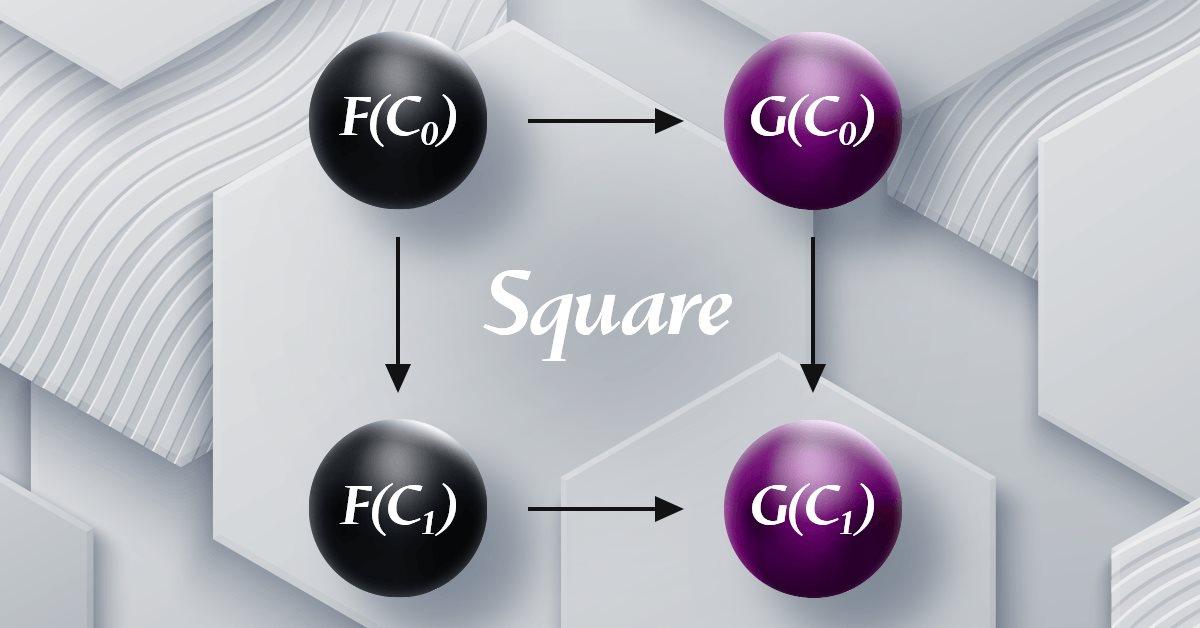
Category Theory in MQL5 (Part 19): Naturality Square Induction
We continue our look at natural transformations by considering naturality square induction. Slight restraints on multicurrency implementation for experts assembled with the MQL5 wizard mean we are showcasing our data classification abilities with a script. Principle applications considered are price change classification and thus its forecasting.


Neural Networks in Trading: Point Cloud Analysis (PointNet)
Direct point cloud analysis avoids unnecessary data growth and improves the performance of models in classification and segmentation tasks. Such approaches demonstrate high performance and robustness to perturbations in the original data.


Neural Networks in Trading: Exploring the Local Structure of Data
Effective identification and preservation of the local structure of market data in noisy conditions is a critical task in trading. The use of the Self-Attention mechanism has shown promising results in processing such data; however, the classical approach does not account for the local characteristics of the underlying structure. In this article, I introduce an algorithm capable of incorporating these structural dependencies.


Causal inference in time series classification problems
In this article, we will look at the theory of causal inference using machine learning, as well as the custom approach implementation in Python. Causal inference and causal thinking have their roots in philosophy and psychology and play an important role in our understanding of reality.