MiniBull Algorithmic Signal Engine
- Indicators
-
Yusuf Levent Aksun
 Platform Engineer и сертифицированный специалист AWS с более чем 20-летним опытом
в разработке программного обеспечения, облачной архитектуре и DevOps-трансформации.
В настоящее время руковожу инициативами платформенной инженерии в World Wide Technology - Version: 2.2
- Activations: 5
VAMA Signal Simulator scans 7 timeframes (M1-D1, weighted 5% to 30%) and scores each on 4 moving averages plus 6 oscillators, combining them into a weighted Strong Buy/Buy/Neutral/Sell/Strong Sell reading. A confirmed signal must also agree with a volatility-adaptive H4 moving average (period shortens in high volatility, lengthens in calm markets) AND both M15 and H1 trend direction.
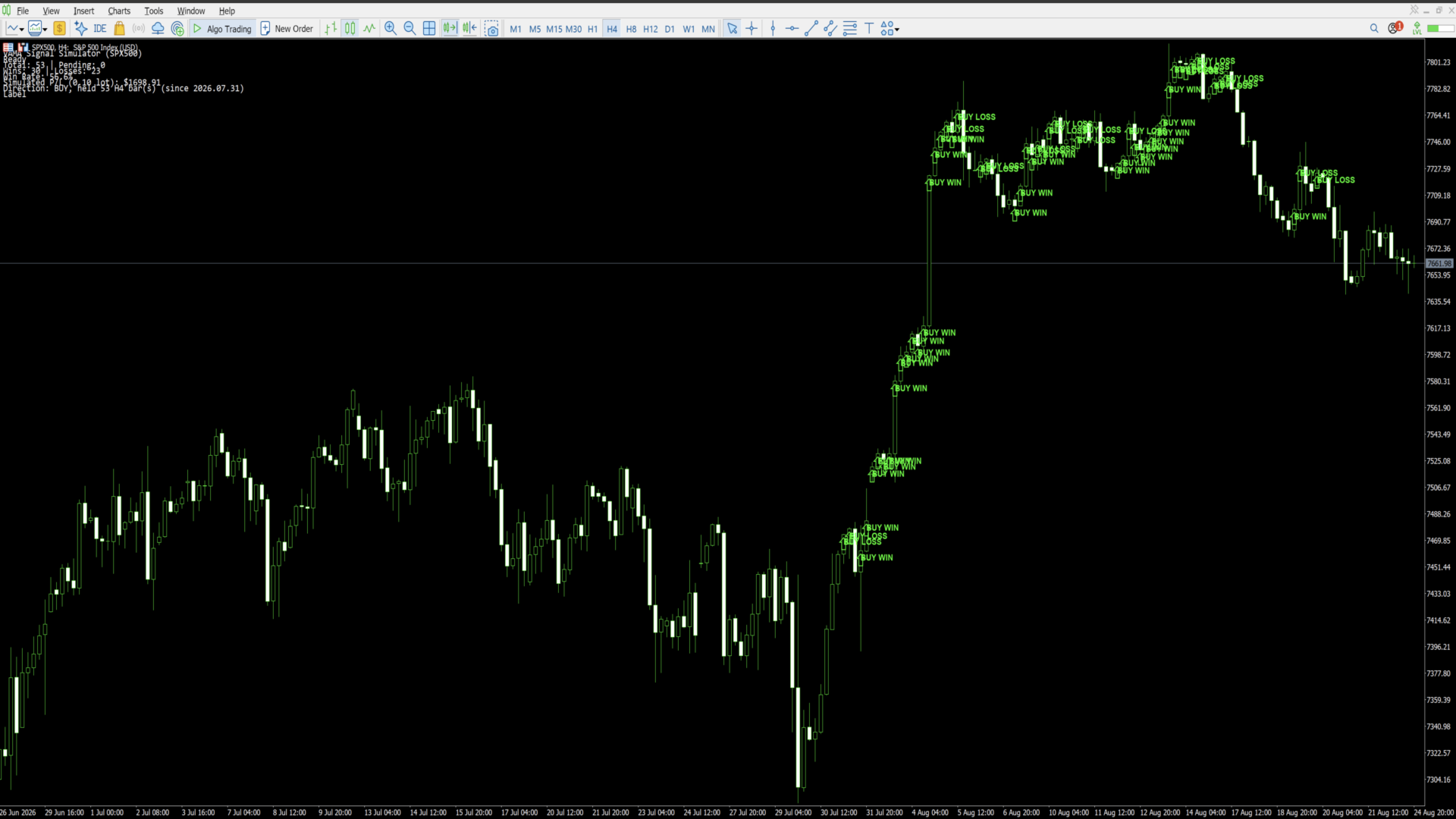
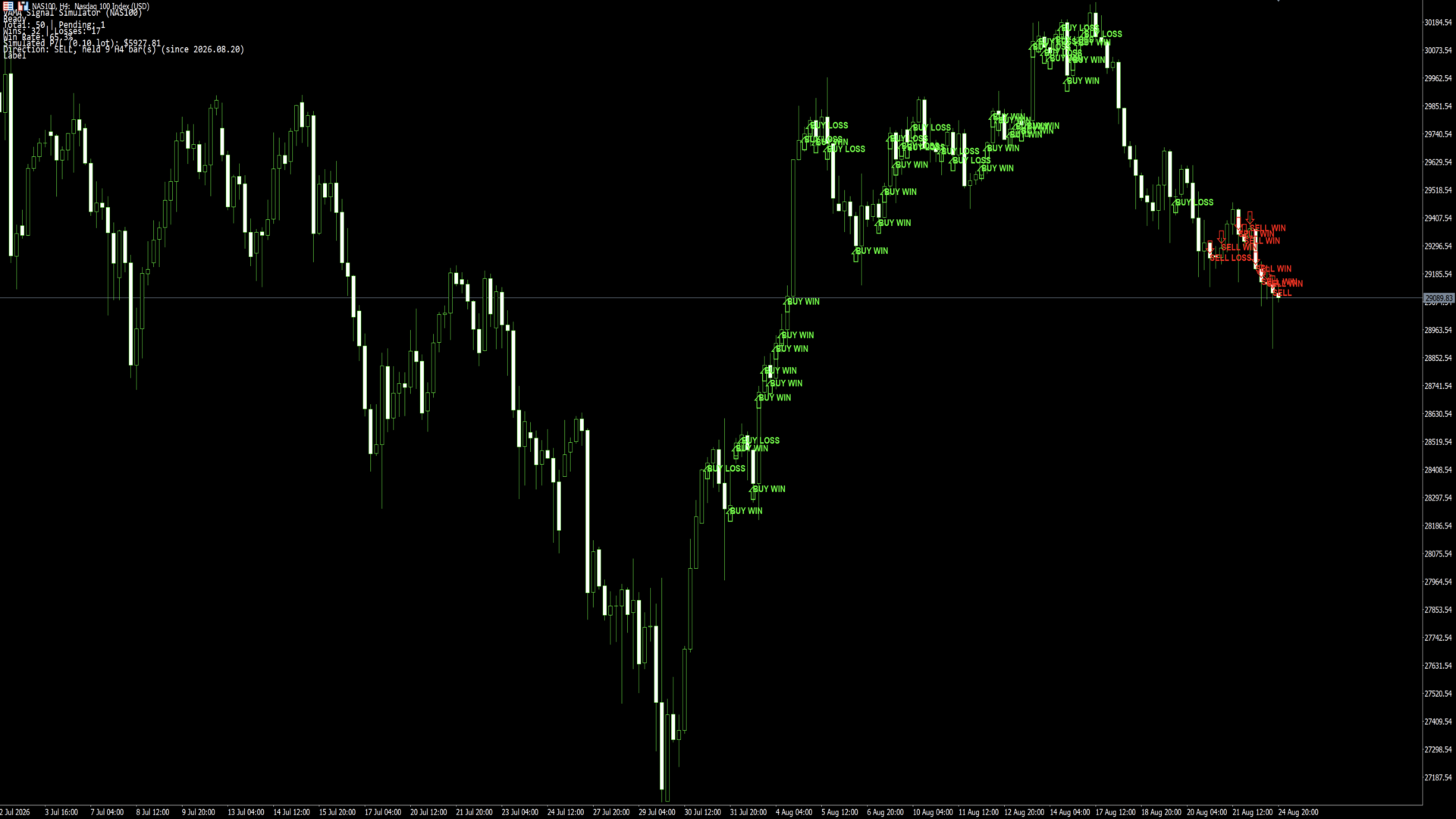
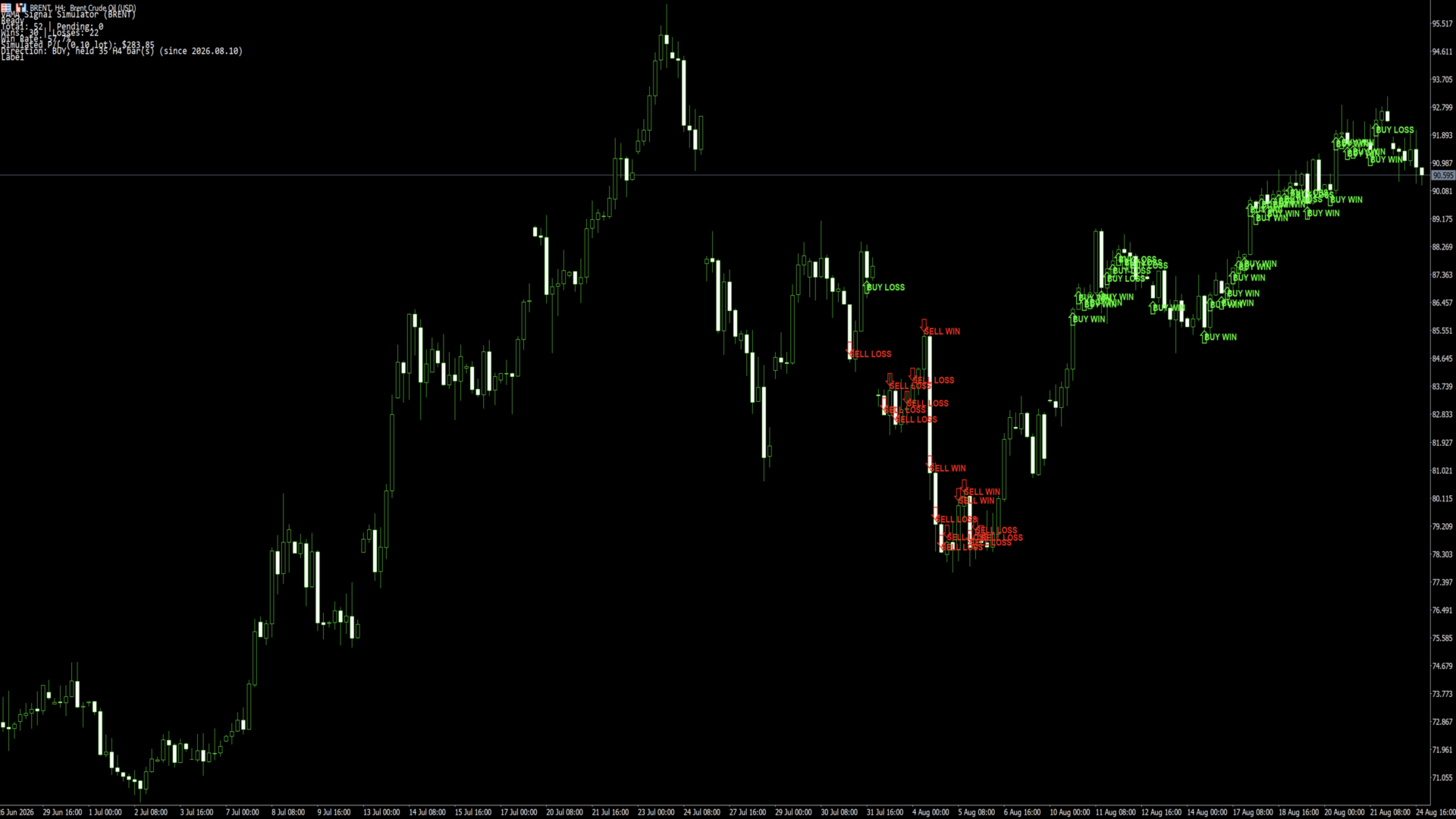
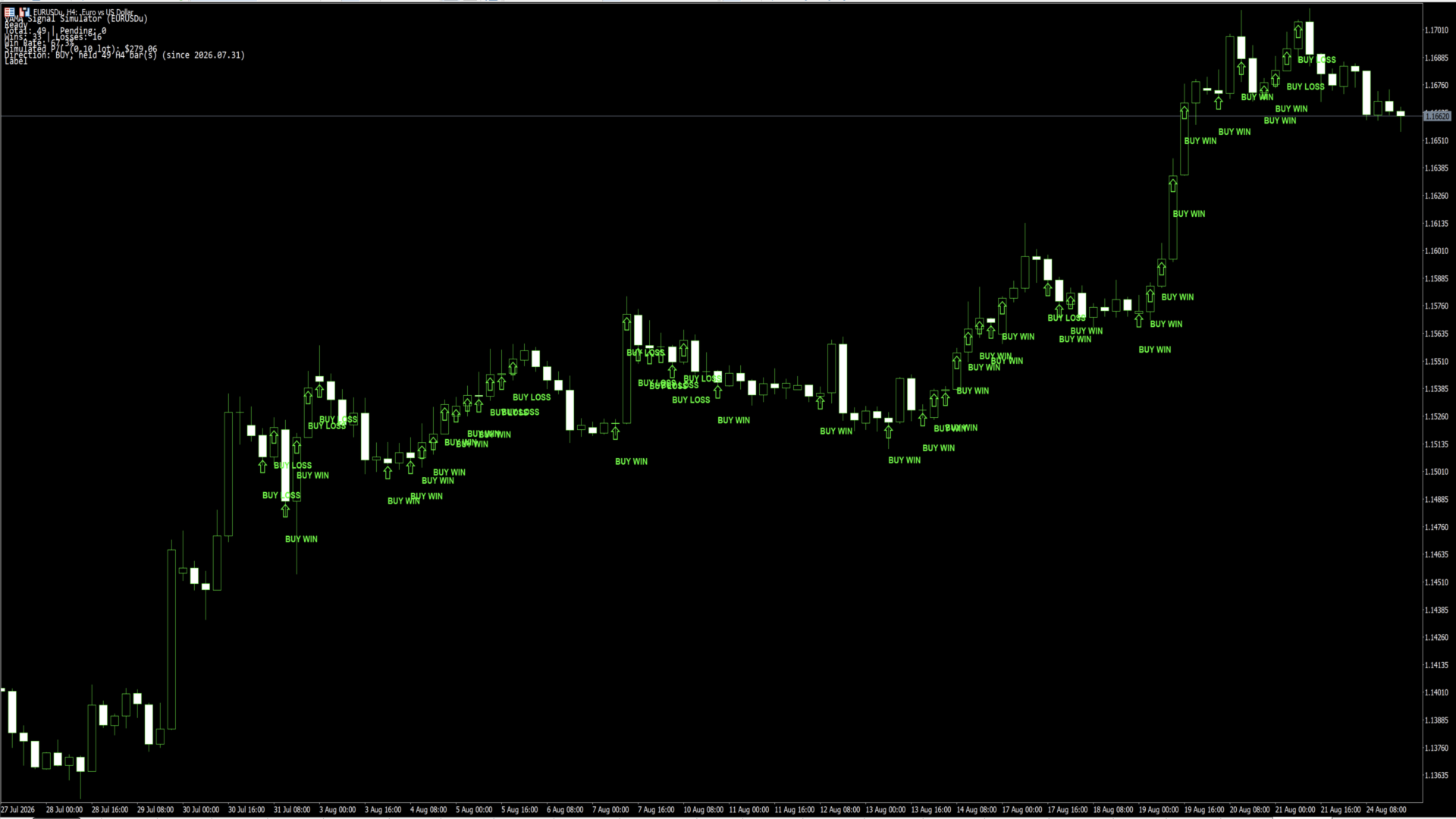
Every confirmed signal gets an arrow and a BUY/SELL label on the chart, colored by direction, plus a CSV log entry with entry price, ATR, take-profit, and stop-loss. SL and TP distances, lot size, and an optional re-entry mode (open a new trade once the prior one resolves, instead of waiting for a reversal) are all adjustable from Inputs — defaults reproduce the original 1:1 risk:reward strategy exactly, changes are clearly opt-in deviations.
The panel shows running Win/Loss/Pending counts, win rate, simulated P/L at your lot size, and how long the current direction has held.
Signal-only: never places, modifies, or closes real trades.
Moving Averages used (4 total, each compared against price for ±1 point):
- SMA(5)
- SMA(20)
- EMA(21)
- EMA(50)
Oscillators used (6 total, each ±1 point):
| Indicator | Settings | Signal rule |
|---|---|---|
| RSI | period 14 | <30 → buy, >70 → sell |
| MACD | 12, 26, 9 | main line > signal line → buy |
| Stochastic | %K=14, %D=3, slowing=1 | %K > %D → buy |
| CCI | period 20, typical price | <-100 → buy, >100 → sell |
| Williams %R | period 14 | <-80 → buy, >-20 → sell |
| Momentum | period 10 (manual: close[i]-close[i+10]) | >0 → buy |
Scoring: the 4 MAs contribute up to ±4, the 6 oscillators up to ±6, giving a total range of -10 to +10 on a single timeframe. That total is bucketed into 5 classes (Strong Sell / Sell / Neutral / Buy / Strong Buy). This calculation runs separately on all 7 timeframes (M1 through D1), and the indicator combines them into one weighted composite reading, as already covered in the description.