Minibull Logical Pro
- Experts
- Yusuf Levent Aksun
- Version: 9.18
- Updated: 12 July 2026
- Activations: 5
# MiniBull Logical Pro: a trend-fade system, tested through real market stress
## What it is
MiniBull Logical Pro is a multi-timeframe trend and false-breakout trading system, available as an MT5 Expert Advisor, a cTrader cBot, and a standalone cTrader indicator. The engine is the same across all three:
- **Monthly + Weekly trend confluence** sets the directional bias. The system only trades in the direction both higher timeframes agree on — if they disagree, no trend, no trade.
- **Daily false-breakout detection** looks for price breaking the previous day's high or low and then closing back inside that range — a classic failed-breakout pattern.
- **Multi-timeframe Moving Average reversal**, checked across seven timeframes (M15 through D1), confirms the entry. A false breakout alone isn't enough; at least one timeframe has to show the MA actually turning in the trade's direction.
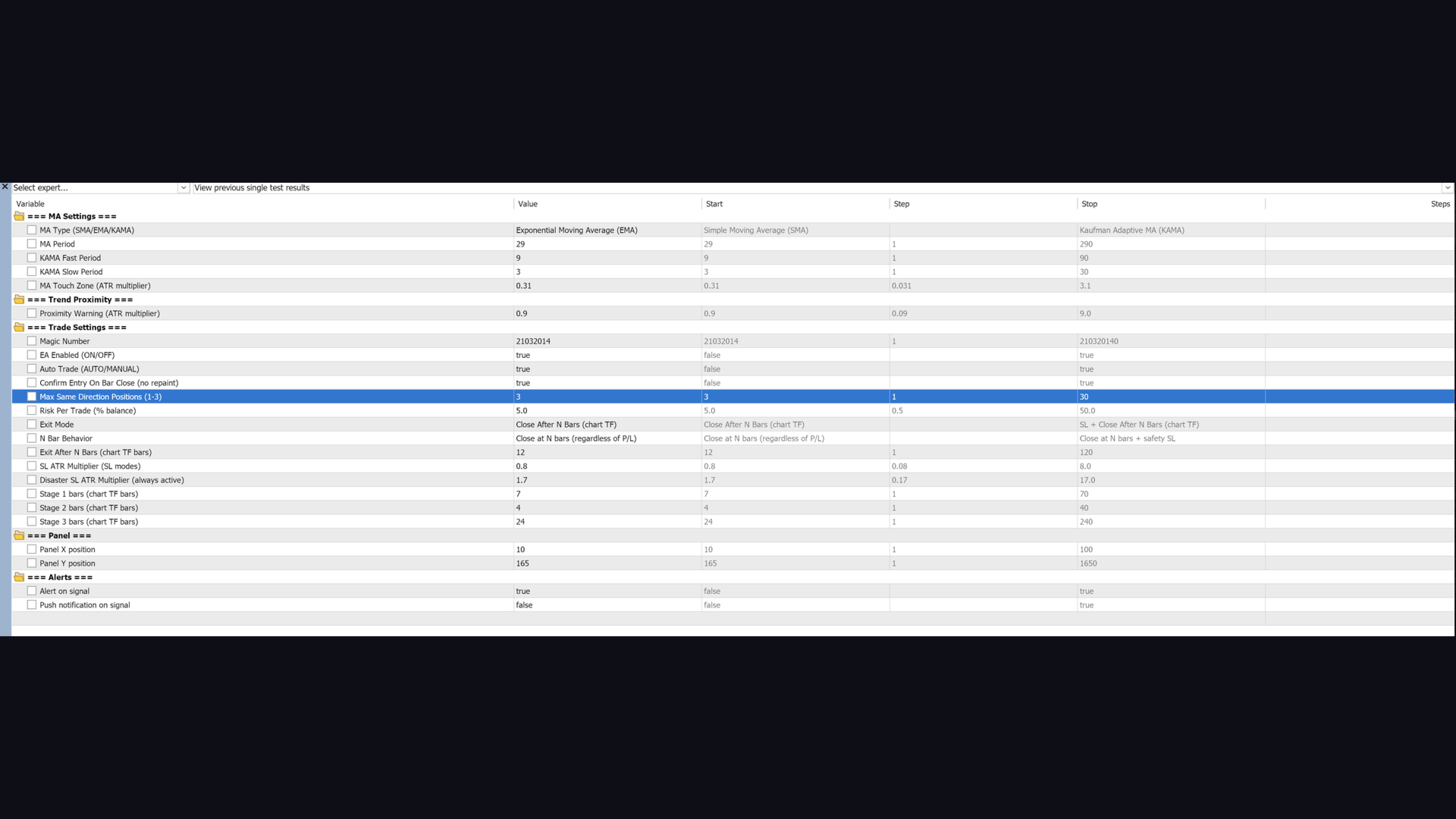
Every position is risk-based in size (a configurable percentage of account balance) and backed by an always-active Disaster Stop Loss, regardless of which exit style is chosen: a simple time-based exit, a three-stage partial close, or a stop-loss-plus-time hybrid. An optional "Confirm Entry On Bar Close" mode removes repainting entirely — once a signal is computed from a closed bar, it's locked in and never changes retroactively.
The mechanism itself gives away what kind of system this is: it's built to fade shallow pullbacks inside an established trend, not to predict direction from nothing. That shapes everything about how it performs — including, as the results below show, when it performs.
## Putting it to the test: a walk-forward split
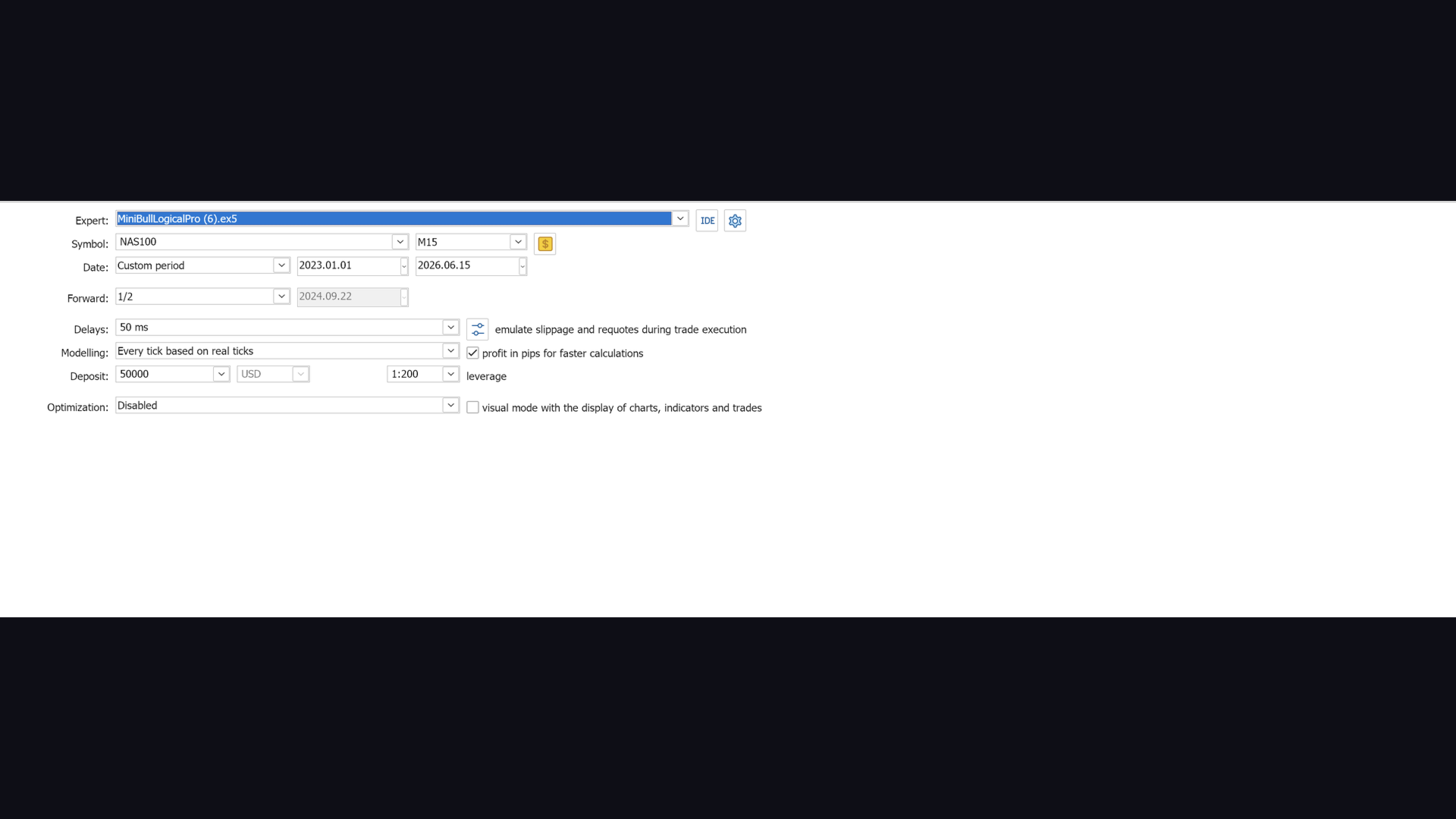
Rather than lean on a single in-sample backtest, this system was validated with a walk-forward split on NAS100 M15, using the same parameter set (the validated "Pass 1726" configuration) in both halves:
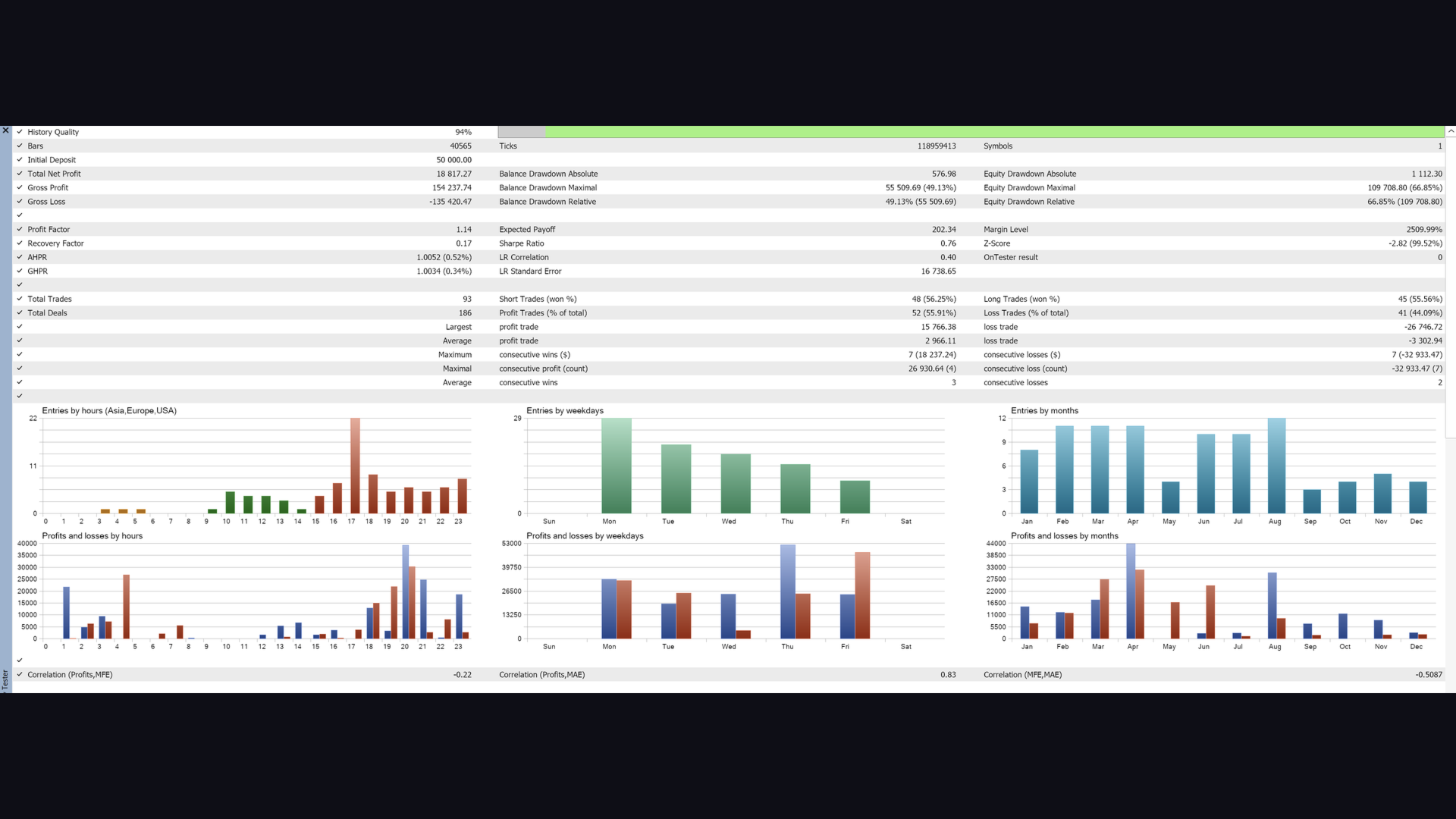
- **Backtest (in-sample):** 2023-01-01 to 2024-09-22
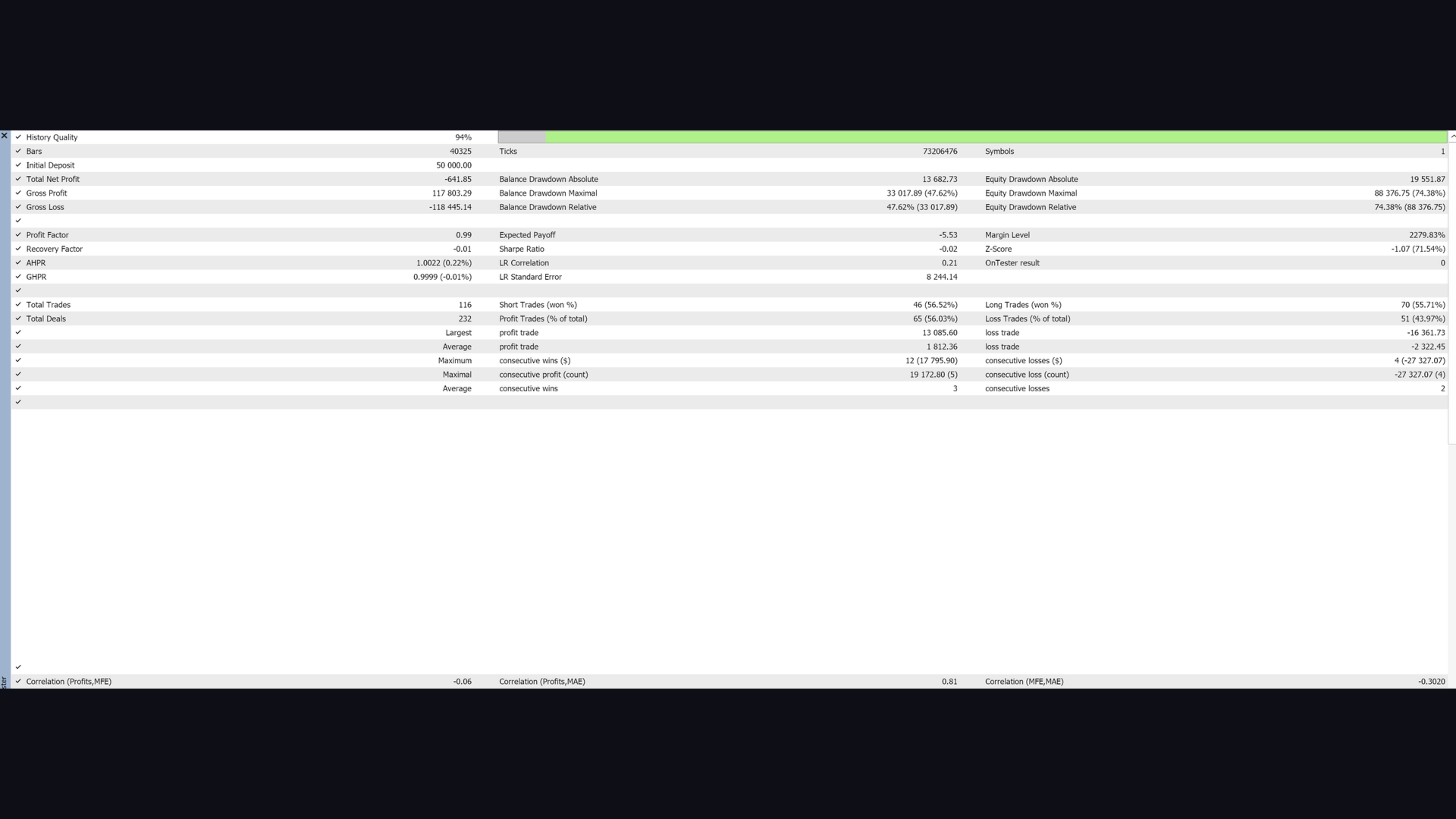
- **Forward test (out-of-sample):** 2024-09-22 to 2026-06-15
The point of a forward test is to see whether a strategy tuned on one period still holds up on data it never saw during development — and to be clear about it when it doesn't.
### How it handled specific crisis windows
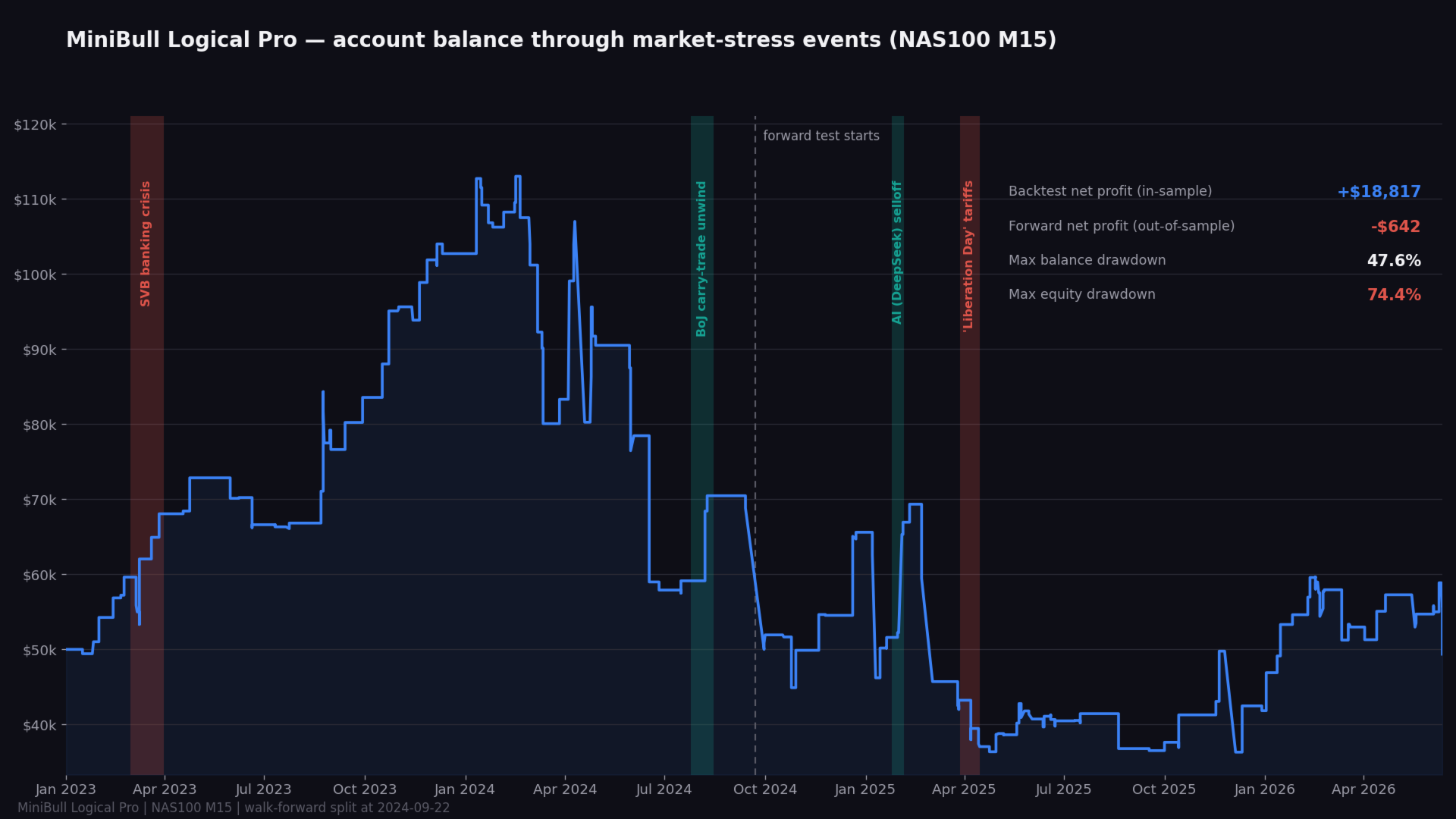
**March 2023 — SVB banking crisis.** Three losing trades in a row (-$3,762, -$876, -$1,659), then a strong recovery (+$8,710, +$2,884, +$3,135). Net positive for the month: shaken early, recovered fast.
**August 2024 — BoJ carry-trade unwind / global selloff.** All three trades in this window won (+$3,513, +$5,774, +$2,042). The strategy handled this sharp, single-event shock well.
**January–February 2025 — AI (DeepSeek) selloff.** Also all winners, including one large +$13,086 trade.
**April 2025 — "Liberation Day" tariff crash.** This one went the other way: a mix of losses (-$5,248, -$1,120, -$927) against one win (+$1,490). Net negative for the window — and it marks the start of the forward test's worst stretch.
### The bigger picture
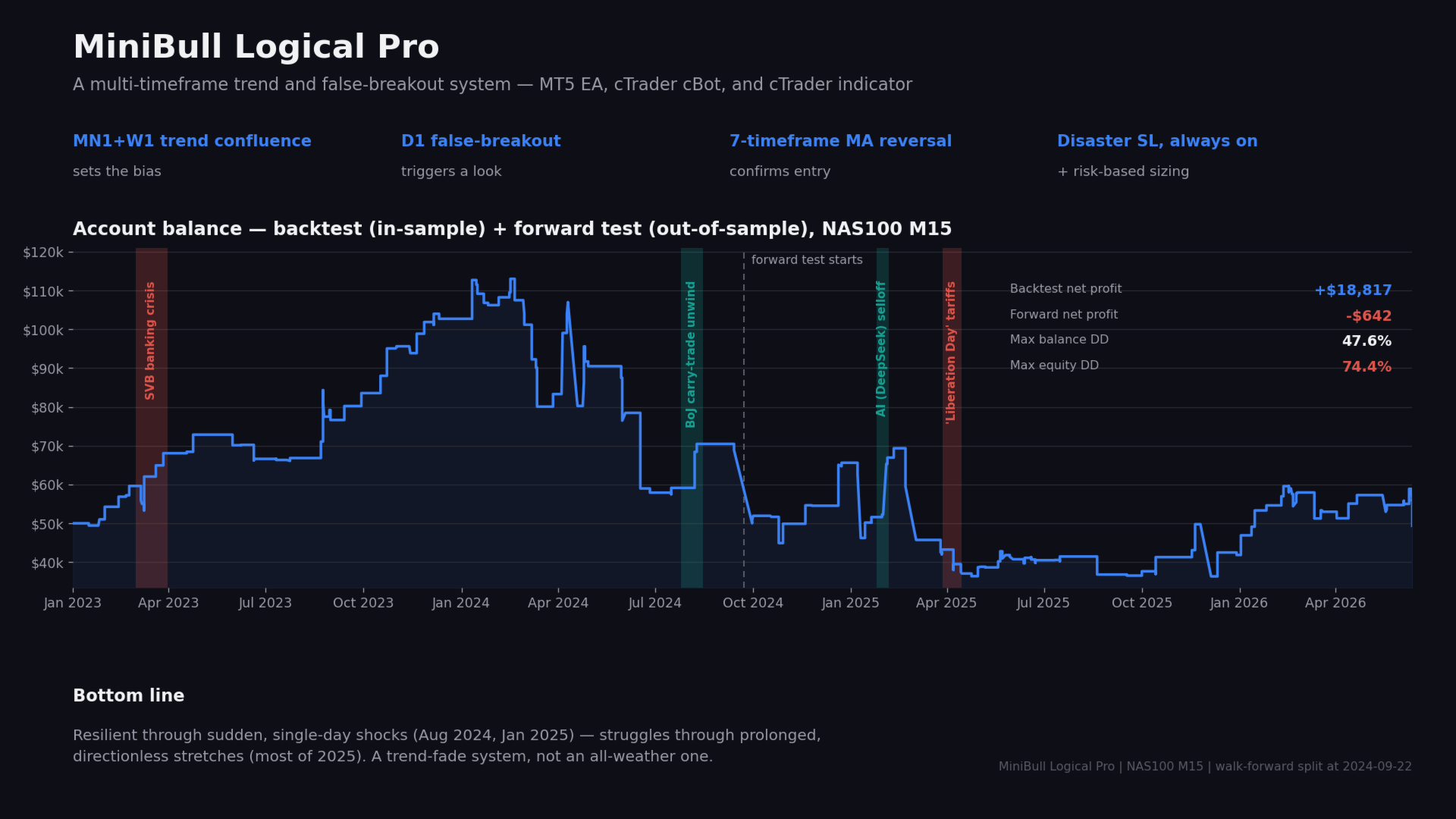
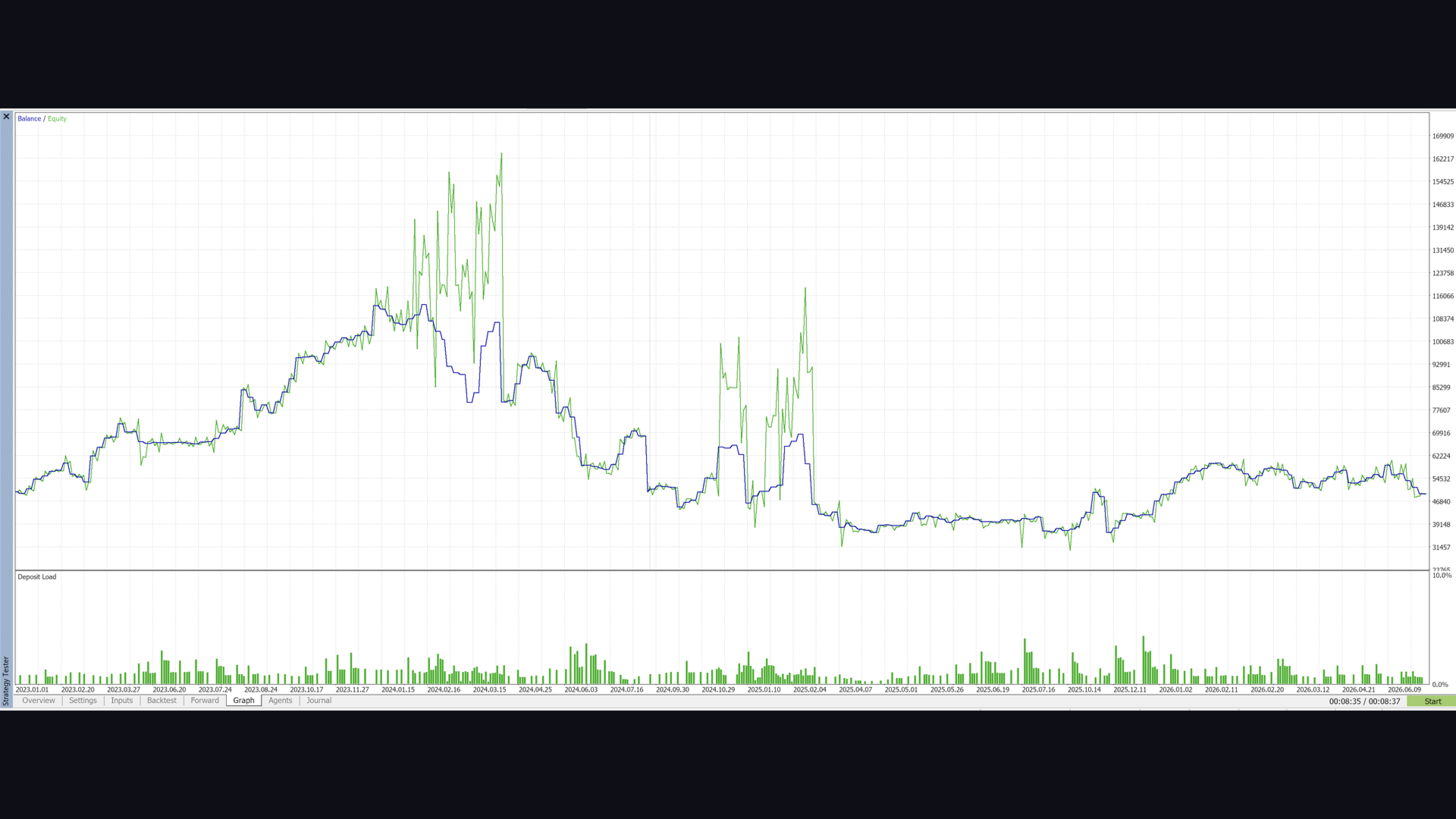
Balance grew from $50k to roughly $113k during the backtest. The forward test then ground down from a ~$65.6k peak (December 2024) to a ~$36.3k trough (December 2025) — a 47.6% balance drawdown, and a 74.4% drawdown on equity, since that figure also captures unrealized losses while a trade was still open. It partially recovered through 2026 but finished the full forward window near breakeven overall.
### Honest caveat
The extended weak stretch through most of 2025 — beyond the identifiable April tariff crash — doesn't map cleanly onto one single event. That's more likely a sustained market regime the trend-fade logic simply doesn't handle well, rather than a crisis with a name. Reliable knowledge of market events here only extends to January 2026, so nothing past that point can be confirmed with certainty — it's reported as backtest data, not verified history.
### Bottom line
The pattern is consistent: this system performs well against sudden, single-day shock events — the kind that produce a sharp move and a quick reversion (August 2024, January 2025). It struggles during prolonged, directionless, or adversarial stretches, which is most of what 2025 turned out to be in this test. It is not an all-weather system, and it isn't sold as one. Anyone using it should expect exactly this shape of performance: resilient through short, sharp shocks; vulnerable to long, grinding regimes — and should size risk and expectations accordingly.