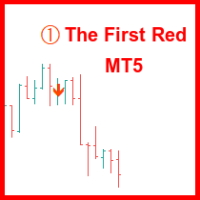
The First Red MT5
- Indicators
- Version: 1.0
- Activations: 5

1. Introduction
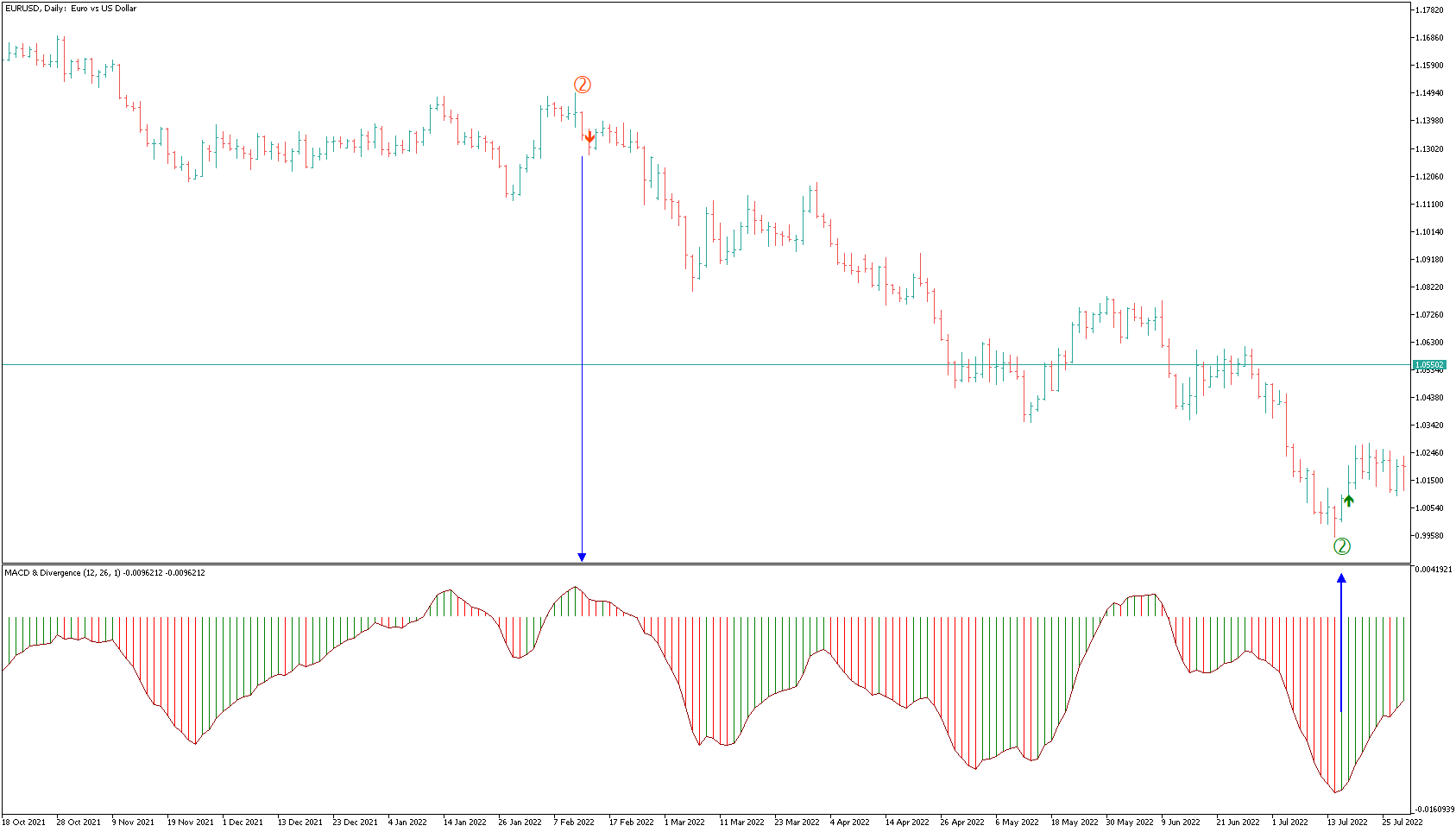
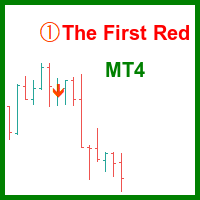
The “First Red” Indicator is a tool designed to pinpoint dynamic market turning points by combining local price extremes with signals from the MACD (Moving Average Convergence Divergence) oscillator. Based on Dariusz Dargo’s original concept, it marks specific candles on your chart that meet the conditions of the “First Red” setup or its related variants—“Second Red,” “First Green,” and “Second Green.” These classifications let traders see at a glance when momentum may be shifting.
2. Core Concepts
Local Extremes
A candle is considered a local maximum if its High is greater than the Highs of surrounding bars, and a local minimum if its Low is lower than the Lows of surrounding bars. The indicator uses a look back window to confirm that a candle’s price truly stands out above or below its neighbours.
MACD Integration
The MACD histogram helps verify whether momentum is turning bullish or bearish:
- Bearish turn: MACD values transition from rising to falling.
- Bullish turn: MACD values transition from falling to rising.
3. Signal Definitions
-
First Red
- Local Maximum + MACD Flip downward on the Same Candle
- The candle itself forms a local maximum and simultaneously causes the MACD to shift from rising to falling at its Close.
- Chart Symbol: A red number “1” above the candle.
-
Second Red
- Local Maximum on the Previous Candle + MACD Flip on the Next Candle
- The previous candle established a local maximum, but the MACD did not flip downward at that time.
- The next candle (which is lower than the previous peak) does cause the MACD to turn bearish.
- Chart Symbol: A red number “2” above the candle.
-
First Green
- Local Minimum + MACD Flip upward on the Same Candle
- The candle itself creates a local minimum and simultaneously causes the MACD to shift from falling to rising at its Close.
- Chart Symbol: A green number “1” below the candle.
-
Second Green
- Local Minimum on the Previous Candle + MACD Flip on the Next Candle
- The previous candle established a local minimum, but the MACD did not flip upward at that time.
- The next candle (which is higher than the previous trough) does cause the MACD to turn bullish.
- Chart Symbol: A green number “2” below the candle.
4. Indicator Settings
MACD_Strength
- Purpose
Sets the number of consecutive bars the MACD must move in a single direction before a reversal signal is recognized. - Logic
- For a bearish signal (red markers), the MACD must have been continuously rising for the specified number of bars (i.e., MACD_Strength) before it flips downward.
- For a bullish signal (green markers), the MACD must have been continuously falling for MACD_Strength bars before it flips upward.
- Interpretation
A larger MACD_Strength value filters out weaker moves by requiring a stronger, more sustained MACD trend prior to suggesting a reversal.
Candle_Extreme_Strength
- Purpose
Defines how many bars must be checked to confirm that the current candle is truly a local maximum or minimum. - Logic
- The indicator looks for the highest High or lowest Low within the last Candle_Extreme_Strength bars.
- If the candle in question is the highest within that window, it’s a local top; if it’s the lowest, it’s a local bottom.
- Interpretation
A higher Candle_Extreme_Strength places a stricter requirement on what qualifies as an extreme, generally indicating a more significant potential turning point.
5. Why Two Types of Signals?
- First Signals
The same bar both creates the price extreme and triggers the MACD direction change. - Second Signals
The local extreme occurs on one bar, but the MACD flip occurs on the following bar.
The “First” signals, which occur on the very candle that forms a local extreme and flips the MACD, are considered slightly stronger than the “Second” signals, which appear just one candle later. However, both “First” and “Second” signals provide robust indications of a potential market reversal.
By contrast, if the MACD change occurs multiple candles after the local extremum, the resulting signals are delayed and—according to Dariusz Dargo—are not recommended for opening new positions. These later signals often lag the actual turning point and may not offer the same trading advantage.
6. Indicator Features
- Visual Clarity
Marks candles directly on the chart with numerical labels (“1” or “2”), making it simple to identify potential turning points. - MACD-Based Confirmation
Uses the MACD oscillator to filter out weaker signals and confirm true momentum shifts. - Customization
Adjust number sizes, colours, and label placement to suit your personal trading style or chart theme.
7. Conclusion
The “First Red” Indicator offers a structured approach to spotting key market reversals using a blend of local price extremes and MACD signals. By distinguishing between “First” and “Second” candles, traders can decide whether they prefer early signals (labelled “1”) or further confirmation (labelled “2”). Fine-tune the MACD_Strength and Candle_Extreme_Strength settings to match your risk tolerance and style, and apply this indicator to any market or timeframe for a clearer picture of potential turning points.