Articles on MetaTrader 5 integration using MQL5

Traders meet interesting challenges which often require an innovative approach. This category features articles that offer the most unexpected solutions for evaluating, analyzing and processing price data and trading results. The articles describe various integration solutions, including connection of databases and ICQ, use of OpenCL and social networks, use of Delphi and C#.
Read on to learn how to use specialized mathematical and neural packages, and much more. Become an author and share unique ideas with the MQL5.community members.
Add a new article

You are missing trading opportunities:
- Free trading apps
- Over 8,000 signals for copying
- Economic news for exploring financial markets
Registration
Log in
You agree to website policy and terms of use
If you do not have an account, please register


Coral Reefs Optimization (CRO)
The article presents a comprehensive analysis of the Coral Reef Optimization (CRO) algorithm, a metaheuristic method inspired by the biological processes of coral reef formation and development. The algorithm models key aspects of coral evolution: broadcast spawning, brooding, larval settlement, asexual reproduction, and competition for limited reef space. Particular attention is paid to the improved version of the algorithm.


Royal Flush Optimization (RFO)
The original Royal Flush Optimization algorithm offers a new approach to solving optimization problems, replacing the classic binary coding of genetic algorithms with a sector-based approach inspired by poker principles. RFO demonstrates how simplifying basic principles can lead to an efficient and practical optimization method. The article presents a detailed analysis of the algorithm and test results.


Population optimization algorithms: Bird Swarm Algorithm (BSA)
The article explores the bird swarm-based algorithm (BSA) inspired by the collective flocking interactions of birds in nature. The different search strategies of individuals in BSA, including switching between flight, vigilance and foraging behavior, make this algorithm multifaceted. It uses the principles of bird flocking, communication, adaptability, leading and following to efficiently find optimal solutions.


From Novice to Expert: Animated News Headline Using MQL5 (VII) — Post Impact Strategy for News Trading
The risk of whipsaw is extremely high during the first minute following a high-impact economic news release. In that brief window, price movements can be erratic and volatile, often triggering both sides of pending orders. Shortly after the release—typically within a minute—the market tends to stabilize, resuming or correcting the prevailing trend with more typical volatility. In this section, we’ll explore an alternative approach to news trading, aiming to assess its effectiveness as a valuable addition to a trader’s toolkit. Continue reading for more insights and details in this discussion.


Creating a Trading Administrator Panel in MQL5 (Part III): Extending Built-in Classes for Theme Management (II)
In this discussion, we will carefully extend the existing Dialog library to incorporate theme management logic. Furthermore, we will integrate methods for theme switching into the CDialog, CEdit, and CButton classes utilized in our Admin Panel project. Continue reading for more insightful perspectives.


Integrating MQL5 with data processing packages (Part 4): Big Data Handling
Exploring advanced techniques to integrate MQL5 with powerful data processing tools, this part focuses on efficient handling of big data to enhance trading analysis and decision-making.


Developing a multi-currency Expert Advisor (Part 9): Collecting optimization results for single trading strategy instances
Let's outline the main stages of the EA development. One of the first things to be done will be to optimize a single instance of the developed trading strategy. Let's try to collect all the necessary information about the tester passes during the optimization in one place.


MQL5 Wizard Techniques you should know (Part 22): Conditional GANs
Generative Adversarial Networks are a pairing of Neural Networks that train off of each other for more accurate results. We adopt the conditional type of these networks as we look to possible application in forecasting Financial time series within an Expert Signal Class.

Price Driven CGI Model: Theoretical Foundation
Let's discuss the data manipulation algorithm, as we dive deeper into conceptualizing the idea of using price data to drive CGI objects. Think about transferring the effects of events, human emotions and actions on financial asset prices to a real-life model. This study delves into leveraging price data to influence the scale of a CGI object, controlling growth and emotions. These visible effects can establish a fresh analytical foundation for traders. Further insights are shared in the article.


Population optimization algorithms: Changing shape, shifting probability distributions and testing on Smart Cephalopod (SC)
The article examines the impact of changing the shape of probability distributions on the performance of optimization algorithms. We will conduct experiments using the Smart Cephalopod (SC) test algorithm to evaluate the efficiency of various probability distributions in the context of optimization problems.


Dialectic Search (DA)
The article introduces the dialectical algorithm (DA), a new global optimization method inspired by the philosophical concept of dialectics. The algorithm exploits a unique division of the population into speculative and practical thinkers. Testing shows impressive performance of up to 98% on low-dimensional problems and overall efficiency of 57.95%. The article explains these metrics and presents a detailed description of the algorithm and the results of experiments on different types of functions.


MQL5 Wizard Techniques you should know (Part 58): Reinforcement Learning (DDPG) with Moving Average and Stochastic Oscillator Patterns
Moving Average and Stochastic Oscillator are very common indicators whose collective patterns we explored in the prior article, via a supervised learning network, to see which “patterns-would-stick”. We take our analyses from that article, a step further by considering the effects' reinforcement learning, when used with this trained network, would have on performance. Readers should note our testing is over a very limited time window. Nonetheless, we continue to harness the minimal coding requirements afforded by the MQL5 wizard in showcasing this.


MetaTrader 5 Machine Learning Blueprint (Part 7): From Scattered Experiments to Reproducible Results
In the latest installment of this series, we move beyond individual machine learning techniques to address the "Research Chaos" that plagues many quantitative traders. This article focuses on the transition from ad-hoc notebook experiments to a principled, production-grade pipeline that ensures reproducibility, traceability, and efficiency.


Integrating MQL5 with Data Processing Packages (Part 7): Building Multi-Agent Environments for Cross-Symbol Collaboration
The article presents a complete Python–MQL5 integration for multi‑agent trading: MT5 data ingestion, indicator computation, per‑agent decisions, and a weighted consensus that outputs a single action. Signals are stored to JSON, served by Flask, and consumed by an MQL5 Expert Advisor for execution with position sizing and ATR‑derived SL/TP. Flask routes provide safe lifecycle control and status monitoring.


Developing a multi-currency Expert Advisor (Part 24): Adding a new strategy (II)
In this article, we will continue to connect the new strategy to the created auto optimization system. Let's look at what changes need to be made to the optimization project creation EA, as well as the second and third stage EAs.


Building A Candlestick Trend Constraint Model (Part 6): All in one integration
One major challenge is managing multiple chart windows of the same pair running the same program with different features. Let's discuss how to consolidate several integrations into one main program. Additionally, we will share insights on configuring the program to print to a journal and commenting on the successful signal broadcast on the chart interface. Find more information in this article as we progress the article series.


Creating a Trading Administrator Panel in MQL5 (Part IV): Login Security Layer
Imagine a malicious actor infiltrating the Trading Administrator room, gaining access to the computers and the Admin Panel used to communicate valuable insights to millions of traders worldwide. Such an intrusion could lead to disastrous consequences, such as the unauthorized sending of misleading messages or random clicks on buttons that trigger unintended actions. In this discussion, we will explore the security measures in MQL5 and the new security features we have implemented in our Admin Panel to safeguard against these threats. By enhancing our security protocols, we aim to protect our communication channels and maintain the trust of our global trading community. Find more insights in this article discussion.


Developing a multi-currency Expert Advisor (Part 23): Putting in order the conveyor of automatic project optimization stages (II)
We aim to create a system for automatic periodic optimization of trading strategies used in one final EA. As the system evolves, it becomes increasingly complex, so it is necessary to look at it as a whole from time to time in order to identify bottlenecks and suboptimal solutions.


How to Connect AI Agents to MQL5 Algo Forge via MCP
This article extends Part 1 by giving an AI access to the development lifecycle on MQL5 Algo Forge. We implement an MCP server over the Forgejo REST API so an agent can create repositories, commit Expert Advisors, branch from main, open pull requests, file issues, and tag releases. You will get a ready-to-run Python server, clear tools, and a safer, reversible workflow.


Artificial Coronary Circulation Algorithm (ACCS)
A metaheuristic algorithm that simulates the growth of coronary arteries in the human heart for optimization problems. It uses the principles of angiogenesis (the growth of new blood vessels), bifurcation (branching), and pruning of weak branches to find optimal solutions in a multidimensional space. Testing its effectiveness across a wide range of tasks yielded unexpected results.


MQL5 Wizard Techniques you should know (Part 82): Using Patterns of TRIX and the WPR with DQN Reinforcement Learning
In the last article, we examined the pairing of Ichimoku and the ADX under an Inference Learning framework. For this piece we revisit, Reinforcement Learning when used with an indicator pairing we considered last in ‘Part 68’. The TRIX and Williams Percent Range. Our algorithm for this review will be the Quantile Regression DQN. As usual, we present this as a custom signal class designed for implementation with the MQL5 Wizard.


Market Simulation (Part 13): Sockets (VII)
When we develop something in xlwings or any other package that allows reading and writing directly to Excel, we must note that all programs, functions, or procedures execute and then complete their task. They do not remain in a loop, no matter how hard we try to do things differently.


Position Management: Scaling Into Winners With A Falling-Risk Pyramid
We introduce CPyramidBridge, a thin MQL5 layer that maps bet-sizing results to CPyramidEngine. The bridge applies probability to initial lot sizing, enforces a capacity-aware entry gate, promotes add-ons from dynamic divergence, adapts the trailing stop to reserve estimates, and syncs signals on close, allowing an Expert Advisor to convert model confidence and concurrency into a structured, decreasing-risk pyramid.


Data Science and ML (Part 45): Forex Time series forecasting using PROPHET by Facebook Model
The Prophet model, developed by Facebook, is a robust time series forecasting tool designed to capture trends, seasonality, and holiday effects with minimal manual tuning. It has been widely adopted for demand forecasting and business planning. In this article, we explore the effectiveness of Prophet in forecasting volatility in forex instruments, showcasing how it can be applied beyond traditional business use cases.

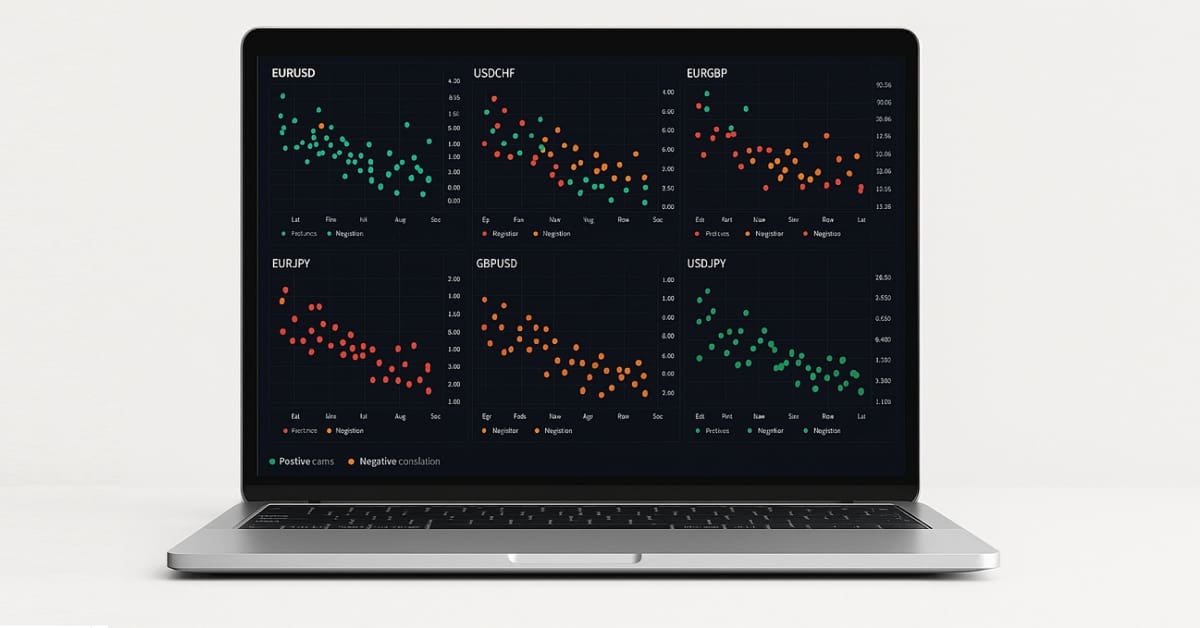
From Novice to Expert: Animated News Headline Using MQL5 (XI)—Correlation in News Trading
In this discussion, we will explore how the concept of Financial Correlation can be applied to improve decision-making efficiency when trading multiple symbols during major economic events announcement. The focus is on addressing the challenge of heightened risk exposure caused by increased volatility during news releases.


Integrating MQL5 with Data Processing Packages (Part 6): Merging Market Feedback with Model Adaptation
In this part, we focus on how to merge real-time market feedback—such as live trade outcomes, volatility changes, and liquidity shifts—with adaptive model learning to maintain a responsive and self-improving trading system.

Developing a multi-currency Expert Advisor (Part 7): Selecting a group based on forward period
Previously, we evaluated the selection of a group of trading strategy instances, with the aim of improving the results of their joint operation, only on the same time period, in which the optimization of individual instances was carried out. Let's see what happens in the forward period.


MQL5 Wizard Techniques you should know (Part 66): Using Patterns of FrAMA and the Force Index with the Dot Product Kernel
The FrAMA Indicator and the Force Index Oscillator are trend and volume tools that could be paired when developing an Expert Advisor. We continue from our last article that introduced this pair by considering machine learning applicability to the pair. We are using a convolution neural network that uses the dot-product kernel in making forecasts with these indicators’ inputs. This is done in a custom signal class file that works with the MQL5 wizard to assemble an Expert Advisor.


The base class of population algorithms as the backbone of efficient optimization
The article represents a unique research attempt to combine a variety of population algorithms into a single class to simplify the application of optimization methods. This approach not only opens up opportunities for the development of new algorithms, including hybrid variants, but also creates a universal basic test stand. This stand becomes a key tool for choosing the optimal algorithm depending on a specific task.


Developing an MQTT client for Metatrader 5: a TDD approach — Part 4
This article is the fourth part of a series describing our development steps of a native MQL5 client for the MQTT protocol. In this part, we describe what MQTT v5.0 Properties are, their semantics, how we are reading some of them, and provide a brief example of how Properties can be used to extend the protocol.


Creating a Trading Administrator Panel in MQL5 (Part XI): Modern feature communications interface (I)
Today, we are focusing on the enhancement of the Communications Panel messaging interface to align with the standards of modern, high-performing communication applications. This improvement will be achieved by updating the CommunicationsDialog class. Join us in this article and discussion as we explore key insights and outline the next steps in advancing interface programming using MQL5.

Integrating MQL5 with data processing packages (Part 1): Advanced Data analysis and Statistical Processing
Integration enables seamless workflow where raw financial data from MQL5 can be imported into data processing packages like Jupyter Lab for advanced analysis including statistical testing.


From CPU to GPU in MQL5: A Practical OpenCL Framework for Accelerating Research, Optimizations, and Patterns
Find out how to build a practical CPU-to-GPU migration path in MQL5 using OpenCL. We will focus on context initialization, buffer organization, large batches, kernel startup, and minimizing data exchanges. Typical errors and ways to eliminate them will be considered as well. An example with candlestick patterns illustrates the practical benefit of the approach.


MQL5 Wizard Techniques you should know (Part 85): Using Patterns of Stochastic-Oscillator and the FrAMA with Beta VAE Inference Learning
This piece follows up ‘Part-84’, where we introduced the pairing of Stochastic and the Fractal Adaptive Moving Average. We now shift focus to Inference Learning, where we look to see if laggard patterns in the last article could have their fortunes turned around. The Stochastic and FrAMA are a momentum-trend complimentary pairing. For our inference learning, we are revisiting the Beta algorithm of a Variational Auto Encoder. We also, as always, do the implementation of a custom signal class designed for integration with the MQL5 Wizard.


MQL5 Wizard Techniques you should know (Part 76): Using Patterns of Awesome Oscillator and the Envelope Channels with Supervised Learning
We follow up on our last article, where we introduced the indicator couple of the Awesome-Oscillator and the Envelope Channel, by looking at how this pairing could be enhanced with Supervised Learning. The Awesome-Oscillator and Envelope-Channel are a trend-spotting and support/resistance complimentary mix. Our supervised learning approach is a CNN that engages the Dot Product Kernel with Cross-Time-Attention to size its kernels and channels. As per usual, this is done in a custom signal class file that works with the MQL5 wizard to assemble an Expert Advisor.


Using the MQL5 Economic Calendar for News Filter (Part 3): Surviving Terminal Restarts During News Window
The article introduces a restart-safe storage model for news-time stop removal. Suspension state and original SL/TP per position are written to terminal global variables, reconstructed on OnInit, and cleaned after restoration. This lets the EA resume an active suspension window after recompiles or restarts and restore stops only when the news window ends.


MQL5 Wizard Techniques you should know (Part 62): Using Patterns of ADX and CCI with Reinforcement-Learning TRPO
The ADX Oscillator and CCI oscillator are trend following and momentum indicators that can be paired when developing an Expert Advisor. We continue where we left off in the last article by examining how in-use training, and updating of our developed model, can be made thanks to reinforcement-learning. We are using an algorithm we are yet to cover in these series, known as Trusted Region Policy Optimization. And, as always, Expert Advisor assembly by the MQL5 Wizard allows us to set up our model(s) for testing much quicker and also in a way where it can be distributed and tested with different signal types.


Introduction to MQL5 (Part 30): Mastering API and WebRequest Function in MQL5 (IV)
Discover a step-by-step tutorial that simplifies the extraction, conversion, and organization of candle data from API responses within the MQL5 environment. This guide is perfect for newcomers looking to enhance their coding skills and develop robust strategies for managing market data efficiently.


Market Simulation (Part 16): Sockets (X)
We are close to completing this challenge. However, before we begin, I want you to try to understand these two articles—this one and the previous one. That way, you will truly understand the next article, in which I will cover exclusively the part related to MQL5 programming. But I will also try to make it understandable. If you do not understand these last two articles, it will be difficult for you to understand the next one, because the material accumulates. The more things there are to do, the more you need to create and understand in order to achieve the goal.


An Introduction to the Study of Fractal Market Structures Using Machine Learning
The article attempts to examine financial time series from the perspective of self-similar fractal structures. Since we have too many analogies that confirm the possibility of considering market quotes as self-similar fractals, this allows us to think about the forecasting horizons of such structures.