MQL4 and MQL5 Programming Articles

Study the MQL5 language for programming trading strategies in numerous published articles mostly written by you - the community members. The articles are grouped into categories to help you quicker find answers to any questions related to programming: Integration, Tester, Trading Strategies, etc.
Follow our new publications and discuss them on the Forum!
Add a new article

You are missing trading opportunities:
- Free trading apps
- Over 8,000 signals for copying
- Economic news for exploring financial markets
Registration
Log in
You agree to website policy and terms of use
If you do not have an account, please register


Category Theory in MQL5 (Part 5): Equalizers
Category Theory is a diverse and expanding branch of Mathematics which is only recently getting some coverage in the MQL5 community. These series of articles look to explore and examine some of its concepts & axioms with the overall goal of establishing an open library that provides insight while also hopefully furthering the use of this remarkable field in Traders' strategy development.


Category Theory in MQL5 (Part 22): A different look at Moving Averages
In this article we attempt to simplify our illustration of concepts covered in these series by dwelling on just one indicator, the most common and probably the easiest to understand. The moving average. In doing so we consider significance and possible applications of vertical natural transformations.


Machine Learning Under Constraint (Part 2): Calibrating Position Size to the Remaining Drawdown Budget
We present a rule-set-aware calibration chain that turns the remaining risk budget into a calibrated sigmoid scale for position sizing. It computes a ceiling from stop loss pct and safety factor, back-solves w at a reference divergence, and flattens size progressively as the budget shrinks. The paper also clarifies where leverage caps must be applied in production: at the lots conversion, since risk-based sizing alone does not enforce max leverage.


From Novice to Expert: Extending a Liquidity Strategy with Trend Filters
The article extends a liquidity-based strategy with a simple trend constraint: trade liquidity zones only in the direction of the EMA(50). It explains filtering rules, presents a reusable TrendFilter.mqh class and EA integration in MQL5, and compares baseline versus filtered tests. Readers gain a clear directional bias, reduced overtrading in countertrend phases, and ready-to-use source files.


Cross-validation and basics of causal inference in CatBoost models, export to ONNX format
The article proposes the method of creating bots using machine learning.


MQL5 Trading Tools (Part 31): Creating an Interactive Tools Palette in MQL5
We turn the Tools Palette sidebar from a static shell into an interactive MQL5 system. The article implements flyout menus per category, a chart event handler, a multi-click drawing engine (one-, two-, and three-click tools), and mouse interactions including drag, bottom-edge resize, scrolling, hover states, and live theme toggling. You will be able to select a tool and place chart objects directly from the palette for analysis


Trading with the MQL5 Economic Calendar (Part 8): Optimizing News-Driven Backtesting with Smart Event Filtering and Targeted Logs
In this article, we optimize our economic calendar with smart event filtering and targeted logging for faster, clearer backtesting in live and offline modes. We streamline event processing and focus logs on critical trade and dashboard events, enhancing strategy visualization. These improvements enable seamless testing and refinement of news-driven trading strategies.


The Power of MetaTrader 5: From Step-by-Step Debugging to EX5 Protection in a Unified Environment
This article examines a comprehensive approach to developing trading algorithms: from project setup and logic debugging to protecting the finished product. We will explore MetaEditor's built-in tools, including step-by-step debugging using real ticks, performance profiling, and direct integration with C++ DLLs to speed up calculations. The article also explains how to protect intellectual property using MQL5 Cloud Protector. The application of the described techniques will transform Expert Advisor development from a chaotic search for solutions into a systematic process, significantly reducing the time required to develop a strategy.

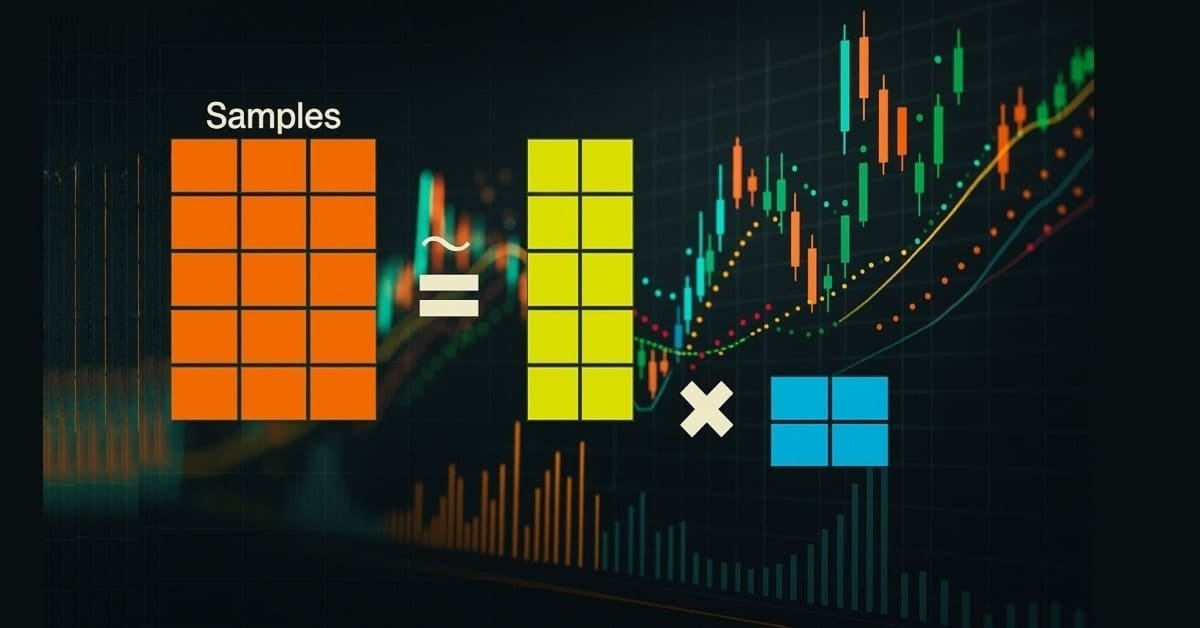
Self Optimizing Expert Advisors in MQL5 (Part 13): A Gentle Introduction To Control Theory Using Matrix Factorization
Financial markets are unpredictable, and trading strategies that look profitable in the past often collapse in real market conditions. This happens because most strategies are fixed once deployed and cannot adapt or learn from their mistakes. By borrowing ideas from control theory, we can use feedback controllers to observe how our strategies interact with markets and adjust their behavior toward profitability. Our results show that adding a feedback controller to a simple moving average strategy improved profits, reduced risk, and increased efficiency, proving that this approach has strong potential for trading applications.


Developing a Replay System — Market simulation (Part 10): Using only real data for Replay
Here we will look at how we can use more reliable data (traded ticks) in the replay system without worrying about whether it is adjusted or not.


Creating Custom Indicators in MQL5 (Part 5): WaveTrend Crossover Evolution Using Canvas for Fog Gradients, Signal Bubbles, and Risk Management
In this article, we enhance the Smart WaveTrend Crossover indicator in MQL5 by integrating canvas-based drawing for fog gradient overlays, signal boxes that detect breakouts, and customizable buy/sell bubbles or triangles for visual alerts. We incorporate risk management features with dynamic take-profit and stop-loss levels calculated via candle multipliers or percentages, displayed through lines and a table, alongside options for trend filtering and box extensions.


Larry Williams Market Secrets (Part 15): Trading Hidden Smash Day Reversals with Market Context
Build an MQL5 Expert Advisor that automates Larry Williams Hidden Smash Day reversals. It reads confirmed signals from a custom indicator, applies context filters (Supertrend alignment and optional trading‑day rules), and manages risk with stop‑loss models based on smash‑bar structure or ATR and a fixed or risk‑based position size. The result is a reproducible framework ready for testing and extension.


Neural Networks in Trading: Controlled Segmentation (Final Part)
We continue the work started in the previous article on building the RefMask3D framework using MQL5. This framework is designed to comprehensively study multimodal interaction and feature analysis in a point cloud, followed by target object identification based on a description provided in natural language.


Neural Networks in Trading: Contrastive Pattern Transformer
The Contrastive Transformer is designed to analyze markets both at the level of individual candlesticks and based on entire patterns. This helps improve the quality of market trend modeling. Moreover, the use of contrastive learning to align representations of candlesticks and patterns fosters self-regulation and improves the accuracy of forecasts.


MQL5 Wizard Techniques you should know (Part 49): Reinforcement Learning with Proximal Policy Optimization
Proximal Policy Optimization is another algorithm in reinforcement learning that updates the policy, often in network form, in very small incremental steps to ensure the model stability. We examine how this could be of use, as we have with previous articles, in a wizard assembled Expert Advisor.


Python-MetaTrader 5 Strategy Tester (Part 02): Dealing with Bars, Ticks, and Overloading Built-in Functions in a Simulator
In this article, we introduce functions similar to those provided by the Python-MetaTrader 5 module, providing a simulator with a familiar interface and a custom way of handling bars and ticks internally.


From Novice to Expert: Animated News Headline Using MQL5 (I)
News accessibility is a critical factor when trading on the MetaTrader 5 terminal. While numerous news APIs are available, many traders face challenges in accessing and integrating them effectively into their trading environment. In this discussion, we aim to develop a streamlined solution that brings news directly onto the chart—where it’s most needed. We'll accomplish this by building a News Headline Expert Advisor that monitors and displays real-time news updates from API sources.


Developing a Replay System — Market simulation (Part 14): Birth of the SIMULATOR (IV)
In this article we will continue the simulator development stage. this time we will see how to effectively create a RANDOM WALK type movement. This type of movement is very intriguing because it forms the basis of everything that happens in the capital market. In addition, we will begin to understand some concepts that are fundamental to those conducting market analysis.


Optimizing Trend Strength: Trading in Trend Direction and Strength
This is a specialized trend-following EA that makes both short and long-term analyses, trading decisions, and executions based on the overall trend and its strength. This article will explore in detail an EA that is specifically designed for traders who are patient, disciplined, and focused enough to only execute trades and hold their positions only when trading with strength and in the trend direction without changing their bias frequently, especially against the trend, until take-profit targets are hit.


A Generic Optimization Formulation (GOF) to Implement Custom Max with Constraints
In this article we will present a way to implement optimization problems with multiple objectives and constraints when selecting "Custom Max" in the Setting tab of the MetaTrader 5 terminal. As an example, the optimization problem could be: Maximize Profit Factor, Net Profit, and Recovery Factor, such that the Draw Down is less than 10%, the number of consecutive losses is less than 5, and the number of trades per week is more than 5.


Exploring Conformal Forecasting of Financial Time Series
In this article, we will consider conformal predictions and the MAPIE library that implements them. This approach is one of the most modern ones in machine learning and allows us to focus on risk management for existing diverse machine learning models. Conformal predictions, by themselves, are not a way to find patterns in data. They only determine the degree of confidence of existing models in predicting specific examples and allow filtering for reliable predictions.


Neural networks made easy (Part 51): Behavior-Guided Actor-Critic (BAC)
The last two articles considered the Soft Actor-Critic algorithm, which incorporates entropy regularization into the reward function. This approach balances environmental exploration and model exploitation, but it is only applicable to stochastic models. The current article proposes an alternative approach that is applicable to both stochastic and deterministic models.


Propensity score in causal inference
The article examines the topic of matching in causal inference. Matching is used to compare similar observations in a data set. This is necessary to correctly determine causal effects and get rid of bias. The author explains how this helps in building trading systems based on machine learning, which become more stable on new data they were not trained on. The propensity score plays a central role and is widely used in causal inference.


Creating Custom Indicators in MQL5 (Part 3): Multi-Gauge Enhancements with Sector and Round Styles
In this article, we enhance the gauge-based indicator in MQL5 to support multiple oscillators, allowing user selection through an enumeration for single or combined displays. We introduce sector and round gauge styles via derived classes from a base gauge framework, improving case rendering with arcs, lines, and polygons for a more refined visual appearance.


Feature Engineering for ML (Part 3): Session-Aware Time Features for Forex Machine Learning
The article addresses the loss of temporal information in ML pipelines by encoding periodic time variables with Fourier harmonics and adding forex session structure. It implements session and overlap flags, lagged session volatility, and calendar effects, then prunes features by timeframe. The get time features function returns an index‑aligned, ML‑ready set of time features suitable for integration with price‑based signals.


MQL5 Trading Tools (Part 9): Developing a First Run User Setup Wizard for Expert Advisors with Scrollable Guide
In this article, we develop an MQL5 First Run User Setup Wizard for Expert Advisors, featuring a scrollable guide with an interactive dashboard, dynamic text formatting, and visual controls like buttons and a checkbox allowing users to navigate instructions and configure trading parameters efficiently. Users of the program get to have insight of what the program is all about and what to do on the first run, more like an orientation model.


Creating a Custom Tick Chart in MQL5
Learn how to implement a tick-based chart in MQL5 where each bar is built from a fixed number of ticks instead of time. The article covers creating and configuring a custom symbol, capturing real-time ticks, forming OHLC values, and pushing data with CustomRatesUpdate. This approach produces activity-driven candles that better reflect market intensity and short-term momentum for precise intraday analysis.


Larry Williams Market Secrets (Part 3): Proving Non-Random Market Behavior with MQL5
Explore whether financial markets are truly random by recreating Larry Williams’ market behavior experiments using MQL5. This article demonstrates how simple price-action tests can reveal statistical market biases using a custom Expert Advisor.


Elements of correlation analysis in MQL5: Pearson chi-square test of independence and correlation ratio
The article observes classical tools of correlation analysis. An emphasis is made on brief theoretical background, as well as on the practical implementation of the Pearson chi-square test of independence and the correlation ratio.


Neural Networks in Trading: Hybrid Graph Sequence Models (Final Part)
We continue exploring hybrid graph sequence models (GSM++), which integrate the advantages of different architectures, providing high analysis accuracy and efficient distribution of computing resources. These models effectively identify hidden patterns, reducing the impact of market noise and improving forecasting quality.


Developing A Swing Entries Monitoring (EA)
As the year approaches its end, long-term traders often reflect on market history to analyze its behavior and trends, aiming to project potential future movements. In this article, we will explore the development of a long-term entry monitoring Expert Advisor (EA) using MQL5. The objective is to address the challenge of missed long-term trading opportunities caused by manual trading and the absence of automated monitoring systems. We'll use one of the most prominently traded pairs as an example to strategize and develop our solution effectively.


The MQL5 Standard Library Explorer (Part 4): Custom Signal Library
Today, we use the MQL5 Standard Library to build custom signal classes and let the MQL5 Wizard assemble a professional Expert Advisor for us. This approach simplifies development so that even beginner programmers can create robust EAs without in-depth coding knowledge, focusing instead on tuning inputs and optimizing performance. Join this discussion as we explore the process step by step.


MQL5 Wizard Techniques you should know (Part 24): Moving Averages
Moving Averages are a very common indicator that are used and understood by most Traders. We explore possible use cases that may not be so common within MQL5 Wizard assembled Expert Advisors.

Neural Networks Made Easy (Part 86): U-Shaped Transformer
We continue to study timeseries forecasting algorithms. In this article, we will discuss another method: the U-shaped Transformer.


Graph Theory: Traversal Depth-First Search (DFS) Applied in Trading
This article applies Depth-First Search to market structure by modeling swing highs and lows as graph nodes and tracking one structural path as deeply as conditions remain valid. When a key swing is broken, the algorithm backtracks and explores an alternative branch. Readers gain a practical framework to formalize structural bias and test whether the current path aligns with targets like liquidity pools or supply and demand zones.


Multiple Symbol Analysis With Python And MQL5 (Part I): NASDAQ Integrated Circuit Makers
Join us as we discuss how you can use AI to optimize your position sizing and order quantities to maximize the returns of your portfolio. We will showcase how to algorithmically identify an optimal portfolio and tailor your portfolio to your returns expectations or risk tolerance levels. In this discussion, we will use the SciPy library and the MQL5 language to create an optimal and diversified portfolio using all the data we have.


Population optimization algorithms: Differential Evolution (DE)
In this article, we will consider the algorithm that demonstrates the most controversial results of all those discussed previously - the differential evolution (DE) algorithm.


MetaTrader 5 Machine Learning Blueprint (Part 14): Transaction Cost Modeling for Triple-Barrier Labels in MQL5
The article replaces hardcoded cost assumptions in triple-barrier labeling with measured inputs. An MQL5 script captures spread distribution, swap rates, and symbol metadata from your broker, and a Python model converts them into a broker-calibrated min ret you can pass to get events. Labels then reflect the actual round-trip friction for your instrument and holding period.


Time Evolution Travel Algorithm (TETA)
This is my own algorithm. The article presents the Time Evolution Travel Algorithm (TETA) inspired by the concept of parallel universes and time streams. The basic idea of the algorithm is that, although time travel in the conventional sense is impossible, we can choose a sequence of events that lead to different realities.

Interview with Sergey Nikitin (ATC 2011)
In the second week of the competition, the Expert Advisor of Sergey Nikitin (VNIK) trading on two currency pairs EURUSD and EURJPY got featured on the very top drawing away from the rest. Multicurrency Expert Advisors always attract attention in the Championship, especially those that show good results. We talked with Sergey about the role of luck in a trader's life and his way of trading.