MQL4 and MQL5 Programming Articles

Study the MQL5 language for programming trading strategies in numerous published articles mostly written by you - the community members. The articles are grouped into categories to help you quicker find answers to any questions related to programming: Integration, Tester, Trading Strategies, etc.
Follow our new publications and discuss them on the Forum!
Add a new article

You are missing trading opportunities:
- Free trading apps
- Over 8,000 signals for copying
- Economic news for exploring financial markets
Registration
Log in
You agree to website policy and terms of use
If you do not have an account, please register


MQL5 Wizard Techniques you should know (Part 36): Q-Learning with Markov Chains
Reinforcement Learning is one of the three main tenets in machine learning, alongside supervised learning and unsupervised learning. It is therefore concerned with optimal control, or learning the best long-term policy that will best suit the objective function. It is with this back-drop, that we explore its possible role in informing the learning-process to an MLP of a wizard assembled Expert Advisor.


Developing a multi-currency Expert Advisor (Part 23): Putting in order the conveyor of automatic project optimization stages (II)
We aim to create a system for automatic periodic optimization of trading strategies used in one final EA. As the system evolves, it becomes increasingly complex, so it is necessary to look at it as a whole from time to time in order to identify bottlenecks and suboptimal solutions.


Developing a Replay System (Part 28): Expert Advisor project — C_Mouse class (II)
When people started creating the first systems capable of computing, everything required the participation of engineers, who had to know the project very well. We are talking about the dawn of computer technology, a time when there were not even terminals for programming. As it developed and more people got interested in being able to create something, new ideas and ways of programming emerged which replaced the previous-style changing of connector positions. This is when the first terminals appeared.


How to Connect AI Agents to MQL5 Algo Forge via MCP
This article extends Part 1 by giving an AI access to the development lifecycle on MQL5 Algo Forge. We implement an MCP server over the Forgejo REST API so an agent can create repositories, commit Expert Advisors, branch from main, open pull requests, file issues, and tag releases. You will get a ready-to-run Python server, clear tools, and a safer, reversible workflow.


Developing a Replay System — Market simulation (Part 25): Preparing for the next phase
In this article, we complete the first phase of developing our replay and simulation system. Dear reader, with this achievement I confirm that the system has reached an advanced level, paving the way for the introduction of new functionality. The goal is to enrich the system even further, turning it into a powerful tool for research and development of market analysis.


Visual assessment and adjustment of trading in MetaTrader 5
The strategy tester allows you to do more than just optimize your trading robot's parameters. I will show how to evaluate your account's trading history post-factum and make adjustments to your trading in the tester by changing the stop-losses of your open positions.


Artificial Coronary Circulation Algorithm (ACCS)
A metaheuristic algorithm that simulates the growth of coronary arteries in the human heart for optimization problems. It uses the principles of angiogenesis (the growth of new blood vessels), bifurcation (branching), and pruning of weak branches to find optimal solutions in a multidimensional space. Testing its effectiveness across a wide range of tasks yielded unexpected results.


MQL5 Trading Tools (Part 22): Graphing the Histogram and Probability Mass Function (PMF) of the Binomial Distribution
This article develops an interactive MQL5 plot for the binomial distribution, combining a histogram of simulated outcomes with the theoretical probability mass function. It implements mean, standard deviation, skewness, kurtosis, percentiles, and confidence intervals, along with configurable themes and labels, and supports dragging, resizing, and live parameter changes. Use it to assess expected wins, likely drawdowns, and confidence ranges when validating trading strategies.


MQL5 Trading Tools (Part 23): Camera-Controlled, DirectX-Enabled 3D Graphs for Distribution Insights
In this article, we advance the binomial distribution graphing tool in MQL5 by integrating DirectX for 3D visualization, enabling switchable 2D/3D modes with camera-controlled rotation, zoom, and auto-fitting for immersive analysis. We render 3D histogram bars, ground planes, and axes alongside the theoretical probability mass function curve, while preserving 2D elements like statistics panels, legends, and customizable themes, gradients, and labels


Price Action Analysis Toolkit Development (Part 72): Building a Gap Fill Indicator in MQL5
An EA-ready weekend gap-fill tool for MetaTrader 5 that detects gaps, confirms complete fills, and posts deterministic buy/sell values to indicator buffers. It reconstructs historical events, monitors live markets without repainting, and visualizes gap structure directly on the chart. Configurable alerts and clear object graphics support both manual review and automated execution.


Chemical reaction optimization (CRO) algorithm (Part II): Assembling and results
In the second part, we will collect chemical operators into a single algorithm and present a detailed analysis of its results. Let's find out how the Chemical reaction optimization (CRO) method copes with solving complex problems on test functions.


MQL5 Wizard Techniques you should know (Part 82): Using Patterns of TRIX and the WPR with DQN Reinforcement Learning
In the last article, we examined the pairing of Ichimoku and the ADX under an Inference Learning framework. For this piece we revisit, Reinforcement Learning when used with an indicator pairing we considered last in ‘Part 68’. The TRIX and Williams Percent Range. Our algorithm for this review will be the Quantile Regression DQN. As usual, we present this as a custom signal class designed for implementation with the MQL5 Wizard.


Market Simulation (Part 13): Sockets (VII)
When we develop something in xlwings or any other package that allows reading and writing directly to Excel, we must note that all programs, functions, or procedures execute and then complete their task. They do not remain in a loop, no matter how hard we try to do things differently.


Position Management: Scaling Into Winners With A Falling-Risk Pyramid
We introduce CPyramidBridge, a thin MQL5 layer that maps bet-sizing results to CPyramidEngine. The bridge applies probability to initial lot sizing, enforces a capacity-aware entry gate, promotes add-ons from dynamic divergence, adapts the trailing stop to reserve estimates, and syncs signals on close, allowing an Expert Advisor to convert model confidence and concurrency into a structured, decreasing-risk pyramid.


Data Science and ML (Part 45): Forex Time series forecasting using PROPHET by Facebook Model
The Prophet model, developed by Facebook, is a robust time series forecasting tool designed to capture trends, seasonality, and holiday effects with minimal manual tuning. It has been widely adopted for demand forecasting and business planning. In this article, we explore the effectiveness of Prophet in forecasting volatility in forex instruments, showcasing how it can be applied beyond traditional business use cases.

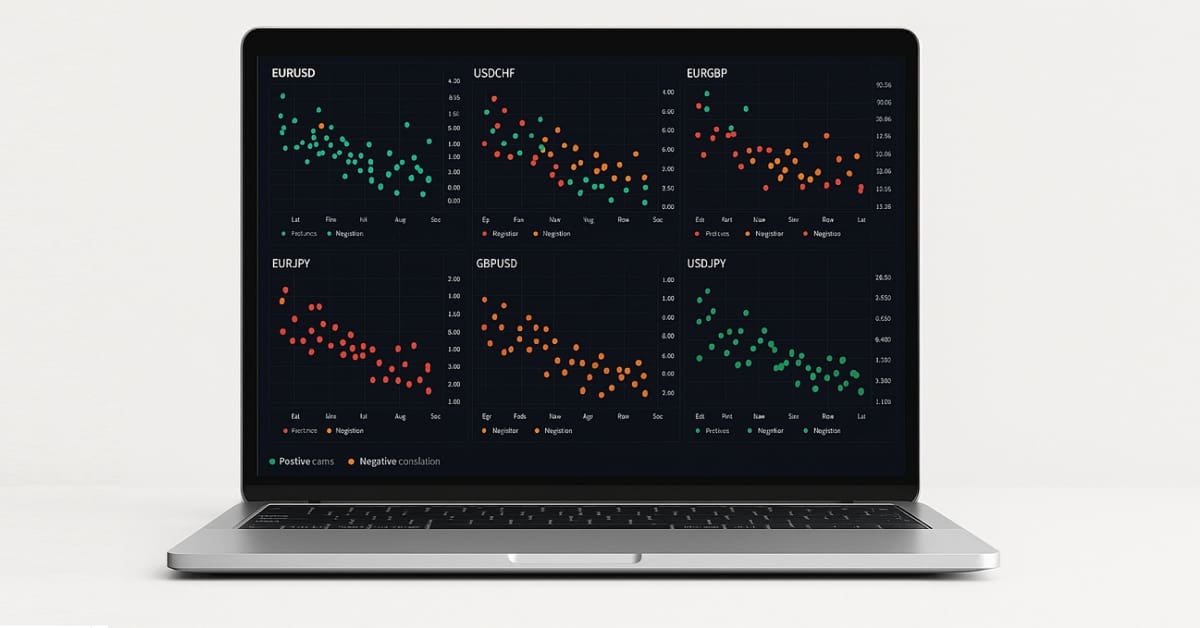
From Novice to Expert: Animated News Headline Using MQL5 (XI)—Correlation in News Trading
In this discussion, we will explore how the concept of Financial Correlation can be applied to improve decision-making efficiency when trading multiple symbols during major economic events announcement. The focus is on addressing the challenge of heightened risk exposure caused by increased volatility during news releases.


News Filtering with MetaTrader 5 Economic Calendar and CSV Fallback
This article presents a self-contained news filter module for MetaTrader 5 built on the platform's economic calendar API. It implements symbol-to-currency mapping, pre- and post-event trading pauses, and optional position size reduction on high-impact days, with a CSV-based fallback for the Strategy Tester. A demo EA and live chart dashboard show integration and verification in both live and backtest environments.


Artificial Cooperative Search (ACS) algorithm
Artificial Cooperative Search (ACS) is an innovative method using a binary matrix and multiple dynamic populations based on mutualistic relationships and cooperation to find optimal solutions quickly and accurately. ACS unique approach to predators and prey enables it to achieve excellent results in numerical optimization problems.


Integrating MQL5 with Data Processing Packages (Part 6): Merging Market Feedback with Model Adaptation
In this part, we focus on how to merge real-time market feedback—such as live trade outcomes, volatility changes, and liquidity shifts—with adaptive model learning to maintain a responsive and self-improving trading system.


Statistical Arbitrage Through Cointegrated Stocks (Part 8): Rolling Windows Eigenvector Comparison for Portfolio Rebalancing
This article proposes using Rolling Windows Eigenvector Comparison for early imbalance diagnostics and portfolio rebalancing in a mean-reversion statistical arbitrage strategy based on cointegrated stocks. It contrasts this technique with traditional In-Sample/Out-of-Sample ADF validation, showing that eigenvector shifts can signal the need for rebalancing even when IS/OOS ADF still indicates a stationary spread. While the method is intended mainly for live trading monitoring, the article concludes that eigenvector comparison could also be integrated into the scoring system—though its actual contribution to performance remains to be tested.

The View and Controller components for tables in the MQL5 MVC paradigm: Simple controls
The article covers simple controls as components of more complex graphical elements of the View component within the framework of table implementation in the MVC (Model-View-Controller) paradigm. The basic functionality of the Controller is implemented for interaction of elements with the user and with each other. This is the second article on the View component and the fourth one in a series of articles on creating tables for the MetaTrader 5 client terminal.


Markets Positioning Codex in MQL5 (Part 1): Bitwise Learning for Nvidia
We commence a new article series that builds upon our earlier efforts laid out in the MQL5 Wizard series, by taking them further as we step up our approach to systematic trading and strategy testing. Within these new series, we’ll concentrate our focus on Expert Advisors that are coded to hold only a single type of position - primarily longs. Focusing on just one market trend can simplify analysis, lessen strategy complexity and expose some key insights, especially when dealing in assets beyond forex. Our series, therefore, will investigate if this is effective in equities and other non-forex assets, where long only systems usually correlate well with smart money or institution strategies.


Neural Networks in Trading: An End-to-End Multivariate Time Series Forecasting Model (GinAR)
We invite you to explore an innovative approach to forecasting time series with missing data using the GinAR framework. The article demonstrates the implementation of key components using OpenCL, which ensures high performance. In our next publication, we will take a detailed look at how to integrate these solutions into MQL5. This will help understand how to apply the method in practice in trading.


MQL5 Wizard Techniques you should know (Part 41): Deep-Q-Networks
The Deep-Q-Network is a reinforcement learning algorithm that engages neural networks in projecting the next Q-value and ideal action during the training process of a machine learning module. We have already considered an alternative reinforcement learning algorithm, Q-Learning. This article therefore presents another example of how an MLP trained with reinforcement learning, can be used within a custom signal class.


Markov Chain Monte Carlo Sampling Methods: The HMC Algorithm
The article examines the Hamiltonian Monte Carlo (HMC) algorithm — the gold standard for sampling from complex multivariate distributions. A full-featured implementation of HMC in MQL5 is presented, including adaptive mass matrix tuning, MAP estimation using the L-BFGS optimization method, and comprehensive diagnostics.


Developing a multi-currency Expert Advisor (Part 7): Selecting a group based on forward period
Previously, we evaluated the selection of a group of trading strategy instances, with the aim of improving the results of their joint operation, only on the same time period, in which the optimization of individual instances was carried out. Let's see what happens in the forward period.


Neural Networks Made Easy (Part 81): Context-Guided Motion Analysis (CCMR)
In previous works, we always assessed the current state of the environment. At the same time, the dynamics of changes in indicators always remained "behind the scenes". In this article I want to introduce you to an algorithm that allows you to evaluate the direct change in data between 2 successive environmental states.


Building a Divergence System (Part II): Adaptive SuperTrend Custom Indicator
The article upgrades SuperTrend by integrating a divergence engine (MPO4 or RSI) the dynamically reduces the ATR multiplier during weakening momentum. It covers the shrinking formula, non-repainting state propagation with dedicated buffers, and a step-by-step MQL5 implementation on the price chart. You will learn how to interpret arrows and line flips, adjust inputs, and apply the indicator for disciplined trailing and earlier confirmations.


MQL5 Wizard Techniques you should know (Part 66): Using Patterns of FrAMA and the Force Index with the Dot Product Kernel
The FrAMA Indicator and the Force Index Oscillator are trend and volume tools that could be paired when developing an Expert Advisor. We continue from our last article that introduced this pair by considering machine learning applicability to the pair. We are using a convolution neural network that uses the dot-product kernel in making forecasts with these indicators’ inputs. This is done in a custom signal class file that works with the MQL5 wizard to assemble an Expert Advisor.


Step-by-Step Implementation of a Local Stop Loss System in MQL5
This article shows how to build a local stop-loss system in an MQL5 Expert Advisor that keeps stop levels on the terminal side. It walks through the execution logic, event handlers, inputs, and an OOP design using CTrade, CPositionInfo, CHashMap/CHashSet, and chart objects. You will implement multi-position tracking, draggable stops, visual spacers and labels, plus cleanup and disconnection behavior to create a practical risk-control utility.


Statistical Arbitrage Through Cointegrated Stocks (Part 3): Database Setup
This article presents a sample MQL5 Service implementation for updating a newly created database used as source for data analysis and for trading a basket of cointegrated stocks. The rationale behind the database design is explained in detail and the data dictionary is documented for reference. MQL5 and Python scripts are provided for the database creation, schema initialization, and market data insertion.


Neural networks made easy (Part 79): Feature Aggregated Queries (FAQ) in the context of state
In the previous article, we got acquainted with one of the methods for detecting objects in an image. However, processing a static image is somewhat different from working with dynamic time series, such as the dynamics of the prices we analyze. In this article, we will consider the method of detecting objects in video, which is somewhat closer to the problem we are solving.


Leak-Free Multi-Timeframe Engine with Closed-Bar Reads in MQL5
The article presents two systematic pitfalls in MQL5 multi‑timeframe work: indicator handle leaks that exhausted resources and repainting from reading the forming bar (index 0). It introduces MTFEngine.mqh, a unified include that creates and tracks handles in one place and defaults all reads to closed bars (index 1). A D1–H4–H1 example shows how this approach keeps signals technically correct and consistent with charts.


Developing a Replay System (Part 36): Making Adjustments (II)
One of the things that can make our lives as programmers difficult is assumptions. In this article, I will show you how dangerous it is to make assumptions: both in MQL5 programming, where you assume that the type will have a certain value, and in MetaTrader 5, where you assume that different servers work the same.


Automating Classic Market Methods in MQL5 (Part 3): Stan Weinstein Stage Analysis
This article presents a complete Expert Advisor built around Stan Weinstein's Stage Analysis method. The EA classifies the market into one of four stages using the 30-week moving average slope and position and volume behavior, then trades only Stage 2 breakouts long and Stage 4 breakdowns short. It explains each stage, how to detect it programmatically, and why the method's discipline—trading only in the correct stage—is what produces the edge.


The base class of population algorithms as the backbone of efficient optimization
The article represents a unique research attempt to combine a variety of population algorithms into a single class to simplify the application of optimization methods. This approach not only opens up opportunities for the development of new algorithms, including hybrid variants, but also creates a universal basic test stand. This stand becomes a key tool for choosing the optimal algorithm depending on a specific task.


Permuting price bars in MQL5
In this article we present an algorithm for permuting price bars and detail how permutation tests can be used to recognize instances where strategy performance has been fabricated to deceive potential buyers of Expert Advisors.


Formulating Dynamic Multi-Pair EA (Part 8): Time-of-Day Capital Rotation Approach
This article presents a Time-of-Day capital rotation engine for MQL5 that allocates risk by trading session instead of using uniform exposure. We detail session budgets within a daily risk cap, dynamic lot sizing from remaining session risk, and automatic daily resets. Execution uses session-specific breakout and fade logic with ATR-based volatility confirmation. Readers gain a practical template to deploy capital where session conditions are statistically strongest while keeping exposure controlled throughout the day.


Causal analysis of time series using transfer entropy
In this article, we discuss how statistical causality can be applied to identify predictive variables. We will explore the link between causality and transfer entropy, as well as present MQL5 code for detecting directional transfers of information between two variables.


Developing an MQTT client for Metatrader 5: a TDD approach — Part 4
This article is the fourth part of a series describing our development steps of a native MQL5 client for the MQTT protocol. In this part, we describe what MQTT v5.0 Properties are, their semantics, how we are reading some of them, and provide a brief example of how Properties can be used to extend the protocol.