MQL4 and MQL5 Programming Articles

Study the MQL5 language for programming trading strategies in numerous published articles mostly written by you - the community members. The articles are grouped into categories to help you quicker find answers to any questions related to programming: Integration, Tester, Trading Strategies, etc.
Follow our new publications and discuss them on the Forum!
Add a new article

You are missing trading opportunities:
- Free trading apps
- Over 8,000 signals for copying
- Economic news for exploring financial markets
Registration
Log in
You agree to website policy and terms of use
If you do not have an account, please register


Neural networks made easy (Part 52): Research with optimism and distribution correction
As the model is trained based on the experience reproduction buffer, the current Actor policy moves further and further away from the stored examples, which reduces the efficiency of training the model as a whole. In this article, we will look at the algorithm of improving the efficiency of using samples in reinforcement learning algorithms.


From Basic to Intermediate: Inheritance
No doubt, this article will require a significant amount of your time to understand how and why the materials described here work. This is because everything that will be shown here is initially oriented toward object-oriented programming, but in fact it is based on the principles of structured programming.


Superposition and Interference of Financial Securities
The more factors influence the behavior of a currency pair, the more difficult it is to evaluate its behavior and make up future forecasts. Therefore, if we managed to extract components of a currency pair, values of a national currency that change with the time, we could considerably delimit the freedom of national currency movement as compared to the currency pair with this currency, as well as the number of factors influencing its behavior. As a result we would increase the accuracy of its behavior estimation and future forecasting. How can we do that?


MQL5 Wizard Techniques you should know (Part 53): Market Facilitation Index
The Market Facilitation Index is another Bill Williams Indicator that is intended to measure the efficiency of price movement in tandem with volume. As always, we look at the various patterns of this indicator within the confines of a wizard assembly signal class, and present a variety of test reports and analyses for the various patterns.


Neural Networks in Trading: Hierarchical Feature Learning for Point Clouds
We continue to study algorithms for extracting features from a point cloud. In this article, we will get acquainted with the mechanisms for increasing the efficiency of the PointNet method.


Dynamic mode decomposition applied to univariate time series in MQL5
Dynamic mode decomposition (DMD) is a technique usually applied to high-dimensional datasets. In this article, we demonstrate the application of DMD on univariate time series, showing its ability to characterize a series as well as make forecasts. In doing so, we will investigate MQL5's built-in implementation of dynamic mode decomposition, paying particular attention to the new matrix method, DynamicModeDecomposition().


Balancing risk when trading multiple instruments simultaneously
This article will allow a beginner to write an implementation of a script from scratch for balancing risks when trading multiple instruments simultaneously. Besides, it may give experienced users new ideas for implementing their solutions in relation to the options proposed in this article.


Trend Criteria. Conclusion
In this article, we will consider the specifics of applying some trend criteria in practice. We will also try to develop several new criteria. The focus will be on the efficiency of applying these criteria to market data analysis and trading.

Price Driven CGI Model: Theoretical Foundation
Let's discuss the data manipulation algorithm, as we dive deeper into conceptualizing the idea of using price data to drive CGI objects. Think about transferring the effects of events, human emotions and actions on financial asset prices to a real-life model. This study delves into leveraging price data to influence the scale of a CGI object, controlling growth and emotions. These visible effects can establish a fresh analytical foundation for traders. Further insights are shared in the article.


From Basic to Intermediate: Indicator (II)
In this article, we will examine how to implement a moving average calculation and what precautions should be taken when performing this calculation. We will also discuss overloading the OnCalculate function to know when and how to work with one model or another.


Developing a Replay System (Part 61): Playing the service (II)
In this article, we will look at changes that will allow the replay/simulation system to operate more efficiently and securely. I will also not leave without attention those who want to get the most out of using classes. In addition, we will consider a specific problem in MQL5 that reduces code performance when working with classes, and explain how to solve it.


Data label for time series mining (Part 5):Apply and Test in EA Using Socket
This series of articles introduces several time series labeling methods, which can create data that meets most artificial intelligence models, and targeted data labeling according to needs can make the trained artificial intelligence model more in line with the expected design, improve the accuracy of our model, and even help the model make a qualitative leap!


Price Action Analysis Toolkit Development (Part 18): Introducing Quarters Theory (III) — Quarters Board
In this article, we enhance the original Quarters Script by introducing the Quarters Board, a tool that lets you toggle quarter levels directly on the chart without needing to revisit the code. You can easily activate or deactivate specific levels, and the EA also provides trend direction commentary to help you better understand market movements.


MQL5 Wizard Techniques you should know (Part 11): Number Walls
Number Walls are a variant of Linear Shift Back Registers that prescreen sequences for predictability by checking for convergence. We look at how these ideas could be of use in MQL5.


MQL5 Wizard Techniques you should know (Part 65): Using Patterns of FrAMA and the Force Index
The Fractal Adaptive Moving Average (FrAMA) and the Force Index Oscillator are another pair of indicators that could be used in conjunction within an MQL5 Expert Advisor. These two indicators complement each other a little bit because FrAMA is a trend following indicator while the Force Index is a volume based oscillator. As always, we use the MQL5 wizard to rapidly explore any potential these two may have.


MQL5 Wizard Techniques you should know (Part 31): Selecting the Loss Function
Loss Function is the key metric of machine learning algorithms that provides feedback to the training process by quantifying how well a given set of parameters are performing when compared to their intended target. We explore the various formats of this function in an MQL5 custom wizard class.


Population optimization algorithms: Changing shape, shifting probability distributions and testing on Smart Cephalopod (SC)
The article examines the impact of changing the shape of probability distributions on the performance of optimization algorithms. We will conduct experiments using the Smart Cephalopod (SC) test algorithm to evaluate the efficiency of various probability distributions in the context of optimization problems.


From Novice to Expert: Developing a Geographic Market Awareness with MQL5 Visualization
Trading without session awareness is like navigating without a compass—you're moving, but not with purpose. Today, we're revolutionizing how traders perceive market timing by transforming ordinary charts into dynamic geographical displays. Using MQL5's powerful visualization capabilities, we'll build a live world map that illuminates active trading sessions in real-time, turning abstract market hours into intuitive visual intelligence. This journey sharpens your trading psychology and reveals professional-grade programming techniques that bridge the gap between complex market structure and practical, actionable insight.


Reimagining Classic Strategies (Part 14): Multiple Strategy Analysis
In this article, we continue our exploration of building an ensemble of trading strategies and using the MT5 genetic optimizer to tune the strategy parameters. Today, we analyzed the data in Python, showing our model could better predict which strategy would outperform, achieving higher accuracy than forecasting market returns directly. However, when we tested our application with its statistical models, our performance levels fell dismally. We subsequently discovered that the genetic optimizer unfortunately favored highly correlated strategies, prompting us to revise our method to keep vote weights fixed and focus optimization on indicator settings instead.


DoEasy. Controls (Part 14): New algorithm for naming graphical elements. Continuing work on the TabControl WinForms object
In this article, I will create a new algorithm for naming all graphical elements meant for building custom graphics, as well as continue developing the TabControl WinForms object.


Developing a Replay System — Market simulation (Part 18): Ticks and more ticks (II)
Obviously the current metrics are very far from the ideal time for creating a 1-minute bar. That's the first thing we are going to fix. Fixing the synchronization problem is not difficult. This may seem hard, but it's actually quite simple. We did not make the required correction in the previous article since its purpose was to explain how to transfer the tick data that was used to create the 1-minute bars on the chart into the Market Watch window.


From Basic to Intermediate: BREAK and CONTINUE Statements
In this article, we will look at how to use the RETURN, BREAK, and CONTINUE statements in a loop. Understanding what each of these statements does in the loop execution flow is very important for working with more complex applications. The content presented here is intended solely for educational purposes. Under no circumstances should the application be viewed for any purpose other than to learn and master the concepts presented.


Dialectic Search (DA)
The article introduces the dialectical algorithm (DA), a new global optimization method inspired by the philosophical concept of dialectics. The algorithm exploits a unique division of the population into speculative and practical thinkers. Testing shows impressive performance of up to 98% on low-dimensional problems and overall efficiency of 57.95%. The article explains these metrics and presents a detailed description of the algorithm and the results of experiments on different types of functions.

MQL5 Wizard Techniques you should know (Part 74): Using Patterns of Ichimoku and the ADX-Wilder with Supervised Learning
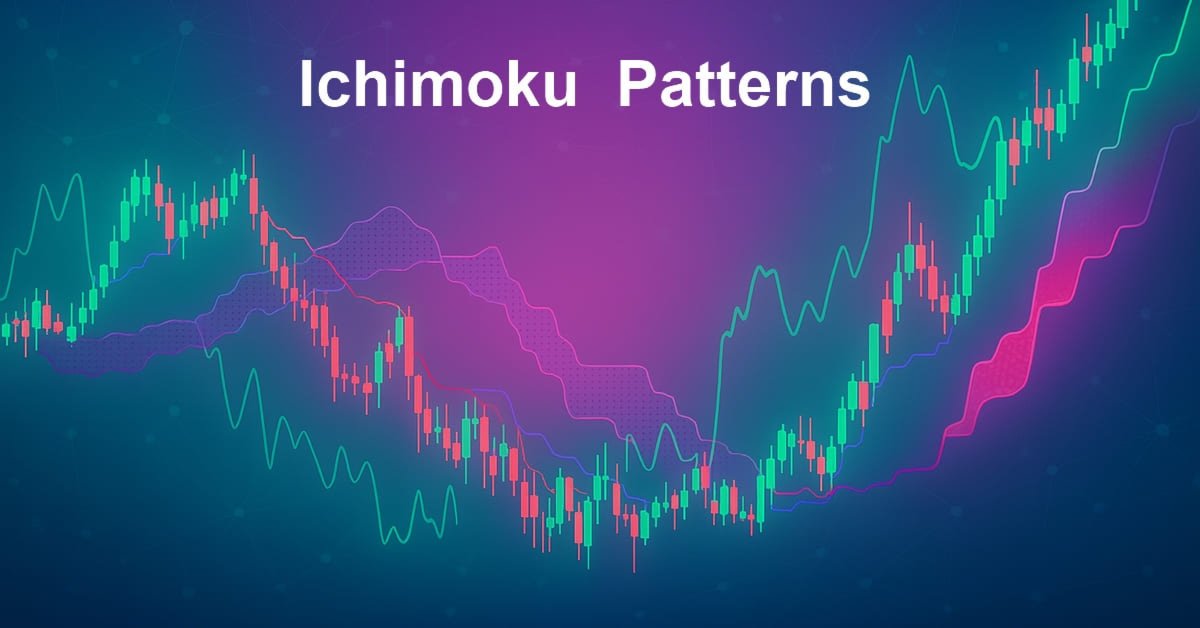
We follow up on our last article, where we introduced the indicator pair of the Ichimoku and the ADX, by looking at how this duo could be improved with Supervised Learning. Ichimoku and ADX are a support/resistance plus trend complimentary pairing. Our supervised learning approach uses a neural network that engages the Deep Spectral Mixture Kernel to fine tune the forecasts of this indicator pairing. As per usual, this is done in a custom signal class file that works with the MQL5 wizard to assemble an Expert Advisor.


MQL5 Wizard Techniques you should know (Part 58): Reinforcement Learning (DDPG) with Moving Average and Stochastic Oscillator Patterns
Moving Average and Stochastic Oscillator are very common indicators whose collective patterns we explored in the prior article, via a supervised learning network, to see which “patterns-would-stick”. We take our analyses from that article, a step further by considering the effects' reinforcement learning, when used with this trained network, would have on performance. Readers should note our testing is over a very limited time window. Nonetheless, we continue to harness the minimal coding requirements afforded by the MQL5 wizard in showcasing this.


MetaTrader 5 Machine Learning Blueprint (Part 7): From Scattered Experiments to Reproducible Results
In the latest installment of this series, we move beyond individual machine learning techniques to address the "Research Chaos" that plagues many quantitative traders. This article focuses on the transition from ad-hoc notebook experiments to a principled, production-grade pipeline that ensures reproducibility, traceability, and efficiency.


Chaos optimization algorithm (COA)
This is an improved chaotic optimization algorithm (COA) that combines the effects of chaos with adaptive search mechanisms. The algorithm uses a set of chaotic maps and inertial components to explore the search space. The article reveals the theoretical foundations of chaotic methods of financial optimization.


Integrating MQL5 with Data Processing Packages (Part 7): Building Multi-Agent Environments for Cross-Symbol Collaboration
The article presents a complete Python–MQL5 integration for multi‑agent trading: MT5 data ingestion, indicator computation, per‑agent decisions, and a weighted consensus that outputs a single action. Signals are stored to JSON, served by Flask, and consumed by an MQL5 Expert Advisor for execution with position sizing and ATR‑derived SL/TP. Flask routes provide safe lifecycle control and status monitoring.


Developing a multi-currency Expert Advisor (Part 24): Adding a new strategy (II)
In this article, we will continue to connect the new strategy to the created auto optimization system. Let's look at what changes need to be made to the optimization project creation EA, as well as the second and third stage EAs.


Building A Candlestick Trend Constraint Model (Part 6): All in one integration
One major challenge is managing multiple chart windows of the same pair running the same program with different features. Let's discuss how to consolidate several integrations into one main program. Additionally, we will share insights on configuring the program to print to a journal and commenting on the successful signal broadcast on the chart interface. Find more information in this article as we progress the article series.


Neural Networks in Trading: Time Series Forecasting Using Adaptive Modal Decomposition (ACEFormer)
We invite you to explore the ACEFormer architecture — a modern solution that combines the effectiveness of probabilistic attention with adaptive time series decomposition. This article will be useful for those seeking a balance between computational performance and forecast accuracy in financial markets.


Developing a Replay System (Part 77): New Chart Trade (IV)
In this article, we will cover some of the measures and precautions to consider when creating a communication protocol. These are pretty simple and straightforward things, so we won't go into too much detail in this article. But to understand what will happen, you need to understand the content of the article.


Forex Arbitrage Trading: Relationship Assessment Panel
This article presents the development of an arbitrage analysis panel in MQL5. How to get fair exchange rates on Forex in different ways? Create an indicator to obtain deviations of market prices from fair exchange rates, as well as to assess the benefits of arbitrage ways of exchanging one currency for another (as in triangular arbitrage).


Creating a Trading Administrator Panel in MQL5 (Part IV): Login Security Layer
Imagine a malicious actor infiltrating the Trading Administrator room, gaining access to the computers and the Admin Panel used to communicate valuable insights to millions of traders worldwide. Such an intrusion could lead to disastrous consequences, such as the unauthorized sending of misleading messages or random clicks on buttons that trigger unintended actions. In this discussion, we will explore the security measures in MQL5 and the new security features we have implemented in our Admin Panel to safeguard against these threats. By enhancing our security protocols, we aim to protect our communication channels and maintain the trust of our global trading community. Find more insights in this article discussion.


Artificial Ecosystem-based Optimization (AEO) algorithm
The article considers a metaheuristic Artificial Ecosystem-based Optimization (AEO) algorithm, which simulates interactions between ecosystem components by creating an initial population of solutions and applying adaptive update strategies, and describes in detail the stages of AEO operation, including the consumption and decomposition phases, as well as different agent behavior strategies. The article introduces the features and advantages of this algorithm.


Neural Networks in Trading: Hierarchical Vector Transformer (Final Part)
We continue studying the Hierarchical Vector Transformer method. In this article, we will complete the construction of the model. We will also train and test it on real historical data.


From Basic to Intermediate: Structs (II)
In this article, we will try to understand why programming languages like MQL5 have structures, and why in some cases structures are the ideal way to pass values between functions and procedures, while in other cases they may not be the best way to do it.


MQL5 Wizard Techniques you should know (Part 89): Using Bitwise Vectorization with Perceptron Classifiers
This article presents a custom MQL5 signal class, CSignalBitwisePerceptron, for ultra-lightweight entry logic. It packs 64 bars into a single uint64 via bitwise vectorization and evaluates them with a perceptron that sums weights only for active bits. A two-gate flow (algorithmic hash map plus neural threshold) minimizes array iteration and heavy math. Readers get a practical template to cut latency and refine entry validation.


Mastering Log Records (Part 4): Saving logs to files
In this article, I will teach you basic file operations and how to configure a flexible handler for customization. We will update the CLogifyHandlerFile class to write logs directly to the file. We will conduct a performance test by simulating a strategy on EURUSD for a week, generating logs at each tick, with a total time of 5 minutes and 11 seconds. The result will be compared in a future article, where we will implement a caching system to improve performance.


Reimagining Classic Strategies: Crude Oil
In this article, we revisit a classic crude oil trading strategy with the aim of enhancing it by leveraging supervised machine learning algorithms. We will construct a least-squares model to predict future Brent crude oil prices based on the spread between Brent and WTI crude oil prices. Our goal is to identify a leading indicator of future changes in Brent prices.