Articles with MQL5 programming examples

Access a huge collection of articles with code examples showing how to create indicators and trading robots for the MetaTrader platform in the MQL5 language. Source codes are attached to the articles, so you can open them in MetaEditor and run them to see how the applications work.
These articles will be useful both for those who have just started exploring automated trading and for professional traders with programming experience. They feature not only examples, but also contain new ideas.
Add a new article

You are missing trading opportunities:
- Free trading apps
- Over 8,000 signals for copying
- Economic news for exploring financial markets
Registration
Log in
You agree to website policy and terms of use
If you do not have an account, please register


Developing a Replay System (Part 64): Playing the service (V)
In this article, we will look at how to fix two errors in the code. However, I will try to explain them in a way that will help you, beginner programmers, understand that things don't always go as you expect. Anyway, this is an opportunity to learn. The content presented here is intended solely for educational purposes. In no way should this application be considered as a final document with any purpose other than to explore the concepts presented.

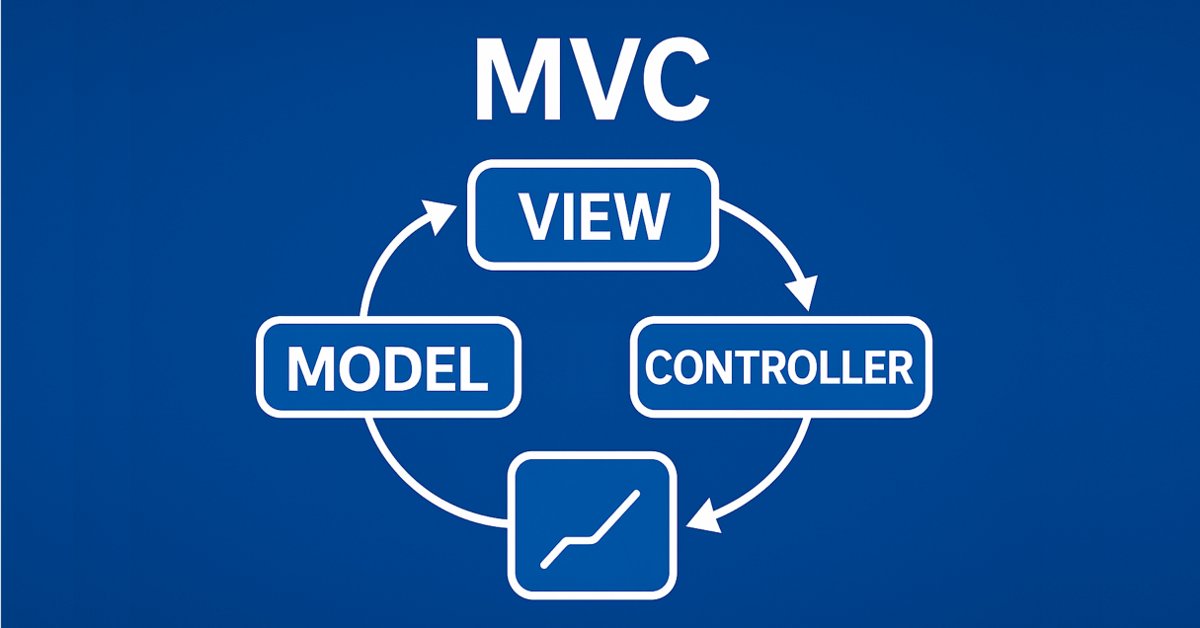
Table and Header Classes based on a table model in MQL5: Applying the MVC concept
This is the second part of the article devoted to the implementation of the table model in MQL5 using the MVC (Model-View-Controller) architectural paradigm. The article discusses the development of table classes and the table header based on a previously created table model. The developed classes will form the basis for further implementation of View and Controller components, which will be discussed in the following articles.


From Basic to Intermediate: Objects (II)
In today's article, we will look at how to control some object properties in a simple way using code. We will also see how a custom application can place more than one object on the same chart. In addition, we will begin to understand the importance of assigning a short name to any indicator we plan to implement.


Interactive Supply and Demand Zone Manager in MQL5 (Part III): Zone Analysis, Stateful Interaction, and Pending Event Management
We extend the stateful supply and demand framework for MetaTrader 5 with a quantitative admission model and a dedicated interaction engine. Candidate zones are scored by structural symmetry, volume participation, and ATR‑normalized displacement, then classified into objective tiers. Admitted zones follow a deterministic lifecycle that tracks first touch, validates bounces, or confirms breakouts, with full telemetry for analysis and reproducibility.


How to Test and Customize Built-in MQL5 Programs: Custom BullishBearish MeetingLines Stoch Expert Advisor
We demonstrate a practical customization path for a built-in MetaTrader 5 EA using BullishBearish MeetingLines Stoch. The workflow covers baseline testing in the Strategy Tester, parameter optimization, and code-level changes. Two modifications are implemented: exposing Stochastic thresholds as inputs and adding an optional Moving Average filter to limit counter‑trend signals. The article includes the full modified code for replication.


Publish Your Article Code to MQL5 Algo Forge in 10 Minutes: A Step-by-Step Guide
The article provides a step-by-step guide on how to migrate code from a published project into a fully-fledged MQL5 Algo Forge project. You will set up the environment and authentication in MetaEditor, create a project in Shared Projects, select the type, arrange the files, add README.md, check the encoding and build, commit the changes to Git, and open the repository publicly. The article helps to build a working structure and preserve version history for the convenience of readers.


How to Detect and Normalize Chart Objects in MQL5 (Part 4): Fully Automated Analytical Objects System
This part extends the series with a modular, event-driven MQL5 pipeline: swing detection feeds an object placer for trendlines, SR, Fibonacci, channels, and pitchforks; evaluators monitor interactions and generate signals; adaptive logic executes trades with valid stops per instrument. The topology manager synchronizes placement, scanning, and processing. The code is structured into reusable components for easy reuse and scaling.


Reimagining Classic Strategies (Part VIII): Currency Markets And Precious Metals on the USDCAD
In this series of articles, we revisit well-known trading strategies to see if we can improve them using AI. In today's discussion, join us as we test whether there is a reliable relationship between precious metals and currencies.


Mastering Log Records (Part 10): Avoiding Log Replay by Implementing a Suppression
We created a log suppression system in the Logify library. It details how the CLogifySuppression class reduces console noise by applying configurable rules to avoid repetitive or irrelevant messages. We also cover the external configuration framework, validation mechanisms, and comprehensive testing to ensure robustness and flexibility in log capture during bot or indicator development.


Mastering Log Records (Part 9): Implementing the builder pattern and adding default configurations
This article shows how to drastically simplify the use of the Logify library with the Builder pattern and automatic default configurations. It explains the structure of the specialized builders, how to use them with smart auto-completion, and how to ensure a functional log even without manual configuration. It also covers tweaks for MetaTrader 5 build 5100.


Client in Connexus (Part 7): Adding the Client Layer
In this article we continue the development of the connexus library. In this chapter we build the CHttpClient class responsible for sending a request and receiving an order. We also cover the concept of mocks, leaving the library decoupled from the WebRequest function, which allows greater flexibility for users.


From Novice to Expert: Animated News Headline Using MQL5 (V)—Event Reminder System
In this discussion, we’ll explore additional advancements as we integrate refined event‑alerting logic for the economic calendar events displayed by the News Headline EA. This enhancement is critical—it ensures users receive timely notifications a short time before key upcoming events. Join this discussion to discover more.


Decoding Market Intent: Reading Structure, Liquidity, and Price Behavior
We implement a five-stage MQL5 pipeline that quantifies market structure, liquidity interaction, and price behavior on four timeframes, then resolves them into a 0–100 Market Intent Score. Decision states (WAIT/WATCH/ACTION) are driven by explicit weights plus hard gates. The analytical core feeds a concise dashboard and, when AutoTrade is on, an execution layer with entry zones, invalidation and liquidity‑based targets.


Creating an HTML Dashboard for Strategy Tester and Prop Firm Challenge Analysis in MQL5
This article demonstrates how to build a reusable prop‑firm evaluation module for MQL5 Expert Advisors and export results to an HTML dashboard. The module monitors balance and equity during backtests, simulates single or rolling challenges, checks profit target, daily and overall drawdown, and minimum trading days, then outputs both a terminal summary and a browser‑readable report.


Bivariate Copulae in MQL5 (Part 3): Implementation and Tuning of Mixed Copula Models in MQL5
The article extends our copula toolkit with mixed copulas implemented natively in MQL5. We construct Clayton–Frank–Gumbel and Clayton–Student–t–Gumbel mixtures, estimate them via EM, and enable sparsity control through SCAD with cross‑validation. Provided scripts tune hyperparameters, compare mixtures using information criteria, and save trained models. Practitioners can apply these components to capture asymmetric tail dependence and embed the selected model in indicators or Expert Advisors.


Self Optimizing Expert Advisors in MQL5 (Part 14): Viewing Data Transformations as Tuning Parameters of Our Feedback Controller
Preprocessing is a powerful yet quickly overlooked tuning parameter. It lives in the shadows of its bigger brothers: optimizers and shiny model architectures. Small percentage improvements here can have disproportionately large, compounding effects on profitability and risk. Too often, this largely unexplored science is boiled down to a simple routine, seen only as a means to an end, when in reality it is where signal can be directly amplified, or just as easily destroyed.


From Basic to Intermediate: Struct (VI)
In this article, we will explore how to approach the implementation of a common structural code base. The goal is to reduce the programming workload and leverage the full potential of the programming language itself—in this case, MQL5.


From Basic to Intermediate: Union (II)
Today we have a very funny and quite interesting article. We will look at Union and will try to solve the problem discussed earlier. We'll also explore some unusual situations that can arise when using union in applications. The materials presented here are intended for didactic purposes only. Under no circumstances should the application be viewed for any purpose other than to learn and master the concepts presented.


Beyond the Clock (Part 4): Efficacy of Bars on Trending and Mean-Reversion Strategies
Does better return conditioning buy strategy performance? We hold bar count fixed across time, tick, tick-imbalance, and tick-runs on 60.5 million EURUSD ticks, then meta-label RSI, Bollinger, and ADX/DI entries and score with purged cross-validation. No family delivers a consistent edge; efficacy varies narrowly and the best case fails a permutation test. Readers learn how to control overlap, leakage, and multiple testing in bar studies.


Developing a Replay System (Part 57): Understanding a Test Service
One point to note: although the service code is not included in this article and will only be provided in the next one, I'll explain it since we'll be using that same code as a springboard for what we're actually developing. So, be attentive and patient. Wait for the next article, because every day everything becomes more interesting.


Developing a Multi-Currency Expert Advisor (Part 28): Adding a Position Closing Manager
When running multiple strategies in parallel, you may want to periodically close all open positions and start the strategies over again. The existing code only allows this behavior to be implemented through manual intervention. Let's try to automate this part.


Broker Reality Check (Part 1): Why Your EA Works on a Demo and Breaks on a Client's Broker
Your Expert Advisor runs clean on your demo, then throws errors on a client's broker and quietly stops trading - and the code never changed. What changed is the broker's rulebook. This first article of the Broker Reality Check series builds a diagnostic EA that reads every relevant symbol trading condition - filling policy, stops and freeze levels, volume step, trade mode, swap and the triple-swap day - and flags the ones that silently break EAs, in plain language. It shows a green/amber/red panel, prints a report and dumps every Market Watch symbol to CSV, so you see why an OrderSend fails (10030, invalid stops, invalid volume) before it costs you a trade.


MQL5 Trading Toolkit (Part 6): Expanding the History Management EX5 Library with the Last Filled Pending Order Functions
Learn how to create an EX5 module of exportable functions that seamlessly query and save data for the most recently filled pending order. In this comprehensive step-by-step guide, we will enhance the History Management EX5 library by developing dedicated and compartmentalized functions to retrieve essential properties of the last filled pending order. These properties include the order type, setup time, execution time, filling type, and other critical details necessary for effective pending orders trade history management and analysis.


From Basic to Intermediate: Struct (IV)
In this article, we will explore how to create so-called structural code, where the entire context and methods for manipulating variables and information are placed within a structure to create a suitable context for implementing any code. Therefore, we will examine the necessity of using a private section of the code to separate what is public from what is not, thereby adhering to the rule of encapsulation and preserving the context for which the data structure was created.


Overcoming Accessibility Problems in MQL5 Trading Tools (Part IV): Remote voice trading
Learn a practical way to execute MetaTrader 5 trades from Telegram voice notes using a Python middleware and an MQL5 EA acting as an HTTP client. The article covers architecture, WebRequest polling, in-memory queuing, JSON parsing with null-terminator stripping, and a constrained command grammar with a 0.001-lot default. You will configure the environment and validate round‑trip latency suitable for mobile data connections.


Modular Indicator Architecture in MQL5 (Part 1): Stop Copy-Pasting and Start Writing Scalable, Reusable Code
This article develops an object-oriented framework for MQL5 indicators by evolving a primitive example into reusable modules. It formalizes partial buffer recalculation in OnCalculate, moves logic into header-based classes (CAppliedPrice, CSma), and introduces CSubIndiBase, CIndicatorBase, and a registry to centralize requirements. You get portable components, isolated inputs, and clean buffers with minimal boilerplate, making new indicators faster to assemble and easier to maintain.


Developing a Replay System (Part 60): Playing the Service (I)
We have been working on just the indicators for a long time now, but now it's time to get the service working again and see how the chart is built based on the data provided. However, since the whole thing is not that simple, we will have to be attentive to understand what awaits us ahead.


Reimagining Classic Strategies in MQL5 (Part II): FTSE100 and UK Gilts
In this series of articles, we explore popular trading strategies and try to improve them using AI. In today's article, we revisit the classical trading strategy built on the relationship between the stock market and the bond market.


Population optimization algorithms: Bacterial Foraging Optimization - Genetic Algorithm (BFO-GA)
The article presents a new approach to solving optimization problems by combining ideas from bacterial foraging optimization (BFO) algorithms and techniques used in the genetic algorithm (GA) into a hybrid BFO-GA algorithm. It uses bacterial swarming to globally search for an optimal solution and genetic operators to refine local optima. Unlike the original BFO, bacteria can now mutate and inherit genes.


Graph Theory: Traversal Breadth-First Search (BFS) Applied in Trading
Breadth First Search (BFS) uses level-order traversal to model market structure as a directed graph of price swings evolving through time. By analyzing historical bars or sessions layer by layer, BFS prioritizes recent price behavior while still respecting deeper market memory.


Market Simulation (Part 12): Sockets (VI)
In this article, we will look at how to solve certain problems and issues that arise when using Python code within other programs. More specifically, we will demonstrate a common issue encountered when using Excel in conjunction with MetaTrader 5, although we will be using Python to facilitate this interaction. However, this implementation has a minor drawback. It does not occur in all cases, but only in certain specific situations. When it does happen, it is necessary to understand the cause. In today’s article, we will begin explaining how to resolve this issue.


A feature selection algorithm using energy based learning in pure MQL5
In this article we present the implementation of a feature selection algorithm described in an academic paper titled,"FREL: A stable feature selection algorithm", called Feature weighting as regularized energy based learning.


Developing a Replay System (Part 45): Chart Trade Project (IV)
The main purpose of this article is to introduce and explain the C_ChartFloatingRAD class. We have a Chart Trade indicator that works in a rather interesting way. As you may have noticed, we still have a fairly small number of objects on the chart, and yet we get the expected functionality. The values present in the indicator can be edited. The question is, how is this possible? This article will start to make things clearer.


Adaptive Social Behavior Optimization (ASBO): Two-phase evolution
We continue dwelling on the topic of social behavior of living organisms and its impact on the development of a new mathematical model - ASBO (Adaptive Social Behavior Optimization). We will dive into the two-phase evolution, test the algorithm and draw conclusions. Just as in nature a group of living organisms join their efforts to survive, ASBO uses principles of collective behavior to solve complex optimization problems.


Mastering Log Records (Part 2): Formatting Logs
In this article, we will explore how to create and apply log formatters in the library. We will see everything from the basic structure of a formatter to practical implementation examples. By the end, you will have the necessary knowledge to format logs within the library, and understand how everything works behind the scenes.


Developing a Replay System (Part 55): Control Module
In this article, we will implement a control indicator so that it can be integrated into the message system we are developing. Although it is not very difficult, there are some details that need to be understood about the initialization of this module. The material presented here is for educational purposes only. In no way should it be considered as an application for any purpose other than learning and mastering the concepts shown.


MQL5 Trading Tools (Part 18): Rounded Speech Bubbles/Balloons with Orientation Control
This article shows how to build rounded speech bubbles in MQL5 by combining a rounded rectangle with a pointer triangle and controlling orientation (up, down, left, right). It details geometry precomputation, supersampled filling, rounded apex arcs, and segmented borders with an extension ratio for seamless joins. Readers get configurable code for size, radii, colors, opacity, and thickness, ready for alerts or tooltips in trading interfaces.


Developing a Replay System (Part 35): Making Adjustments (I)
Before we can move forward, we need to fix a few things. These are not actually the necessary fixes but rather improvements to the way the class is managed and used. The reason is that failures occurred due to some interaction within the system. Despite attempts to find out the cause of such failures in order to eliminate them, all these attempts were unsuccessful. Some of these cases make no sense, for example, when we use pointers or recursion in C/C++, the program crashes.


Reimagining Classic Strategies (Part VII) : Forex Markets And Sovereign Debt Analysis on the USDJPY
In today's article, we will analyze the relationship between future exchange rates and government bonds. Bonds are among the most popular forms of fixed income securities and will be the focus of our discussion.Join us as we explore whether we can improve a classic strategy using AI.


Developing a Replay System (Part 39): Paving the Path (III)
Before we proceed to the second stage of development, we need to revise some ideas. Do you know how to make MQL5 do what you need? Have you ever tried to go beyond what is contained in the documentation? If not, then get ready. Because we will be doing something that most people don't normally do.