Articles with MQL5 programming examples

Access a huge collection of articles with code examples showing how to create indicators and trading robots for the MetaTrader platform in the MQL5 language. Source codes are attached to the articles, so you can open them in MetaEditor and run them to see how the applications work.
These articles will be useful both for those who have just started exploring automated trading and for professional traders with programming experience. They feature not only examples, but also contain new ideas.
Add a new article

You are missing trading opportunities:
- Free trading apps
- Over 8,000 signals for copying
- Economic news for exploring financial markets
Registration
Log in
You agree to website policy and terms of use
If you do not have an account, please register


From Basic to Intermediate: Indicator (II)
In this article, we will examine how to implement a moving average calculation and what precautions should be taken when performing this calculation. We will also discuss overloading the OnCalculate function to know when and how to work with one model or another.


From Novice to Expert: Developing a Geographic Market Awareness with MQL5 Visualization
Trading without session awareness is like navigating without a compass—you're moving, but not with purpose. Today, we're revolutionizing how traders perceive market timing by transforming ordinary charts into dynamic geographical displays. Using MQL5's powerful visualization capabilities, we'll build a live world map that illuminates active trading sessions in real-time, turning abstract market hours into intuitive visual intelligence. This journey sharpens your trading psychology and reveals professional-grade programming techniques that bridge the gap between complex market structure and practical, actionable insight.


Price Action Analysis Toolkit Development (Part 18): Introducing Quarters Theory (III) — Quarters Board
In this article, we enhance the original Quarters Script by introducing the Quarters Board, a tool that lets you toggle quarter levels directly on the chart without needing to revisit the code. You can easily activate or deactivate specific levels, and the EA also provides trend direction commentary to help you better understand market movements.

Price Driven CGI Model: Theoretical Foundation
Let's discuss the data manipulation algorithm, as we dive deeper into conceptualizing the idea of using price data to drive CGI objects. Think about transferring the effects of events, human emotions and actions on financial asset prices to a real-life model. This study delves into leveraging price data to influence the scale of a CGI object, controlling growth and emotions. These visible effects can establish a fresh analytical foundation for traders. Further insights are shared in the article.


DoEasy. Controls (Part 14): New algorithm for naming graphical elements. Continuing work on the TabControl WinForms object
In this article, I will create a new algorithm for naming all graphical elements meant for building custom graphics, as well as continue developing the TabControl WinForms object.


Developing a Replay System (Part 61): Playing the service (II)
In this article, we will look at changes that will allow the replay/simulation system to operate more efficiently and securely. I will also not leave without attention those who want to get the most out of using classes. In addition, we will consider a specific problem in MQL5 that reduces code performance when working with classes, and explain how to solve it.


MetaTrader 5 Machine Learning Blueprint (Part 7): From Scattered Experiments to Reproducible Results
In the latest installment of this series, we move beyond individual machine learning techniques to address the "Research Chaos" that plagues many quantitative traders. This article focuses on the transition from ad-hoc notebook experiments to a principled, production-grade pipeline that ensures reproducibility, traceability, and efficiency.


Population optimization algorithms: Changing shape, shifting probability distributions and testing on Smart Cephalopod (SC)
The article examines the impact of changing the shape of probability distributions on the performance of optimization algorithms. We will conduct experiments using the Smart Cephalopod (SC) test algorithm to evaluate the efficiency of various probability distributions in the context of optimization problems.


From Basic to Intermediate: BREAK and CONTINUE Statements
In this article, we will look at how to use the RETURN, BREAK, and CONTINUE statements in a loop. Understanding what each of these statements does in the loop execution flow is very important for working with more complex applications. The content presented here is intended solely for educational purposes. Under no circumstances should the application be viewed for any purpose other than to learn and master the concepts presented.


Creating a Trading Administrator Panel in MQL5 (Part IV): Login Security Layer
Imagine a malicious actor infiltrating the Trading Administrator room, gaining access to the computers and the Admin Panel used to communicate valuable insights to millions of traders worldwide. Such an intrusion could lead to disastrous consequences, such as the unauthorized sending of misleading messages or random clicks on buttons that trigger unintended actions. In this discussion, we will explore the security measures in MQL5 and the new security features we have implemented in our Admin Panel to safeguard against these threats. By enhancing our security protocols, we aim to protect our communication channels and maintain the trust of our global trading community. Find more insights in this article discussion.


Chaos optimization algorithm (COA)
This is an improved chaotic optimization algorithm (COA) that combines the effects of chaos with adaptive search mechanisms. The algorithm uses a set of chaotic maps and inertial components to explore the search space. The article reveals the theoretical foundations of chaotic methods of financial optimization.


Visual assessment and adjustment of trading in MetaTrader 5
The strategy tester allows you to do more than just optimize your trading robot's parameters. I will show how to evaluate your account's trading history post-factum and make adjustments to your trading in the tester by changing the stop-losses of your open positions.


Mastering Log Records (Part 4): Saving logs to files
In this article, I will teach you basic file operations and how to configure a flexible handler for customization. We will update the CLogifyHandlerFile class to write logs directly to the file. We will conduct a performance test by simulating a strategy on EURUSD for a week, generating logs at each tick, with a total time of 5 minutes and 11 seconds. The result will be compared in a future article, where we will implement a caching system to improve performance.


Step-by-Step Implementation of a Local Stop Loss System in MQL5
This article shows how to build a local stop-loss system in an MQL5 Expert Advisor that keeps stop levels on the terminal side. It walks through the execution logic, event handlers, inputs, and an OOP design using CTrade, CPositionInfo, CHashMap/CHashSet, and chart objects. You will implement multi-position tracking, draggable stops, visual spacers and labels, plus cleanup and disconnection behavior to create a practical risk-control utility.


Reimagining Classic Strategies: Crude Oil
In this article, we revisit a classic crude oil trading strategy with the aim of enhancing it by leveraging supervised machine learning algorithms. We will construct a least-squares model to predict future Brent crude oil prices based on the spread between Brent and WTI crude oil prices. Our goal is to identify a leading indicator of future changes in Brent prices.


Developing a Replay System (Part 77): New Chart Trade (IV)
In this article, we will cover some of the measures and precautions to consider when creating a communication protocol. These are pretty simple and straightforward things, so we won't go into too much detail in this article. But to understand what will happen, you need to understand the content of the article.


From Basic to Intermediate: Structs (II)
In this article, we will try to understand why programming languages like MQL5 have structures, and why in some cases structures are the ideal way to pass values between functions and procedures, while in other cases they may not be the best way to do it.


Chemical reaction optimization (CRO) algorithm (Part II): Assembling and results
In the second part, we will collect chemical operators into a single algorithm and present a detailed analysis of its results. Let's find out how the Chemical reaction optimization (CRO) method copes with solving complex problems on test functions.


Artificial Cooperative Search (ACS) algorithm
Artificial Cooperative Search (ACS) is an innovative method using a binary matrix and multiple dynamic populations based on mutualistic relationships and cooperation to find optimal solutions quickly and accurately. ACS unique approach to predators and prey enables it to achieve excellent results in numerical optimization problems.

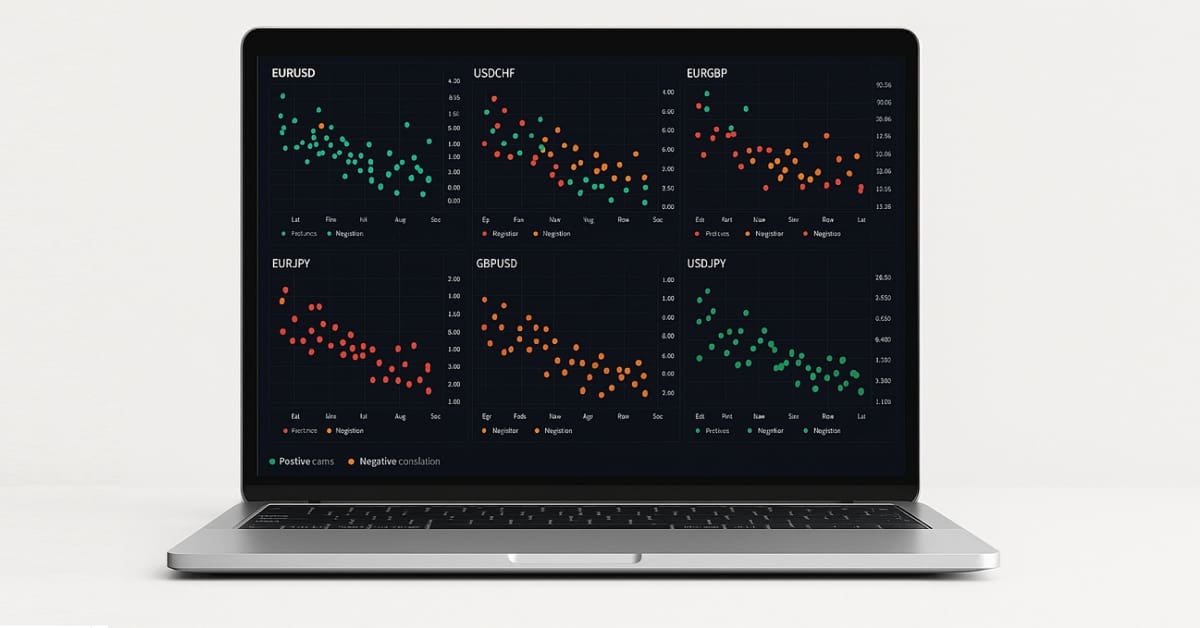
From Novice to Expert: Animated News Headline Using MQL5 (XI)—Correlation in News Trading
In this discussion, we will explore how the concept of Financial Correlation can be applied to improve decision-making efficiency when trading multiple symbols during major economic events announcement. The focus is on addressing the challenge of heightened risk exposure caused by increased volatility during news releases.


Formulating Dynamic Multi-Pair EA (Part 8): Time-of-Day Capital Rotation Approach
This article presents a Time-of-Day capital rotation engine for MQL5 that allocates risk by trading session instead of using uniform exposure. We detail session budgets within a daily risk cap, dynamic lot sizing from remaining session risk, and automatic daily resets. Execution uses session-specific breakout and fade logic with ATR-based volatility confirmation. Readers gain a practical template to deploy capital where session conditions are statistically strongest while keeping exposure controlled throughout the day.

The View and Controller components for tables in the MQL5 MVC paradigm: Simple controls
The article covers simple controls as components of more complex graphical elements of the View component within the framework of table implementation in the MVC (Model-View-Controller) paradigm. The basic functionality of the Controller is implemented for interaction of elements with the user and with each other. This is the second article on the View component and the fourth one in a series of articles on creating tables for the MetaTrader 5 client terminal.


Causal analysis of time series using transfer entropy
In this article, we discuss how statistical causality can be applied to identify predictive variables. We will explore the link between causality and transfer entropy, as well as present MQL5 code for detecting directional transfers of information between two variables.


Permuting price bars in MQL5
In this article we present an algorithm for permuting price bars and detail how permutation tests can be used to recognize instances where strategy performance has been fabricated to deceive potential buyers of Expert Advisors.

Developing a Replay System (Part 36): Making Adjustments (II)
One of the things that can make our lives as programmers difficult is assumptions. In this article, I will show you how dangerous it is to make assumptions: both in MQL5 programming, where you assume that the type will have a certain value, and in MetaTrader 5, where you assume that different servers work the same.


Risk Management (Part 4): Completing the Key Class Methods
This is Part 4 of our series on risk management in MQL5, where we continue exploring advanced methods for protecting and optimizing trading strategies. Having laid important foundations in earlier articles, we will now focus on completing all remaining methods postponed in Part 3, including functions for checking whether specific profit or loss levels have been reached. In addition, we will introduce new key events that enable more accurate and flexible risk management.


Building Volatility Models in MQL5 (Part II): Implementing GJR-GARCH and TARCH in MQL5
The article implements GJR-GARCH and TARCH in an MQL5 volatility library and explains why asymmetry improves on standard ARCH/GARCH. It covers model formulation, parameterization, and usage through derived classes and scripts. Readers get code examples for calibration and one-step-ahead forecasting on real data to support risk and diagnostics.


Creating a Trading Administrator Panel in MQL5 (Part XI): Modern feature communications interface (I)
Today, we are focusing on the enhancement of the Communications Panel messaging interface to align with the standards of modern, high-performing communication applications. This improvement will be achieved by updating the CommunicationsDialog class. Join us in this article and discussion as we explore key insights and outline the next steps in advancing interface programming using MQL5.


Gain an Edge Over Any Market (Part III): Visa Spending Index
In the world of big data, there are millions of alternative datasets that hold the potential to enhance our trading strategies. In this series of articles, we will help you identify the most informative public datasets.


From Basic to Intermediate: The Include Directive
In today's article, we will discuss a compilation directive that is widely used in various codes that can be found in MQL5. Although this directive will be explained rather superficially here, it is important that you begin to understand how to use it, as it will soon become indispensable as you move to higher levels of programming. The content presented here is intended solely for educational purposes. Under no circumstances should the application be viewed for any purpose other than to learn and master the concepts presented.


Engineering Trading Discipline into Code (Part 5): Account-Level Risk Enforcement in MQL5
We introduce an MQL5 discipline engine that enforces risk consistently at the account level. It continuously scans positions from any source, validates SL/TP, equity-based exposure, and target R:R, and automatically corrects deviations by setting levels or adjusting volume. The result is uniform risk structure across manual and EA trades, supported by on-chart feedback and mode-based control.


Population optimization algorithms: Simulated Isotropic Annealing (SIA) algorithm. Part II
The first part was devoted to the well-known and popular algorithm - simulated annealing. We have thoroughly considered its pros and cons. The second part of the article is devoted to the radical transformation of the algorithm, which turns it into a new optimization algorithm - Simulated Isotropic Annealing (SIA).


Developing a Replay System (Part 66): Playing the service (VII)
In this article, we will implement the first solution that will allow us to determine when a new bar may appear on the chart. This solution is applicable in a wide variety of situations. Understanding its development will help you grasp several important aspects. The content presented here is intended solely for educational purposes. Under no circumstances should the application be viewed for any purpose other than to learn and master the concepts presented.


Reimagining Classic Strategies (Part 13): Taking Our Crossover Strategy to New Dimensions (Part 2)
Join us in our discussion as we look for additional improvements to make to our moving-average cross over strategy to reduce the lag in our trading strategy to more reliable levels by leveraging our skills in data science. It is a well-studied fact that projecting your data to higher dimensions can at times improve the performance of your machine learning models. We will demonstrate what this practically means for you as a trader, and illustrate how you can weaponize this powerful principle using your MetaTrader 5 Terminal.


Developing a Replay System (Part 44): Chart Trade Project (III)
In the previous article I explained how you can manipulate template data for use in OBJ_CHART. In that article, I only outlined the topic without going into details, since in that version the work was done in a very simplified way. This was done to make it easier to explain the content, because despite the apparent simplicity of many things, some of them were not so obvious, and without understanding the simplest and most basic part, you would not be able to truly understand the entire picture.


Developing a Replay System (Part 49): Things Get Complicated (I)
In this article, we'll complicate things a little. Using what was shown in the previous articles, we will start to open up the template file so that the user can use their own template. However, I will be making changes gradually, as I will also be refining the indicator to reduce the load on MetaTrader 5.


Overcoming The Limitation of Machine Learning (Part 7): Automatic Strategy Selection
This article demonstrates how to automatically identify potentially profitable trading strategies using MetaTrader 5. White-box solutions, powered by unsupervised matrix factorization, are faster to configure, more interpretable, and provide clear guidance on which strategies to retain. Black-box solutions, while more time-consuming, are better suited for complex market conditions that white-box approaches may not capture. Join us as we discuss how our trading strategies can help us carefully identify profitable strategies under any circumstance.


Bivariate Copulae in MQL5 (Part 2): Implementing Archimedean copulae in MQL5
In the second installment of the series, we discuss the properties of bivariate Archimedean copulae and their implementation in MQL5. We also explore applying copulae to the development of a simple pairs trading strategy.


Developing a Replay System — Market simulation (Part 07): First improvements (II)
In the previous article, we made some fixes and added tests to our replication system to ensure the best possible stability. We also started creating and using a configuration file for this system.


Matrix Factorization: The Basics
Since the goal here is didactic, we will proceed as simply as possible. That is, we will implement only what we need: matrix multiplication. You will see today that this is enough to simulate matrix-scalar multiplication. The most significant difficulty that many people encounter when implementing code using matrix factorization is this: unlike scalar factorization, where in almost all cases the order of the factors does not change the result, this is not the case when using matrices.