Articles with MQL5 programming examples

Access a huge collection of articles with code examples showing how to create indicators and trading robots for the MetaTrader platform in the MQL5 language. Source codes are attached to the articles, so you can open them in MetaEditor and run them to see how the applications work.
These articles will be useful both for those who have just started exploring automated trading and for professional traders with programming experience. They feature not only examples, but also contain new ideas.
Add a new article

You are missing trading opportunities:
- Free trading apps
- Over 8,000 signals for copying
- Economic news for exploring financial markets
Registration
Log in
You agree to website policy and terms of use
If you do not have an account, please register


Automating Terminal Startup for Service Tasks
The article explores the possibility of launching a terminal with a configuration file to perform automated routine tasks, programmatically handling such launches, and creating a fully-fledged system for auto-optimizing an EA using Windows OS tools.


MQL5 Trading Toolkit (Part 7): Expanding the History Management EX5 Library with the Last Canceled Pending Order Functions
Learn how to complete the creation of the final module in the History Manager EX5 library, focusing on the functions responsible for handling the most recently canceled pending order. This will provide you with the tools to efficiently retrieve and store key details related to canceled pending orders with MQL5.


From Basic to Intermediate: Union (I)
In this article we will look at what a union is. Here, through experiments, we will analyze the first constructions in which union can be used. However, what will be shown here is only a core part of a set of concepts and information that will be covered in subsequent articles. The content presented here is intended solely for educational purposes. Under no circumstances should the application be viewed for any purpose other than to learn and master the concepts presented.


From Basic to Intermediate: Events (II)
In this article, we will see that not everything always needs to be implemented in a certain specific way. There are alternative approaches to problem-solving. To properly understand this article, it is necessary to grasp the concepts described in the previous articles. The materials presented here are for educational purposes only. Do not regard it as a finished application. Its purpose is to study the concepts presented here.


Mastering Log Records (Part 8): Error Records That Translate Themselves
In this eighth installment of the Mastering Log Records series, we explore the implementation of multilingual error messages in Logify, a powerful logging library for MQL5. You’ll learn how to structure errors with context, translate messages into multiple languages, and dynamically format logs by severity level. All of this with a clean, extensible, and production-ready design.


Code, Tears, and Algo Forge
This article discusses the transition to MQL5 Algo Forge as a modern and convenient format for publishing program code and article attachments. Using repositories instead of traditional ZIP archives and source code allows you to keep projects up-to-date, make edits quickly, and professionally interact with your readers. Recommendations are provided for quickly migrating developments to the cloud environment via the MetaEditor interface.


How to Detect and Normalize Chart Objects in MQL5 (Part 5): Fibonacci in Focus
The article bridges automated placement with manual analysis for the Fibonacci family in MQL5. It scans charts, identifies user Fibonacci objects, and normalizes their level arrays, interaction flags, and visuals per object type while preserving coordinates. With manual-priority enforcement, Expert Advisors can evaluate both human and code-generated tools reliably, without duplicates or runtime indexing issues.


The MQL5 Standard Library Explorer (Part 14): Building a Dynamic Hedge EA with the ALGLIB Port (ap.mqh)
This article introduces ap.mqh, the ALGLIB port for MQL5, and demonstrates its use in multi‑asset workflows that require robust linear algebra. It covers why built-in indicators fall short, then implements polynomial regression, a rolling correlation matrix indicator, and an adaptive hedge ratio estimator using ridge regression with Cholesky. Practical code shows how to compute spread z‑scores and execute coordinated pairs trades entirely within MetaTrader 5.


Implementing Anchored VWAP Indicator in MQL5: A Step-by-Step Guide
A step-by-step guide to building an anchored VWAP indicator with an interactive draggable anchor line in MQL5. The article covers the complete implementation, including calculation methodology, session resets, standard deviation bands, and custom visualization. Learn the architectural design decisions behind stateless boundary detection, multi-instance support, and cross-asset volume handling to build a versatile indicator with benchmarking, technical, and analytical capabilities.


Integrating MQL5 with Data Processing Packages (Part 9): Entropy-Based Adaptive Volatility
This work presents an end-to-end pipeline: collect MetaTrader 5 data, engineer entropy/volatility/trend features, train a PyTorch classifier, and expose predictions through a Flask API. An MQL5 EA posts rolling prices each tick, receives probability and regime, and applies adaptive position sizing and stop distances. The result is a clear recipe for integrating ML inference with MetaTrader 5.

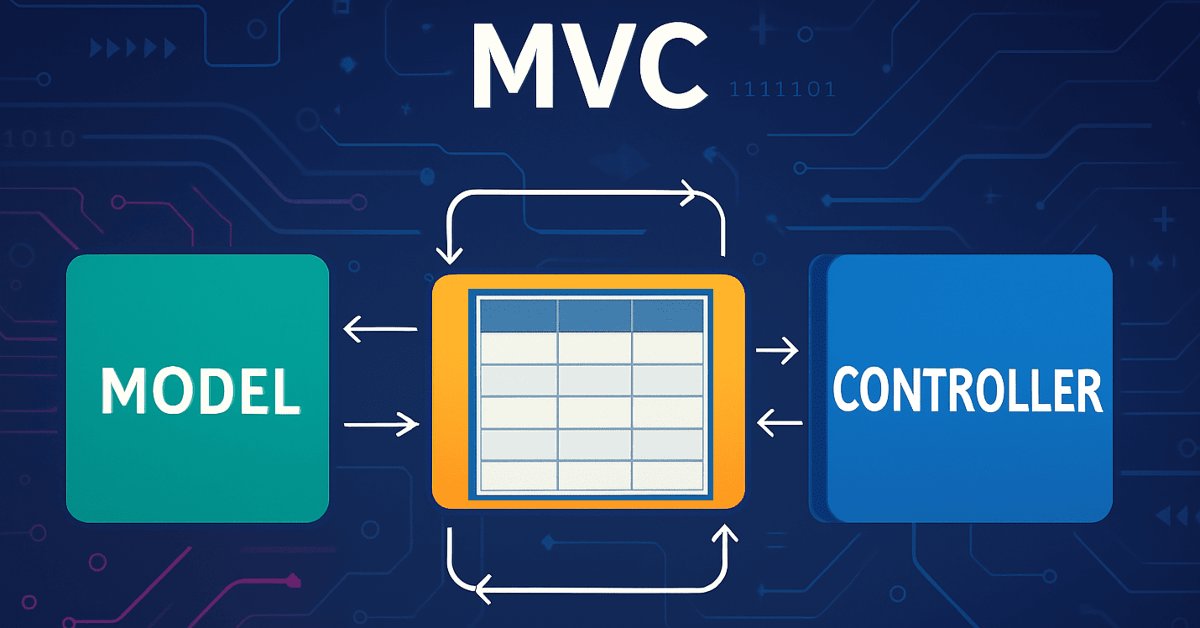
Implementation of a table model in MQL5: Applying the MVC concept
In this article, we look at the process of developing a table model in MQL5 using the MVC (Model-View-Controller) architectural pattern to separate data logic, presentation, and control, enabling structured, flexible, and scalable code. We consider implementation of classes for building a table model, including the use of linked lists for storing data.


Population optimization algorithms: Resistance to getting stuck in local extrema (Part I)
This article presents a unique experiment that aims to examine the behavior of population optimization algorithms in the context of their ability to efficiently escape local minima when population diversity is low and reach global maxima. Working in this direction will provide further insight into which specific algorithms can successfully continue their search using coordinates set by the user as a starting point, and what factors influence their success.


Developing a Replay System (Part 34): Order System (III)
In this article, we will complete the first phase of construction. Although this part is fairly quick to complete, I will cover details that were not discussed previously. I will explain some points that many do not understand. Do you know why you have to press the Shift or Ctrl key?


Developing a Replay System (Part 41): Starting the second phase (II)
If everything seemed right to you up to this point, it means you're not really thinking about the long term, when you start developing applications. Over time you will no longer need to program new applications, you will just have to make them work together. So let's see how to finish assembling the mouse indicator.


Mastering Log Records (Part 3): Exploring Handlers to Save Logs
In this article, we will explore the concept of handlers in the logging library, understand how they work, and create three initial implementations: Console, Database, and File. We will cover everything from the basic structure of handlers to practical testing, preparing the ground for their full functionality in future articles.


Header in the Connexus (Part 3): Mastering the Use of HTTP Headers for Requests
We continue developing the Connexus library. In this chapter, we explore the concept of headers in the HTTP protocol, explaining what they are, what they are for, and how to use them in requests. We cover the main headers used in communications with APIs, and show practical examples of how to configure them in the library.


Overcoming Accessibility Problems in MQL5 Trading Tools (Part I): How to Add Contextual Voice Alerts in MQL5 Indicators
This article explores an accessibility-focused enhancement that goes beyond default terminal alerts by leveraging MQL5 resource management to deliver contextual voice feedback. Instead of generic tones, the indicator communicates what has occurred and why, allowing traders to understand market events without relying solely on visual observation. This approach is especially valuable for visually impaired traders, but it also benefits busy or multitasking users who prefer hands-free interaction.


From Basic to Intermediate: Floating point
This article is a brief introduction to the concept of floating-point numbers. Since this text is very complex please, read it attentively and carefully. Do not expect to quickly master the floating-point system. It only becomes clear over time, as you gain experience using it. But this article will help you understand why your application sometimes produces results different from what you expect.


The View component for tables in the MQL5 MVC paradigm: Base graphical element
The article covers the process of developing a base graphical element for the View component as part of the implementation of tables in the MVC (Model-View-Controller) paradigm in MQL5. This is the first article on the View component and the third one in a series of articles on creating tables for the MetaTrader 5 client terminal.


Developing a Replay System (Part 56): Adapting the Modules
Although the modules already interact with each other properly, an error occurs when trying to use the mouse pointer in the replay service. We need to fix this before moving on to the next step. Additionally, we will fix an issue in the mouse indicator code. So this version will be finally stable and properly polished.


Mastering Log Records (Part 5): Optimizing the Handler with Cache and Rotation
This article improves the logging library by adding formatters in handlers, the CIntervalWatcher class to manage execution cycles, optimization with caching and file rotation, performance tests and practical examples. With these improvements, we ensure an efficient, scalable and adaptable logging system to different development scenarios.


Body in Connexus (Part 4): Adding HTTP body support
In this article, we explored the concept of body in HTTP requests, which is essential for sending data such as JSON and plain text. We discussed and explained how to use it correctly with the appropriate headers. We also introduced the ChttpBody class, part of the Connexus library, which will simplify working with the body of requests.


From Basic to Intermediate: Indicator (III)
In this article, we will explore how to declare various graphical representation indicators, such as DRAW_COLOR_LINE and DRAW_FILLING. Additionally, of course, we will learn how to plot graphs using multiple indicators in a simple, practical, and fast way. This can truly change your perspective on MetaTrader 5 and the market as a whole.


MQL5 Expert Advisor Builder (Part 1): A Simple Static Template
The article examines an example of a multipurpose trading robot template that is suitable both for creating your own strategies and as a codebase for freelance work. A key feature of the solution is bar-based trading; the code already includes built-in modes for averaging, martingale, and holding positions for extended periods. This material will be most useful to beginners who want to develop their own simple strategies or learn about common trading techniques.


The View and Controller components for tables in the MQL5 MVC paradigm: Containers
In this article, we will discuss creating a "Container" control that supports scrolling its contents. Within the process, the already implemented classes of graphics library controls will be improved.


From Basic to Intermediate: Objects (I)
In this article, we will begin looking at how to work with objects directly on the chart. This is done using code specially developed for demonstration purposes. Working with objects is very interesting and can be a lot of fun. Since this will be our first contact with the topic, we will start with something very simple.


Developing a Replay System (Part 63): Playing the service (IV)
In this article, we will finally solve the problems with the simulation of ticks on a one-minute bar so that they can coexist with real ticks. This will help us avoid problems in the future. The material presented here is for educational purposes only. Under no circumstances should the application be viewed for any purpose other than to learn and master the concepts presented.


Connexus Observer (Part 8): Adding a Request Observer
In this final installment of our Connexus library series, we explored the implementation of the Observer pattern, as well as essential refactorings to file paths and method names. This series covered the entire development of Connexus, designed to simplify HTTP communication in complex applications.


Building a Crosshair Volume Profile Indicator in MQL5
We implement an interactive Crosshair Volume Profile indicator in MQL5 for MetaTrader 5. Using a right-click-and-drag crosshair, you select a chart region; the indicator then builds adaptive price bins, accumulates tick or real volume, detects the POC, and renders the profile on the chart. You will practice OnChartEvent()-driven interaction, cursor-to-time/price mapping, and price-source models (Close, Median, Typical, Weighted, OHLC4) for on-demand volume analysis.


From Basic to Intermediate: Struct (VII)
In today's article, we will show how to approach solving problems related to structuring different elements and creating simpler and more attractive solutions. Although the content is oriented toward learning and, therefore, does not constitute production code, it is essential to thoroughly understand the concepts and knowledge that will be covered here. In this way, in the future we will be able to follow the codes we will present.


Market Simulation: (Part 11): Sockets (V)
We are beginning to implement the connection between Excel and MetaTrader 5, but first we need to understand some key points. This way, you won't have to rack your brains trying to figure out why something works or doesn't. And before you frown at the prospect of integrating Python and Excel, let's see how we can (to some extent) control MetaTrader 5 through Excel using xlwings. What we demonstrate here will primarily focus on educational objectives. However, don't think that we can only do what will be covered here.


Measuring What Matters (Part 1) : Portfolio Risk Decomposition in MQL5
The article establishes a reproducible method to measure portfolio risk for multiple symbols using MQL5 matrices and OpenBLAS. It covers computing log returns, building a covariance matrix, and evaluating wᵀΣw instead of summing individual variances. A complete script prints naive versus true volatility and the cross‑term contribution, enabling you to detect when correlated instruments inflate exposure beyond single‑asset estimates.


Developing a Replay System (Part 58): Returning to Work on the Service
After a break in development and improvement of the service used for replay/simulator, we are resuming work on it. Now that we've abandoned the use of resources like terminal globals, we'll have to completely restructure some parts of it. Don't worry, this process will be explained in detail so that everyone can follow the development of our service.


Self Optimizing Expert Advisors in MQL5 (Part 18): Time Lagged Independent Components Analysis
We evaluate blind source separation for market noise control using FastICA applied to SMA-filtered, time-lagged OHLC features. The study compares classical and surrogate targets, measures accuracy across lags, tunes KNN models, and inspects residual structure with clustering. Models are exported to ONNX and integrated into an MQL5 Expert Advisor for testing. The result is a reproducible pipeline from data extraction to deployment.


Building Volatility Models in MQL5 (Part IV): Implementing Long Memory Volatility Processes, FIGARCH, and HARCH
The article delivers MQL5 implementations of FIGARCH and HARCH and updates the volatility library for long‑memory processes. It provides code for Hurst and GPH testing, parameter setup (truncation and horizons), and scripts for fitting, forecasting, and simulations. Readers learn how to apply and compare the models on market data to select an appropriate specification.


Automating Classic Market Methods in MQL5 (Part 6): Jesse Livermore's Pivotal Point System
This article presents a complete MQL5 Expert Advisor that implements Jesse Livermore's market key as a deterministic state machine. It detects pivotal levels from consolidations using ATR and volume expansion, scales in across four tranches, and exits on abnormal behavior defined by range and volume. The EA validates inputs in OnInit, requires a hedging account, and compiles out of the box for testing Livermore's rules on daily data.


Interactive Supply and Demand Zone Manager in MQL5 (Part IV): Trading Supply and Demand Zones
We extend the supply and demand framework with a strategy layer that converts zone interactions into decisions. Qualified zones pass sequential checks for interaction proximity, approach behavior, higher‑timeframe alignment, and price action before execution is handed to a dedicated trade manager. This architecture improves control, maintainability, and future extensibility without changing the underlying zone engine.


Automating Classic Market Methods in MQL5 (Part 7): The Nicolas Darvas Box System
This article implements the Darvas Box method as a complete MQL5 Expert Advisor. We code box detection with a three-session hold, volume contraction during consolidation, and volume-confirmed breakouts, plus a staircase pyramid with a shared, rolling stop at the latest box floor. The EA uses a state machine to run box scanning and trade management in parallel, providing a ready-to-compile system with configurable inputs and clear on-chart diagnostics.


From Basic to Intermediate: Definitions (II)
In this article, we will continue our awareness of #define directive, but this time we will focus on its second form of use, that is, creating macros. Since this subject can be a bit complicated, we decided to use an application that we have been studying for some time. I hope you enjoy today's article.


From Basic to Intermediate: Random Access to Files (I)
In today's article, we will explore random access to file contents for the first time. This applies to both writing and reading information stored in a file. However, since the topic is too broad to cover in a single article, we will limit ourselves here to an introduction to random access.