
Praetorian
- Experts
-
Ben Niemann
 Hi, I’m Ben.
For more than eight years, I have been deeply involved in the financial markets as an enthusiast, researcher, and system builder. - Version: 3.20
- Updated: 8 September 2026
- Activations: 5
Praetorian live record
The visible chart is only the surface
Praetorian maps higher-timeframe market structure across Gold and Nasdaq through an internally governed, multi-horizon breakout portfolio.
Whatever timeframe you display, Praetorian works from its own internal market horizons. It identifies relevant higher-timeframe key levels, prepares breakout execution and manages each system through its own risk and exit logic.
You choose the markets, broker environment and risk. Praetorian controls its internal timing, key levels, signal calculation and execution process.
What you receive
- Gold: a dedicated multi-horizon breakout stack
- Nasdaq: a dedicated multi-horizon breakout stack
- Distinct system logic: every system has its own internal horizon, entry cycle, risk calculation and position management
Two markets. Multiple higher-timeframe horizons. Ten systems under one internally governed architecture.
The internal horizons operate concurrently. You do not need to interpret each higher-timeframe structure manually, rotate timing presets or decide which horizon should replace another.
The level is defined before price arrives
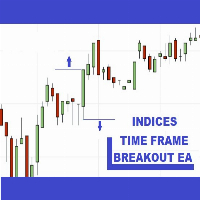
Internally, every system derives its actionable breakout levels from completed higher-timeframe candles within its assigned market horizon. The timeframe displayed on the chart does not determine the signal logic. Buy Stop and Sell Stop orders prepare execution before price reaches the identified levels.
Every position begins with a volatility-based protective stop. There is no fixed take-profit target. Each system manages its exit through fixed internal trailing logic, allowing the position to remain active without a predetermined take-profit ceiling.
Fixed strategy architecture
Consistency begins with what does not change.
- No annual set-file rotation
- No market-phase presets
- No recurring parameter search required for operation
Risk settings and execution discipline
Risk is defined separately for each of the ten systems, either as a fixed amount in the account currency or as a percentage of the current account balance. The default risk levels deliberately differ between the systems. This weighting is part of the portfolio design and is explained at the end of this section.
Praetorian calculates the order volume from the planned entry to the initial protective stop, using the contract specifications supplied by the broker. The volume is rounded down to the broker's volume step and is never raised above the selected risk merely to satisfy the broker's minimum lot. If even the smallest tradable volume would exceed the selected risk, no order is placed.
Minimum risk per system
Gold
- G1: USD 200
- G2: USD 200
- G3: USD 100
- G4: USD 100
- G5: USD 50
Nasdaq
- N1: USD 200
- N2: USD 200
- N3: USD 100
- N4: USD 100
- N5: USD 50
These amounts are the default values of the Fixed Risk input in the current version and, at the same time, the minimum risk per system. They are set so that, with typical broker specifications, all ten systems can execute their complete range of setups within the minimum-lot constraints. Do not go below these amounts.
Accounts in a currency other than USD: the input values are plain numbers in the account currency, not in USD. Use the current account-currency equivalent of the USD amounts listed above.
Percentage-based sizing (the default risk mode): for each system, the selected percentage multiplied by the current balance must be at least the amount listed above. The default percentages (2% / 2% / 1% / 1% / 0.5%) produce exactly these amounts at a balance of USD 10,000. Below USD 10,000, either switch the risk mode to a fixed amount and use the amounts listed above, or raise all percentages by the same factor (at USD 5,000: 4% / 4% / 2% / 2% / 1%). A percentage follows the balance and drops below the minimum in a drawdown; a fixed amount holds the minimum at any balance.
Recommended minimum account size: USD 5,000+
Below this level, the capital base is too small in relation to the required minimum risk. More capital gives the portfolio more room.
Why the minimum matters
Praetorian works with higher-timeframe, swing-sized protective stops. Risk budgets below the listed minimums therefore quickly become incompatible with the broker's minimum lot, most noticeably on Gold. When the executable risk is insufficient, valid setups are filtered out, the trade sample shrinks, and the result no longer represents all enabled systems operating with full participation.
The exact requirement can be higher than the listed minimums, depending on minimum volume, volume step, contract size, tick value and the entry-to-stop distance of the individual setup. Confirm complete participation of all systems under the same broker specifications, account currency and risk scale intended for live deployment.
If the required minimum risk does not fit your overall risk plan, increase the capital base rather than exceeding your planned risk per trade.
Strategic risk weighting
The different risk levels across the systems are deliberate. Systems with lower drawdown, lower variance and a higher win rate carry the larger risk budgets. Systems with higher drawdown, higher variance and a lower win rate carry the smaller ones, with the remaining systems in between. This weighting improves and stabilizes the long-term performance of the portfolio as a whole. When scaling risk to a larger account, scale all systems by the same factor so that the proportions remain intact.
Conservative validation standard
For final evaluation, use Every tick based on real ticks, history quality as close to 100% as the broker data permits and the same account currency, symbol specifications, trading costs and risk scale intended for deployment.
In the developer's comparative tests, one-minute OHLC produced approximately 10-20% higher results than real-tick modeling. One-minute OHLC may be sufficient for preliminary checks.
Broker price feeds and server time affect the construction of the internal higher-timeframe calculations. Spreads, commissions, swaps and execution also affect trades and results. Praetorian does not use a news filter or a universal maximum-spread filter, so broker selection and total trading costs remain part of your risk planning.
Broker and account selection
Praetorian is broker-independent. The quality of the execution environment, especially regarding spread costs, still matters.
The following raw-spread and commission-based MetaTrader 5 account environments form the primary shortlist for Praetorian deployment:
- Fusion Markets - Zero Account
- IC Markets - Raw Spread Account
- Tickmill - Raw Account
- Vantage - RAW ECN Account
- FP Markets - Raw Account
- BlackBull Markets - ECN Prime Account
- Pepperstone - Razor Account
- Global Prime - Raw Account
- Axi - Pro Account
- Eightcap - Raw Account
Use the properly regulated entity available in your jurisdiction and confirm that the selected account provides MetaTrader 5, hedging mode and the required Gold and Nasdaq instruments.
Minimize spreads, commissions and swaps wherever possible. Lower total execution costs preserve more of the strategy's gross trading result.
Test the exact account environment intended for live execution and confirm that every enabled system can place valid orders at the selected risk scale.
Defined deployment
Compatibility: a MetaTrader 5 hedging account is required.
- Run one instance on the intended Gold chart with Gold enabled and Nasdaq disabled.
- Run a second instance on the intended Nasdaq chart with Nasdaq enabled and Gold disabled.
- Keep all ten Magic Numbers unique and confirm the risk settings.
Do not enable both market groups on the same chart. The switches activate system groups; they do not route orders to different symbols. The visible chart timeframe does not control Praetorian because its higher-timeframe horizons operate internally.
Continuous VPS operation is recommended.
Do not remove Praetorian or change its market switches, Magic Numbers, chart context or settings while related positions or pending orders remain active. Existing positions remain open and may no longer be managed. Verify all remaining exposure before making changes.
Built for the right operator
Praetorian is built for you if you want systematic participation in Gold and Nasdaq, explicit control over risk and a fixed process you are prepared to evaluate across complete market cycles.
Activity can be quiet or clustered, and positions can remain open across multiple sessions. Praetorian does not target constant trade frequency, fixed monthly returns or guaranteed short-term outcomes.

























User didn't leave any comment to the rating