Iconic Gold AI
- Experts
-
Maurice Prang
 About SOVRIAN.AI
SOVRIAN.AI develops intelligent AI powered trading systems for MetaTrader 5 and operates as a community bridge into crypto trading, decentralized finance and alternative financial infrastructure. - Version: 2.32
- Updated: 5 July 2026
- Activations: 10
ICONIC GOLD AI+ | COGNITIVE LIQUIDITY SYNAPSE ENGINE
ICONIC GOLD AI+ is an automated XAUUSD Expert Advisor for MetaTrader 5, running on the M10 timeframe. At its core sits the COGNITIVE LIQUIDITY SYNAPSE ENGINE — a full deployment of the SYNAPSE.PHENOTYPE S6 architecture used across the ICONIC FX product line. The system combines a differentiable plastic neural network with a 3x3 phenotypic MAP Elites archive, Hindsight Experience Replay, GL fractional long memory channels, and Riemannian geodesic niche blending. Every trade carries a hard stop loss placed before entry. No grid. No martingale. No exceptions.
System Philosophy
ICONIC GOLD AI+ does not chase constant market participation. Before any pending order is placed, the engine runs a layered assessment covering trend structure, volatility state, session context, spread, cooldown status, news filter, and the current output of the COGNITIVE LIQUIDITY SYNAPSE ENGINE. Every layer must clear simultaneously. If any single condition fails, the EA waits. Inactivity is a deliberate system output, not a malfunction.
Gold behaves differently from Forex majors and indices. Rapid directional moves, sudden spread expansion, and shifting liquidity structure are part of the XAUUSD character. ICONIC GOLD AI+ was engineered specifically for this instrument and should not be deployed on other symbols unless a future version explicitly supports them.
- Symbol: XAUUSD
- Timeframe: M10
- Platform: MetaTrader 5
The COGNITIVE LIQUIDITY SYNAPSE ENGINE
The COGNITIVE LIQUIDITY SYNAPSE ENGINE is the decision and learning layer of ICONIC GOLD AI+. It is not a price predictor. It is a differentiable plastic network that updates its weights continuously through live trade feedback and adjusts lot sizing, stop loss padding, and take profit expansion within configured bounds — all in real time, all in RAM.
Differentiable Plasticity via Hebbian Neuromodulation
Every synapse carries three components: a base weight, a plasticity coefficient, and a Hebbian trace. The effective weight used in every forward pass is computed as:
W_effective = W_base + alpha_plastic × Hebbian_trace
The base weight is the stable, evolutionarily preserved component. The plasticity coefficient scales how much the co activation trace modulates the base. This architecture allows fast synaptic adaptation within the lifetime of a single trade and structural learning across trades via updates to base weights and plasticity coefficients. Hebbian traces are ephemeral — they reset on every hot swap and trade entry and are never serialized to disk.
3x3 MAP Elites Archive
The engine does not operate from a single fixed brain. It maintains an in RAM archive of nine phenotypic elites organized as a 3x3 grid across two behavioral axes:
- Axis 1 — Volatility: ATR normalized regime — Low, Medium, High
- Axis 2 — Trend linearity: Higher timeframe R squared score — Low, Medium, High
Each of the nine niche slots holds the best performing elite genome for that specific regime combination, ranked by realized Sharpe ratio. When market conditions shift between regimes, the engine performs an instant hot swap: the working brain is replaced by a value copy of the niche elite best suited to current conditions. The outgoing brain is promoted into the archive if its Sharpe score outperforms the incumbent. Hebbian traces are cleared on every swap and promotion, preserving only trained base weights and plasticity coefficients in the elite store.
Fuzzy Niche Blending
Hard niche boundaries create oscillation — a market sitting exactly on a volatility threshold would switch brains back and forth with every bar. The engine resolves this with triangular fuzzy membership. The working brain output is a bilinear blend of the two or four nearest niche elites, weighted by proximity on both axes simultaneously. Regime transitions are smooth instead of binary.
Riemannian Metric Tensor
The volatility and trend axes are correlated. Equal Euclidean distances along each axis do not represent equal behavioral distances in the current regime. The engine estimates a live 2x2 covariance metric tensor from an exponentially weighted running estimate of the streaming axis pair and computes niche distances and blending weights under this geodesic metric. Shrinkage toward isotropy is applied to keep the tensor invertible in sparse data regimes.
Epigenetic Methylation Gate
During choppy, low structure conditions and during periods of accelerating drawdown, Hebbian plasticity on the input to hidden layer is gated down by a methylation coefficient in the range [0, 1]. This prevents the network from absorbing noisy co activation traces when the market environment is unreliable. The gate releases when structural conditions return. Output synapses are not methylated. The current methylation level is displayed on the GUI HUD.
Hindsight Experience Replay
After a losing trade, the engine checks whether price offered any meaningful favorable excursion during the trade. If the maximum favorable excursion exceeded 0.10R, the loss is relabeled as a bounded positive reward proportional to what price actually offered. The update then corrects exit timing and take profit policy rather than penalizing the entry decision. If the favorable excursion was below 0.10R, the trade is kept as a genuine negative reward — the entry itself was poor. Strict relabeling mode with a literal +1.0 reward substitution is available but disabled by default due to overfitting risk.
GL Fractional Long Memory Channels
A standard first difference discards all historical memory beyond the previous bar. The COGNITIVE LIQUIDITY SYNAPSE ENGINE adds three fractional differentiation channels computed at order 0.45 using GL binomial weights. This order renders the log price series stationary while retaining multi week structural memory in the feature stream — achieving what neither raw price nor a first difference can provide. The three channels capture fractional momentum of raw log price, EMA smoothed log price, and structural velocity. All three are normalized by the current ATR volatility unit and compressed through tanh before the network forward pass. Values are cached per H1 bar to eliminate redundant computation within each bar.
V7 Engine Upgrades
- Online Welford normalization: Running per channel mean and variance statistics are maintained using the Welford algorithm and updated once per H1 bar. All 11 input features are standardized before the forward pass. Statistics are frozen during an open trade so the entry time feature vector and the post close learning step share an identical normalization basis.
- Experience replay buffer: Real trade experiences including the feature vector, reward signal, and control errors are stored in an in RAM circular buffer. After each live trade, a random batch of past experiences is replayed at reduced learning rate to stabilize persistent weights against catastrophic forgetting.
- Sortino reward shaping: Reward magnitude is scaled by a Sortino style factor derived from the running downside deviation of realized R returns. Clean, low downside regimes amplify reward slightly. High downside periods compress it. The sign and direction of the reward are never altered by this scaling.
- Statistical drift detection: A change point detector monitors mean absolute feature activation per bar. On detecting a distributional shift that falls outside the 3x3 niche structure, the learning rate is temporarily boosted and a drift flag is raised on the HUD. Trade blocking is not applied on drift detection — confirmed across the ICONIC FX product line, as excessive filtering reduces trade frequency without compensating benefit.
- Confidence calibration: Ten reliability buckets map predicted engine confidence to empirically observed win rates. After a minimum of 8 samples accumulate per bucket, the raw predicted confidence is blended 60/40 toward the empirical hit rate. During warm up, raw values pass through unmodified.
Five Execution Stances
The network produces three continuous sigmoid outputs that control lot coefficient, stop loss padding, and take profit expansion. These map to one of five discrete execution stances, displayed on the HUD and written into every trade comment.
- SKIP: Engine veto. No pending order placed. The quality gate or confidence threshold rejected current conditions.
- DEFENSIVE: Reduced execution parameters. Active on low confidence or after consecutive losses. The EA participates at a smaller risk footprint.
- NEUTRAL: Standard parameters. Conditions are acceptable with no strong directional signal from the engine.
- CONFIDENT: Elevated lot coefficient and expanded take profit within configured limits. The engine classifies the current niche as favorable.
- AGGRESSIVE: Maximum parameters within the configured ceiling. Reserved for the strongest internal signal classifications.
Feature Architecture
The network processes 11 input features. Eight are regime state signals from the current market and account context. Three are GL fractional long memory channels.
- Trend active (binary, EMA direction)
- Trend strong (binary, EMA slope direction over configurable bars)
- Volatility regime (ATR ratio vs 10-bar average, normalized)
- Trading session (European or American)
- Day bias (current equity relative to session opening equity)
- Drawdown fraction (current intraday drawdown, scaled)
- ATR expanding (binary, current ATR vs 5-bar average)
- Spread quality (normalized to configured maximum)
- GL channel A: fractional momentum of raw log price
- GL channel B: fractional momentum of EMA smoothed log price
- GL channel C: fractional structural velocity
The three sigmoid outputs are continuous control signals: lot coefficient [0.1 to 1.5], stop loss pad multiplier [0.8 to 1.6], and take profit expansion [1.0 to 2.5]. These scale the base risk configuration multiplicatively rather than replacing it.
Pending Order Logic
ICONIC GOLD AI+ does not use market orders. It arms pending stop orders at structurally relevant levels, only after the quality gate and engine stance clear together. Four level types are supported:
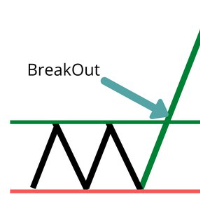
- Current day high and low: Primary breakout reference from the active daily candle.
- Previous day high and low: Structural reference from the prior session. A 25-point offset is applied automatically to prevent overlap with current day levels.
- Support and resistance: Highest high and lowest low across a configurable H1 lookback (default 120 bars). Only placed when the level passes clean breakout and free space validation.
- Order blocks: Reference to the high and low of a recent H1 candle at a configurable offset. Only placed when breakout and free space conditions are satisfied.
Pending orders are deleted automatically when the trend direction changes, when a news lock window activates, when spread conditions become unacceptable, or when the daily trade limit is reached. A configurable refresh timer (default 60 minutes) reevaluates and replaces outdated orders. Stale orders are never left in the market across regime changes or session boundaries.
Market Context and Quality Gate
Every placement attempt passes through a layered quality gate. All of the following must clear simultaneously:
- Trend must be active — EMA direction confirmed, not flat
- Trading session must be within the configured hours (default 01:00 to 23:00)
- Spread must be within the configured maximum (default 25 points)
- Choppy low ATR range conditions without expansion are rejected
- Engine confidence must meet or exceed the dynamic minimum threshold
The confidence threshold rises dynamically after consecutive losses: +0.05 after one loss, +0.10 after two, with a ceiling applied. Cooldown after a closed trade multiplies by 2x, 3x, and 5x based on the consecutive loss count. A forced rearm timer prevents the confidence gate from locking the EA indefinitely — if confidence stays below the critical floor for the configured maximum lock duration (default 60 minutes), the EA switches to DEFENSIVE stance and resumes placement.
Risk Control
- Percentage based lot sizing on current equity (default 1.5% per trade)
- AI lot coefficient [0.1x to 1.5x] from the engine sigmoid output
- AI stop loss pad multiplier [0.8x to 1.6x]
- AI take profit expansion [1.0x to 2.5x]
- Drawdown based lot reduction: 15% at 1.5% drawdown, 30% at 3%, 50% at 5%
- Volatility based risk adjustment: reduced in high ATR regimes, slightly increased in low ATR
- Dynamic cooldown multiplier after consecutive losses
- Maximum trades per day (default 18)
- Maximum spread filter (default 25 points)
- Hard stop loss on every trade, placed before entry
The final lot size is the product of the base equity risk, the AI lot coefficient, the drawdown factor, and the volatility factor — then normalized to the broker minimum lot step. Higher configured risk parameters increase drawdown exposure proportionally. Test settings thoroughly on demo before live deployment.
Daily Profit Target
ICONIC GOLD AI+ includes a configurable daily profit target. When the threshold is reached, the EA stops opening new positions for the remainder of the trading day. All open positions continue to be managed normally — trailing and breakeven mechanics stay active after the target is hit. The daily accumulator resets at midnight using a live counter that updates directly in the trade transaction callback, ensuring the target triggers without delay. The target can be set as a fixed USD amount or as a percentage of the session opening equity. Default is 5% of equity.
Trade Management
- Stop loss: Placed before entry at the configured point distance, scaled by the AI stop loss pad multiplier.
- Take profit: Set to the minimum of the ATR based target and the TP to SL ratio, then scaled by the AI take profit expansion multiplier. Capped at the configured maximum (default 1200 points).
- Breakeven: Stop loss moves to entry plus one point once the trade moves a configurable fraction of the initial SL distance in the favorable direction (default 35% of SL).
- Trailing stop: Activates after a configurable favorable movement threshold (default 200 points). Moves in one direction only, stepping by the configured increment (default 100 points).
News Filter
ICONIC GOLD AI+ reads USD economic calendar data directly from the native MetaTrader 5 calendar engine. No WebRequest configuration is required. The EA queries events with a configurable look ahead window (default 48 hours) and refreshes the event list at a configurable interval (default every 30 minutes). During active lock windows, all pending orders are deleted and no new setups are placed. The next scheduled event name and time are displayed on the GUI HUD.
- High impact USD events — enabled by default
- Medium impact USD events — optional
- Configurable buffer period before news events (default: 30 minutes)
- Configurable buffer period after news events (default: 15 minutes)
GUI and Chart Display
The EA renders a real time animated HUD on the chart. Displayed information includes the current engine stance, confidence percentage, methylation level, drift flag status, today's trade count, session PnL, cumulative EA PnL, active drawdown, next news event, and the internal quality gate reason when a setup is blocked. Trade levels including entry, stop loss, and take profit are drawn as colored lines with labels as long as a position is open. All visual elements are fully configurable through input parameters.
Brain Persistence
The trained network state — base weights, plasticity coefficients, niche Sharpe scores, Welford normalization statistics, Sortino running stats, and confidence calibration buckets — is saved to a binary file in the MetaTrader 5 common folder (default filename: ICONIC_GOLD_S6.bin). Saves are deferred and throttled: writing occurs in the background timer, never during active trade execution. The save interval is configurable (default every 4 hours, also triggered after each closed trade). The archive is reloaded on EA restart, allowing the trained state to persist across terminal sessions. The archive can be wiped via input parameter when a clean start is preferred.
Recovery Mode
An optional recovery mode is available and is disabled by default. When enabled, a losing trade activates a lot multiplier on subsequent entries for a configurable number of follow up trades. This mode increases exposure and drawdown risk during losing sequences. Test thoroughly on demo before enabling it on a live account. Default parameters: multiplier 2.0, maximum recovery trades 2.
Before Live Deployment
Complete the following steps before attaching ICONIC GOLD AI+ to a live account:
- Run a Strategy Tester check to confirm the EA attaches and places the validation order correctly, then set Market_Validation_Mode to FALSE before going live
- Test on a demo account under real broker conditions for a meaningful period
- Verify the XAUUSD symbol name, suffix, contract size, minimum lot, and tick value at your broker
- Confirm average spread and execution quality on XAUUSD
- Confirm the M10 timeframe is selected
- Review all risk inputs before changing defaults
- Use a VPS for stable, continuous operation
- Monitor the first trading sessions closely
- Avoid changing multiple advanced settings simultaneously
Risk Disclaimer
Trading XAUUSD and other leveraged instruments involves substantial risk of loss. Automated trading does not remove market risk. Historical backtests, forward tests, live monitoring results, and product descriptions do not guarantee future performance. Results depend on market conditions, broker specifications, spread, slippage, execution quality, leverage, contract size, VPS stability, and user configuration. Use a demo account first. Only trade with capital you can afford to lose entirely.