Articles on trading system automation in MQL5

Read articles on the trading systems with a wide variety of ideas at the core. Learn how to use statistical methods and patterns on candlestick charts, how to filter signals and where to use semaphore indicators.
The MQL5 Wizard will help you create robots without programming to quickly check your trading ideas. Use the Wizard to learn about genetic algorithms.
Add a new article

You are missing trading opportunities:
- Free trading apps
- Over 8,000 signals for copying
- Economic news for exploring financial markets
Registration
Log in
You agree to website policy and terms of use
If you do not have an account, please register


Cross-validation and basics of causal inference in CatBoost models, export to ONNX format
The article proposes the method of creating bots using machine learning.


Exploring Conformal Forecasting of Financial Time Series
In this article, we will consider conformal predictions and the MAPIE library that implements them. This approach is one of the most modern ones in machine learning and allows us to focus on risk management for existing diverse machine learning models. Conformal predictions, by themselves, are not a way to find patterns in data. They only determine the degree of confidence of existing models in predicting specific examples and allow filtering for reliable predictions.


Feature Engineering for ML (Part 3): Session-Aware Time Features for Forex Machine Learning
The article addresses the loss of temporal information in ML pipelines by encoding periodic time variables with Fourier harmonics and adding forex session structure. It implements session and overlap flags, lagged session volatility, and calendar effects, then prunes features by timeframe. The get time features function returns an index‑aligned, ML‑ready set of time features suitable for integration with price‑based signals.


Larry Williams Market Secrets (Part 3): Proving Non-Random Market Behavior with MQL5
Explore whether financial markets are truly random by recreating Larry Williams’ market behavior experiments using MQL5. This article demonstrates how simple price-action tests can reveal statistical market biases using a custom Expert Advisor.


MQL5 Wizard Techniques you should know (Part 49): Reinforcement Learning with Proximal Policy Optimization
Proximal Policy Optimization is another algorithm in reinforcement learning that updates the policy, often in network form, in very small incremental steps to ensure the model stability. We examine how this could be of use, as we have with previous articles, in a wizard assembled Expert Advisor.


Neural Networks in Trading: Contrastive Pattern Transformer
The Contrastive Transformer is designed to analyze markets both at the level of individual candlesticks and based on entire patterns. This helps improve the quality of market trend modeling. Moreover, the use of contrastive learning to align representations of candlesticks and patterns fosters self-regulation and improves the accuracy of forecasts.


Neural Networks in Trading: Controlled Segmentation (Final Part)
We continue the work started in the previous article on building the RefMask3D framework using MQL5. This framework is designed to comprehensively study multimodal interaction and feature analysis in a point cloud, followed by target object identification based on a description provided in natural language.


Propensity score in causal inference
The article examines the topic of matching in causal inference. Matching is used to compare similar observations in a data set. This is necessary to correctly determine causal effects and get rid of bias. The author explains how this helps in building trading systems based on machine learning, which become more stable on new data they were not trained on. The propensity score plays a central role and is widely used in causal inference.


MQL5 Trading Tools (Part 9): Developing a First Run User Setup Wizard for Expert Advisors with Scrollable Guide
In this article, we develop an MQL5 First Run User Setup Wizard for Expert Advisors, featuring a scrollable guide with an interactive dashboard, dynamic text formatting, and visual controls like buttons and a checkbox allowing users to navigate instructions and configure trading parameters efficiently. Users of the program get to have insight of what the program is all about and what to do on the first run, more like an orientation model.


Developing a Replay System — Market simulation (Part 14): Birth of the SIMULATOR (IV)
In this article we will continue the simulator development stage. this time we will see how to effectively create a RANDOM WALK type movement. This type of movement is very intriguing because it forms the basis of everything that happens in the capital market. In addition, we will begin to understand some concepts that are fundamental to those conducting market analysis.


Creating Custom Indicators in MQL5 (Part 3): Multi-Gauge Enhancements with Sector and Round Styles
In this article, we enhance the gauge-based indicator in MQL5 to support multiple oscillators, allowing user selection through an enumeration for single or combined displays. We introduce sector and round gauge styles via derived classes from a base gauge framework, improving case rendering with arcs, lines, and polygons for a more refined visual appearance.


Neural networks made easy (Part 51): Behavior-Guided Actor-Critic (BAC)
The last two articles considered the Soft Actor-Critic algorithm, which incorporates entropy regularization into the reward function. This approach balances environmental exploration and model exploitation, but it is only applicable to stochastic models. The current article proposes an alternative approach that is applicable to both stochastic and deterministic models.


The MQL5 Standard Library Explorer (Part 4): Custom Signal Library
Today, we use the MQL5 Standard Library to build custom signal classes and let the MQL5 Wizard assemble a professional Expert Advisor for us. This approach simplifies development so that even beginner programmers can create robust EAs without in-depth coding knowledge, focusing instead on tuning inputs and optimizing performance. Join this discussion as we explore the process step by step.


Neural Networks in Trading: Hybrid Graph Sequence Models (Final Part)
We continue exploring hybrid graph sequence models (GSM++), which integrate the advantages of different architectures, providing high analysis accuracy and efficient distribution of computing resources. These models effectively identify hidden patterns, reducing the impact of market noise and improving forecasting quality.


Graph Theory: Traversal Depth-First Search (DFS) Applied in Trading
This article applies Depth-First Search to market structure by modeling swing highs and lows as graph nodes and tracking one structural path as deeply as conditions remain valid. When a key swing is broken, the algorithm backtracks and explores an alternative branch. Readers gain a practical framework to formalize structural bias and test whether the current path aligns with targets like liquidity pools or supply and demand zones.


Neural Networks Made Easy (Part 86): U-Shaped Transformer
We continue to study timeseries forecasting algorithms. In this article, we will discuss another method: the U-shaped Transformer.


Low-Frequency Quantitative Strategies in Metatrader 5: (Part 2) Backtesting a Lead/Lag Analysis in SQL and in Metatrader 5
The article describes a complete pipeline that uses data analysis for finding low-frequency lead/lag trading opportunities. It goes into building a cross-correlation-based Lead/Lag analyser step-by-step, with special attention to the most common errors beginners may commit while developing cross-asset diffusion queries. After screening dozens of cointegrated and correlated pairs, a trading candidate pair is chosen, and its tradeability is evaluated in a pure SQL backtest. Once it is qualified, the strategy is backtested on the MetaTester for parameter optimization. The Expert Advisor with respective backtest settings and optimization inputs is provided, along with Python and SQL scripts.


MQL5 Wizard Techniques you should know (Part 24): Moving Averages
Moving Averages are a very common indicator that are used and understood by most Traders. We explore possible use cases that may not be so common within MQL5 Wizard assembled Expert Advisors.


Price Action Analysis Toolkit Development (Part 45): Creating a Dynamic Level-Analysis Panel in MQL5
In this article, we explore a powerful MQL5 tool that let's you test any price level you desire with just one click. Simply enter your chosen level and press analyze, the EA instantly scans historical data, highlights every touch and breakout on the chart, and displays statistics in a clean, organized dashboard. You'll see exactly how often price respected or broke through your level, and whether it behaved more like support or resistance. Continue reading to explore the detailed procedure.


The MQL5 Standard Library Explorer (Part 3): Expert Standard Deviation Channel
In this discussion, we will develop an Expert Advisor using the CTrade and CChartObjectStdDevChannel classes, while applying several filters to enhance profitability. This stage puts our previous discussion into practical application. Additionally, I’ll introduce another simple approach to help you better understand the MQL5 Standard Library and its underlying codebase. Join the discussion to explore these concepts in action.


Multiple Symbol Analysis With Python And MQL5 (Part I): NASDAQ Integrated Circuit Makers
Join us as we discuss how you can use AI to optimize your position sizing and order quantities to maximize the returns of your portfolio. We will showcase how to algorithmically identify an optimal portfolio and tailor your portfolio to your returns expectations or risk tolerance levels. In this discussion, we will use the SciPy library and the MQL5 language to create an optimal and diversified portfolio using all the data we have.


Hidden Markov Models in Machine Learning-Based Trading Systems
Hidden Markov Models (HMMs) are a powerful class of probabilistic models designed to analyze sequential data, where observed events depend on some sequence of unobserved (hidden) states that form a Markov process. The main assumptions of HMM include the Markov property for hidden states, meaning that the probability of transition to the next state depends only on the current state, and the independence of observations given knowledge of the current hidden state.


Trading with the MQL5 Economic Calendar (Part 3): Adding Currency, Importance, and Time Filters
In this article, we implement filters in the MQL5 Economic Calendar dashboard to refine news event displays by currency, importance, and time. We first establish filter criteria for each category and then integrate these into the dashboard to display only relevant events. Finally, we ensure each filter dynamically updates to provide traders with focused, real-time economic insights.


Quantitative Analysis of Trends: Collecting Statistics in Python
What is quantitative trend analysis in the Forex market? We collect statistics on trends, their magnitude and distribution across the EURUSD currency pair. How quantitative trend analysis can help you create a profitable trading expert advisor.


Neural Networks Made Easy (Part 85): Multivariate Time Series Forecasting
In this article, I would like to introduce you to a new complex timeseries forecasting method, which harmoniously combines the advantages of linear models and transformers.


Integrate Your Own LLM into EA (Part 5): Develop and Test Trading Strategy with LLMs (II)-LoRA-Tuning
With the rapid development of artificial intelligence today, language models (LLMs) are an important part of artificial intelligence, so we should think about how to integrate powerful LLMs into our algorithmic trading. For most people, it is difficult to fine-tune these powerful models according to their needs, deploy them locally, and then apply them to algorithmic trading. This series of articles will take a step-by-step approach to achieve this goal.


Low-Frequency Quantitative Strategies in MetaTrader 5 (Part 3): A Regime-Adaptive Mean-Reversion Swing Trading System
The article describes and codes MR Swing in MQL5, a mean‑reversion swing approach that combines a 200‑day hysteresis channel with Value Charts, DVO, and SVAPO. We document entry/exit rules for bull and bear regimes and show five‑year backtests on six high‑liquidity Nasdaq stocks. The complete EA code and backtest configurations are provided for reproducibility.


Reimagining Classic Strategies (Part 17): Modelling Technical Indicators
In this discussion, we focus on how we can break the glass ceiling imposed by classical machine learning techniques in finance. It appears that the greatest limitation to the value we can extract from statistical models does not lie in the models themselves — neither in the data nor in the complexity of the algorithms — but rather in the methodology we use to apply them. In other words, the true bottleneck may be how we employ the model, not the model’s intrinsic capability.


How to Connect an LLM to an MQL5 Expert Advisor via a Python Server
The article examines three key obstacles to integrating LLMs with MetaTrader 5: the lack of direct access, strict rate limits, and API key security given the architectural limitations of MQL5. A configuration is proposed that uses a local Python server as a bridge between the Expert Advisor and OpenRouter. The article covers WebSocket and fallback to TCP, storing the key on the server, batch processing of multiple symbols, and constructing a technical prompt. Readers get a ready-made architecture that reduces latency and costs.


Data Science and Machine Learning (Part 16): A Refreshing Look at Decision Trees
Dive into the intricate world of decision trees in the latest installment of our Data Science and Machine Learning series. Tailored for traders seeking strategic insights, this article serves as a comprehensive recap, shedding light on the powerful role decision trees play in the analysis of market trends. Explore the roots and branches of these algorithmic trees, unlocking their potential to enhance your trading decisions. Join us for a refreshing perspective on decision trees and discover how they can be your allies in navigating the complexities of financial markets.


A Reinforcement Learning System for Algorithmic Trading in MQL5
The article describes the development of a multi-agent machine learning system for algorithmic trading on MetaTrader 5 based on reinforcement learning. The system has a three-tier architecture: memory neurons store experience, agents make independent decisions, and the collective mind combines them through weighted voting. The system is continuously improved through Q-learning, pruning of ineffective neurons, and evolutionary reduction of exploration.


Neural Networks in Trading: Node-Adaptive Graph Representation with NAFS
We invite you to get acquainted with the NAFS (Node-Adaptive Feature Smoothing) method, which is a non-parametric approach to creating node representations that does not require parameter training. NAFS extracts features of each node given its neighbors and then adaptively combines these features to form a final representation.

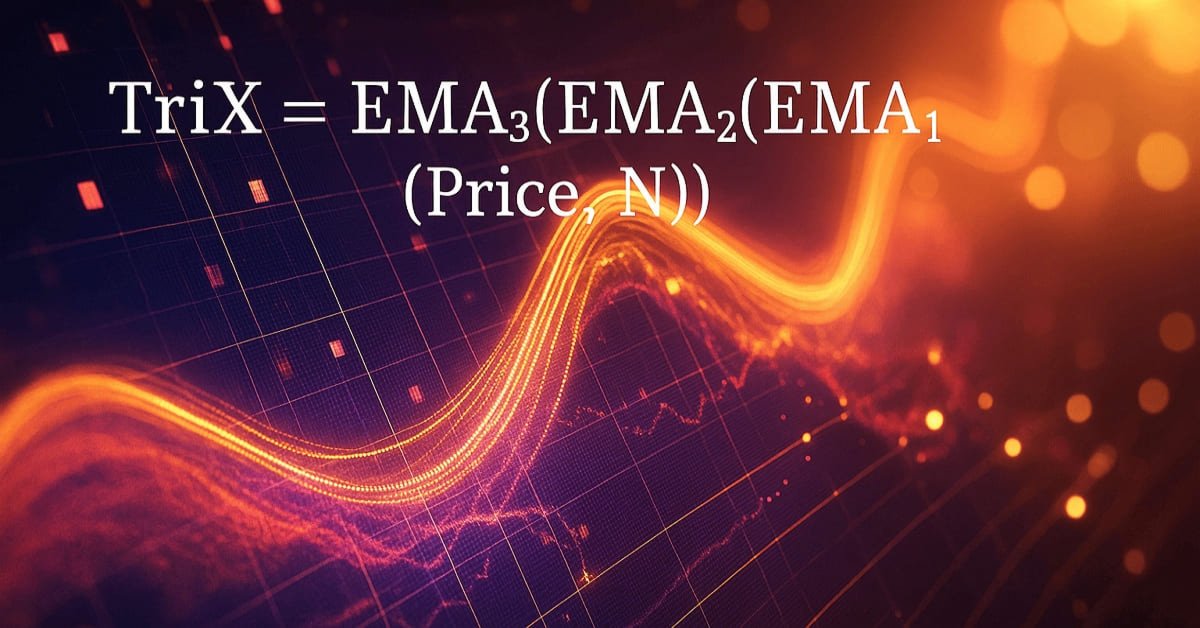
MQL5 Wizard Techniques you should know (Part 67): Using Patterns of TRIX and the Williams Percent Range
The Triple Exponential Moving Average Oscillator (TRIX) and the Williams Percentage Range Oscillator are another pair of indicators that could be used in conjunction within an MQL5 Expert Advisor. This indicator pair, like those we’ve covered recently, is also complementary given that TRIX defines the trend while Williams Percent Range affirms support and Resistance levels. As always, we use the MQL5 wizard to prototype any potential these two may have.


Developing a Replay System (Part 76): New Chart Trade (III)
In this article, we'll look at how the code of DispatchMessage, missing from the previous article, works. We will laso introduce the topic of the next article. For this reason, it is important to understand how this code works before moving on to the next topic. The content presented here is intended solely for educational purposes. Under no circumstances should the application be viewed for any purpose other than to learn and master the concepts presented.


Developing a multi-currency Expert Advisor (Part 18): Automating group selection considering forward period
Let's continue to automate the steps we previously performed manually. This time we will return to the automation of the second stage, that is, the selection of the optimal group of single instances of trading strategies, supplementing it with the ability to take into account the results of instances in the forward period.


Statistical Arbitrage Through Cointegrated Stocks (Part 4): Real-time Model Updating
This article describes a simple but comprehensive statistical arbitrage pipeline for trading a basket of cointegrated stocks. It includes a fully functional Python script for data download and storage; correlation, cointegration, and stationarity tests, along with a sample Metatrader 5 Service implementation for database updating, and the respective Expert Advisor. Some design choices are documented here for reference and for helping in the experiment replication.


Implementing Practical Modules from Other Languages in MQL5 (Part 03): Schedule Module from Python, the OnTimer Event on Steroids
The schedule module in Python offers a simple way to schedule repeated tasks. While MQL5 lacks a built-in equivalent, in this article we’ll implement a similar library to make it easier to set up timed events in MetaTrader 5.


Neural networks made easy (Part 74): Trajectory prediction with adaptation
This article introduces a fairly effective method of multi-agent trajectory forecasting, which is able to adapt to various environmental conditions.


MQL5 Wizard Techniques You should know (Part 86): Speeding Up Data Access with a Sparse Table for a Custom Trailing Class
We revamp our earlier articles on testing trade setups with the MQL5 Wizard by putting a bit more emphasis on input data quality, cleaning, and handling. In the earlier articles we had looked at a lot of custom signal classes, usable by the wizard, so we now shift our focus to a custom trailing class, given that exiting is also a very important part in any trading system. Our broad theme for this particular piece data-efficiency and the O(1) range-query; the core ‘tech’ is MQL5, SQLite, Python-Polars; the Algorithm is the Sparse-Table while we will seek validation from the ATR Indicator.


Example of Stochastic Optimization and Optimal Control
This Expert Advisor, named SMOC (likely standing for Stochastic Model Optimal Control), is a simple example of an advanced algorithmic trading system for MetaTrader 5. It uses a combination of technical indicators, model predictive control, and dynamic risk management to make trading decisions. The EA incorporates adaptive parameters, volatility-based position sizing, and trend analysis to optimize its performance across varying market conditions.