Amaterasu X
- Experts
-
Michael Prescott Burney
 I am a professional trader and Expert Advisor developer focused on building high-performance, risk-driven systems for MetaTrader 5.
 - Version: 4.0
- Updated: 13 September 2026
- Activations: 20
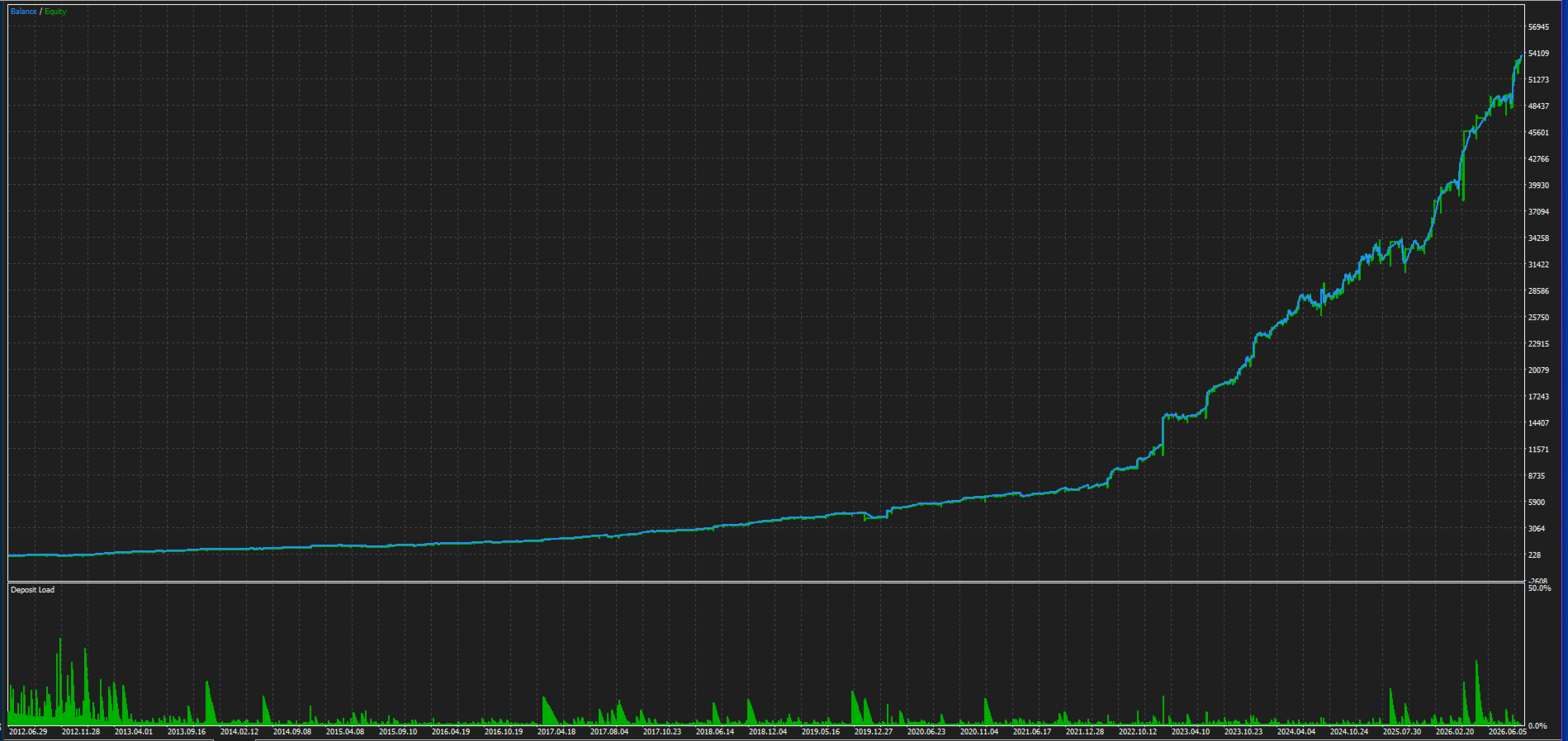
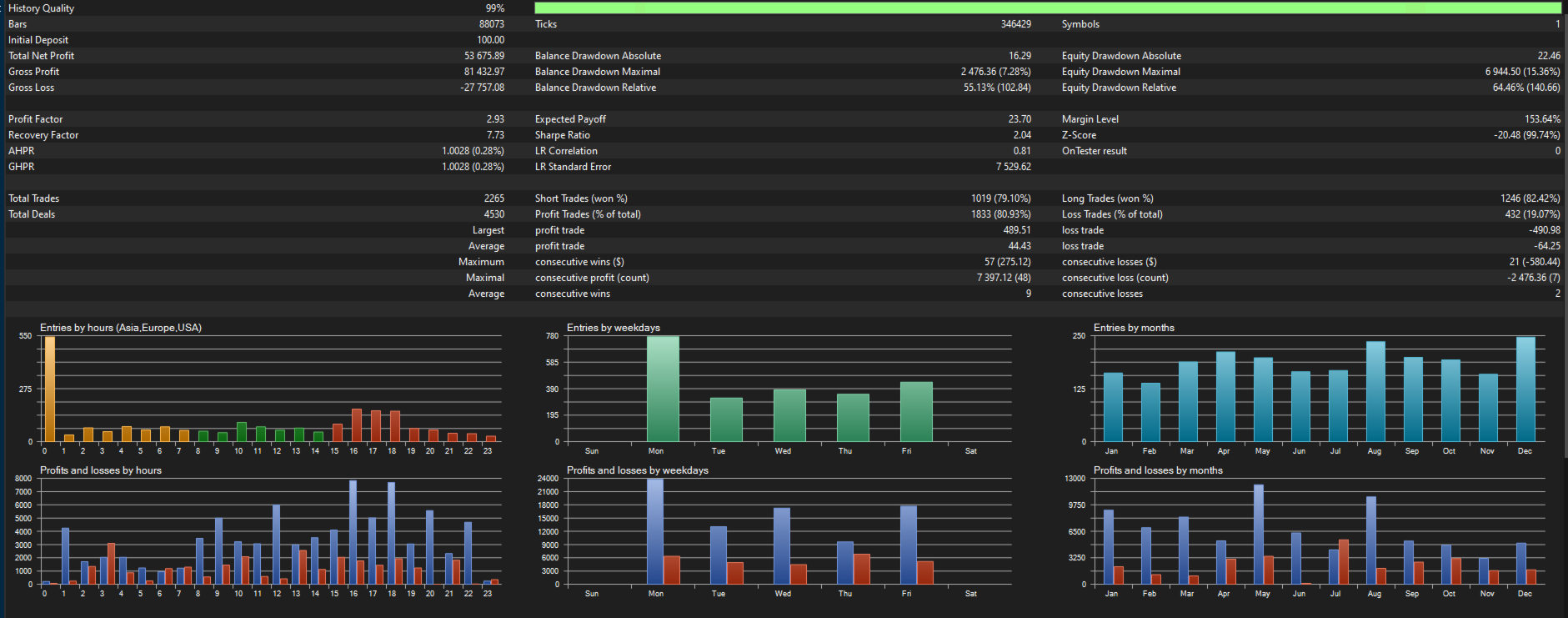
Amaterasu X is an advanced automated trading system built specifically for the USDJPY H1 chart in MetaTrader 5. Powered by a high-output portfolio of 200 integrated strategy models, the EA is designed to scan, evaluate, and trade USDJPY using structured algorithmic logic on the one-hour timeframe.
This USDJPY H1 Expert Advisor for MetaTrader 5 is engineered for traders who want a dedicated, portfolio-driven forex robot without needing to manually monitor charts throughout the trading day. Amaterasu X combines a broad collection of internal trading approaches into one automated system, providing systematic execution for the USDJPY market.
Amaterasu X Features
- 200-strategy USDJPY portfolio trading system
- Dedicated USDJPY one-hour forex robot
- Fully automated MetaTrader 5 Expert Advisor
- Portfolio-based trade selection and execution
- Key-level and price-location awareness within the internal trade framework
- Bollinger Band context with additional internal confirmation filters
- Designed to evaluate deeper trade-location opportunities and meaningful target structures
- Designed for algorithmic USDJPY trading on H1
- Default-ready configuration for streamlined setup
- Lot-size adjustment for account-specific risk management
Recommended Chart Setup
- Currency Pair: USDJPY
- Timeframe: H1 / 60 Minute
- Platform: MetaTrader 5
- Installation: Attach Amaterasu X to one USDJPY H1 chart, choose a suitable lot size, and enable Algo Trading.
USDJPY Algorithmic Trading Solution
Amaterasu X is designed for traders searching for a USDJPY H1 automated trading bot, a MetaTrader 5 USDJPY portfolio EA, or a hands-free forex robot for the USDJPY one-hour chart. It is suited to users who prefer rules-based, automated execution and want a dedicated trading system focused on the U.S. dollar and Japanese yen currency pair.
Unlike generic multi-pair robots, Amaterasu X is built around the behavior of USDJPY on the H1 timeframe. Its diversified 200-strategy structure is intended to provide a broad portfolio approach to automated USDJPY forex trading rather than relying on one isolated entry methodology.
USDJPY can move through trending, ranging, pullback, breakout, and volatility-driven conditions. Amaterasu X is designed to evaluate these changing environments through its internal strategy framework before a new trade is considered.
Key-Level and Bollinger Band Framework
Amaterasu X incorporates key-level awareness and Bollinger Band context into its internal trading framework. Key levels can help provide price-location context, while Bollinger Bands can help evaluate volatility expansion, contraction, and relative price position.
A Bollinger Band interaction by itself is not treated as a complete trading signal. The EA uses additional internal filters and strategy components to evaluate whether current USDJPY H1 conditions support a potential trade.
The system is designed to assess factors such as:
- Price location relative to internal key areas
- Trend and pullback conditions
- Range and breakout behavior
- Bollinger Band expansion and contraction context
- Internal confirmation filters before trade execution
- Risk and execution conditions according to the EA configuration
Deep Trade-Location and Target Focus
Amaterasu X is designed to prioritize selective trade entry areas rather than chasing extended price movement. Its internal framework evaluates deeper trade-location opportunities where structure, volatility context, and internal confirmation conditions align.
The system is also designed to pursue meaningful target structures when its internal trade conditions support sufficient room for the USDJPY H1 trade to develop. This does not guarantee that a target will be reached, but it reflects a structured approach to evaluating price location, potential reward, and trade quality before execution.
How to Use Amaterasu X
- Open MetaTrader 5.
- Open a chart for USDJPY.
- Set the chart timeframe to H1.
- Attach Amaterasu X to the USDJPY H1 chart.
- Review the input parameters and select a lot size suitable for your account risk plan.
- Enable Algo Trading in MetaTrader 5.
- Allow the EA to evaluate USDJPY H1 conditions according to its internal rules.
For intended operation, use Amaterasu X on one USDJPY H1 chart. Do not attach the EA to other symbols or timeframes unless you have independently tested the configuration and understand the effect of different contract specifications, spread conditions, sessions, volatility, and broker execution.
Important Notes
- Amaterasu X is designed specifically for USDJPY H1.
- USDJPY can be affected by U.S. economic data, Federal Reserve policy, Japanese economic releases, Bank of Japan decisions, interest-rate expectations, and changes in global risk sentiment.
- High-impact news, rollover, reduced liquidity, market opening conditions, and unexpected events can cause wider spreads, slippage, and sharp price movement.
- Broker USDJPY symbol names, suffixes, digits, contract sizes, tick values, minimum volumes, leverage, margin requirements, and trading conditions can vary.
- Use a broker with stable USDJPY pricing, reasonable spreads, and reliable execution.
- A VPS can help support uninterrupted MT5 operation when continuous automated trading is required.
- Demo testing is recommended before considering live use.
Important Risk Disclosure
Forex and leveraged trading involve significant risk and may result in losses. Amaterasu X does not guarantee profits, a specific win rate, deep-target completion, funded-account qualification, or protection from drawdown. Backtests, optimization reports, historical results, and demo performance are not indicators or guarantees of future live performance. Market conditions, broker execution, spread, commission, slippage, swap, price gaps, contract specifications, margin requirements, and account settings can materially affect results. Always use suitable risk settings, begin with demo testing where appropriate, and trade only with capital you can afford to risk.