Amaterasu X
- 专家
- 版本: 2.0
- 激活: 20
Amaterasu X is a USDJPY-focused Expert Advisor designed specifically for the H1 chart. It combines a 200-strategy internal framework with key-level analysis, Bollinger Band context, and selective entry filters to identify deeper trade opportunities with clearly defined objectives.
Built for traders who prefer a structured automated approach, Amaterasu X prioritizes trade-location quality and disciplined entry conditions rather than reacting to every short-term price movement. The EA evaluates USDJPY H1 conditions through its internal framework before a position is considered, with the objective of targeting meaningful market movement when the required conditions align.
Core Trading Concept
USDJPY can move through sustained trends, sharp pullbacks, broad ranges, volatility expansion, central-bank reactions, and changes in global risk sentiment. Amaterasu X is designed to evaluate these changing environments through a diversified internal decision framework rather than relying on one isolated signal.
The system focuses on three core ideas:
- Trade location: Identify price areas near relevant internal key levels instead of chasing extended movement.
- Volatility context: Use Bollinger Bands as part of the analysis framework to assess price position, expansion, contraction, and relative market conditions.
- Selective confirmation: Require additional internal filters before a new USDJPY H1 trade is allowed.
The objective is not to trade every visible market move. The objective is to wait for a combination of price location, volatility context, market structure, and internal confirmation conditions that meet the system’s rules.
Designed for USDJPY H1
Amaterasu X is built for USDJPY on the H1 timeframe. The H1 chart is intended to provide a balanced environment for structured trade evaluation: it can filter some of the noise seen on lower timeframes while still allowing the EA to respond to meaningful changes in price structure and volatility.
For intended operation, attach Amaterasu X only to:
- Symbol: USDJPY
- Timeframe: H1
- Platform: MetaTrader 5
USDJPY can be affected by U.S. economic releases, Federal Reserve policy, Japanese economic data, Bank of Japan decisions, interest-rate expectations, and broader risk-sentiment changes. High-impact events can affect price, spread, liquidity, and execution quality.
200-Strategy Framework
Amaterasu X uses a diversified internal framework of 200 strategy components. These components are designed to evaluate different forms of USDJPY H1 behavior and operate as a coordinated decision process before a trade is opened.
The 200 internal strategies do not mean that the EA will open 200 positions or trade every market movement. They act as internal analysis, validation, and filtering components that help determine whether a potential opportunity meets the current requirements of the system.
The framework is designed to evaluate conditions such as:
- Directional market structure and trend behavior.
- Pullback, retracement, and deeper price-location conditions.
- Key-level interaction and support or resistance context.
- Bollinger Band position, width, expansion, and contraction.
- Range behavior, boundary interaction, and rejection conditions.
- Breakout, retest, continuation, and follow-through conditions.
- Volatility-aware entry filtering.
- Risk and execution checks before a position is opened.
This multi-strategy design is intended to reduce reliance on a single pattern, single indicator, or one-candle signal. Amaterasu X is designed to wait for internal alignment before taking a USDJPY H1 trade.
Key Levels and Trade Entry Areas
Amaterasu X prioritizes trade entry areas around relevant internal key levels. These levels can provide structure for evaluating whether price is extended, retracing, testing an important area, or developing a potential continuation or reversal condition.
Entering after price has already moved far from a planned location can change the quality of the trade. The logical stop-loss may become farther away while the remaining reward to the next market obstacle may become smaller. For this reason, Amaterasu X is designed to focus on selective price areas instead of chasing every rapid move.
The trade-location framework is designed to assess:
- Price interaction with internal support and resistance areas.
- Pullbacks into potential value zones.
- Range boundaries and possible rejection areas.
- Breakout retests and continuation locations.
- Distance from recent price extension.
- Available room toward a realistic target area.
Key-level analysis does not guarantee that price will reverse or continue. It provides structured context that can be combined with the EA’s Bollinger Band and internal confirmation filters.
Bollinger Bands With Selective Filters
Bollinger Bands are widely used volatility-based technical tools. They can help show relative price location, volatility compression, volatility expansion, and price interaction with a dynamic range.
A Bollinger Band touch by itself is not a complete trading signal. During strong trends, USDJPY can remain near an outer band for an extended period. During ranges, price can react at a band but still continue through the area. A robust system needs context, confirmation, and risk control.
Amaterasu X uses Bollinger Bands as part of its internal entry framework together with additional filters designed to assess:
- Current USDJPY price structure and directional context.
- Price location relative to internal key levels.
- Band width and volatility environment.
- Potential trend continuation versus reversal behavior.
- Pullback and retracement quality.
- Internal trade confirmation before execution.
- Risk and execution conditions before entry.
The purpose is to make Bollinger Band analysis more selective. Rather than treating every upper-band or lower-band interaction as an entry, Amaterasu X waits for its internal requirements to align.
Accuracy-Focused Trade Selection
Amaterasu X is designed with an accuracy-focused trade-selection process. The system prioritizes quality of entry area and internal confirmation over the goal of taking every possible trade.
Its entry process is designed to emphasize:
- USDJPY H1 market context.
- Price location near relevant internal levels.
- Bollinger Band volatility context.
- Additional internal confirmation filters.
- Trend, pullback, range, and breakout-condition evaluation.
- Defined risk before an order is placed.
- Consistent rule-based execution.
No Expert Advisor can guarantee accurate entries, a specific win rate, profitable trades, or future performance. Accuracy can change with market regime, volatility, broker spread, commission, slippage, swap, execution quality, account settings, and the period evaluated.
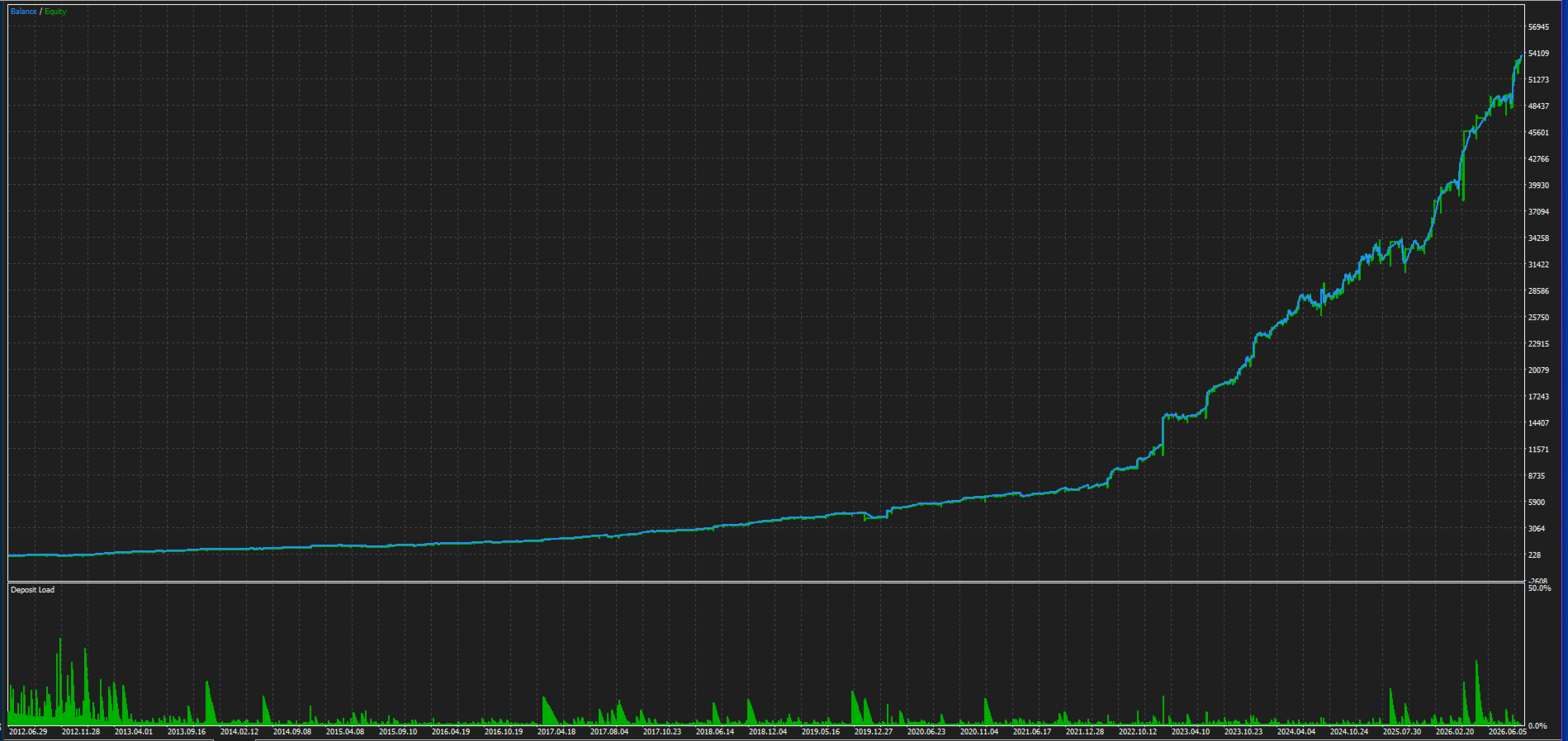
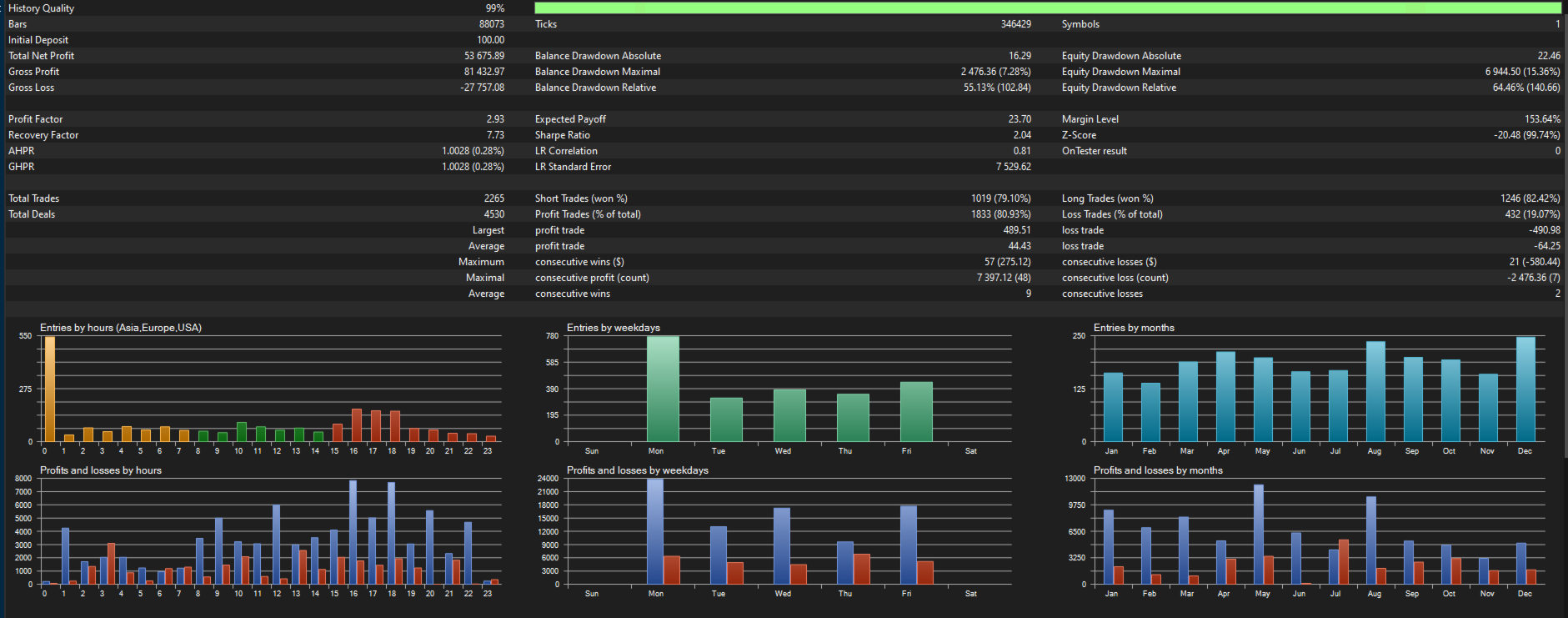
Amaterasu X should be judged using a complete performance view that includes win rate, average win, average loss, drawdown, consecutive losses, risk-to-reward, trading costs, and broker-specific execution—not accuracy alone.
Deep Targets and Meaningful Trade Development
Amaterasu X is designed to pursue deeper targets when its USDJPY H1 entry conditions and trade-location framework provide sufficient room for a meaningful move. The focus is on allowing qualified trades to target broader price objectives rather than relying only on very small short-term movements.
Deeper targets require realistic expectations. A target should reflect internal trade logic and available market structure, not an arbitrary large number selected to make a trade appear attractive.
The system’s trade-development approach is designed to consider:
- Entry location relative to key levels.
- Distance to relevant support or resistance areas.
- Trend and volatility conditions.
- Risk-to-reward structure before entry.
- Internal exit and trade-management rules.
Deep targets do not guarantee large profits. A trade can still reach its protective stop-loss, experience slippage, or be affected by changing conditions. Proper risk settings remain essential.
Structured Trade Framework
| Trade Component | Amaterasu X Approach |
|---|---|
| Market focus | Designed specifically for USDJPY on the H1 timeframe. |
| Entry location | Prioritizes selective price areas around internal key levels and deeper trade locations. |
| Signal context | Uses Bollinger Bands as part of the signal framework with additional internal filters. |
| Trade selection | Accuracy-focused filtering designed to evaluate market condition, price location, and confirmation. |
| Target approach | Designed to pursue deeper, meaningful targets when internal structure and conditions support them. |
| Risk handling | Uses defined internal trade logic and user-selected risk settings. |
| Execution | Rule-based automated operation designed to reduce emotional manual decision-making. |
Why Amaterasu X?
Amaterasu X is designed for traders seeking a specialized USDJPY H1 automated system that combines a broad internal strategy framework with key-level awareness, Bollinger Band context, and selective trade filtering.
- Designed specifically for USDJPY H1.
- Uses a 200-strategy internal decision framework.
- Prioritizes deeper and more selective trade entry areas.
- Uses internal key-level analysis to provide price-location context.
- Uses Bollinger Bands as part of the entry-signal framework.
- Applies additional internal filters before a position is opened.
- Focuses on accuracy-oriented trade selection rather than constant market exposure.
- Designed to pursue deeper targets when internal market conditions support the trade structure.
- Uses rule-based automated execution for consistent operation.
How to Use
- Open MetaTrader 5.
- Open a chart for USDJPY.
- Set the chart timeframe to H1.
- Attach Amaterasu X to the USDJPY H1 chart.
- Enable Algo Trading in MetaTrader 5.
- Review all input parameters and select risk settings suitable for your account.
- Allow Amaterasu X to evaluate USDJPY H1 market conditions according to its internal rules.
For intended operating conditions, do not attach Amaterasu X to other symbols or timeframes unless you have independently tested the configuration and understand the impact of different spreads, contract specifications, tick values, sessions, volatility, and broker execution conditions.
Recommended Setup
- Trading platform: MetaTrader 5
- Symbol: USDJPY
- Timeframe: H1
- Operation: One chart instance per account unless your written risk plan supports additional instances
- Broker: A broker with stable USDJPY pricing, reasonable spreads, transparent symbol specifications, and reliable execution
- Connection: VPS recommended for uninterrupted automated operation
- Testing: Demo testing recommended before considering live use
Important Notes
- Amaterasu X is designed for USDJPY on the H1 timeframe.
- USDJPY symbol names, suffixes, digits, contract size, tick value, minimum volume, leverage, and margin requirements can differ between brokers.
- U.S. and Japanese economic releases, Federal Reserve events, Bank of Japan decisions, and changes in risk sentiment can produce rapid market movement.
- Spread, commission, slippage, swap, broker execution, price gaps, and account settings can materially affect real results.
- Deep targets and accuracy-focused trade selection do not guarantee profits, high win rates, or future performance.
- Use conservative risk and calculate volume according to your broker’s USDJPY contract specifications.
- Do not increase risk based on a short period of positive performance.
- Past performance, backtests, optimization results, and demo results do not guarantee future results.
Risk Disclaimer
Trading foreign exchange, CFDs, and other leveraged products involves substantial risk and may not be suitable for all investors. Amaterasu X is an automated trading tool, not a guarantee of profit, accurate entries, deep targets, a specific win rate, or future performance. Market conditions, broker execution, spread, commission, slippage, swap, price gaps, contract specifications, margin requirements, and account settings can materially affect results. Past performance, backtests, optimization results, and demo performance do not guarantee future results. Always test on a demo account first, use conservative risk, and trade only with funds you can afford to lose.