Articles on machine learning in trading

Creating AI-based trading robots: native integration with Python, matrices and vectors, math and statistics libraries and much more.
Find out how to use machine learning in trading. Neurons, perceptrons, convolutional and recurrent networks, predictive models — start with the basics and work your way up to developing your own AI. You will learn how to train and apply neural networks for algorithmic trading in financial markets.
Add a new article

You are missing trading opportunities:
- Free trading apps
- Over 8,000 signals for copying
- Economic news for exploring financial markets
Registration
Log in
You agree to website policy and terms of use
If you do not have an account, please register


Reimagining Classic Strategies (Part 14): High Probability Setups
High probability Setups are well known in our trading community, but regrettably they are not well-defined. In this article, we will aim to find an empirical and algorithmic way of defining exactly what is a high probability setup, identifying and exploiting them. By using Gradient Boosting Trees, we demonstrated how the reader can improve the performance of an arbitrary trading strategy and better communicate the exact job to be done to our computer in a more meaningful and explicit manner.


Neural networks made easy (Part 61): Optimism issue in offline reinforcement learning
During the offline learning, we optimize the Agent's policy based on the training sample data. The resulting strategy gives the Agent confidence in its actions. However, such optimism is not always justified and can cause increased risks during the model operation. Today we will look at one of the methods to reduce these risks.


Neural Networks in Trading: A Cross-Domain Time Series Forecasting Framework (TimeFound)
In this article, we build the core of the TimeFound intelligent model step by step, adapting it to real-world time series forecasting tasks. If you are interested in the practical implementation of neural network patching algorithms in MQL5, you have come to the right place.


Analyzing binary code of prices on the exchange (Part II): Converting to BIP39 and writing GPT model
Continuing tries to decipher price movements... What about linguistic analysis of the "market dictionary" that we get by converting the binary price code to BIP39? In this article, we will delve into an innovative approach to exchange data analysis and consider how modern natural language processing techniques can be applied to the market language.


Biological neuron for forecasting financial time series
We will build a biologically correct system of neurons for time series forecasting. The introduction of a plasma-like environment into the neural network architecture creates a kind of "collective intelligence," where each neuron influences the system's operation not only through direct connections, but also through long-range electromagnetic interactions. Let's see how the neural brain modeling system will perform in the market.


Anarchic Society Optimization (ASO) algorithm
In this article, we will get acquainted with the Anarchic Society Optimization (ASO) algorithm and discuss how an algorithm based on the irrational and adventurous behavior of participants in an anarchic society (an anomalous system of social interaction free from centralized power and various kinds of hierarchies) is able to explore the solution space and avoid the traps of local optimum. The article presents a unified ASO structure applicable to both continuous and discrete problems.


Artificial Bee Hive Algorithm (ABHA): Theory and methods
In this article, we will consider the Artificial Bee Hive Algorithm (ABHA) developed in 2009. The algorithm is aimed at solving continuous optimization problems. We will look at how ABHA draws inspiration from the behavior of a bee colony, where each bee has a unique role that helps them find resources more efficiently.


Successful Restaurateur Algorithm (SRA)
Successful Restaurateur Algorithm (SRA) is an innovative optimization method inspired by restaurant business management principles. Unlike traditional approaches, SRA does not discard weak solutions, but improves them by combining with elements of successful ones. The algorithm shows competitive results and offers a fresh perspective on balancing exploration and exploitation in optimization problems.


MQL5 Wizard Techniques you should know (Part 34): Price-Embedding with an Unconventional RBM
Restricted Boltzmann Machines are a form of neural network that was developed in the mid 1980s at a time when compute resources were prohibitively expensive. At its onset, it relied on Gibbs Sampling and Contrastive Divergence in order to reduce dimensionality or capture the hidden probabilities/properties over input training data sets. We examine how Backpropagation can perform similarly when the RBM ‘embeds’ prices for a forecasting Multi-Layer-Perceptron.


The case for using a Composite Data Set this Q4 in weighing SPDR XLY's next performance
We consider XLY, SPDR’s consumer discretionary spending ETF and see if with tools in MetaTrader’s IDE we can sift through an array of data sets in selecting what could work with a forecasting model with a forward outlook of not more than a year.


Animal Migration Optimization (AMO) algorithm
The article is devoted to the AMO algorithm, which models the seasonal migration of animals in search of optimal conditions for life and reproduction. The main features of AMO include the use of topological neighborhood and a probabilistic update mechanism, which makes it easy to implement and flexible for various optimization tasks.


Ensemble methods to enhance numerical predictions in MQL5
In this article, we present the implementation of several ensemble learning methods in MQL5 and examine their effectiveness across different scenarios.


Integrating MQL5 with data processing packages (Part 3): Enhanced Data Visualization
In this article, we will perform Enhanced Data Visualization by going beyond basic charts by incorporating features like interactivity, layered data, and dynamic elements, enabling traders to explore trends, patterns, and correlations more effectively.


Defining your Edge (Part 1): Using a Discrete Fourier Transform and a Spiking Neural Network in a Trading Robot
In this article we make the case for pairing the Discrete Fourier Transform with a Spiking Neural Network in a Trading Robot. The Fourier Transform helps represent data as oscillations instead of its raw values. To govern how we interpret these cycles, we engage a Spiking Neural Network that unlike regular networks, uses time dependent electrical charges to accumulate potential and only "spike" when a target threshold is met. Combining these two engines allows us better control on the timing of discrete market movements, that in theory should give us entry signals with rigorous mathematical confirmation.

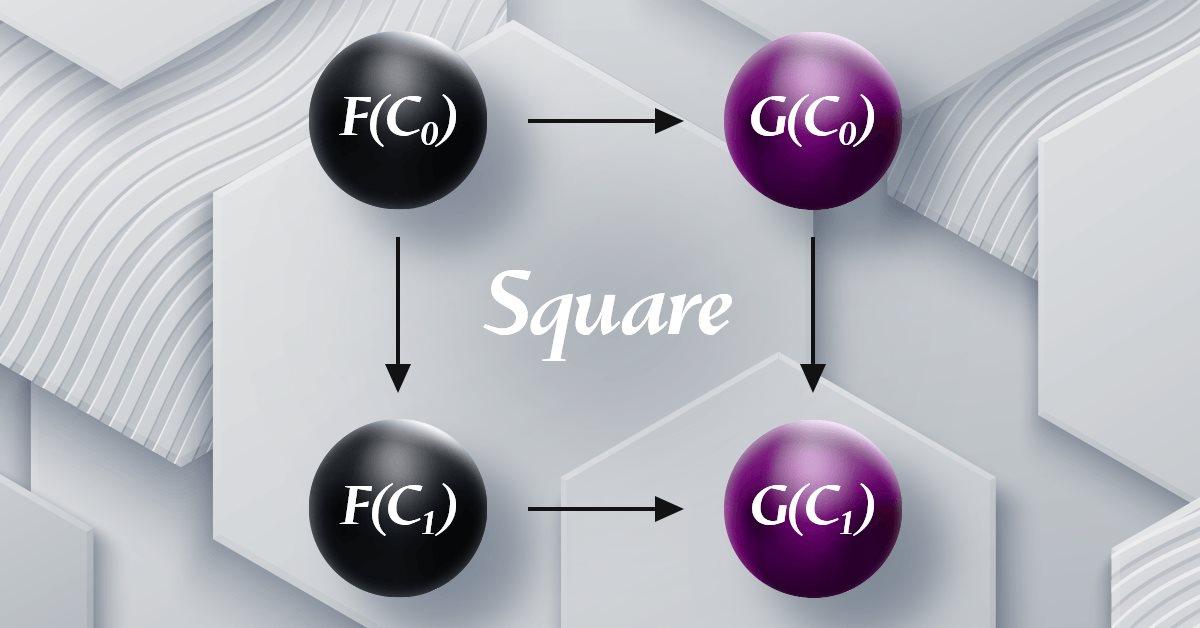
Category Theory in MQL5 (Part 19): Naturality Square Induction
We continue our look at natural transformations by considering naturality square induction. Slight restraints on multicurrency implementation for experts assembled with the MQL5 wizard mean we are showcasing our data classification abilities with a script. Principle applications considered are price change classification and thus its forecasting.

The Group Method of Data Handling: Implementing the Combinatorial Algorithm in MQL5
In this article we continue our exploration of the Group Method of Data Handling family of algorithms, with the implementation of the Combinatorial Algorithm along with its refined incarnation, the Combinatorial Selective Algorithm in MQL5.


Population optimization algorithms: Spiral Dynamics Optimization (SDO) algorithm
The article presents an optimization algorithm based on the patterns of constructing spiral trajectories in nature, such as mollusk shells - the spiral dynamics optimization (SDO) algorithm. I have thoroughly revised and modified the algorithm proposed by the authors. The article will consider the necessity of these changes.


Neural Networks in Trading: Injection of Global Information into Independent Channels (InjectTST)
Most modern multimodal time series forecasting methods use the independent channels approach. This ignores the natural dependence of different channels of the same time series. Smart use of two approaches (independent and mixed channels) is the key to improving the performance of the models.


Neural Networks in Trading: Point Cloud Analysis (PointNet)
Direct point cloud analysis avoids unnecessary data growth and improves the performance of models in classification and segmentation tasks. Such approaches demonstrate high performance and robustness to perturbations in the original data.


Neural Networks in Trading: Exploring the Local Structure of Data
Effective identification and preservation of the local structure of market data in noisy conditions is a critical task in trading. The use of the Self-Attention mechanism has shown promising results in processing such data; however, the classical approach does not account for the local characteristics of the underlying structure. In this article, I introduce an algorithm capable of incorporating these structural dependencies.


Reimagining Classic Strategies (Part IV): SP500 and US Treasury Notes
In this series of articles, we analyze classical trading strategies using modern algorithms to determine whether we can improve the strategy using AI. In today's article, we revisit a classical approach for trading the SP500 using the relationship it has with US Treasury Notes.


Category Theory in MQL5 (Part 21): Natural Transformations with LDA
This article, the 21st in our series, continues with a look at Natural Transformations and how they can be implemented using linear discriminant analysis. We present applications of this in a signal class format, like in the previous article.


MQL5 Wizard Techniques you should know (Part 32): Regularization
Regularization is a form of penalizing the loss function in proportion to the discrete weighting applied throughout the various layers of a neural network. We look at the significance, for some of the various regularization forms, this can have in test runs with a wizard assembled Expert Advisor.


Causal inference in time series classification problems
In this article, we will look at the theory of causal inference using machine learning, as well as the custom approach implementation in Python. Causal inference and causal thinking have their roots in philosophy and psychology and play an important role in our understanding of reality.


Developing an MQL5 RL agent with RestAPI integration (Part 3): Creating automatic moves and test scripts in MQL5
This article discusses the implementation of automatic moves in the tic-tac-toe game in Python, integrated with MQL5 functions and unit tests. The goal is to improve the interactivity of the game and ensure the reliability of the system through testing in MQL5. The presentation covers game logic development, integration, and hands-on testing, and concludes with the creation of a dynamic game environment and a robust integrated system.


Neural Networks in Trading: Hierarchical Dual-Tower Transformer (Final Part)
We continue to build the Hidformer hierarchical dual-tower transformer model designed for analyzing and forecasting complex multivariate time series. In this article, we will bring the work we started earlier to its logical conclusion — we will test the model on real historical data.


MQL5 Wizard Techniques you should know (Part 70): Using Patterns of SAR and the RVI with a Exponential Kernel Network
We follow up our last article, where we introduced the indicator pair of the SAR and the RVI, by considering how this indicator pairing could be extended with Machine Learning. SAR and RVI are a trend and momentum complimentary pairing. Our machine learning approach uses a convolution neural network that engages the Exponential kernel in sizing its kernels and channels, when fine-tuning the forecasts of this indicator pairing. As always, this is done in a custom signal class file that works with the MQL5 wizard to assemble an Expert Advisor.


Neural Networks in Trading: Hierarchical Dual-Tower Transformer (Hidformer)
We invite you to get acquainted with the Hierarchical Double-Tower Transformer (Hidformer) framework, which was developed for time series forecasting and data analysis. The framework authors proposed several improvements to the Transformer architecture, which resulted in increased forecast accuracy and reduced computational resource consumption.


Spurious Regressions in Python
Spurious regressions occur when two time series exhibit a high degree of correlation purely by chance, leading to misleading results in regression analysis. In such cases, even though variables may appear to be related, the correlation is coincidental and the model may be unreliable.


Neural networks are easy (Part 59): Dichotomy of Control (DoC)
In the previous article, we got acquainted with the Decision Transformer. But the complex stochastic environment of the foreign exchange market did not allow us to fully implement the potential of the presented method. In this article, I will introduce an algorithm that is aimed at improving the performance of algorithms in stochastic environments.


Meta-Labeling the Classics (Part 1): Filtering and Sizing RSI Trades
RSI accumulates losses in trending conditions by firing at every threshold crossing regardless of market regime. A Random Forest secondary classifier trained on 12 contextual features — RSI momentum slope, EMA50 trend velocity, ATR-normalised trend stretch, and nine others — filters raw signals and scales position size by classifier confidence on EURUSD H1. Results compare plain RSI, meta-filtered RSI, and bet-sized RSI across a 16-month out-of-sample period with per-trade metrics and drawdown diagnostics.


Tabu Search (TS)
The article discusses the Tabu Search algorithm, one of the first and most well-known metaheuristic methods. We will go through the algorithm operation in detail, starting with choosing an initial solution and exploring neighboring options, with an emphasis on using a tabu list. The article covers the key aspects of the algorithm and its features.


Neural Networks in Trading: Transformer for the Point Cloud (Pointformer)
In this article, we will talk about algorithms for using attention methods in solving problems of detecting objects in a point cloud. Object detection in point clouds is important for many real-world applications.


Building Volatility models in MQL5 (Part I): The Initial Implementation
In this article, we present an MQL5 library for modeling volatility, designed to function similarly to Python's arch package. The library currently supports the specification of common conditional mean (HAR, AR, Constant Mean, Zero Mean) and conditional volatility (Constant Variance, ARCH, GARCH) models.


Dolphin Echolocation Algorithm (DEA)
In this article, we take a closer look at the DEA algorithm, a metaheuristic optimization method inspired by dolphins' unique ability to find prey using echolocation. From mathematical foundations to practical implementation in MQL5, from analysis to comparison with classical algorithms, we will examine in detail why this relatively new method deserves a place in the arsenal of researchers facing optimization problems.


Economic forecasts: Exploring the Python potential
How to use World Bank economic data for forecasts? What happens when you combine AI models and economics?


Mastering Model Interpretation: Gaining Deeper Insight From Your Machine Learning Models
Machine Learning is a complex and rewarding field for anyone of any experience. In this article we dive deep into the inner mechanisms powering the models you build, we explore the intricate world of features,predictions and impactful decisions unravelling the complexities and gaining a firm grasp of model interpretation. Learn the art of navigating tradeoffs , enhancing predictions, ranking feature importance all while ensuring robust decision making. This essential read helps you clock more performance from your machine learning models and extract more value for employing machine learning methodologies.


Neural Network in Practice: Pseudoinverse (II)
Since these articles are educational in nature and are not intended to show the implementation of specific functionality, we will do things a little differently in this article. Instead of showing how to apply factorization to obtain the inverse of a matrix, we will focus on factorization of the pseudoinverse. The reason is that there is no point in showing how to get the general coefficient if we can do it in a special way. Even better, the reader can gain a deeper understanding of why things happen the way they do. So, let's now figure out why hardware is replacing software over time.


Neural Networks Made Easy (Part 90): Frequency Interpolation of Time Series (FITS)
By studying the FEDformer method, we opened the door to the frequency domain of time series representation. In this new article, we will continue the topic we started. We will consider a method with which we can not only conduct an analysis, but also predict subsequent states in a particular area.

Camel Algorithm (CA)
The Camel Algorithm, developed in 2016, simulates the behavior of camels in the desert to solve optimization problems, taking into account temperature, supply, and endurance. This article also presents a modified version of the algorithm (CAm) with key improvements: the use of a Gaussian distribution in generating solutions and the optimization of the oasis effect parameters.