Articles with MQL5 programming examples

Access a huge collection of articles with code examples showing how to create indicators and trading robots for the MetaTrader platform in the MQL5 language. Source codes are attached to the articles, so you can open them in MetaEditor and run them to see how the applications work.
These articles will be useful both for those who have just started exploring automated trading and for professional traders with programming experience. They feature not only examples, but also contain new ideas.
Add a new article

You are missing trading opportunities:
- Free trading apps
- Over 8,000 signals for copying
- Economic news for exploring financial markets
Registration
Log in
You agree to website policy and terms of use
If you do not have an account, please register


Overcoming Accessibility Problems in MQL5 Trading Tools (Part IV): Remote voice trading
Learn a practical way to execute MetaTrader 5 trades from Telegram voice notes using a Python middleware and an MQL5 EA acting as an HTTP client. The article covers architecture, WebRequest polling, in-memory queuing, JSON parsing with null-terminator stripping, and a constrained command grammar with a 0.001-lot default. You will configure the environment and validate round‑trip latency suitable for mobile data connections.


Developing a Replay System (Part 60): Playing the Service (I)
We have been working on just the indicators for a long time now, but now it's time to get the service working again and see how the chart is built based on the data provided. However, since the whole thing is not that simple, we will have to be attentive to understand what awaits us ahead.


Reimagining Classic Strategies in MQL5 (Part II): FTSE100 and UK Gilts
In this series of articles, we explore popular trading strategies and try to improve them using AI. In today's article, we revisit the classical trading strategy built on the relationship between the stock market and the bond market.


Modular Indicator Architecture in MQL5 (Part 1): Stop Copy-Pasting and Start Writing Scalable, Reusable Code
This article develops an object-oriented framework for MQL5 indicators by evolving a primitive example into reusable modules. It formalizes partial buffer recalculation in OnCalculate, moves logic into header-based classes (CAppliedPrice, CSma), and introduces CSubIndiBase, CIndicatorBase, and a registry to centralize requirements. You get portable components, isolated inputs, and clean buffers with minimal boilerplate, making new indicators faster to assemble and easier to maintain.


Graph Theory: Traversal Breadth-First Search (BFS) Applied in Trading
Breadth First Search (BFS) uses level-order traversal to model market structure as a directed graph of price swings evolving through time. By analyzing historical bars or sessions layer by layer, BFS prioritizes recent price behavior while still respecting deeper market memory.


Population optimization algorithms: Bacterial Foraging Optimization - Genetic Algorithm (BFO-GA)
The article presents a new approach to solving optimization problems by combining ideas from bacterial foraging optimization (BFO) algorithms and techniques used in the genetic algorithm (GA) into a hybrid BFO-GA algorithm. It uses bacterial swarming to globally search for an optimal solution and genetic operators to refine local optima. Unlike the original BFO, bacteria can now mutate and inherit genes.


Market Simulation (Part 12): Sockets (VI)
In this article, we will look at how to solve certain problems and issues that arise when using Python code within other programs. More specifically, we will demonstrate a common issue encountered when using Excel in conjunction with MetaTrader 5, although we will be using Python to facilitate this interaction. However, this implementation has a minor drawback. It does not occur in all cases, but only in certain specific situations. When it does happen, it is necessary to understand the cause. In today’s article, we will begin explaining how to resolve this issue.


A feature selection algorithm using energy based learning in pure MQL5
In this article we present the implementation of a feature selection algorithm described in an academic paper titled,"FREL: A stable feature selection algorithm", called Feature weighting as regularized energy based learning.


Developing a Replay System (Part 45): Chart Trade Project (IV)
The main purpose of this article is to introduce and explain the C_ChartFloatingRAD class. We have a Chart Trade indicator that works in a rather interesting way. As you may have noticed, we still have a fairly small number of objects on the chart, and yet we get the expected functionality. The values present in the indicator can be edited. The question is, how is this possible? This article will start to make things clearer.


Adaptive Social Behavior Optimization (ASBO): Two-phase evolution
We continue dwelling on the topic of social behavior of living organisms and its impact on the development of a new mathematical model - ASBO (Adaptive Social Behavior Optimization). We will dive into the two-phase evolution, test the algorithm and draw conclusions. Just as in nature a group of living organisms join their efforts to survive, ASBO uses principles of collective behavior to solve complex optimization problems.


Mastering Log Records (Part 2): Formatting Logs
In this article, we will explore how to create and apply log formatters in the library. We will see everything from the basic structure of a formatter to practical implementation examples. By the end, you will have the necessary knowledge to format logs within the library, and understand how everything works behind the scenes.


MQL5 Trading Tools (Part 18): Rounded Speech Bubbles/Balloons with Orientation Control
This article shows how to build rounded speech bubbles in MQL5 by combining a rounded rectangle with a pointer triangle and controlling orientation (up, down, left, right). It details geometry precomputation, supersampled filling, rounded apex arcs, and segmented borders with an extension ratio for seamless joins. Readers get configurable code for size, radii, colors, opacity, and thickness, ready for alerts or tooltips in trading interfaces.


Developing a Replay System (Part 55): Control Module
In this article, we will implement a control indicator so that it can be integrated into the message system we are developing. Although it is not very difficult, there are some details that need to be understood about the initialization of this module. The material presented here is for educational purposes only. In no way should it be considered as an application for any purpose other than learning and mastering the concepts shown.


Developing a Replay System (Part 35): Making Adjustments (I)
Before we can move forward, we need to fix a few things. These are not actually the necessary fixes but rather improvements to the way the class is managed and used. The reason is that failures occurred due to some interaction within the system. Despite attempts to find out the cause of such failures in order to eliminate them, all these attempts were unsuccessful. Some of these cases make no sense, for example, when we use pointers or recursion in C/C++, the program crashes.


Reimagining Classic Strategies (Part VII) : Forex Markets And Sovereign Debt Analysis on the USDJPY
In today's article, we will analyze the relationship between future exchange rates and government bonds. Bonds are among the most popular forms of fixed income securities and will be the focus of our discussion.Join us as we explore whether we can improve a classic strategy using AI.


Developing a Replay System (Part 39): Paving the Path (III)
Before we proceed to the second stage of development, we need to revise some ideas. Do you know how to make MQL5 do what you need? Have you ever tried to go beyond what is contained in the documentation? If not, then get ready. Because we will be doing something that most people don't normally do.


All about Automated Trading Championship: Reporting the Championship 2007
The present article contains Weekly Reports of the ATC 2007. These materials are like snapshots, they are interesting-to-read not only during the Championship, but years later as well.


MQL5 Trading Toolkit (Part 7): Expanding the History Management EX5 Library with the Last Canceled Pending Order Functions
Learn how to complete the creation of the final module in the History Manager EX5 library, focusing on the functions responsible for handling the most recently canceled pending order. This will provide you with the tools to efficiently retrieve and store key details related to canceled pending orders with MQL5.


From Basic to Intermediate: Union (I)
In this article we will look at what a union is. Here, through experiments, we will analyze the first constructions in which union can be used. However, what will be shown here is only a core part of a set of concepts and information that will be covered in subsequent articles. The content presented here is intended solely for educational purposes. Under no circumstances should the application be viewed for any purpose other than to learn and master the concepts presented.


Automating Terminal Startup for Service Tasks
The article explores the possibility of launching a terminal with a configuration file to perform automated routine tasks, programmatically handling such launches, and creating a fully-fledged system for auto-optimizing an EA using Windows OS tools.


From Basic to Intermediate: Events (II)
In this article, we will see that not everything always needs to be implemented in a certain specific way. There are alternative approaches to problem-solving. To properly understand this article, it is necessary to grasp the concepts described in the previous articles. The materials presented here are for educational purposes only. Do not regard it as a finished application. Its purpose is to study the concepts presented here.


Mastering Log Records (Part 8): Error Records That Translate Themselves
In this eighth installment of the Mastering Log Records series, we explore the implementation of multilingual error messages in Logify, a powerful logging library for MQL5. You’ll learn how to structure errors with context, translate messages into multiple languages, and dynamically format logs by severity level. All of this with a clean, extensible, and production-ready design.


Code, Tears, and Algo Forge
This article discusses the transition to MQL5 Algo Forge as a modern and convenient format for publishing program code and article attachments. Using repositories instead of traditional ZIP archives and source code allows you to keep projects up-to-date, make edits quickly, and professionally interact with your readers. Recommendations are provided for quickly migrating developments to the cloud environment via the MetaEditor interface.


The MQL5 Standard Library Explorer (Part 14): Building a Dynamic Hedge EA with the ALGLIB Port (ap.mqh)
This article introduces ap.mqh, the ALGLIB port for MQL5, and demonstrates its use in multi‑asset workflows that require robust linear algebra. It covers why built-in indicators fall short, then implements polynomial regression, a rolling correlation matrix indicator, and an adaptive hedge ratio estimator using ridge regression with Cholesky. Practical code shows how to compute spread z‑scores and execute coordinated pairs trades entirely within MetaTrader 5.


How to Detect and Normalize Chart Objects in MQL5 (Part 5): Fibonacci in Focus
The article bridges automated placement with manual analysis for the Fibonacci family in MQL5. It scans charts, identifies user Fibonacci objects, and normalizes their level arrays, interaction flags, and visuals per object type while preserving coordinates. With manual-priority enforcement, Expert Advisors can evaluate both human and code-generated tools reliably, without duplicates or runtime indexing issues.

All about Automated Trading Championship: Reporting the Championship 2006
This article contains Weekly Reports of the ATC 2006. These materials are like snapshots, they are interesting-to-read not only during the Championship, but years later as well.


Implementing Anchored VWAP Indicator in MQL5: A Step-by-Step Guide
A step-by-step guide to building an anchored VWAP indicator with an interactive draggable anchor line in MQL5. The article covers the complete implementation, including calculation methodology, session resets, standard deviation bands, and custom visualization. Learn the architectural design decisions behind stateless boundary detection, multi-instance support, and cross-asset volume handling to build a versatile indicator with benchmarking, technical, and analytical capabilities.


Integrating MQL5 with Data Processing Packages (Part 9): Entropy-Based Adaptive Volatility
This work presents an end-to-end pipeline: collect MetaTrader 5 data, engineer entropy/volatility/trend features, train a PyTorch classifier, and expose predictions through a Flask API. An MQL5 EA posts rolling prices each tick, receives probability and regime, and applies adaptive position sizing and stop distances. The result is a clear recipe for integrating ML inference with MetaTrader 5.

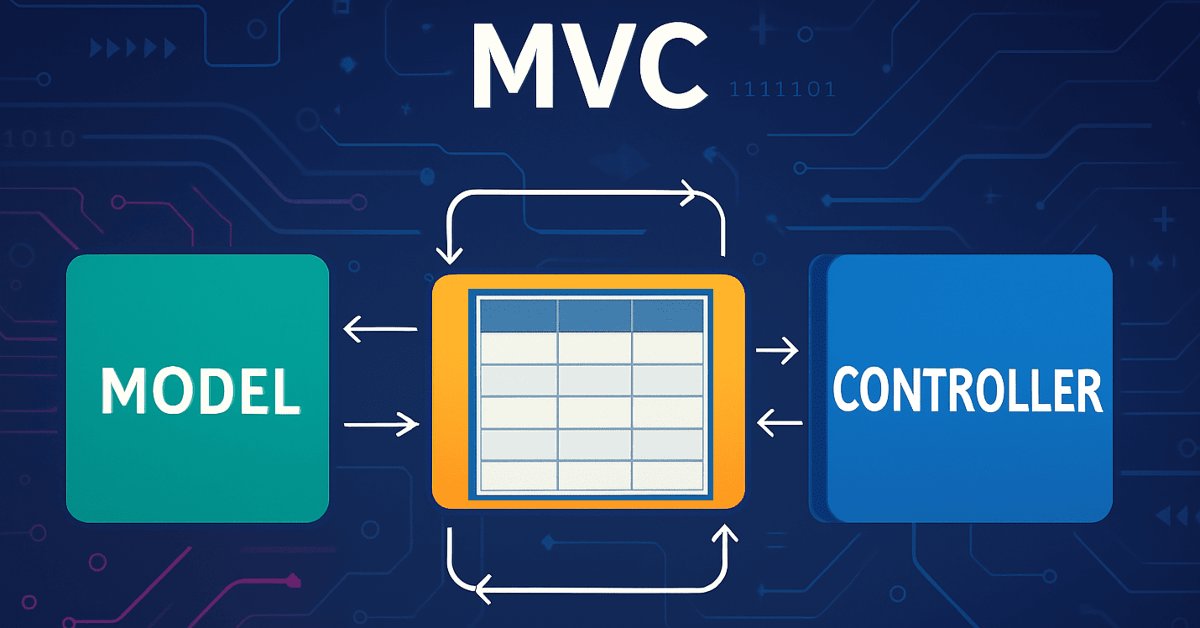
Implementation of a table model in MQL5: Applying the MVC concept
In this article, we look at the process of developing a table model in MQL5 using the MVC (Model-View-Controller) architectural pattern to separate data logic, presentation, and control, enabling structured, flexible, and scalable code. We consider implementation of classes for building a table model, including the use of linked lists for storing data.


Population optimization algorithms: Resistance to getting stuck in local extrema (Part I)
This article presents a unique experiment that aims to examine the behavior of population optimization algorithms in the context of their ability to efficiently escape local minima when population diversity is low and reach global maxima. Working in this direction will provide further insight into which specific algorithms can successfully continue their search using coordinates set by the user as a starting point, and what factors influence their success.


Developing a Replay System (Part 34): Order System (III)
In this article, we will complete the first phase of construction. Although this part is fairly quick to complete, I will cover details that were not discussed previously. I will explain some points that many do not understand. Do you know why you have to press the Shift or Ctrl key?


Developing a Replay System (Part 41): Starting the second phase (II)
If everything seemed right to you up to this point, it means you're not really thinking about the long term, when you start developing applications. Over time you will no longer need to program new applications, you will just have to make them work together. So let's see how to finish assembling the mouse indicator.


Mastering Log Records (Part 3): Exploring Handlers to Save Logs
In this article, we will explore the concept of handlers in the logging library, understand how they work, and create three initial implementations: Console, Database, and File. We will cover everything from the basic structure of handlers to practical testing, preparing the ground for their full functionality in future articles.


Header in the Connexus (Part 3): Mastering the Use of HTTP Headers for Requests
We continue developing the Connexus library. In this chapter, we explore the concept of headers in the HTTP protocol, explaining what they are, what they are for, and how to use them in requests. We cover the main headers used in communications with APIs, and show practical examples of how to configure them in the library.


Overcoming Accessibility Problems in MQL5 Trading Tools (Part I): How to Add Contextual Voice Alerts in MQL5 Indicators
This article explores an accessibility-focused enhancement that goes beyond default terminal alerts by leveraging MQL5 resource management to deliver contextual voice feedback. Instead of generic tones, the indicator communicates what has occurred and why, allowing traders to understand market events without relying solely on visual observation. This approach is especially valuable for visually impaired traders, but it also benefits busy or multitasking users who prefer hands-free interaction.


From Basic to Intermediate: Floating point
This article is a brief introduction to the concept of floating-point numbers. Since this text is very complex please, read it attentively and carefully. Do not expect to quickly master the floating-point system. It only becomes clear over time, as you gain experience using it. But this article will help you understand why your application sometimes produces results different from what you expect.


The View component for tables in the MQL5 MVC paradigm: Base graphical element
The article covers the process of developing a base graphical element for the View component as part of the implementation of tables in the MVC (Model-View-Controller) paradigm in MQL5. This is the first article on the View component and the third one in a series of articles on creating tables for the MetaTrader 5 client terminal.


Developing a Replay System (Part 56): Adapting the Modules
Although the modules already interact with each other properly, an error occurs when trying to use the mouse pointer in the replay service. We need to fix this before moving on to the next step. Additionally, we will fix an issue in the mouse indicator code. So this version will be finally stable and properly polished.


Mastering Log Records (Part 5): Optimizing the Handler with Cache and Rotation
This article improves the logging library by adding formatters in handlers, the CIntervalWatcher class to manage execution cycles, optimization with caching and file rotation, performance tests and practical examples. With these improvements, we ensure an efficient, scalable and adaptable logging system to different development scenarios.


Body in Connexus (Part 4): Adding HTTP body support
In this article, we explored the concept of body in HTTP requests, which is essential for sending data such as JSON and plain text. We discussed and explained how to use it correctly with the appropriate headers. We also introduced the ChttpBody class, part of the Connexus library, which will simplify working with the body of requests.