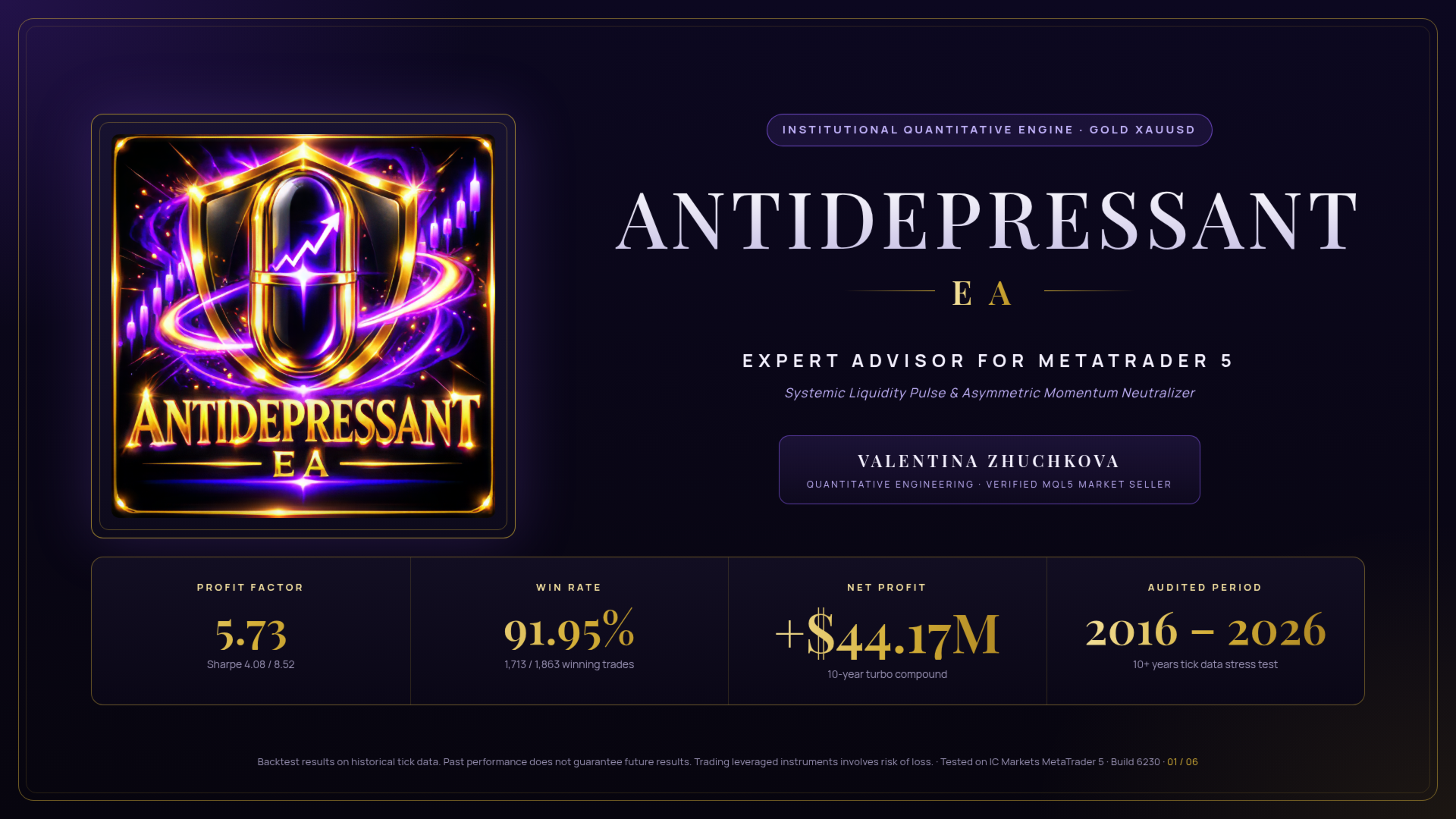
Antidepressant EA
- Experts
-
Valentina Zhuchkova
 The "New Author" Myth vs. Algorithmic Reality
In trading, tenure is not a hedge. Many traders fall into the "Legacy Trap"—trusting old names whose systems were built for a market that no longer exists.
A new name isn't a risk; it’s a technological upgrade. - Version: 27.150
- Activations: 12
Algorithmic Liquidity & Volatility Engine for XAUUSD (M5)
Gold moves fast. Trade with a system.
Antidepressant EA is an automated trading system for MetaTrader 5, built specifically for XAUUSD on M5. Directional opportunity selection, adaptive position management and built-in account protection come together in one Expert Advisor with straightforward controls.
Less manual routine. More discipline, visibility and control over your trading process.
Developer: Valentina Zhuchkova
Antidepressant EA public signal
Built for the character of Gold
Sharp impulses, deep pullbacks and changing trading conditions call for a consistent approach. Antidepressant combines market-context analysis, entry filtering and automated management of open positions. You select the risk profile; the EA carries out the trading process according to predefined rules.
Five advantages. One system.
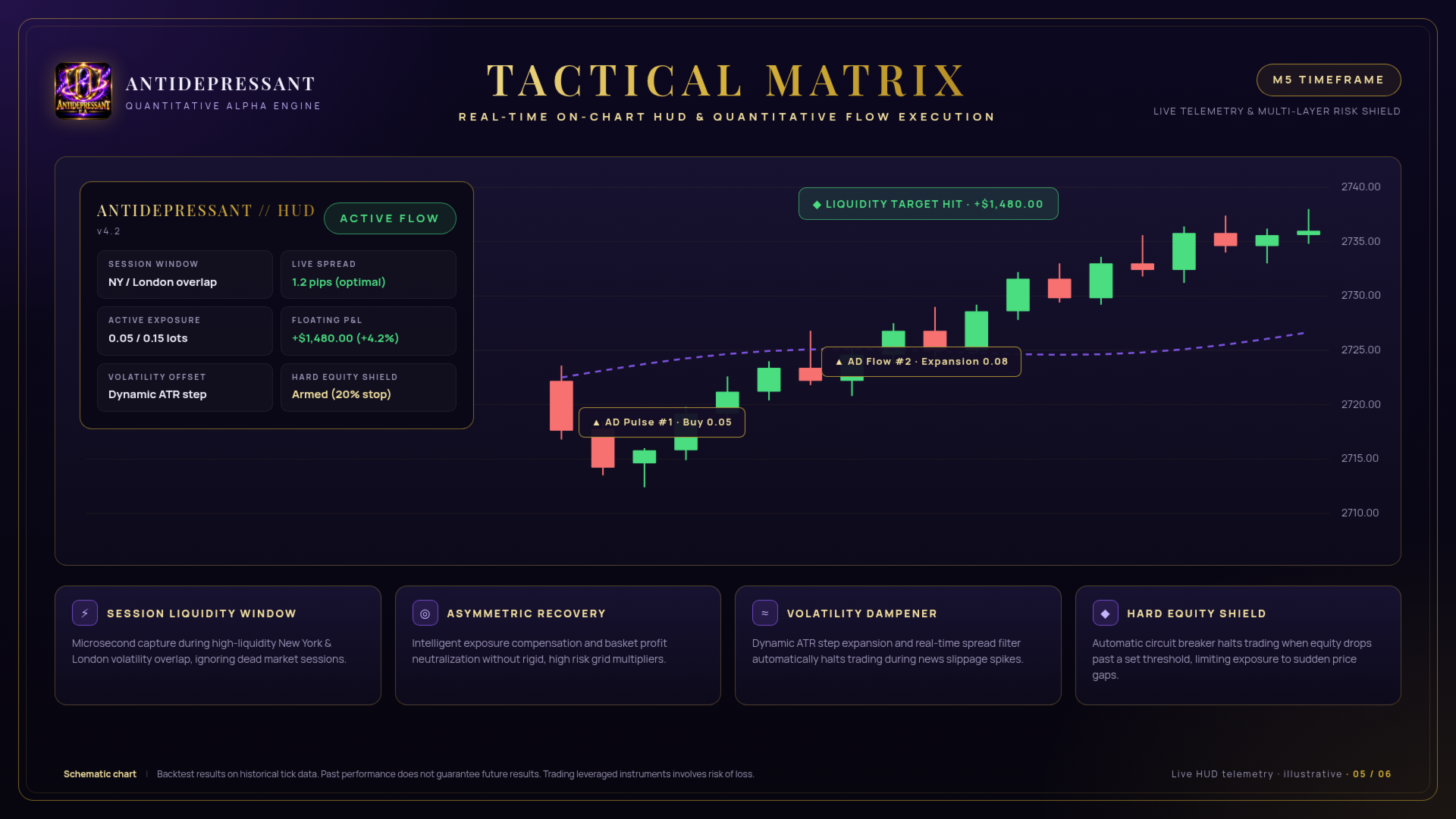
- Neural Pulse Core · AD Pulse — disciplined entries. Identifies directional opportunities while considering market context and trading conditions.
- Dynamic VWAP Flow · AD Flow — adaptive management. Coordinates a basket of positions and its shared exit target as price develops.
- iAutoSpread — cost awareness. An adaptive spread filter helps restrict new initial entries when pricing conditions deteriorate.
- House-Money Compounding — grow with your account. Reinvestment treats starting capital and accumulated profit differently, according to the selected profile.
- Equity Protection — built-in capital protection. Monitors equity drawdown, closing the EA's positions and pausing its trading when the configured threshold triggers.
Your style. Your risk profile.
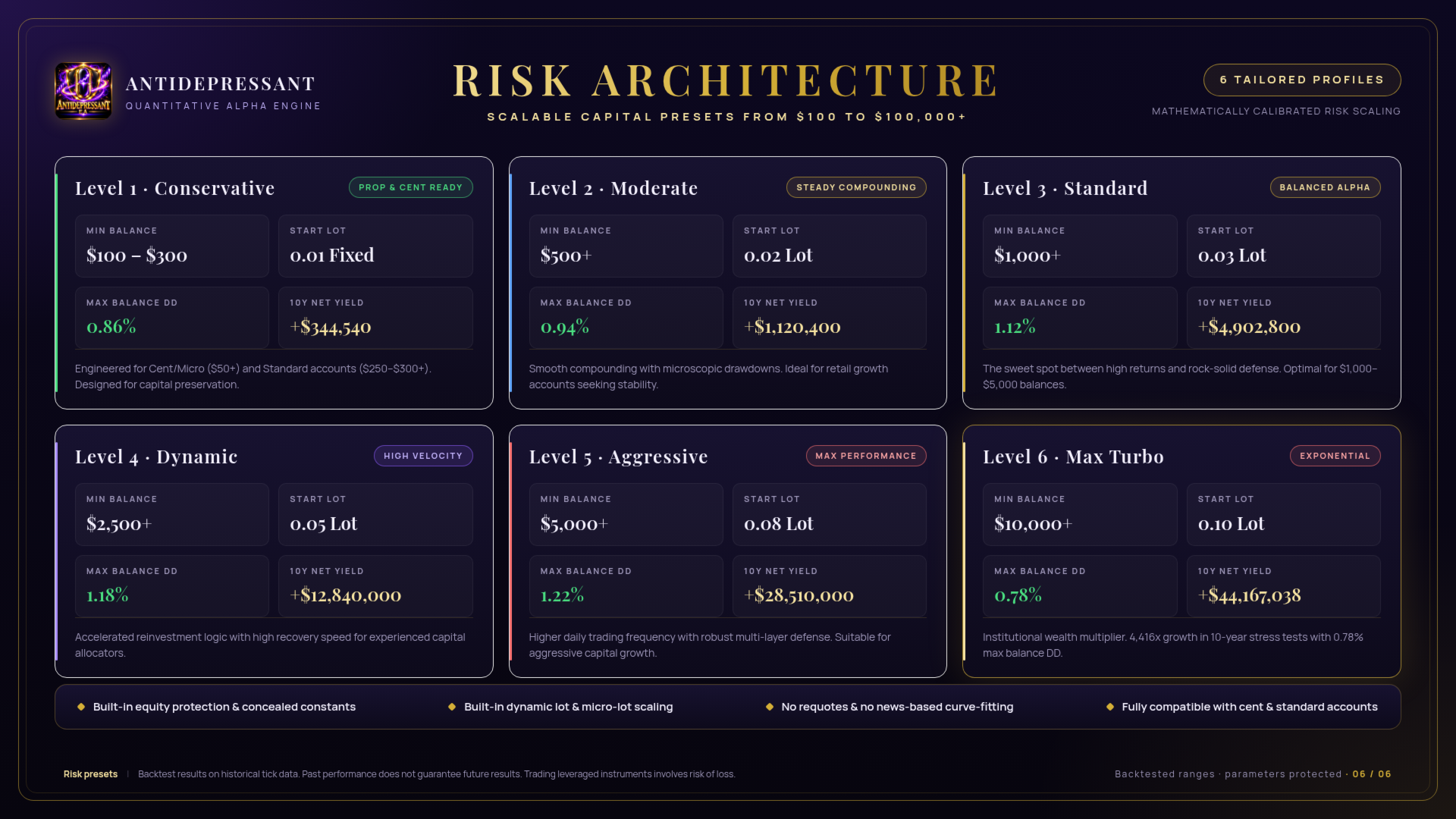
Six ready-to-use options are available through iRiskLevel, from restrained exposure to intensive reinvestment:
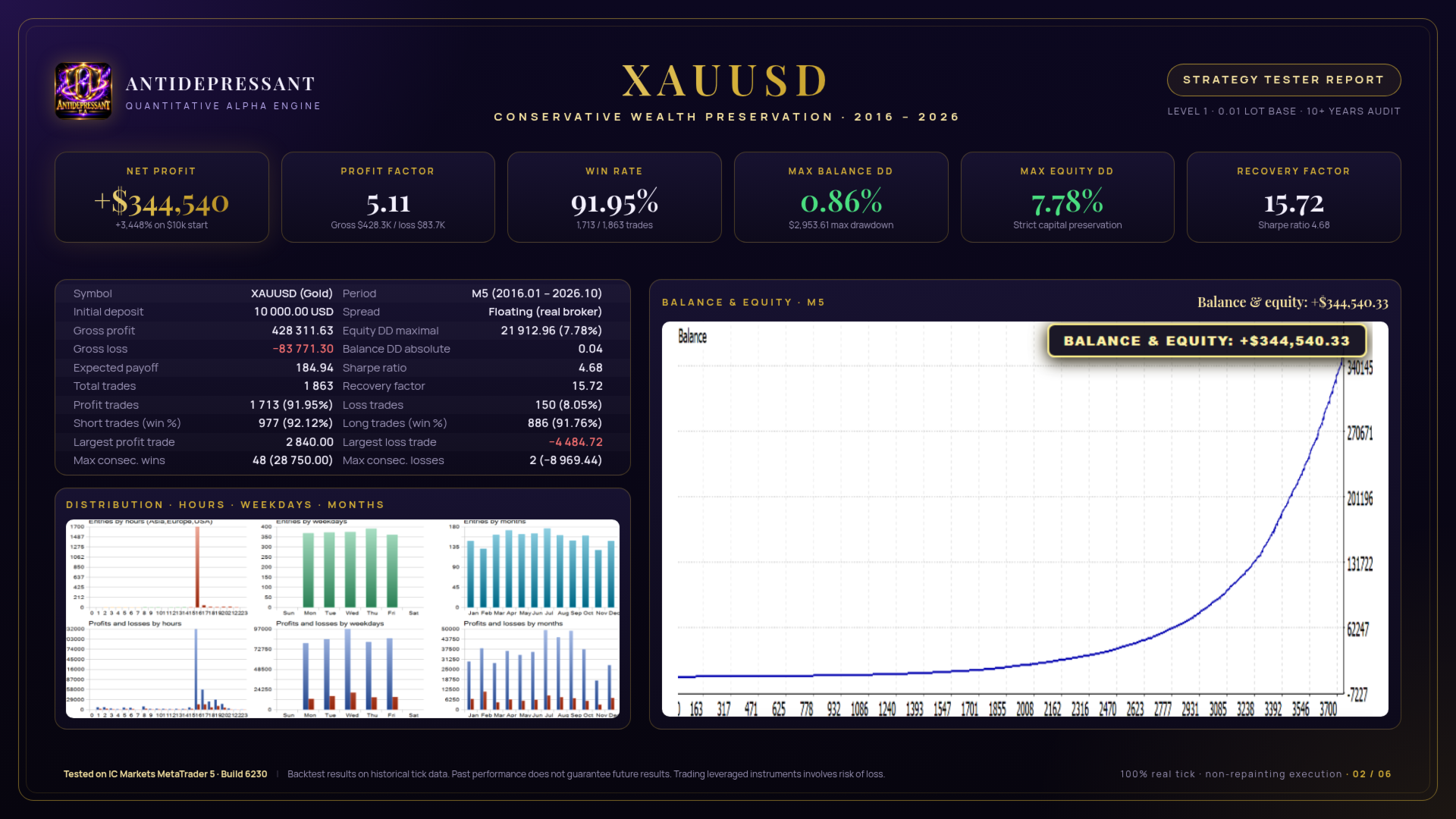
- Level 1 · Minimal — the most restrained profile in the range.
- Level 2 · Conservative — controlled scaling.
- Level 3 · Balanced — a balanced approach to volume and reinvestment.
- Level 4 · Dynamic — increased exposure for a more dynamic approach.
- Level 5 · Aggressive — active profit reinvestment.
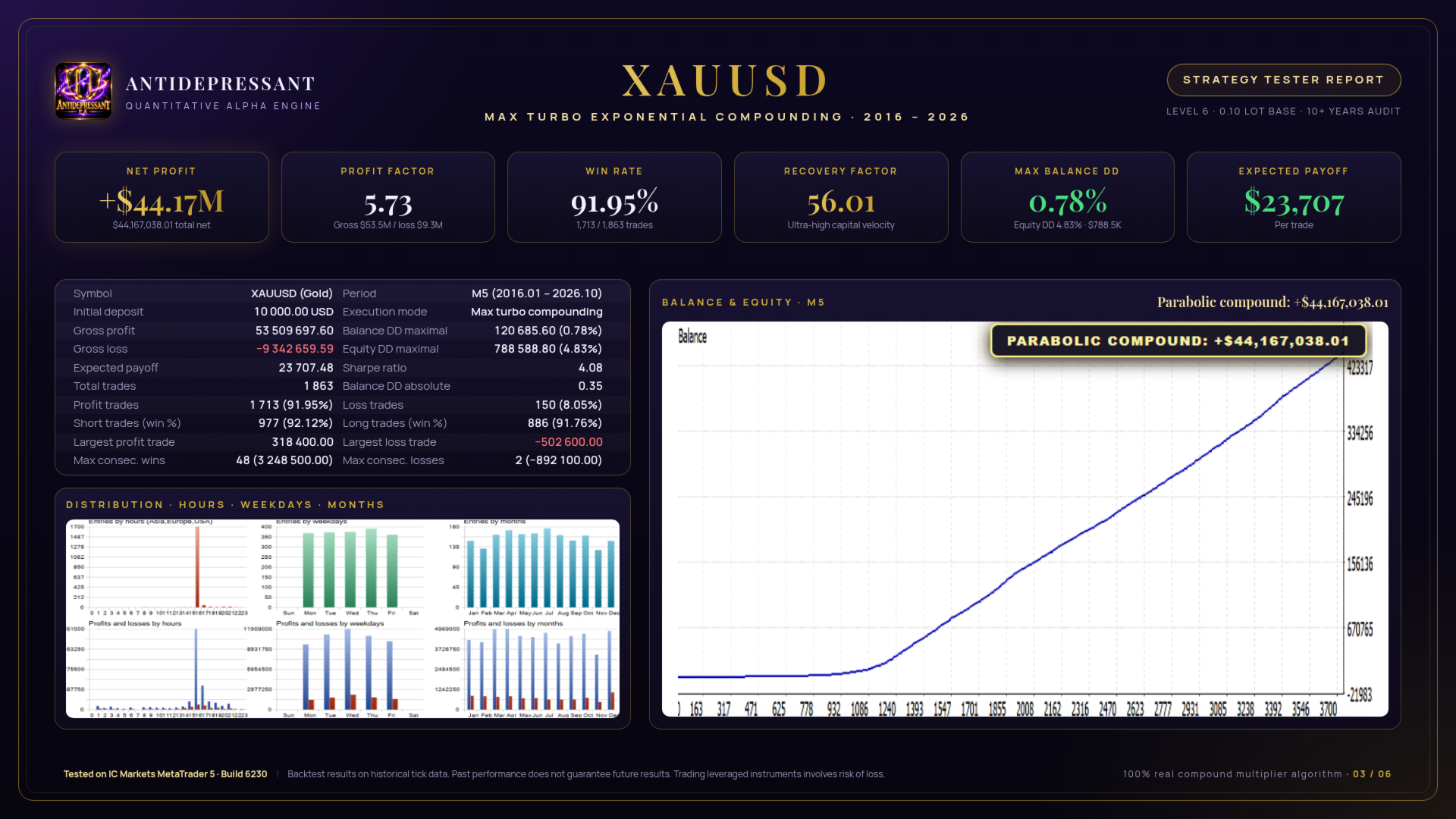
- Level 6 · Max Turbo — the highest scaling intensity among the built-in profiles.
Choose a level that suits your capital and drawdown tolerance. Higher profiles place greater demands on the account.
The full picture, right on your chart
- HUD dashboard: active profile, floating P/L, spread status and market direction.
- Market Map: visual market reference points and exit levels.
- BreakShift: automatic broker-time synchronization with seasonal adjustments.
- Manual control: pause new entries and close positions with two-step confirmation.
Automation handles the process while essential information stays in view.
Getting started
- Platform: MetaTrader 5.
- Instrument and timeframe: XAUUSD (Gold), M5.
- Account: Hedging; ECN / Raw Spread preferred.
- Deposit: the developer's tested reference is 250–300 USD with 1:500 leverage and 0.01 lot starting volume. For more margin headroom, the reference is 500–1000 USD. These are test conditions, not a guarantee of sufficient capital.
- Smaller balances: for 50–200 USD, Cent / Micro suitability depends on the broker's contract size, minimum lot and margin requirements.
- Leverage: from 1:200; the guide recommends 1:500 where your broker offers it.
- Continuous operation: keep the terminal running; a low-latency Windows VPS is recommended, ideally below 20 ms to the broker server where available.
See the system in action
Explore the public signal, trading history and drawdown. Test your chosen profile on demo with your broker. For setup questions, contact the developer through the MQL5 profile.
Antidepressant EA — disciplined execution, adaptive management, control in your hands.
Risk: leveraged trading with additional positions can result in loss of the entire deposit. Protection mechanisms do not eliminate losses; past performance does not guarantee future returns.