Don’t miss these signals from the Owl Smart Levels indicator!

There are 4 types of Owl Smart Levels signals that statistically have a success rate of over 90%. These are the setups you should focus on the most. Let’s take a closer look at each of them below.
Deep Correction Within the Trend
One of the most reliable entry scenarios appears when the market makes a deep pullback within the main trend.
After a strong impulsive move, the price pulls back and tests more favorable levels. This correction allows the market to reset and prepare for the next move.
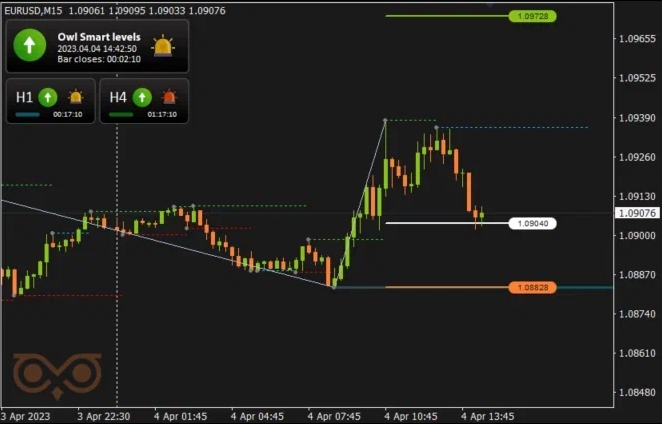
Fig. 1. Example n.1 of an Owl indicator signal after a deep pullback
When an Owl Smart Levels signal appears in this structure, the entry is taken after the correction, when price returns to a more favorable zone within the trend.
That’s why these signals often offer a better risk/reward ratio.
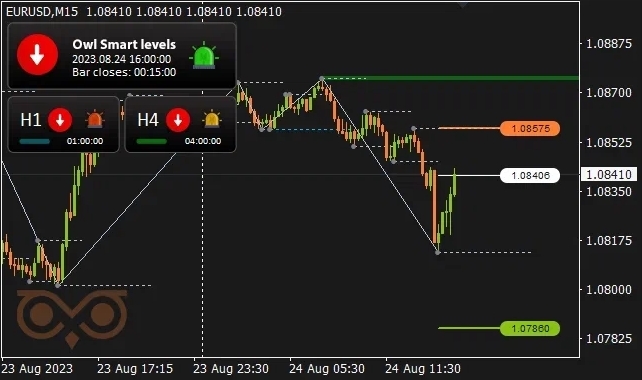
Fig. 2. Example n.2 of an Owl indicator signal after a deep pullback
Night Move Followed by a Pullback
Another strong setup often comes from a move formed during the night session, followed by a pullback.
Night movement often sets the initial direction. Later, the market corrects and forms a clearer structure for entry.
That’s why Owl signals appearing after a night move and a pullback often lead to a continuation of the main trend.
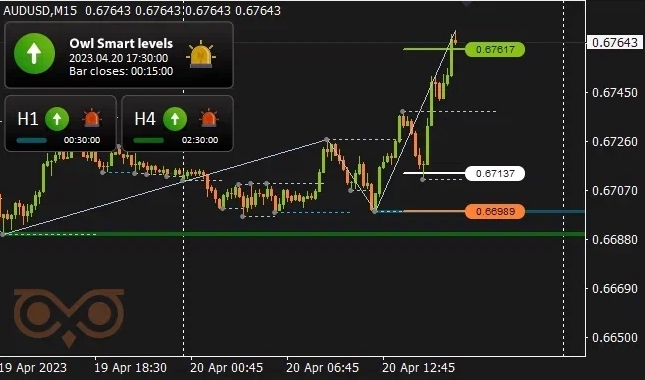
Fig. 3. Example of an Owl indicator signal after a night move and pullback
SPECIAL OFFER!!!

Signal Near a Higher Timeframe Level
Another strong setup appears when a signal forms near a higher timeframe level, such as H1.
Higher timeframe levels often act as key reaction zones. These are the areas where price may slow down, pull back, or continue its movement.
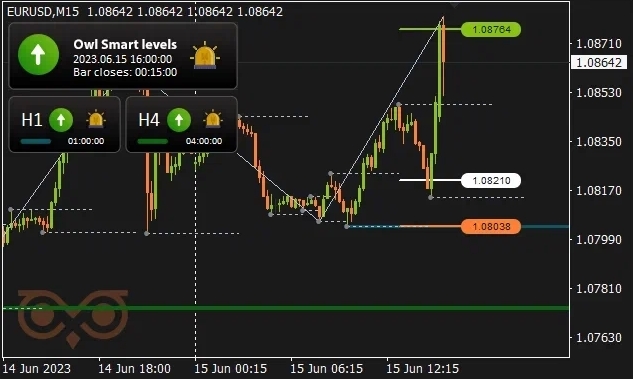
Fig. 4. Example of an Owl indicator signal near an H1 level
If an Owl signal appears near such a level, it gains additional context. The level strengthens the setup and makes the entry clearer.
Smooth Directional Movement
Sometimes the market moves without sharp moves or erratic spikes. Price consistently forms new highs or lows while maintaining a stable structure.
In these conditions, signals tend to perform better, as the market is controlled by one side — either buyers or sellers.
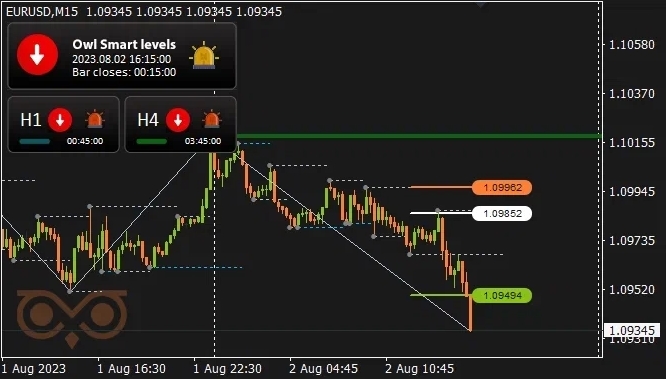
Fig. 5. Example of an Owl indicator signal during smooth market movement
The absence of sharp reversals and erratic moves makes the market structure clearer and Owl signals more reliable.
This type of movement is directly related to core market principles: trend behavior, wave structure, and the formation of highs and lows. You can learn more about these concepts in the article "Basic Principles of the Market".
It’s important to understand that even in ideal conditions, no signal can guarantee results. However, some market situations objectively provide a more favorable context for continuation.
That’s why the ability to select high-quality signals is just as important as the trading strategy itself.
If you want to learn more about the Owl Smart Levels strategy itself and see real examples of how it works, I recommend checking out the following materials:
Recommended for reading
I'm Sergei Ermolov, follow me and don't miss more useful tools for profitable trading on the Forex market.