MQL4 and MQL5 Programming Articles

Study the MQL5 language for programming trading strategies in numerous published articles mostly written by you - the community members. The articles are grouped into categories to help you quicker find answers to any questions related to programming: Integration, Tester, Trading Strategies, etc.
Follow our new publications and discuss them on the Forum!
Add a new article

You are missing trading opportunities:
- Free trading apps
- Over 8,000 signals for copying
- Economic news for exploring financial markets
Registration
Log in
You agree to website policy and terms of use
If you do not have an account, please register


How to Become a Participant of Automated Trading Championship 2008?
The main purpose of the Championship is to popularize automated trading and accumulate practical information in this field of knowledge. As the Organizer of the Championship, we are doing our best to provide a fair competition and suppress all attempts to “play booty”. It is this reasoning that sets the strict Rules of the Championship.


MQL5 Trading Tools (Part 16): Improved Super-Sampling Anti-Aliasing (SSAA) and High-Resolution Rendering
We add supersampling‑driven anti‑aliasing and high‑resolution rendering to the MQL5 canvas dashboard, then downsample to the target size. The article implements rounded rectangle fills and borders, rounded triangle arrows, and a custom scrollbar with theming for the stats and text panels. These tools help you build smoother, more legible UI components in MetaTrader 5.


Building a Divergence System (Part III): The Adaptive SuperTrend EA
The article implements a self-sufficient Adaptive SuperTrend EA with internal calculations on a selectable timeframe, avoiding external buffers and indicator files. It includes risk-based lot sizing, ATR stops, stepwise RR trailing, optional anti-repainting confirmation, and session control. Practitioners can reuse the structure for consistent new‑bar signal handling and broker‑compliant order validation.


Simplifying Databases in MQL5 (Part 2): Using metaprogramming to create entities
We explored the advanced use of #define for metaprogramming in MQL5, creating entities that represent tables and column metadata (type, primary key, auto-increment, nullability, etc.). We centralized these definitions in TickORM.mqh, automating the generation of metadata classes and paving the way for efficient data manipulation by the ORM, without having to write SQL manually.


From Basic to Intermediate: IF ELSE
In this article we will discuss how to work with the IF operator and its companion ELSE. This statement is the most important and significant of those existing in any programming language. However, despite its ease of use, it can sometimes be confusing if we have no experience with its use and the concepts associated with it. The content presented here is intended solely for educational purposes. Under no circumstances should the application be viewed for any purpose other than to learn and master the concepts presented.


Developing a Replay System (Part 50): Things Get Complicated (II)
We will solve the chart ID problem and at the same time we will begin to provide the user with the ability to use a personal template for the analysis and simulation of the desired asset. The materials presented here are for didactic purposes only and should in no way be considered as an application for any purpose other than studying and mastering the concepts presented.


MQL5 Wizard Techniques you should know (Part 34): Price-Embedding with an Unconventional RBM
Restricted Boltzmann Machines are a form of neural network that was developed in the mid 1980s at a time when compute resources were prohibitively expensive. At its onset, it relied on Gibbs Sampling and Contrastive Divergence in order to reduce dimensionality or capture the hidden probabilities/properties over input training data sets. We examine how Backpropagation can perform similarly when the RBM ‘embeds’ prices for a forecasting Multi-Layer-Perceptron.


The case for using a Composite Data Set this Q4 in weighing SPDR XLY's next performance
We consider XLY, SPDR’s consumer discretionary spending ETF and see if with tools in MetaTrader’s IDE we can sift through an array of data sets in selecting what could work with a forecasting model with a forward outlook of not more than a year.


Introduction to MQL5 (Part 33): Mastering API and WebRequest Function in MQL5 (VII)
This article demonstrates how to integrate the Google Generative AI API with MetaTrader 5 using MQL5. You will learn how to structure API requests, handle server responses, extract AI-generated content, manage rate limits, and save the results to a text file for easy access.


Creating an EMA Crossover Forward Simulation Indicator in MQL5
A custom forward simulation engine detects fast/slow EMA crossovers and immediately projects synthetic candles ahead of the signal bar. It generates bodies and wicks using controlled logic, draws them with chart objects, and refreshes on every new signal or anchor change. You get a clear forward-looking view to test timing, visualize scenarios, and manage invalidation on the chart.


Causal inference in time series classification problems
In this article, we will look at the theory of causal inference using machine learning, as well as the custom approach implementation in Python. Causal inference and causal thinking have their roots in philosophy and psychology and play an important role in our understanding of reality.


Market Simulation (Part 04): Creating the C_Orders Class (I)
In this article, we will start creating the C_Orders class to be able to send orders to the trading server. We'll do this little by little, as our goal is to explain in detail how this will happen through the messaging system.

The Group Method of Data Handling: Implementing the Combinatorial Algorithm in MQL5
In this article we continue our exploration of the Group Method of Data Handling family of algorithms, with the implementation of the Combinatorial Algorithm along with its refined incarnation, the Combinatorial Selective Algorithm in MQL5.


The MQL5 Standard Library Explorer (Part 2): Connecting Library Components
Today, we take an important step toward helping every developer understand how to read class structures and quickly build Expert Advisors using the MQL5 Standard Library. The library is rich and expandable, yet it can feel like being handed a complex toolkit without a manual. Here we share and discuss an alternative integration routine—a concise, repeatable workflow that shows how to connect classes reliably in real projects.


Account Audit System in MQL5 (Part 1): Designing the User Interface
This article builds the user interface layer of an Account Audit System in MQL5 using CChartObject classes. We construct an on-chart dashboard that displays key metrics such as start/end balance, net profit, total trades, wins/losses, win rate, withdrawals, and a star-based performance rating. A menu button lets you show or hide the panel and restores one-click trading, delivering a clean, usable foundation for the broader audit pipeline.


Reimagining Classic Strategies (Part IV): SP500 and US Treasury Notes
In this series of articles, we analyze classical trading strategies using modern algorithms to determine whether we can improve the strategy using AI. In today's article, we revisit a classical approach for trading the SP500 using the relationship it has with US Treasury Notes.


Developing a Replay System (Part 40): Starting the second phase (I)
Today we'll talk about the new phase of the replay/simulator system. At this stage, the conversation will become truly interesting and quite rich in content. I strongly recommend that you read the article carefully and use the links provided in it. This will help you understand the content better.


Neural Networks in Trading: Exploring the Local Structure of Data
Effective identification and preservation of the local structure of market data in noisy conditions is a critical task in trading. The use of the Self-Attention mechanism has shown promising results in processing such data; however, the classical approach does not account for the local characteristics of the underlying structure. In this article, I introduce an algorithm capable of incorporating these structural dependencies.


Neural Networks in Trading: Injection of Global Information into Independent Channels (InjectTST)
Most modern multimodal time series forecasting methods use the independent channels approach. This ignores the natural dependence of different channels of the same time series. Smart use of two approaches (independent and mixed channels) is the key to improving the performance of the models.


Statistical Arbitrage Through Cointegrated Stocks (Part 9): Backtesting Portfolio Weights Updates
This article describes the use of CSV files for backtesting portfolio weights updates in a mean-reversion-based strategy that uses statistical arbitrage through cointegrated stocks. It goes from feeding the database with the results of a Rolling Windows Eigenvector Comparison (RWEC) to comparing the backtest reports. In the meantime, the article details the role of each RWEC parameter and its impact in the overall backtest result, showing how the comparison of the relative drawdown can help us to further improve those parameters.


The MQL5 Standard Library Explorer (Part 8) : The Hybrid Trades Journal Logging with CFile
In this article, we explore the File Operations classes of the MQL5 Standard Library to build a robust reporting module that automatically generates Excel-ready CSV files. Along the way, we clearly distinguish between manually executed trades and algorithmically executed orders, laying the groundwork for reliable, auditable trade reporting.

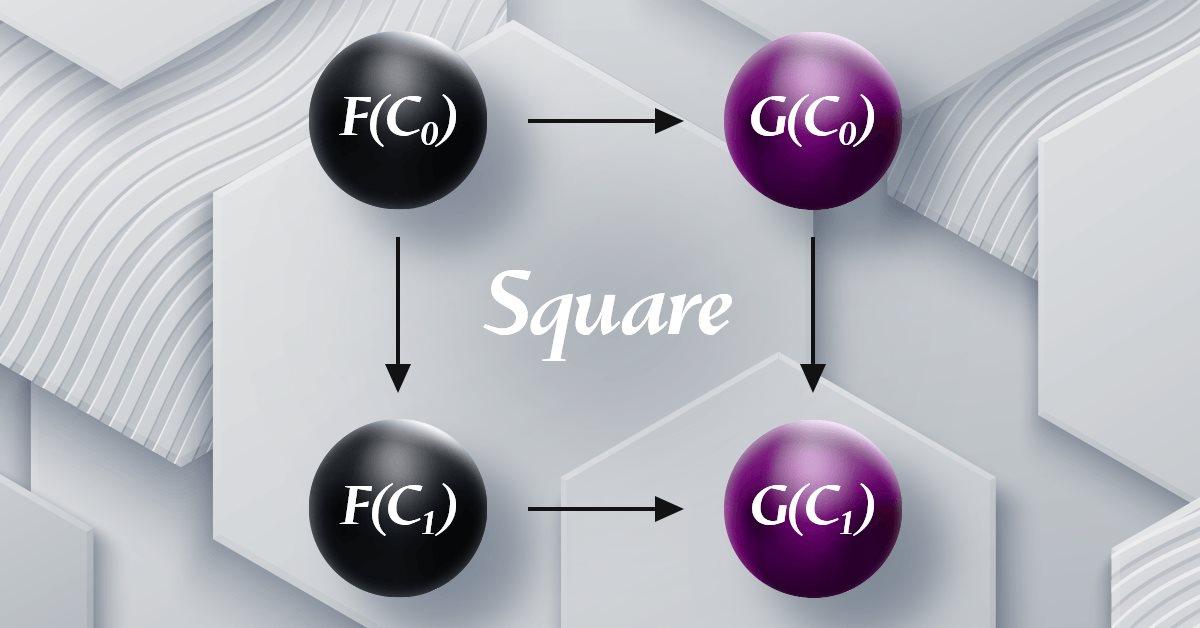
Category Theory in MQL5 (Part 19): Naturality Square Induction
We continue our look at natural transformations by considering naturality square induction. Slight restraints on multicurrency implementation for experts assembled with the MQL5 wizard mean we are showcasing our data classification abilities with a script. Principle applications considered are price change classification and thus its forecasting.


Neural Networks in Trading: Point Cloud Analysis (PointNet)
Direct point cloud analysis avoids unnecessary data growth and improves the performance of models in classification and segmentation tasks. Such approaches demonstrate high performance and robustness to perturbations in the original data.


Category Theory in MQL5 (Part 21): Natural Transformations with LDA
This article, the 21st in our series, continues with a look at Natural Transformations and how they can be implemented using linear discriminant analysis. We present applications of this in a signal class format, like in the previous article.


From Basic to Intermediate: Passing by Value or by Reference
In this article, we will practically understand the difference between passing by value and passing by reference. Although this seems like something simple and common and not causing any problems, many experienced programmers often face real failures in working on the code precisely because of this small detail. Knowing when, how, and why to use pass by value or pass by reference will make a huge difference in our lives as programmers. The content presented here is intended solely for educational purposes. Under no circumstances should the application be viewed for any purpose other than to learn and master the concepts presented.


The MQL5 Standard Library Explorer (Part 6): Optimizing a generated Expert Advisor
In this discussion, we follow up on the previously developed multi-signal Expert Advisor with the objective of exploring and applying available optimization methods. The aim is to determine whether the trading performance of the EA can be meaningfully improved through systematic optimization based on historical data.

Idleness is the Stimulus to Progress, or How to Work with Graphics Interacively
An indicator for interactive working with trend lines, Fibo levels, icons manually imposed on a chart. It allows you to draw the colored zones of Fibo levels, shows the moments of the price crossing the trend line, manages the "Price label" object.


Measuring broker execution quality in MQL5: Why your live account doesn't match the backtest
Live performance often drifts from backtests because of execution friction. We introduce an MQL5 diagnostic EA that records entry and exit slippage, asymmetry, observed spread, requotes, and per-leg latency, using a precise probe mode and an approximate passive mode, and writes every sample to CSV. Use the results to distinguish strategy issues from execution effects across your terminal, network, broker, and liquidity.


Developing an MQL5 RL agent with RestAPI integration (Part 3): Creating automatic moves and test scripts in MQL5
This article discusses the implementation of automatic moves in the tic-tac-toe game in Python, integrated with MQL5 functions and unit tests. The goal is to improve the interactivity of the game and ensure the reliability of the system through testing in MQL5. The presentation covers game logic development, integration, and hands-on testing, and concludes with the creation of a dynamic game environment and a robust integrated system.

Poll: Traders’ Estimate of the Mobile Terminal
Unfortunately, there are no clear projections available at this moment about the future of the mobile trading. However, there are a lot of speculations surrounding this matter. In our attempt to resolve this ambiguity we decided to conduct a survey among traders to find out their opinion about our mobile terminals. Through the efforts of this survey, we have managed to established a clear picture of what our clients currently think about the product as well as their requests and wishes in future developments of our mobile terminals.


MQL5 Wizard Techniques you should know (Part 32): Regularization
Regularization is a form of penalizing the loss function in proportion to the discrete weighting applied throughout the various layers of a neural network. We look at the significance, for some of the various regularization forms, this can have in test runs with a wizard assembled Expert Advisor.


Building Volatility models in MQL5 (Part I): The Initial Implementation
In this article, we present an MQL5 library for modeling volatility, designed to function similarly to Python's arch package. The library currently supports the specification of common conditional mean (HAR, AR, Constant Mean, Zero Mean) and conditional volatility (Constant Variance, ARCH, GARCH) models.


Spurious Regressions in Python
Spurious regressions occur when two time series exhibit a high degree of correlation purely by chance, leading to misleading results in regression analysis. In such cases, even though variables may appear to be related, the correlation is coincidental and the model may be unreliable.


Neural Networks in Trading: Hierarchical Dual-Tower Transformer (Final Part)
We continue to build the Hidformer hierarchical dual-tower transformer model designed for analyzing and forecasting complex multivariate time series. In this article, we will bring the work we started earlier to its logical conclusion — we will test the model on real historical data.


Dolphin Echolocation Algorithm (DEA)
In this article, we take a closer look at the DEA algorithm, a metaheuristic optimization method inspired by dolphins' unique ability to find prey using echolocation. From mathematical foundations to practical implementation in MQL5, from analysis to comparison with classical algorithms, we will examine in detail why this relatively new method deserves a place in the arsenal of researchers facing optimization problems.


Market Simulation (Part 21): First Steps with SQL (IV)
Many of you may have far more experience working with databases than I do, and therefore may have a different opinion. Since it was necessary to explain why databases are designed the way they are, and why SQL has the form it does—especially why primary and foreign keys emerged—some things had to remain somewhat abstract.


MQL5 Wizard Techniques you should know (Part 70): Using Patterns of SAR and the RVI with a Exponential Kernel Network
We follow up our last article, where we introduced the indicator pair of the SAR and the RVI, by considering how this indicator pairing could be extended with Machine Learning. SAR and RVI are a trend and momentum complimentary pairing. Our machine learning approach uses a convolution neural network that engages the Exponential kernel in sizing its kernels and channels, when fine-tuning the forecasts of this indicator pairing. As always, this is done in a custom signal class file that works with the MQL5 wizard to assemble an Expert Advisor.


Feature Engineering for ML (Part 12): Fractal Features in MQL5
A direct MQL5 port of the fractal detector writes each pattern at its center bar, so a buffer read by an expert advisor holds a value that only existed n bars later. We implement CFractalFeatures.mqh with ProcessBar for bar-by-bar use and Compute for full-series recalculation, covering detection, strength scored against a fixed or volatility-scaled floor, an event-based support/resistance ring, and trend-filtered breakout signals. Output is eighteen buffers published at the confirmation bar, verified against the Python reference to within 1e-13.


From Basic to Intermediate: Struct (I)
Today we will begin to study structures in a simpler, more practical, and comfortable way. Structures are among the foundations of programming, whether they are structured or not. I know many people think of structures as just collections of data, but I assure you that they are much more than just structures. And here we will begin to explore this new universe in the most didactic way.


Neural Networks in Trading: Hierarchical Dual-Tower Transformer (Hidformer)
We invite you to get acquainted with the Hierarchical Double-Tower Transformer (Hidformer) framework, which was developed for time series forecasting and data analysis. The framework authors proposed several improvements to the Transformer architecture, which resulted in increased forecast accuracy and reduced computational resource consumption.