EXION Ai
- Experts
- Version: 1.2
- Updated: 17 May 2026
- Activations: 10

Dual AI Snapshot Intelligence (Claude + GPT) with Precision Setup Logic and 2 real Strategies.
EXION Ai is a next-generation AI-based trading system developed as an advanced evolution within the same product family as EXEC Ai, while using a different internal strategy approach and a more refined decision structure.
The EA combines AI-powered chart interpretation, dynamic market phase detection, liquidity evaluation, and adaptive risk filtering to identify trading situations with stronger overall quality.
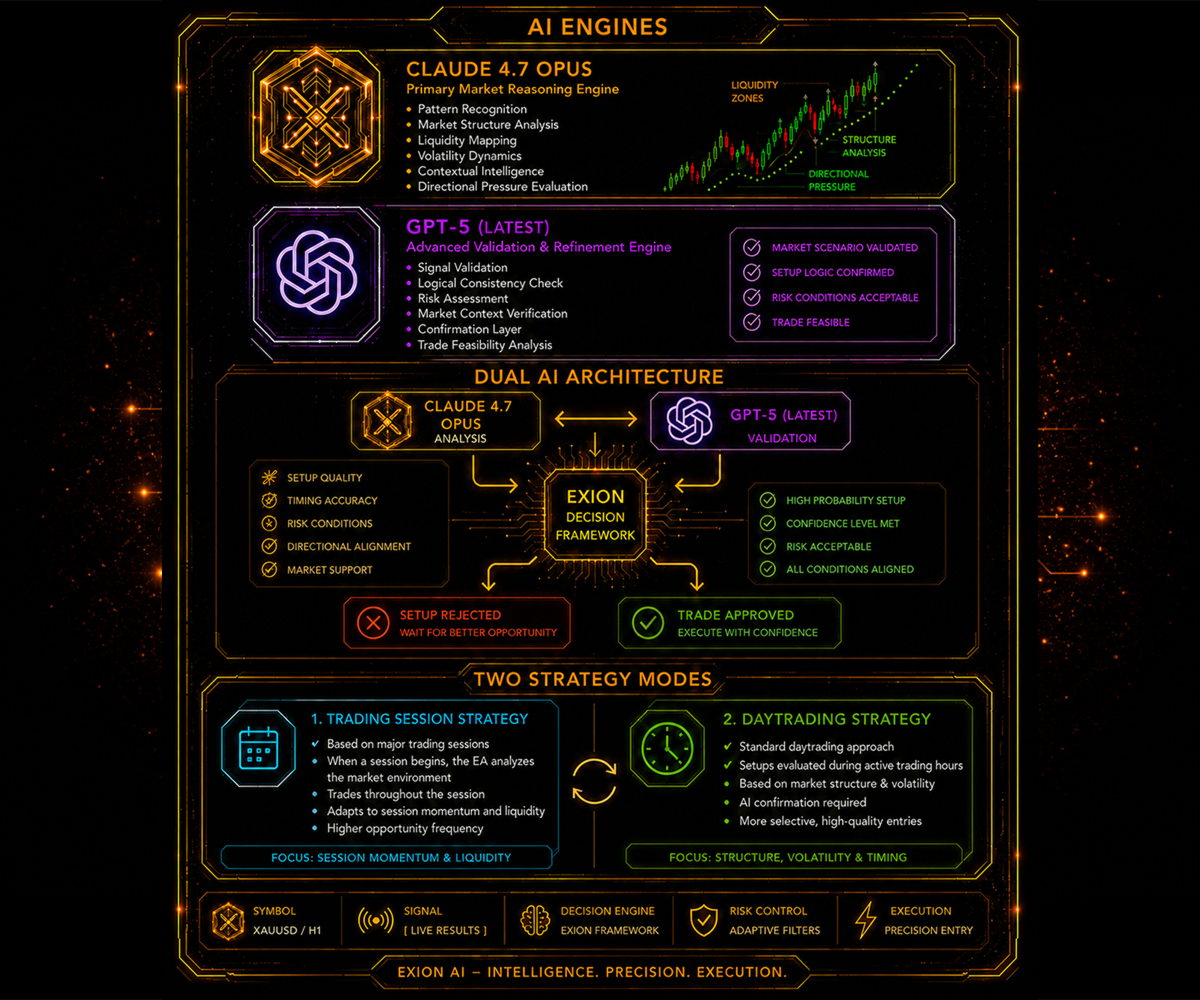
Claude is used as the primary market reasoning engine for deep structural interpretation, volatility behavior, price compression, liquidity zones, and directional pressure,
while the latest OpenAI GPT model acts as an advanced confirmation and refinement layer to validate the market scenario and improve the final trading decision.
This allows the system to assess not only where price is located, but also how the market is behaving, where liquidity may be positioned, whether volatility is expanding or fading,
and whether the current structure supports a clean trade setup.
After the AI evaluations are completed, EXION Ai does not immediately execute a trade. The system first runs the information through its internal EXION decision framework,
where the setup is checked for timing, confirmation quality, risk conditions, and directional consistency.
A position is only opened when the complete market picture supports the trade idea and the predefined confidence level is reached.
If the AI detects mixed conditions, unclear price behavior, weak momentum, or increased execution risk, the EA avoids the trade and waits for a better opportunity.
Main Features
> Latest GPT Model (Advanced AI validation layer)
> Claude 4.7 Opus (Primary market reasoning engine)
> Symbol XAUUSD / H1
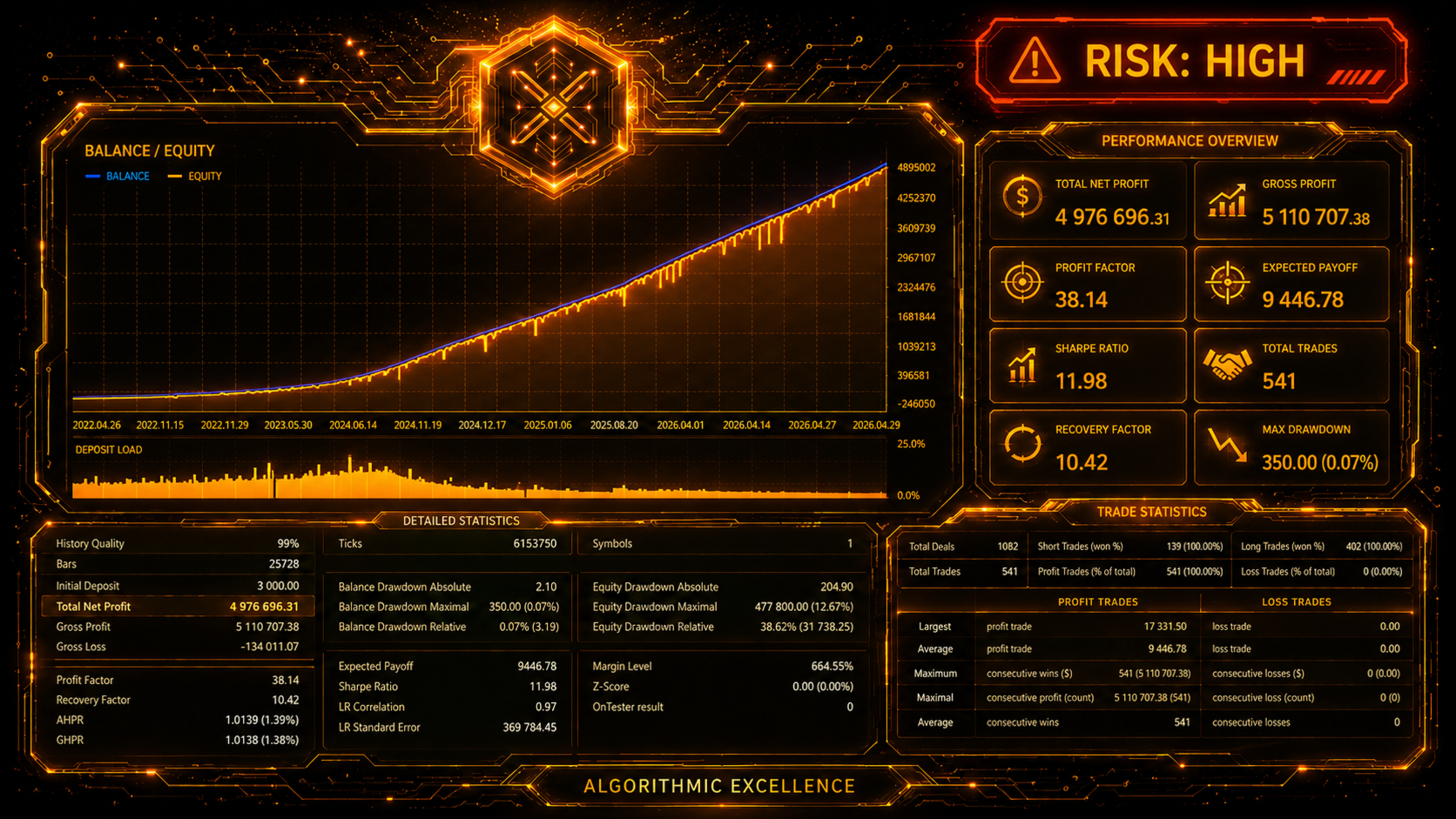
> Signal [Live Results]
> EXION Decision Framework
Two Strategy Modes and Separate Signal Logic
EXION Ai includes two different strategy concepts, which is why two separate signal approaches are used.
The first strategy is based on trading sessions. When a relevant session begins, the EA analyzes the market environment and may trade throughout the day based on the conditions detected during that session.
The second strategy follows a more standard daytrading approach, where setups are evaluated during the active trading day based on market structure, AI confirmation, volatility, and price behavior.
Both strategies are designed to work with the same AI-based decision framework, but they use different timing logic and market evaluation methods.
This allows the EA to react to session-based market behavior while also maintaining a more classic daytrading structure for additional trading opportunities.
AI Decision Flow in 7 Phases
1. The EA monitors the active chart environment and identifies potential market phases before any trade is considered.
2. Several high-resolution snapshots are captured to provide the AI systems with a complete view of current price structure.
3. Claude evaluates the market focusing on liquidity, volatility, expansion, and directional pressure.
4. The latest GPT model reviews the same market situation as a separate validation layer and checks whether the setup is logical and tradable.
5. EXION logic combines both AI results and calculates whether the setup has enough quality, timing accuracy, and market support.
6. The EA applies final protection filters for unstable volatility, unclear momentum, weak confirmation, and unfavorable execution conditions.
7. The trade is executed only when the complete AI decision flow confirms a high-quality opportunity, otherwise the signal is rejected.
> [SCAN] Market Phase
> [CAPTURE] AI Snapshot
> [REASON] Claude Structure Analysis
> [BLOCK] Setup Rejected
> [VALIDATE] GPT Confirmation
> [EXECUTE] High-Quality Trade
Main Features
> Latest GPT Model (Advanced AI validation layer)> Claude 4.7 Opus (Primary market reasoning engine)
> Symbol XAUUSD / H1
> Signal [Live Results]
> EXION Decision Framework
Two Strategy Modes and Separate Signal Logic
EXION Ai includes two different strategy concepts, which is why two separate signal approaches are used.
The first strategy is based on trading sessions. When a relevant session begins, the EA analyzes the market environment and may trade throughout the day based on the conditions detected during that session.
The second strategy follows a more standard daytrading approach, where setups are evaluated during the active trading day based on market structure, AI confirmation, volatility, and price behavior.
Both strategies are designed to work with the same AI-based decision framework, but they use different timing logic and market evaluation methods.
This allows the EA to react to session-based market behavior while also maintaining a more classic daytrading structure for additional trading opportunities.
AI Decision Flow in 7 Phases
1. The EA monitors the active chart environment and identifies potential market phases before any trade is considered.
2. Several high-resolution snapshots are captured to provide the AI systems with a complete view of current price structure.
3. Claude evaluates the market focusing on liquidity, volatility, expansion, and directional pressure.
4. The latest GPT model reviews the same market situation as a separate validation layer and checks whether the setup is logical and tradable.
5. EXION logic combines both AI results and calculates whether the setup has enough quality, timing accuracy, and market support.
6. The EA applies final protection filters for unstable volatility, unclear momentum, weak confirmation, and unfavorable execution conditions.
7. The trade is executed only when the complete AI decision flow confirms a high-quality opportunity, otherwise the signal is rejected.
[SCAN] Market Phase
EXION Decision Framework
The EXION decision framework is the central intelligence layer of the system and works as an adaptive AI-based evaluation model within the dual-AI architecture.
It does not simply compare two AI answers. Instead, it evaluates the complete quality of the trading scenario by analyzing market phase, structural clarity, liquidity behavior, volatility pressure, timing, and execution risk.
Each setup is classified according to its strength, reliability, confirmation depth, and market relevance, while weak, late, emotional, or unclear signals are filtered out before they can reach the execution stage.
The framework also applies a dynamic priority model, giving more importance to market situations where both AI systems detect clean structure, strong directional logic, and favorable volatility conditions.
The result is a more selective AI-powered trading filter that focuses on high-quality opportunities instead of frequent entries, helping the EA operate with greater discipline and stability across changing market conditions.
Live Testing and System Validation
Before the release of EXION Ai, the system was developed to provide a fresh AI trading approach while remaining connected to the proven foundation of the EXEC product line.
The internal logic was adjusted to focus more strongly on market phase detection, setup quality, timing precision, and adaptive risk evaluation.
Instead of following the exact same execution behavior as EXEC Ai, EXION Ai uses a different strategy rhythm and a more selective confirmation process to identify cleaner market opportunities.
The EA was tested across different gold market conditions, including consolidation phases, strong trend moves, liquidity-driven reactions, and highly volatile sessions.
Additional validation was performed under different broker environments to observe execution quality, spread behavior, response timing, and the reliability of the AI-based decision flow.
The combination of Claude and the latest OpenAI GPT model allows the system to evaluate the market from two independent AI perspectives and reject setups when the overall structure does not provide enough confidence.
These improvements helped shape EXION Ai into a refined AI trading system with a strong focus on patience, quality filtering, and controlled execution.
The result is a next-generation AI trading system designed to recognize strong market setups, avoid weak trading environments, and execute only when the complete AI decision flow confirms a high-quality opportunity.