MQL4 and MQL5 Programming Articles

Study the MQL5 language for programming trading strategies in numerous published articles mostly written by you - the community members. The articles are grouped into categories to help you quicker find answers to any questions related to programming: Integration, Tester, Trading Strategies, etc.
Follow our new publications and discuss them on the Forum!
Add a new article

You are missing trading opportunities:
- Free trading apps
- Over 8,000 signals for copying
- Economic news for exploring financial markets
Registration
Log in
You agree to website policy and terms of use
If you do not have an account, please register


Graphical Interfaces VI: the Slider and the Dual Slider Controls (Chapter 2)
In the previous article, we have enriched our library with four controls frequently used in graphical interfaces: checkbox, edit, edit with checkbox and check combobox. The second chapter of the sixth part will be dedicated to the slider and the dual slider controls.

Graphical Interfaces VI: the Checkbox Control, the Edit Control and their Mixed Types (Chapter 1)
This article is the beginning of the sixth part of the series dedicated to the development of the library for creating graphical interfaces in the MetaTrader terminals. In the first chapter, we are going to discuss the checkbox control, the edit control and their mixed types.

Forex Trading ABC
Working on financial markets represents, first of all, trade operations. We all, starting from the very childhood, have an intuitive idea of what is to buy and to sell. But Forex trading is still something special. This article deals with the ideas necessary to explain some terms. We will also consider the MQL 4 functions that correspond with those terms.

MQL5 Cookbook: Writing the History of Deals to a File and Creating Balance Charts for Each Symbol in Excel
When communicating in various forums, I often used examples of my test results displayed as screenshots of Microsoft Excel charts. I have many times been asked to explain how such charts can be created. Finally, I now have some time to explain it all in this article.


Automating Trading Strategies in MQL5 (Part 37): Regular RSI Divergence Convergence with Visual Indicators
In this article, we build an MQL5 EA that detects regular RSI divergences using swing points with strength, bar limits, and tolerance checks. It executes trades on bullish or bearish signals with fixed lots, SL/TP in pips, and optional trailing stops. Visuals include colored lines on charts and labeled swings for better strategy insights.

Universal Expert Advisor: Trading in a Group and Managing a Portfolio of Strategies (Part 4)
In the last part of the series of articles about the CStrategy trading engine, we will consider simultaneous operation of multiple trading algorithms, will learn to load strategies from XML files, and will present a simple panel for selecting Expert Advisors from a single executable module, and managing their trading modes.

Interview with Alexey Masterov (ATC 2012)
We do our best to introduce all the leading Championship Participants to our audience in reasonable time. To achieve that, we closely monitor the most promising contestants in our TOP-10 and arrange interviews with them. However, the sharp rise of Alexey Masterov (reinhard) up to the third place has become a real surprise!

MQL Parsing by Means of MQL
The article describes a preprocessor, a scanner, and a parser to be used in parsing the MQL-based source codes. MQL implementation is attached.

Deep Neural Networks (Part II). Working out and selecting predictors
The second article of the series about deep neural networks will consider the transformation and choice of predictors during the process of preparing data for training a model.


CatBoost machine learning algorithm from Yandex with no Python or R knowledge required
The article provides the code and the description of the main stages of the machine learning process using a specific example. To obtain the model, you do not need Python or R knowledge. Furthermore, basic MQL5 knowledge is enough — this is exactly my level. Therefore, I hope that the article will serve as a good tutorial for a broad audience, assisting those interested in evaluating machine learning capabilities and in implementing them in their programs.

Testing of Expert Advisors in the MetaTrader 4 Client Terminal: An Outward Glance
What happens after you have clicked on the "Start" button? The article answers this and many other questions.


Neural networks made easy (Part 11): A take on GPT
Perhaps one of the most advanced models among currently existing language neural networks is GPT-3, the maximal variant of which contains 175 billion parameters. Of course, we are not going to create such a monster on our home PCs. However, we can view which architectural solutions can be used in our work and how we can benefit from them.

Alert and Comment for External Indicators. Multi-Currency Analysis Through External Scanning
Alert for multi-currency and multiple time frame analysis of external indicators. The article deals with a method of getting event information in respect of events in external indicators, without having to attach indicators to a chart or open charts themselves. We will call it external scanning.

Analysis of the Main Characteristics of Time Series
This article introduces a class designed to give a quick preliminary estimate of characteristics of various time series. As this takes place, statistical parameters and autocorrelation function are estimated, a spectral estimation of time series is carried out and a histogram is built.


How to build and optimize a cycle-based trading system (Detrended Price Oscillator - DPO)
This article explains how to design and optimise a trading system using the Detrended Price Oscillator (DPO) in MQL5. It outlines the indicator's core logic, demonstrating how it identifies short-term cycles by filtering out long-term trends. Through a series of step-by-step examples and simple strategies, readers will learn how to code it, define entry and exit signals, and conduct backtesting. Finally, the article presents practical optimization methods to enhance performance and adapt the system to changing market conditions.


An Analysis of Why Expert Advisors Fail
This article presents an analysis of currency data to better understand why expert advisors can have good performance in some regions of time and poor performance in other regions of time.

Statistical Probability Distributions in MQL5
The article addresses probability distributions (normal, log-normal, binomial, logistic, exponential, Cauchy distribution, Student's t-distribution, Laplace distribution, Poisson distribution, Hyperbolic Secant distribution, Beta and Gamma distribution) of random variables used in Applied Statistics. It also features classes for handling these distributions.

MQL as a Markup Tool for the Graphical Interface of MQL Programs. Part 2
This paper continues checking the new conception to describe the window interface of MQL programs, using the structures of MQL. Automatically creating GUI based on the MQL markup provides additional functionality for caching and dynamically generating the elements and controlling the styles and new schemes for processing the events. Attached is an enhanced version of the standard library of controls.

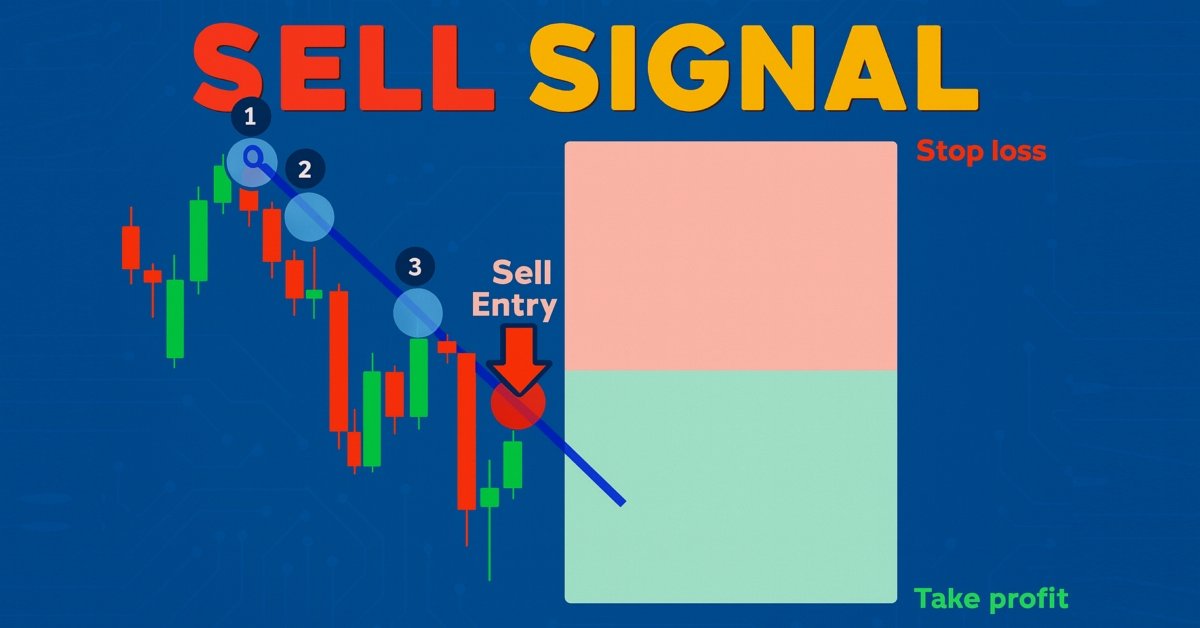
Automating Trading Strategies in MQL5 (Part 25): Trendline Trader with Least Squares Fit and Dynamic Signal Generation
In this article, we develop a trendline trader program that uses least squares fit to detect support and resistance trendlines, generating dynamic buy and sell signals based on price touches and open positions based on generated signals.


Python + MetaTrader 5: Fast Research Framework for Data, Features, and Prototypes
The article demonstrates how Python and MetaTrader 5 integration combines research flexibility and trade execution into a single workflow. Python is used for data analysis, feature selection and model training, while MetaTrader 5 is used for testing and trading automation. This approach simplifies the transfer of solutions into practice, increases reproducibility, and makes the development of trading systems faster and more structured.


From Novice to Expert: Higher Probability Signals
In high-probability support and resistance zones, valid entry confirmation signals are always present once the zone has been correctly identified. In this discussion, we build an intelligent MQL5 program that automatically detects entry conditions within these zones. We leverage well-known candlestick patterns alongside native confirmation indicators to validate trade decisions. Click to read further.

Graphical interfaces X: Advanced management of lists and tables. Code optimization (build 7)
The library code needs to be optimized: it should be more regularized, which is — more readable and comprehensible for studying. In addition, we will continue to develop the controls created previously: lists, tables and scrollbars.

Selection and navigation utility in MQL5 and MQL4: Adding auto search for patterns and displaying detected symbols
In this article, we continue expanding the features of the utility for collecting and navigating through symbols. This time, we will create new tabs displaying only the symbols that satisfy some of the necessary parameters and find out how to easily add custom tabs with the necessary sorting rules.


Take a few lessons from Prop Firms (Part 1) — An introduction
In this introductory article, I address a few of the lessons one can take from the challenge rules that proprietary trading firms implement. This is especially relevant for beginners and those who struggle to find their footing in this world of trading. The subsequent article will address the code implementation.

Using the TesterWithdrawal() Function for Modeling the Withdrawals of Profit
This article describes the usage of the TesterWithDrawal() function for estimating risks in trade systems which imply the withdrawing of a certain part of assets during their operation. In addition, it describes the effect of this function on the algorithm of calculation of the drawdown of equity in the strategy tester. This function is useful when optimizing parameter of your Expert Advisors.

Testing patterns that arise when trading currency pair baskets. Part I
We begin testing the patterns and trying the methods described in the articles about trading currency pair baskets. Let's see how oversold/overbought level breakthrough patterns are applied in practice.

Testing Expert Advisors on Non-Standard Time Frames
It's not just simple; it's super simple. Testing Expert Advisors on non-standard time frames is possible! All we need to do is to replace standard time frame data with non-standard time frame data. Furthermore, we can even test Expert Advisors that use data from several non-standard time frames.

Naive Bayes classifier for signals of a set of indicators
The article analyzes the application of the Bayes' formula for increasing the reliability of trading systems by means of using signals from multiple independent indicators. Theoretical calculations are verified with a simple universal EA, configured to work with arbitrary indicators.

How to Secure Your Expert Advisor While Trading on the Moscow Exchange
The article delves into the trading methods ensuring the security of trading operations at the stock and low-liquidity markets through the example of Moscow Exchange's Derivatives Market. It brings practical approach to the trading theory described in the article "Principles of Exchange Pricing through the Example of Moscow Exchange's Derivatives Market".

Video: Simple automated trading – How to create a simple Expert Advisor with MQL5
The majority of students in my courses felt that MQL5 was really difficult to understand. In addition to this, they were searching for a straightforward method to automate a few processes. Find out how to begin working with MQL5 right now by reading the information contained in this article. Even if you have never done any form of programming before. And even in the event that you are unable to comprehend the previous illustrations that you have observed.

Interview with Irina Korobeinikova (irishka.rf)
Having a female member on the MQL5.community is rare. This interview was inspired by a one of a kind case. Irina Korobeinikova (irishka.rf) is a fifteen-year-old programmer from Izhevsk. She is currently the only girl who actively participates in the "Jobs" service and is featured on the Top Developers list.

Developing a cross-platform grider EA (part III): Correction-based grid with martingale
In this article, we will make an attempt to develop the best possible grid-based EA. As usual, this will be a cross-platform EA capable of working both with MetaTrader 4 and MetaTrader 5. The first EA was good enough, except that it could not make a profit over a long period of time. The second EA could work at intervals of more than several years. Unfortunately, it was unable to yield more than 50% of profit per year with a maximum drawdown of less than 50%.

Money Management Revisited
The article deals with some issues arising when traders apply various money management systems to Forex trading. Experimental data obtained from performing trading deals using different money management (MM) methods is also described.

Drawing Channels - Inside and Outside View
I guess it won't be an exaggeration, if I say the channels are the most popular tool for the analysis of market and making trade decisions after the moving averages. Without diving deeply into the mass of trade strategies that use channels and their components, we are going to discuss the mathematical basis and the practical implementation of an indicator, which draws a channel determined by three extremums on the screen of the client terminal.


Neural Networks in Trading: A Multi-Agent Self-Adaptive Model (MASA)
I invite you to get acquainted with the Multi-Agent Self-Adaptive (MASA) framework, which combines reinforcement learning and adaptive strategies, providing a harmonious balance between profitability and risk management in turbulent market conditions.

LifeHack for trader: four backtests are better than one
Before the first single test, every trader faces the same question — "Which of the four modes to use?" Each of the provided modes has its advantages and features, so we will do it the easy way - run all four modes at once with a single button! The article shows how to use the Win API and a little magic to see all four testing chart at the same time.

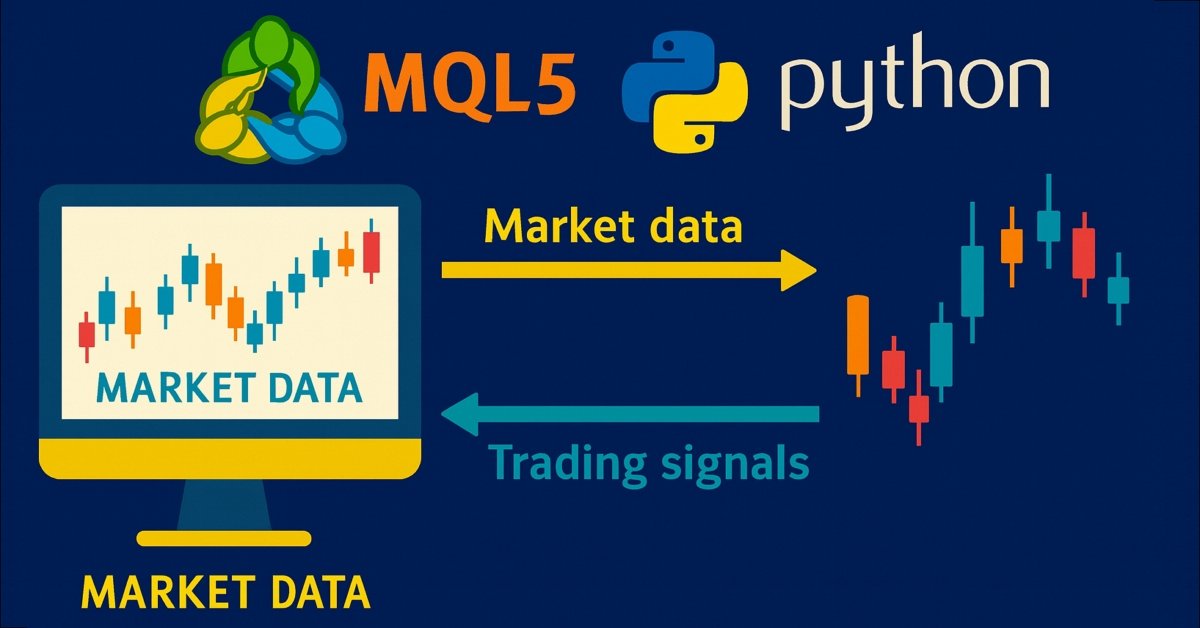
Price Action Analysis Toolkit Development (Part 36): Unlocking Direct Python Access to MetaTrader 5 Market Streams
Harness the full potential of your MetaTrader 5 terminal by leveraging Python’s data-science ecosystem and the official MetaTrader 5 client library. This article demonstrates how to authenticate and stream live tick and minute-bar data directly into Parquet storage, apply sophisticated feature engineering with Ta and Prophet, and train a time-aware Gradient Boosting model. We then deploy a lightweight Flask service to serve trade signals in real time. Whether you’re building a hybrid quant framework or enhancing your EA with machine learning, you’ll walk away with a robust, end-to-end pipeline for data-driven algorithmic trading.


Engineering Trading Discipline into Code (Part 1): Creating Structural Discipline in Live Trading with MQL5
Discipline becomes reliable when it is produced by system design, not willpower. Using MQL5, the article implements real-time constraints—trade-frequency caps and daily equity-based stops—that monitor behavior and trigger actions on breach. Readers gain a practical template for governance layers that stabilize execution under market pressure.


Learn how to design a trading system by Awesome Oscillator
In this new article in our series, we will learn about a new technical tool that may be useful in our trading. It is the Awesome Oscillator (AO) indicator. We will learn how to design a trading system by this indicator.


Automating Trading Strategies in MQL5 (Part 8): Building an Expert Advisor with Butterfly Harmonic Patterns
In this article, we build an MQL5 Expert Advisor to detect Butterfly harmonic patterns. We identify pivot points and validate Fibonacci levels to confirm the pattern. We then visualize the pattern on the chart and automatically execute trades when confirmed.