MQL4 and MQL5 Programming Articles

Study the MQL5 language for programming trading strategies in numerous published articles mostly written by you - the community members. The articles are grouped into categories to help you quicker find answers to any questions related to programming: Integration, Tester, Trading Strategies, etc.
Follow our new publications and discuss them on the Forum!
Add a new article

You are missing trading opportunities:
- Free trading apps
- Over 8,000 signals for copying
- Economic news for exploring financial markets
Registration
Log in
You agree to website policy and terms of use
If you do not have an account, please register


DiNapoli trading system
The article describes the Fibo levels-based trading system developed by Joe DiNapoli. The idea behind the system and the main concepts are explained, as well as a simple indicator is provided as an example for more clarity.

Deep Neural Networks (Part V). Bayesian optimization of DNN hyperparameters
The article considers the possibility to apply Bayesian optimization to hyperparameters of deep neural networks, obtained by various training variants. The classification quality of a DNN with the optimal hyperparameters in different training variants is compared. Depth of effectiveness of the DNN optimal hyperparameters has been checked in forward tests. The possible directions for improving the classification quality have been determined.

Data Structure in MetaTrader 4 Build 600 and Higher
MetaTarder 4 build 600 features the new structure and location of the client terminal files. Now, MQL4 applications are placed in separate directories according to the program type (Expert Advisors, indicators or scripts). In most cases, the terminal data is now stored in a special data folder separated from the terminal installation location. In this article, we will describe in details how data is transferred, as well as the reasons for introducing the new storage system.

Integrating MQL-based Expert Advisors and databases (SQL Server, .NET and C#)
The article describes how to add the ability to work with Microsoft SQL Server database server to MQL5-based Expert Advisors. Import of functions from a DLL is used. The DLL is created using the Microsoft .NET platform and the C# language. The methods used in the article are also suitable for experts written in MQL4, with minor adjustments.

MQL5 Cookbook: Implementing Your Own Depth of Market
This article demonstrates how to utilize Depth of Market (DOM) programmatically and describes the operation principle of CMarketBook class, that can expand the Standard Library of MQL5 classes and offer convenient methods of using DOM.

Library for easy and quick development of MetaTrader programs (part XXVIII): Closure, removal and modification of pending trading requests
This is the third article about the concept of pending requests. We are going to complete the tests of pending trading requests by creating the methods for closing positions, removing pending orders and modifying position and pending order parameters.

MQL5 Wizard for Dummies
In early 2011 we released the first version of the MQL5 Wizard. This new application provides a simple and convenient tool to automatically generate trading robots. Any MetaTrader 5 user can create a custom Expert Advisor without even knowing how to program in MQL5.

Creating an Indicator with Multiple Indicator Buffers for Newbies
The complex codes consist of a set of simple codes. If you are familiar with them, it doesn't look so complicated. In this article, we will consider how to create an indicator with multiple indicator buffers. As an example, the Aroon indicator is analyzed in details, and two different versions of the code are presented.

Creating an assistant in manual trading
The number of trading robots used on the currency markets has significantly increased recently. They employ various concepts and strategies, however, none of them has yet succeeded to create a win-win sample of artificial intelligence. Therefore, many traders remain committed to manual trading. But even for such specialists, robotic assistants or, so called, trading panels, are created. This article is yet another example of creating a trading panel from scratch.

Comparative analysis of 10 flat trading strategies
The article explores the advantages and disadvantages of trading in flat periods. The ten strategies created and tested within this article are based on the tracking of price movements inside a channel. Each strategy is provided with a filtering mechanism, which is aimed at avoiding false market entry signals.

Time Series Forecasting Using Exponential Smoothing
The article familiarizes the reader with exponential smoothing models used for short-term forecasting of time series. In addition, it touches upon the issues related to optimization and estimation of the forecast results and provides a few examples of scripts and indicators. This article will be useful as a first acquaintance with principles of forecasting on the basis of exponential smoothing models.

Creating Active Control Panels in MQL5 for Trading
The article covers the problem of development of active control panels in MQL5. Interface elements are managed by the event handling mechanism. Besides, the option of a flexible setup of control elements properties is available. The active control panel allows working with positions, as well setting, modifying and deleting market and pending orders.

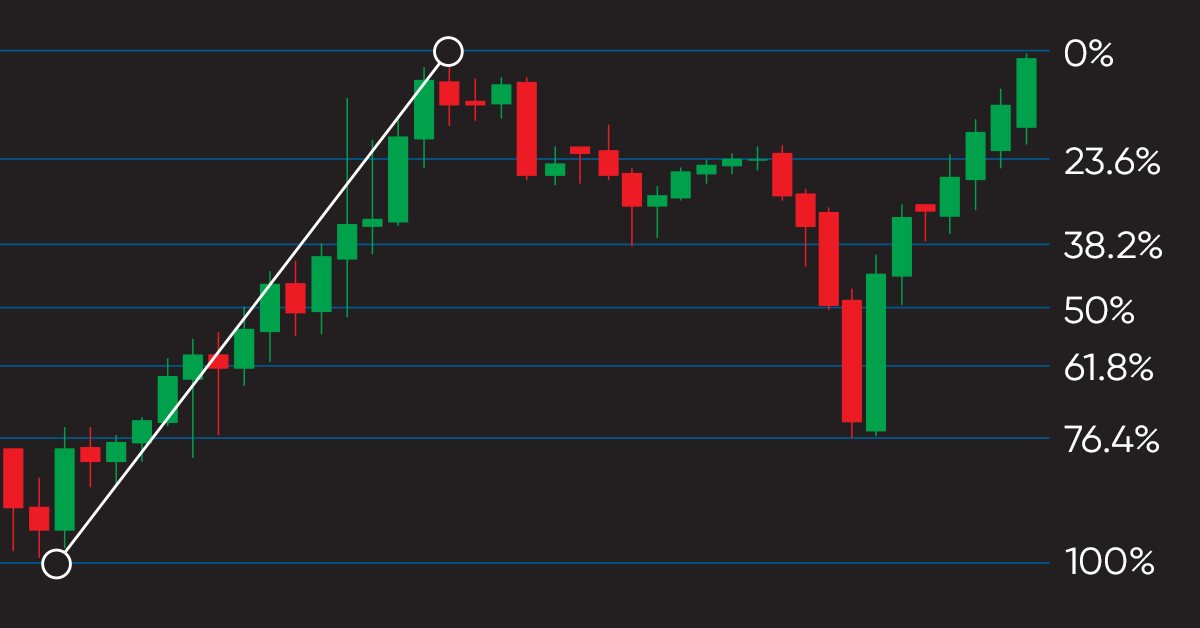
Learn how to design a trading system by Fibonacci
In this article, we will continue our series of creating a trading system based on the most popular technical indicator. Here is a new technical tool which is the Fibonacci and we will learn how to design a trading system based on this technical indicator.

Genetic Algorithms - It's Easy!
In this article the author talks about evolutionary calculations with the use of a personally developed genetic algorithm. He demonstrates the functioning of the algorithm, using examples, and provides practical recommendations for its usage.

Native Twitter Client for MT4 and MT5 without DLL
Ever wanted to access tweets and/or post your trade signals on Twitter ? Search no more, these on-going article series will show you how to do it without using any DLL. Enjoy the journey of implementing Twitter API using MQL. In this first part, we will follow the glory path of authentication and authorization in accessing Twitter API.


Elevate Your Trading With Smart Money Concepts (SMC): OB, BOS, and FVG
Elevate your trading with Smart Money Concepts (SMC) by combining Order Blocks (OB), Break of Structure (BOS), and Fair Value Gaps (FVG) into one powerful EA. Choose automatic strategy execution or focus on any individual SMC concept for flexible and precise trading.

Learn how to design different Moving Average systems
There are many strategies that can be used to filter generated signals based on any strategy, even by using the moving average itself which is the subject of this article. So, the objective of this article is to share with you some of Moving Average Strategies and how to design an algorithmic trading system.

Advanced Adaptive Indicators Theory and Implementation in MQL5
This article will describe advanced adaptive indicators and their implementation in MQL5: Adaptive Cyber Cycle, Adaptive Center of Gravity and Adaptive RVI. All indicators were originally presented in "Cybernetic Analysis for Stocks and Futures" by John F. Ehlers.

The Basics of Object-Oriented Programming
You don't need to know what are polymorphism, encapsulation, etc. all about in to use object-oriented programming (OOP)... you may simply use these features. This article covers the basics of OOP with hands-on examples.

Creating Tick Indicators in MQL5
In this article, we will consider the creation of two indicators: the tick indicator, which plots the tick chart of the price and tick candle indicator, which plot candles with the specified number of ticks. Each of the indicators writes the incoming prices into a file, and uses the saved data after the restart of the indicator (these data also can be used by the other programs)

Creating a Multi-Currency Indicator, Using a Number of Intermediate Indicator Buffers
There has been a recent rise of interest in the cluster analyses of the FOREX market. MQL5 opens up new possibilities of researching the trends of the movement of currency pairs. A key feature of MQL5, differentiating it from MQL4, is the possibility of using an unlimited amount of indicator buffers. This article describes an example of the creation of a multi-currency indicator.

Creating Neural Network EAs Using MQL5 Wizard and Hlaiman EA Generator
The article describes a method of automated creation of neural network EAs using MQL5 Wizard and Hlaiman EA Generator. It shows you how you can easily start working with neural networks, without having to learn the entire body of theoretical information and writing your own code.

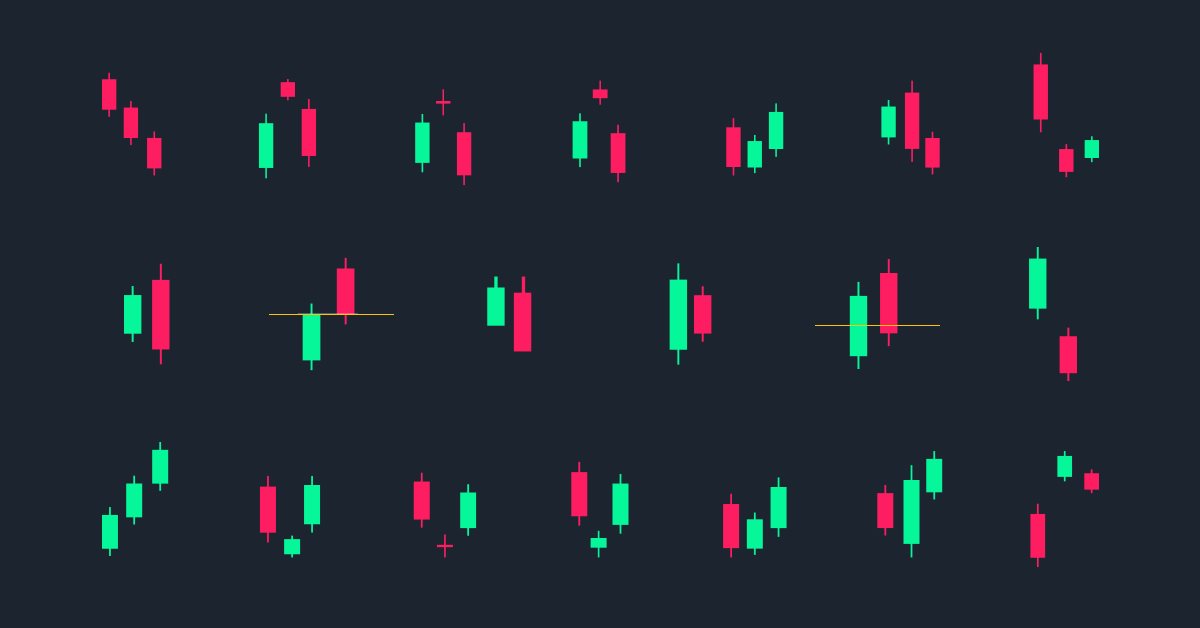
How to use MQL5 to detect candlesticks patterns
A new article to learn how to detect candlesticks patterns on prices automatically by MQL5.

Evaluation of Trade Systems - the Effectiveness of Entering, Exiting and Trades in General
There are a lot of measures that allow determining the effectiveness and profitability of a trade system. However, traders are always ready to put any system to a new crash test. The article tells how the statistics based on measures of effectiveness can be used for the MetaTrader 5 platform. It includes the class for transformation of the interpretation of statistics by deals to the one that doesn't contradict the description given in the "Statistika dlya traderov" ("Statistics for Traders") book by S.V. Bulashev. It also includes an example of custom function for optimization.

Developing a self-adapting algorithm (Part II): Improving efficiency
In this article, I will continue the development of the topic by improving the flexibility of the previously created algorithm. The algorithm became more stable with an increase in the number of candles in the analysis window or with an increase in the threshold percentage of the overweight of falling or growing candles. I had to make a compromise and set a larger sample size for analysis or a larger percentage of the prevailing candle excess.

Auto detection of extreme points based on a specified price variation
Automation of trading strategies involving graphical patterns requires the ability to search for extreme points on the charts for further processing and interpretation. Existing tools do not always provide such an ability. The algorithms described in the article allow finding all extreme points on charts. The tools discussed here are equally efficient both during trends and flat movements. The obtained results are not strongly affected by a selected timeframe and are only defined by a specified scale.

Auto-Generated Documentation for MQL5 Code
Most Java coders will be familiar with the auto-generated documentation that can be created with JavaDocs. The idea is to add comments into the code in a semi-structured way that can then be extracted into an easy to navigate help file. The C++ world also has a number of documentation auto-generators, with Microsoft's SandCastle and Doxygen being two leaders. The article describes the use of Doxygen to create HTML help file from structured comments in MQL5 code. The experiment worked very well and I believe the help documentation that Doxygen produces from MQL5 code will add a great deal of value.

Developing graphical interfaces for Expert Advisors and indicators based on .Net Framework and C#
The article presents a simple and fast method of creating graphical windows using Visual Studio with subsequent integration into the Expert Advisor's MQL code. The article is meant for non-specialist audiences and does not require any knowledge of C# and .Net technology.

Graphical Interfaces X: Updates for Easy And Fast Library (Build 3)
The next version of the Easy And Fast library (version 3) is presented in this article. Fixed certain flaws and added new features. More details further in the article.

How to quickly develop and debug a trading strategy in MetaTrader 5
Scalping automatic systems are rightfully regarded the pinnacle of algorithmic trading, but at the same time their code is the most difficult to write. In this article we will show how to build strategies based on analysis of incoming ticks using the built-in debugging tools and visual testing. Developing rules for entry and exit often require years of manual trading. But with the help of MetaTrader 5, you can quickly test any such strategy on real history.

Forecasting Time Series (Part 1): Empirical Mode Decomposition (EMD) Method
This article deals with the theory and practical use of the algorithm for forecasting time series, based on the empirical decomposition mode. It proposes the MQL implementation of this method and presents test indicators and Expert Advisors.

Library for easy and quick development of MetaTrader programs (part XXXIV): Pending trading requests - removing and modifying orders and positions under certain conditions
In this article, we will complete the description of the pending request trading concept and create the functionality for removing pending orders, as well as modifying orders and positions under certain conditions. Thus, we are going to have the entire functionality enabling us to develop simple custom strategies, or rather EA behavior logic activated upon user-defined conditions.

Developing stock indicators featuring volume control through the example of the delta indicator
The article deals with the algorithm of developing stock indicators based on real volumes using the CopyTicks() and CopyTicksRange() functions. Some subtle aspects of developing such indicators, as well as their operation in real time and in the strategy tester are also described.

Applying the Monte Carlo method for optimizing trading strategies
Before launching a robot on a trading account, we usually test and optimize it on quotes history. However, a reasonable question arises: how can past results help us in the future? The article describes applying the Monte Carlo method to construct custom criteria for trading strategy optimization. In addition, the EA stability criteria are considered.

Indicator for Constructing a Three Line Break Chart
This article is dedicated to the Three Line Break chart, suggested by Steve Nison in his book "Beyond Candlesticks". The greatest advantage of this chart is that it allows filtering minor fluctuations of a price in relation to the previous movement. We are going to discuss the principle of the chart construction, the code of the indicator and some examples of trading strategies based on it.

Plotting trend lines based on fractals using MQL4 and MQL5
The article describes the automation of trend lines plotting based on the Fractals indicator using MQL4 and MQL5. The article structure provides a comparative view of the solution for two languages. Trend lines are plotted using two last known fractals.


OpenCL: From Naive Towards More Insightful Programming
This article focuses on some optimization capabilities that open up when at least some consideration is given to the underlying hardware on which the OpenCL kernel is executed. The figures obtained are far from being ceiling values but even they suggest that having the existing resources available here and now (OpenCL API as implemented by the developers of the terminal does not allow to control some parameters important for optimization - particularly, the work group size), the performance gain over the host program execution is very substantial.

Exploring Seasonal Patterns of Financial Time Series with Boxplot
In this article we will view seasonal characteristics of financial time series using Boxplot diagrams. Each separate boxplot (or box-and-whiskey diagram) provides a good visualization of how values are distributed along the dataset. Boxplots should not be confused with the candlestick charts, although they can be visually similar.

Machine Learning: How Support Vector Machines can be used in Trading
Support Vector Machines have long been used in fields such as bioinformatics and applied mathematics to assess complex data sets and extract useful patterns that can be used to classify data. This article looks at what a support vector machine is, how they work and why they can be so useful in extracting complex patterns. We then investigate how they can be applied to the market and potentially used to advise on trades. Using the Support Vector Machine Learning Tool, the article provides worked examples that allow readers to experiment with their own trading.

Using limit orders instead of Take Profit without changing the EA's original code
Using limit orders instead of conventional take profits has long been a topic of discussions on the forum. What is the advantage of this approach and how can it be implemented in your trading? In this article, I want to offer you my vision of this topic.