Gold Worldender
- Experts
-
Shakir Mehmed
 I have built and tested trading software for more than eight years. I build and test gold (XAUUSD) Expert Advisors, which are trading robots, for MetaTrader 5 and 4. Ideas start in a Python engine, then go through the MT5 Strategy Tester (MetaTrader's backtesting tool) on 1-minute OHLC, which builds
- Version: 2.0
- Activations: 10
Gold Worldender combines breakout trading with eight basket strategies in one Expert Advisor for gold. Its two engines have separate position sizing and share account protection, giving you control over both approaches from a single H1 chart.
Developed by a software engineering graduate with eight years of software development experience, Worldender draws on a strong interest in statistics and probability. Its development includes rigorous historical testing, recent broker real-tick checks and tests across difficult market periods. The research examines drawdown, margin pressure and losing sequences, with fresh starts from different balances and checks that the settings and protective exits behave as intended.
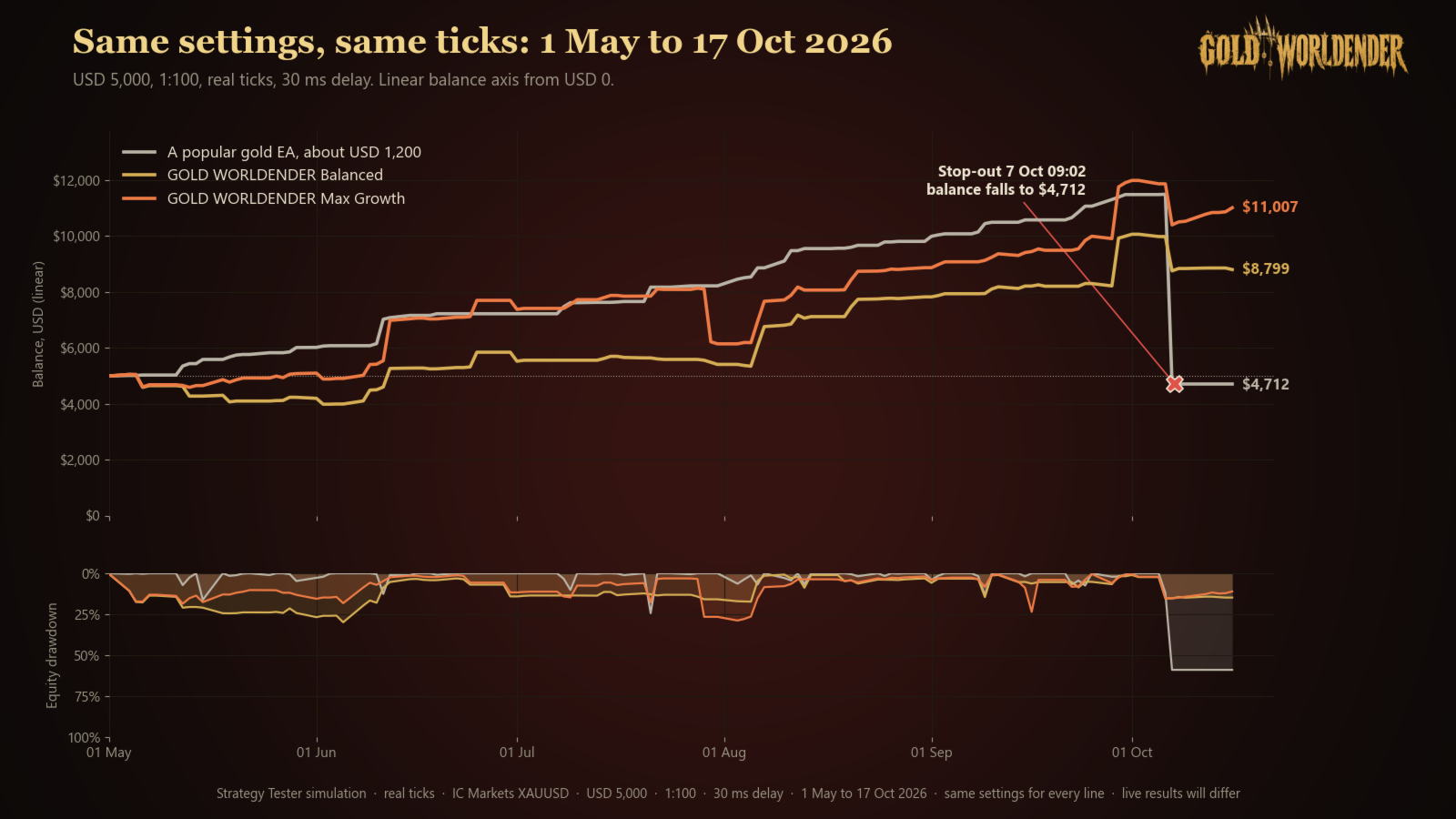
On 7 October 2026, users of a more expensive gold basket system reported their live accounts being wiped out. Worldender addresses the risk of escalating basket exposure with position limits, margin checks and exits for losing baskets. These controls are designed to reduce the risk of a basket developing into a broker stop-out.
How it trades
The breakout engine places pending orders at levels drawn from higher-timeframe ranges. Each trade has its own stop-loss and take-profit. Trailing logic manages open positions as the price moves.
Each of the eight basket strategies has its own entry conditions, trading hours and direction. When price moves against a basket, it can add positions of the same lot size at defined price intervals, then manage the basket toward a common exit. This is grid averaging. The lot size does not increase with each added position, although the basket's total exposure grows.
Presets and control
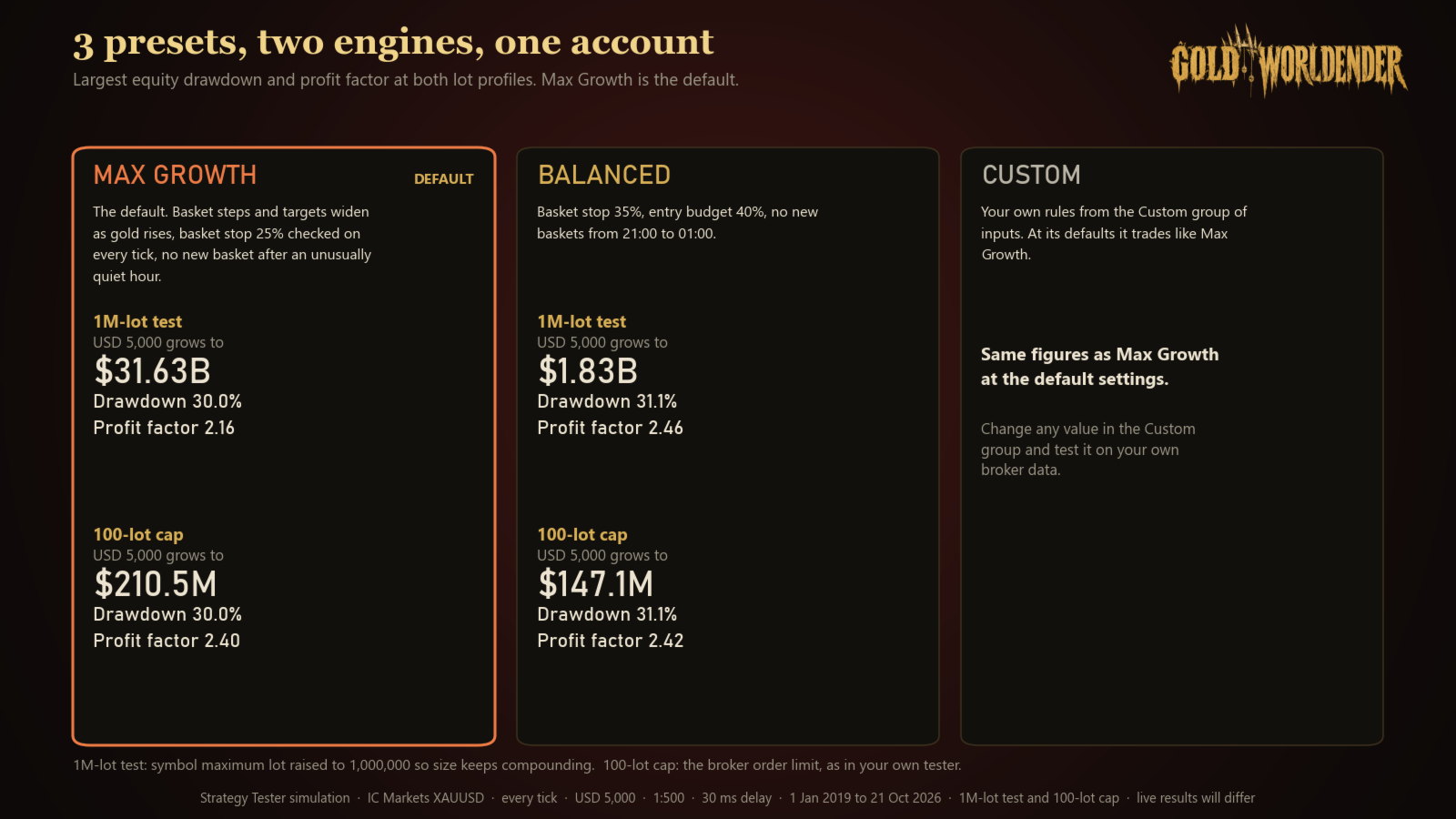
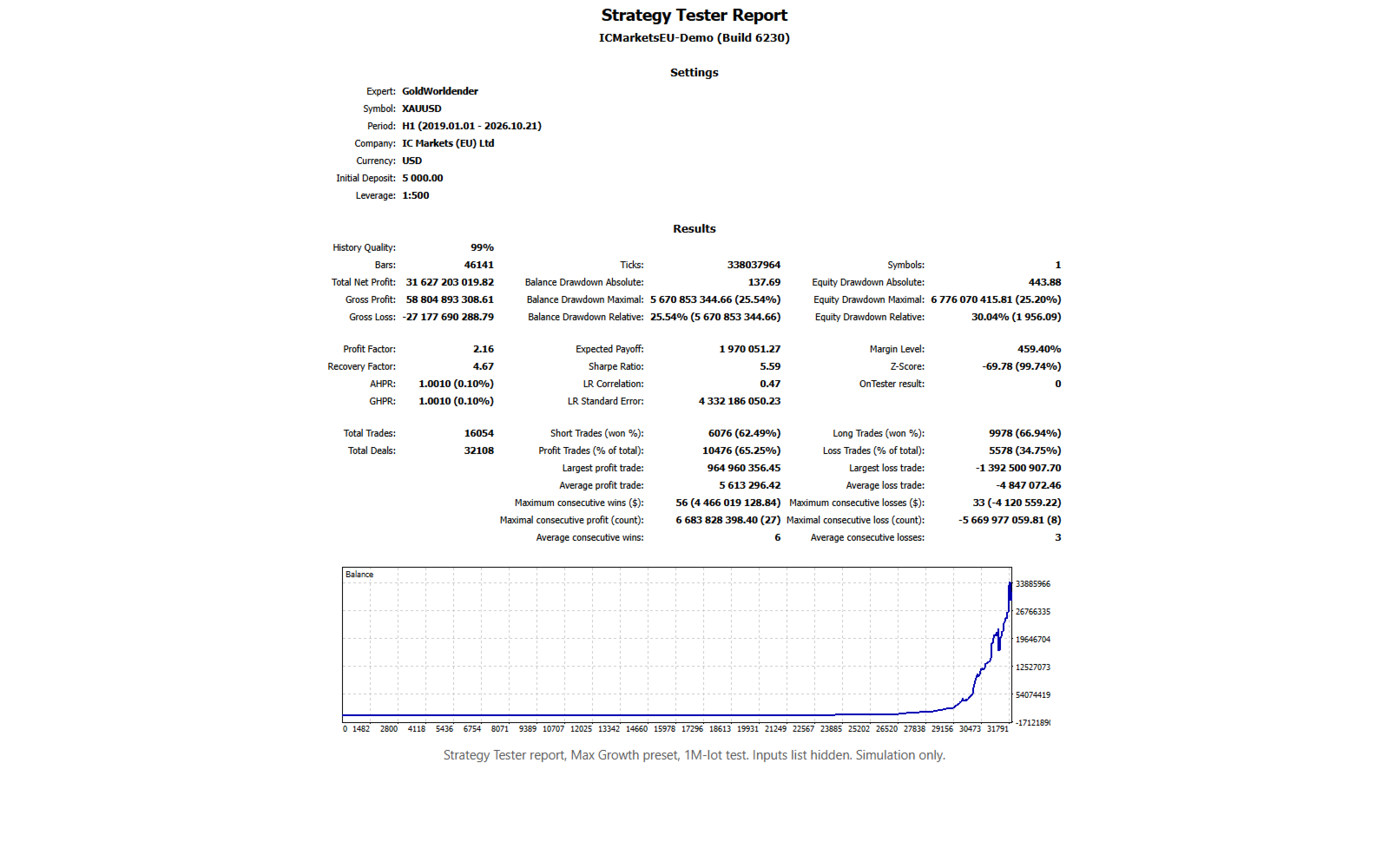
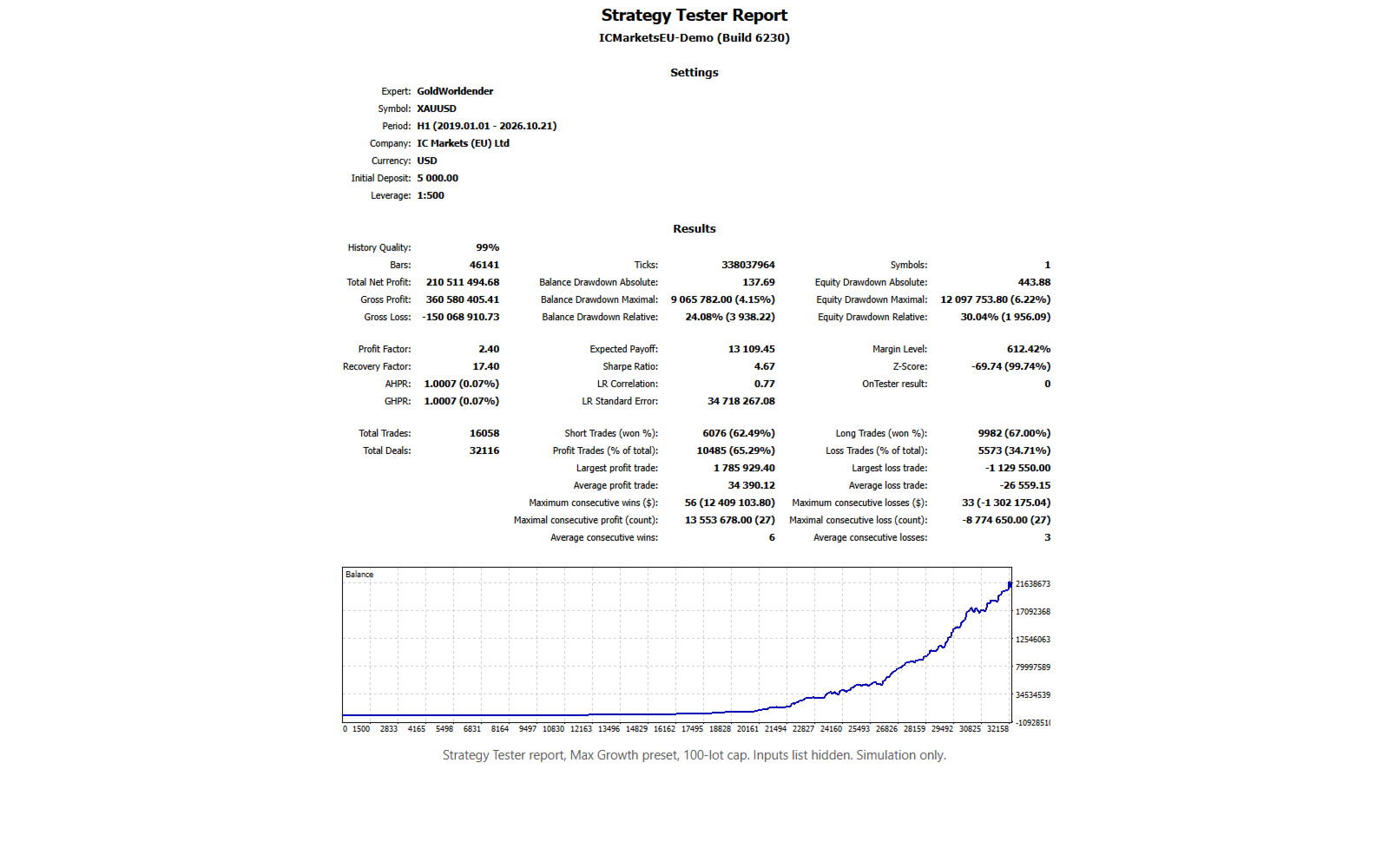
- Max Growth is the default. It adjusts basket spacing and targets as the gold price rises, and uses a broker tick-activity filter to delay new baskets after unusually quiet hours. The basket loss threshold is 25% of account balance, checked on every tick.
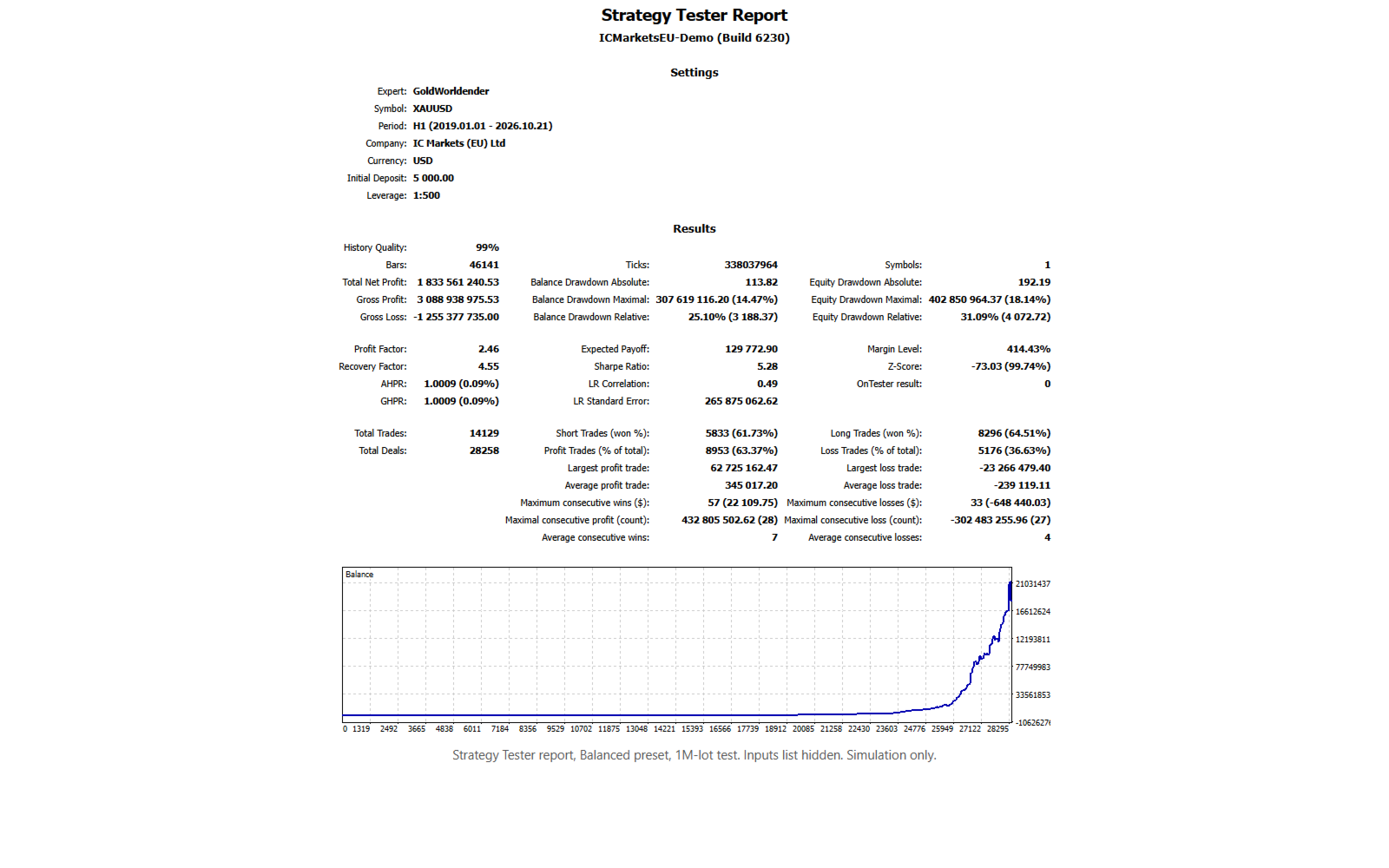
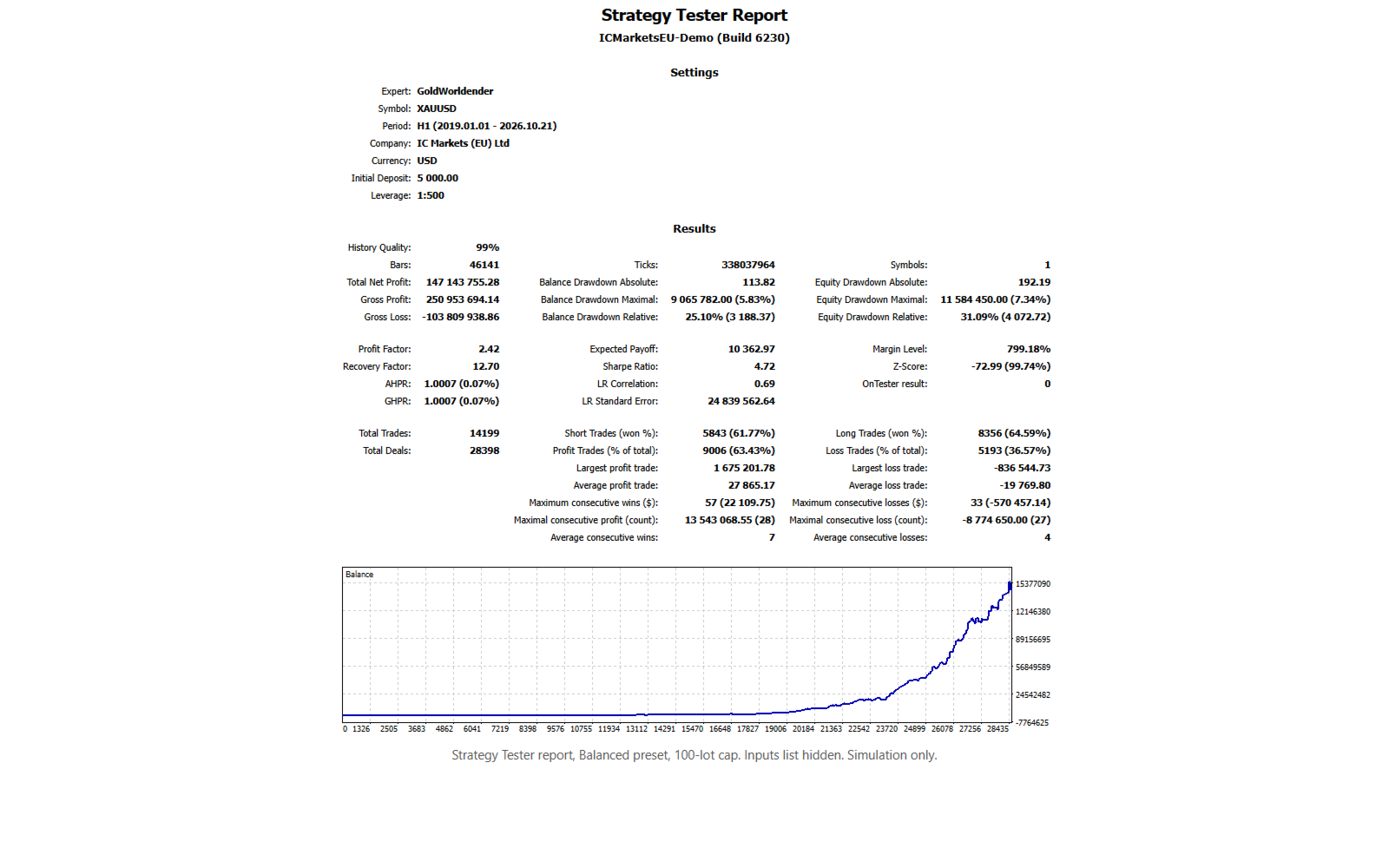
- Balanced uses a 35% basket loss threshold. It restricts new baskets overnight and when portfolio drawdown exceeds its entry budget. Its different rules do not mean it carries less risk in every market.
- Custom starts with the Max Growth values and lets you change basket spacing, targets, depth, timing and further risk controls.
You can adjust each engine's size or switch it off, choose automatic or fixed lots, set a maximum order size and select individual basket strategies. The guide explains what each setting does, so you can make informed changes to the configuration.
The account equity stop defaults to 50% below the recorded equity high. At that threshold, Worldender closes its positions and stops trading until reset. Restarting the terminal does not clear the stop. There is also an optional daily loss limit that closes Worldender trades and pauses until the next broker day. It is off by default.
Test charts
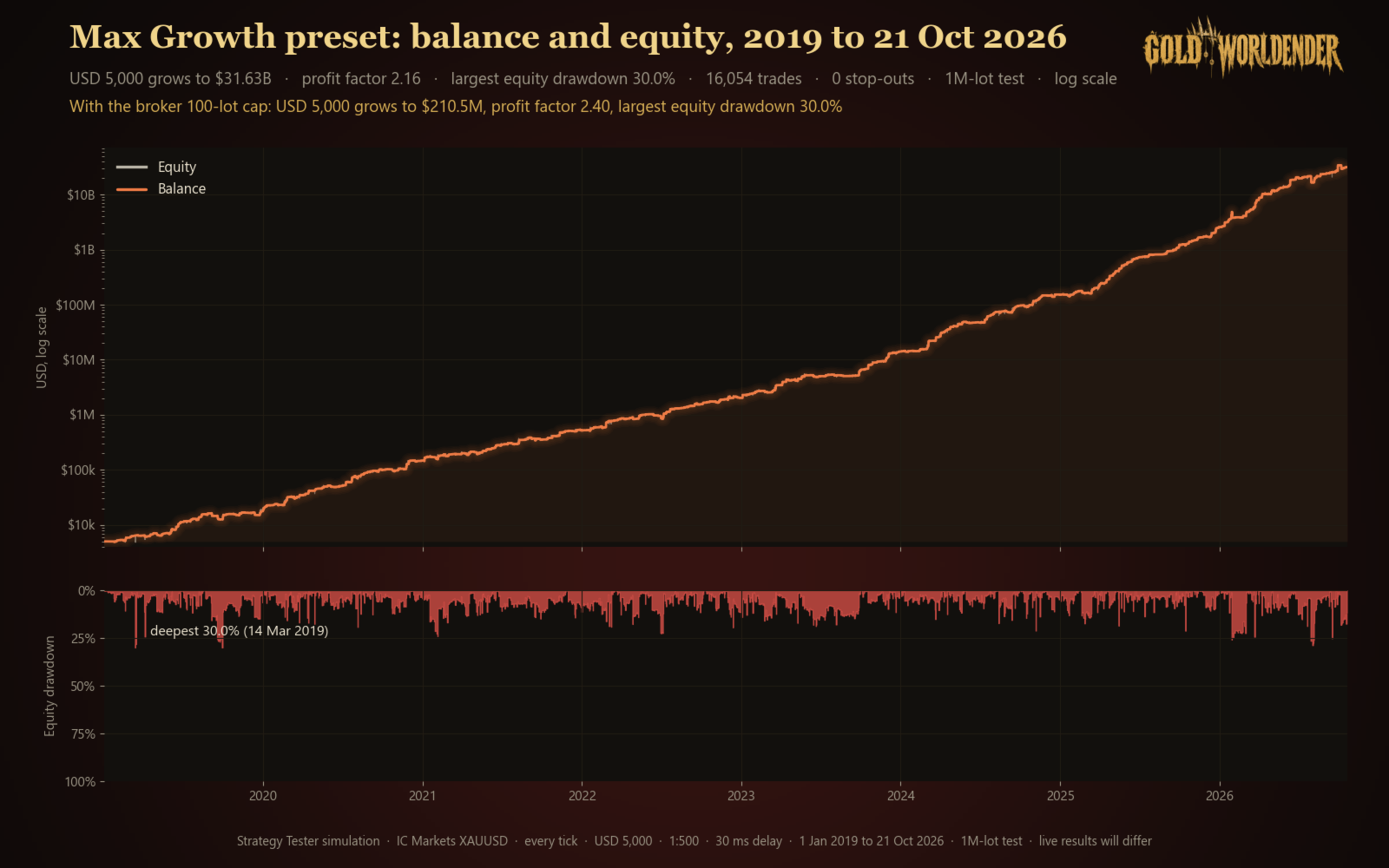
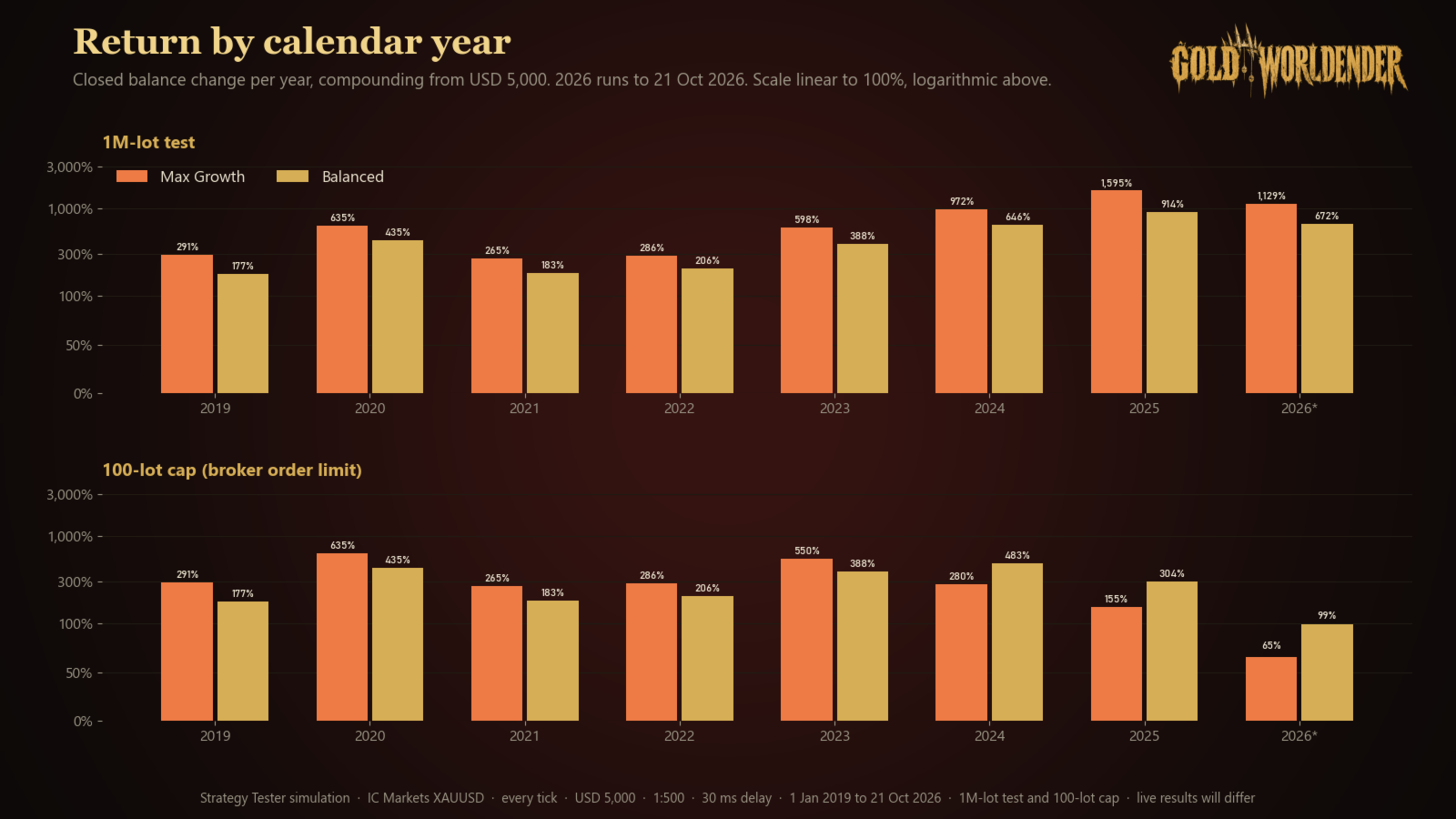
We also ran research tests with a 1,000,000-lot ceiling to study compounding beyond the 100-lot ceiling used in the capped runs. The modified tester volume limit is identified on those charts. These are historical simulations, not live results or evidence that those trade sizes could be executed. Your broker's volume limits and your own settings still apply.
Setup
Use your broker's gold symbol on an H1 chart with a MetaTrader 5 hedging account. Keep the terminal running during trading hours, preferably on a virtual server. Test your settings with your broker's costs, leverage and execution conditions before going live. Support is available through MQL5 messages and the product comments.
Gold and grid trading can result in the loss of the entire deposit. Gaps, slippage and execution delays can take losses beyond the configured thresholds. Historical results do not predict future returns.