Fine Silver
- Experts
-
Sergio Lozano Romero
 Hello im Sergio
i know im new here but i have been coding trading bot for years now
i worked hard to develop a stable bot and now after years of failure i finally did it - Version: 1.0
- Activations: 15
Fine Silver
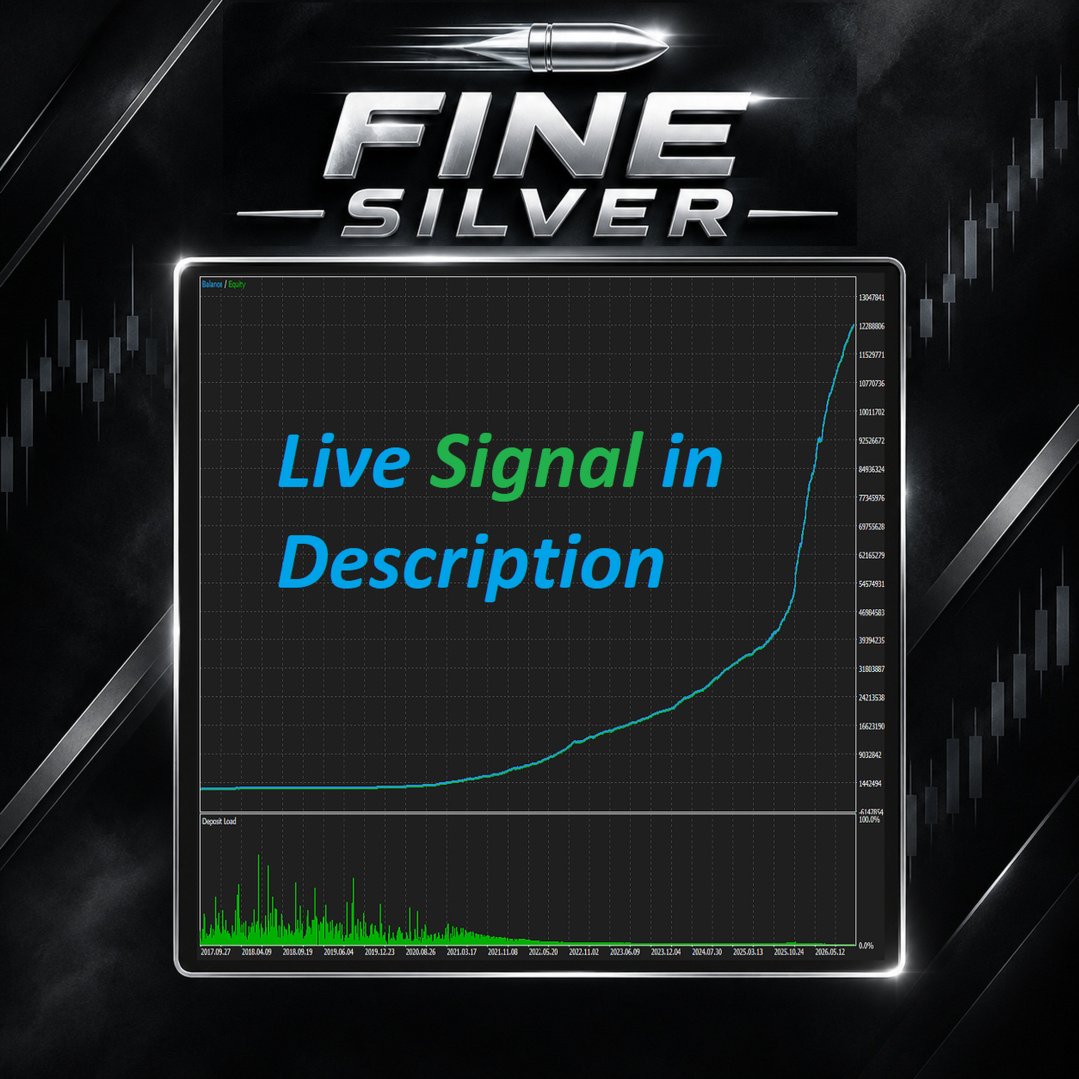
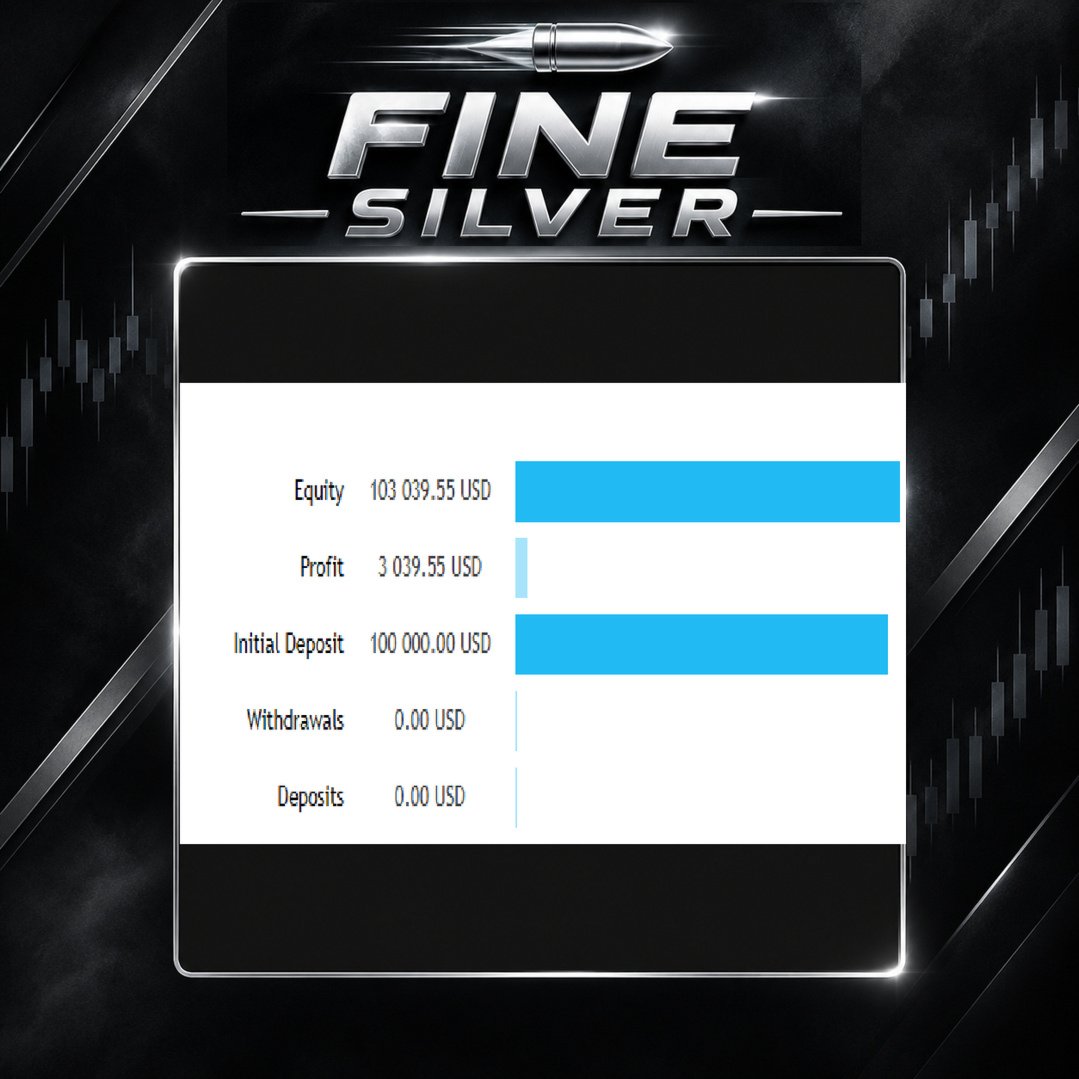
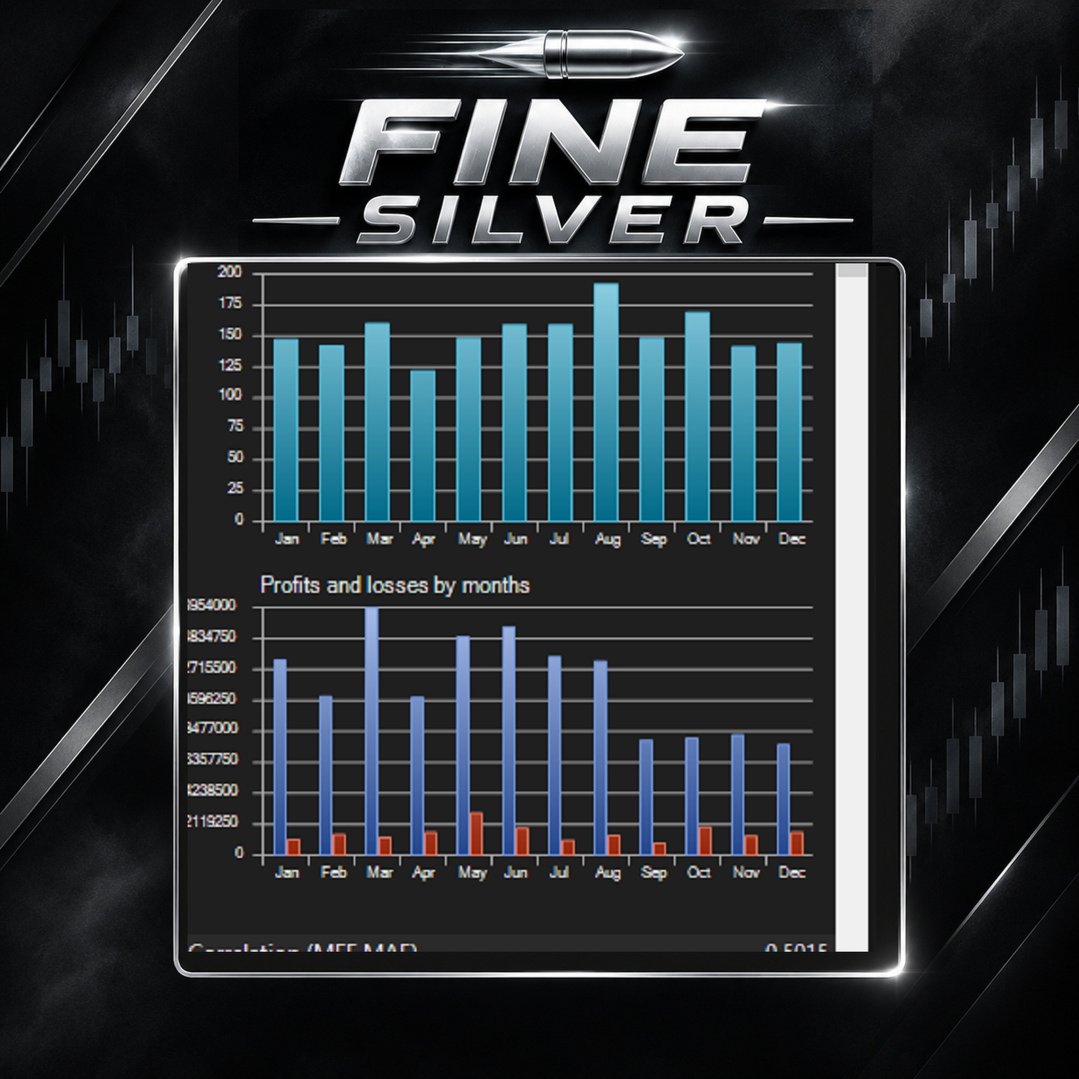
>>LIVE SIGNAL ON REAL ACCOUNT<<: https://www.mql5.com/en/signals/2393255
"Fine Silver waits for a level to be swept and rejected, scores which side actually has control, and only then allows an entry. Recent results and live conditions still retune how aggressive that process is. Personal accounts can use adaptive recovery. Prop challenges run the same engine with recovery switched off."
===== OVERVIEW
Fine Silver trades fakeouts and shakeouts at meaningful levels. Price often pokes through a high, low, or other trading level, takes the orders resting there, and then fails to continue. That failed push is the event the EA is built to catch. It does not enter on the break itself. It waits until the shakeout is visible, scores the likely true direction away from that level, and engages only when an entry signal agrees with the score.
The score is built from what happened at the level and from the broader picture around it:
• Volume — how much business printed on the push through the level versus how much printed on the rejection. A sweep with no follow-through, and stronger volume on the way back, raises the score for the opposite direction.
• Rejections — how many times price was turned away from one side of the level. Repeated rejection on one side adds weight to a move in the other direction.
• Liquidity sweeps — an estimate of whether stops and resting orders beyond the level were taken. A completed sweep that immediately loses momentum is treated as fuel for the reversal, not as a real breakout.
• Market structure — where the level sits in the wider swing picture. A shakeout that aligns with the prevailing structure scores higher than the same wick in a conflicting structure.
• Context around the level — the depth of the poke, how fast price returned inside the level, and whether nearby structure supports the same side.
Each factor contributes to a directional score. When the score is strong enough, the EA has a side. Entry signals then decide the actual trade: timing, price location, and confirmation that the shakeout is still valid. A high score with no entry signal produces no order. An entry signal that disagrees with the score is ignored.
On top of that logic, the EA is self-modifying. After closed trades, and as volatility and price behavior change, it retunes its own working settings inside fixed limits: how strict the score must be, how much size to use, and whether recovery is allowed. The strategy stays the fakeout score. The way it is applied becomes tighter, looser, or paused.
Two inputs drive those adjustments:
• Previous trades — recent results, holding time, and whether the last sequence made or lost ground. A strong run can allow normal participation. A weak run makes the EA more selective and smaller in size.
• Current market conditions — volatility and whether the live market still resembles the conditions behind the last good scores. When it does not, the EA changes pace.
All adaptation stays inside a bounded range set before the session. The EA can retune risk, score strictness, and recovery permission. It cannot drop the level-score rules or keep raising size just because a trade is open.
Load it once on XAGUSD, timeframe M15. From that single chart it manages XAGUSD(Silver), including scoring, entry signals, the dashboard, the adaptive state, and recovery tracking.
1 ===== TRIAL BEFORE YOU BUY
A demo-account trial version is available on request. Contact me directly before purchasing if you want to run the system yourself first. The trial is limited to demo accounts and gives you full access to observe the level scoring, entry signals, adaptive logic, recovery behavior, and dashboard in a live environment.
2 ===== THE RECOVERY METHOD
Recovery in Fine Silver is a controlled mode of the same adaptive engine. It is used to work back from a drawdown in steps, with size and permission decided by account state and market state together. A recovery entry still needs a valid level score and an entry signal. The recovery state does not bypass the fakeout logic.
How a recovery sequence runs
1. Drawdown is recognized. The EA marks a recovery state only after a defined loss condition. A normal losing trade does not automatically start a new layer.
2. The level is scored again. Recovery is allowed only when a fresh shakeout still produces a strong directional score and current conditions support it. If the score is weak, the EA waits.
3. Size is taken from equity. The next position is calculated from current account equity and the recovery step, so size stays proportional to the account.
4. Layers are capped. A maximum number of recovery steps is fixed in advance. When that cap is reached, the sequence ends.
5. The state clears. Once the sequence finishes or the score fails, the EA returns to normal adaptive trading.
On a personal account you can run recovery as Full or Passive. On a prop challenge, set it to OFF. With recovery off, every trade is a single entry with its own stop, and the self-tuning continues only inside that single-entry mode.
3 ===== PROP FIRM COMPATIBILITY
PROP FIRM SETFILE AVAILABLE
A dedicated configuration file for prop firm challenges is ready and provided on request after purchase. The setfile disables the recovery system, keeps the level-scoring and entry logic inside single-entry rules, and configures risk to suit standard daily and total loss limits.
Contact us after purchase to receive the prop firm setfile along with notes on how to apply it correctly to your specific challenge type.
On a prop firm challenge, turn the recovery method off entirely. In that mode each trade stands alone with its own stop loss. The EA can still tighten or pause itself from recent results and market conditions, while open risk stays limited to one position at a time. That makes it straightforward to stay inside the loss boundaries prop firms enforce.
| Account Type | Recovery Setting | Setfile |
|---|---|---|
| Personal live account | Full or Passive | Standard setfile |
| Prop firm challenge | OFF | Prop setfile — request after purchase |
| Demo / testing | Any mode | Contact me for backtest config |
4 ===== CHART AND DEPLOYMENT
Attach to XAGUSD on M15. This EA runs from a single chart only — do not attach multiple instances. Level scoring, entry signals, the adaptive state, recovery tracking, dashboard, and trade management all operate from that one chart.
Best performing symbols: XAGUSD(Silver)
5 ===== BACKTEST NOTICE
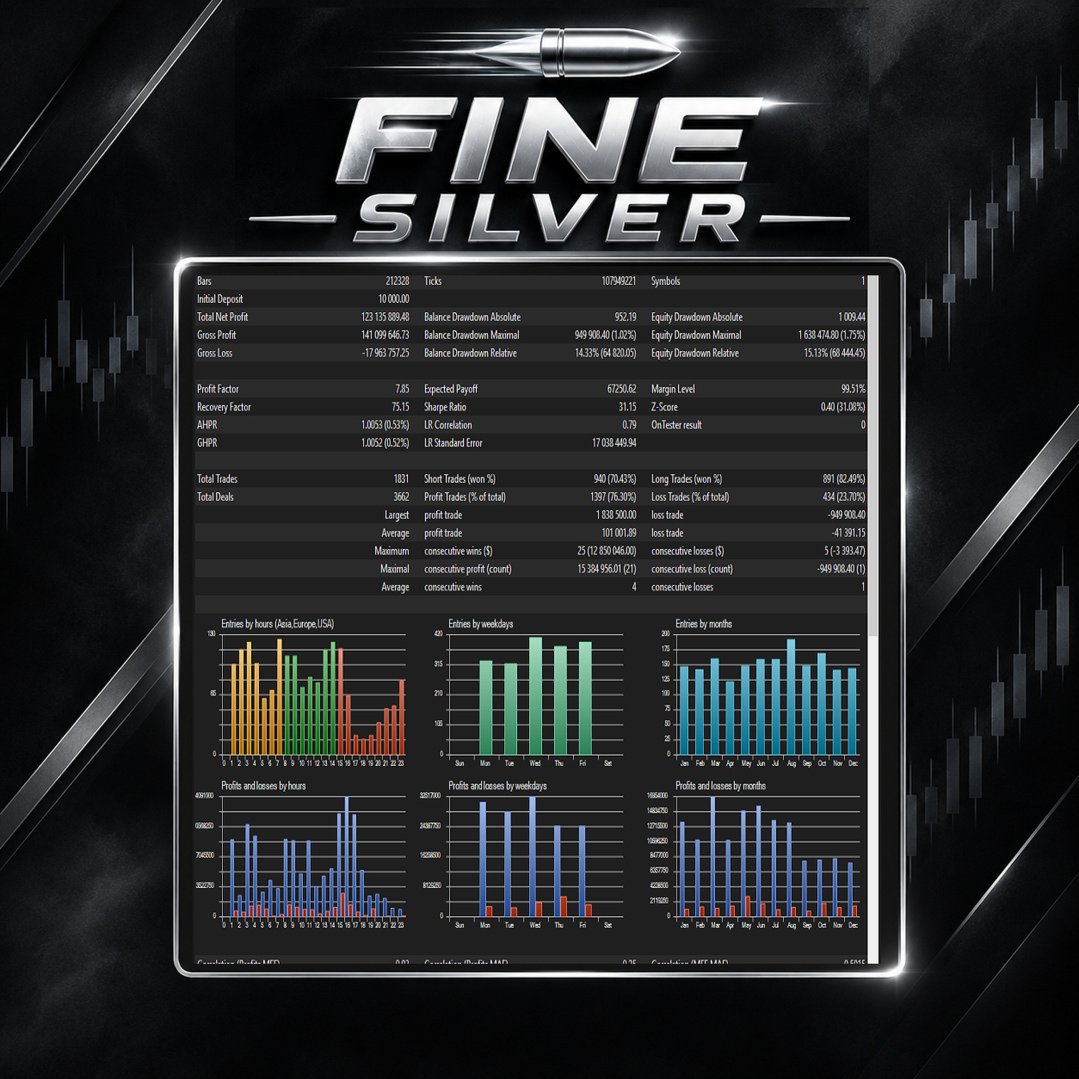
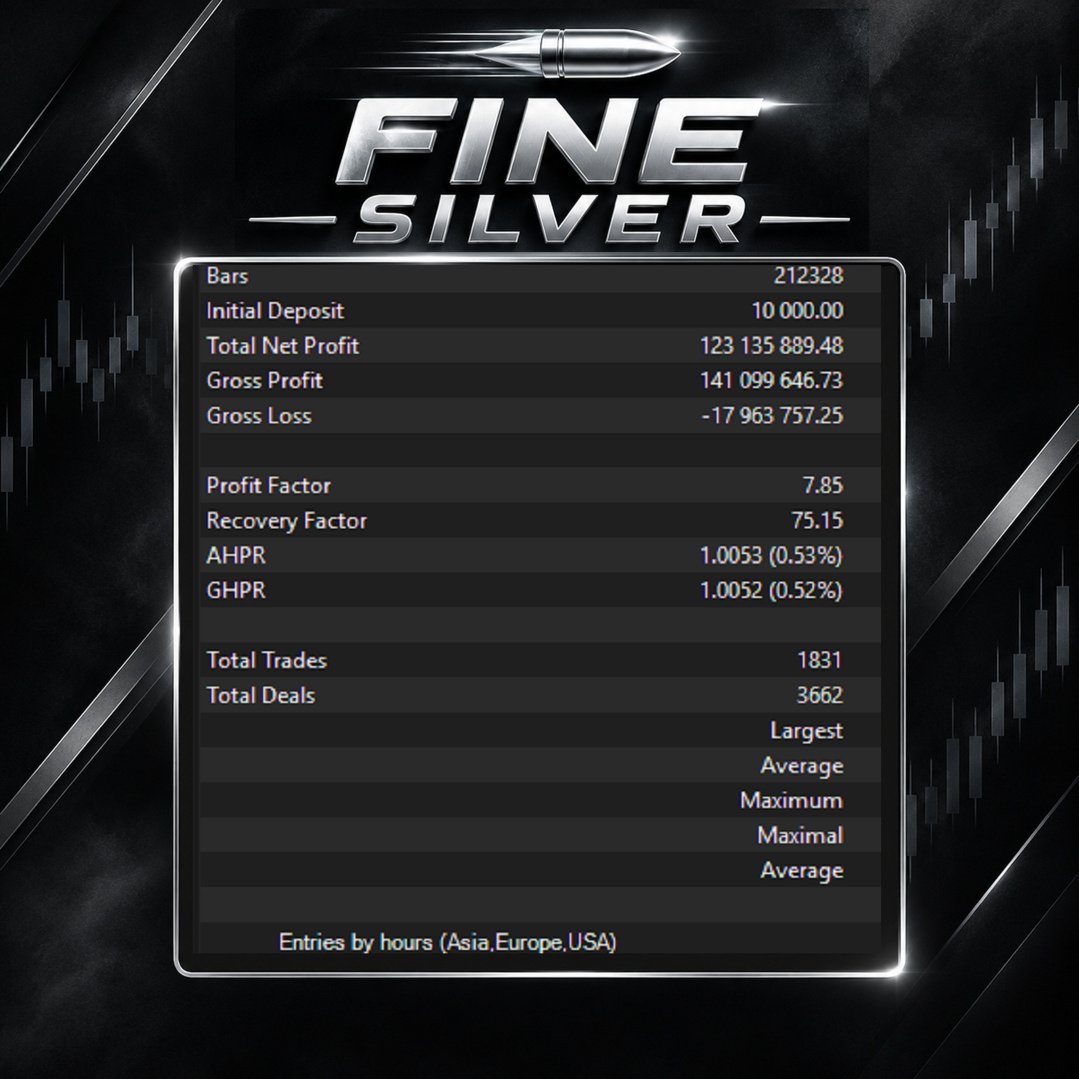
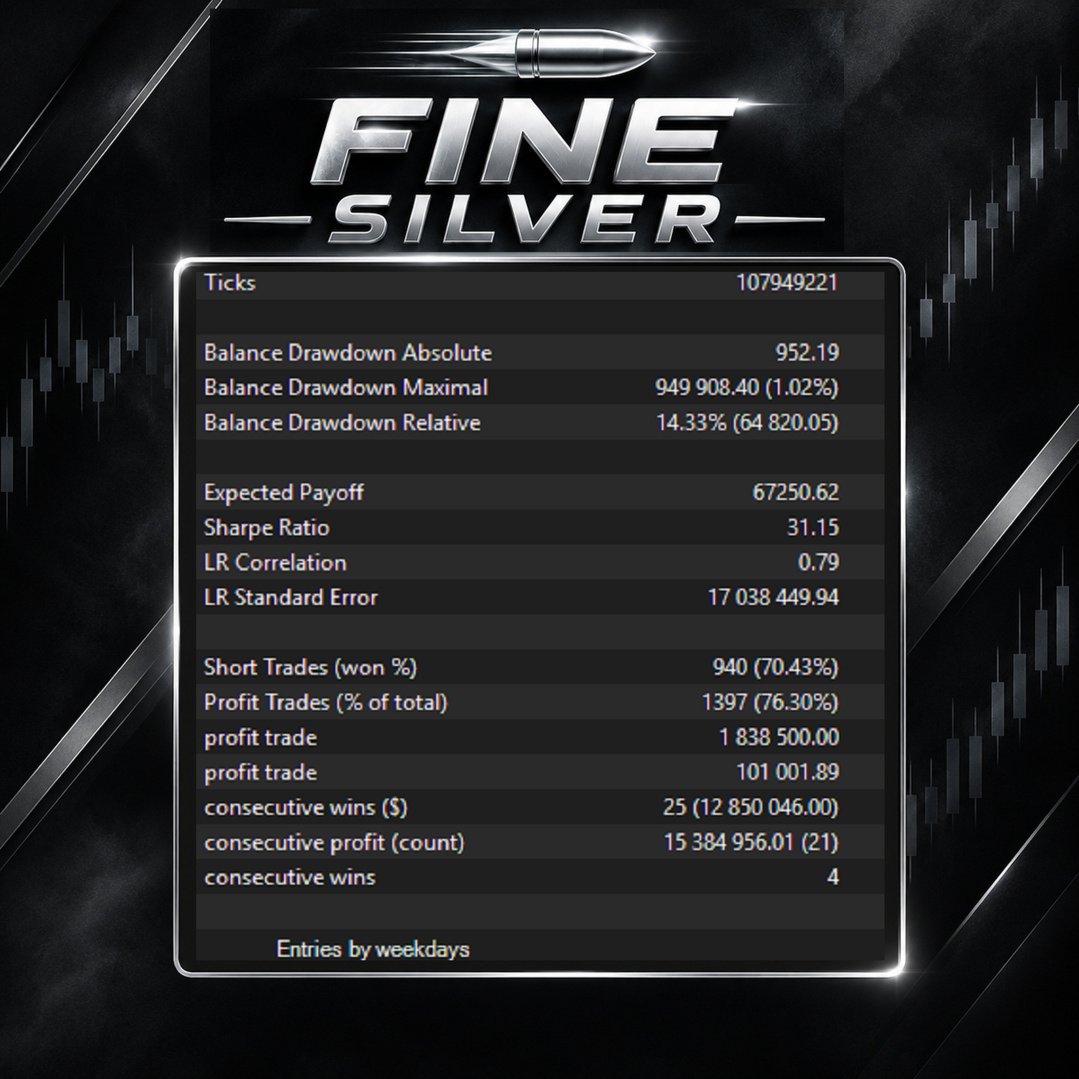
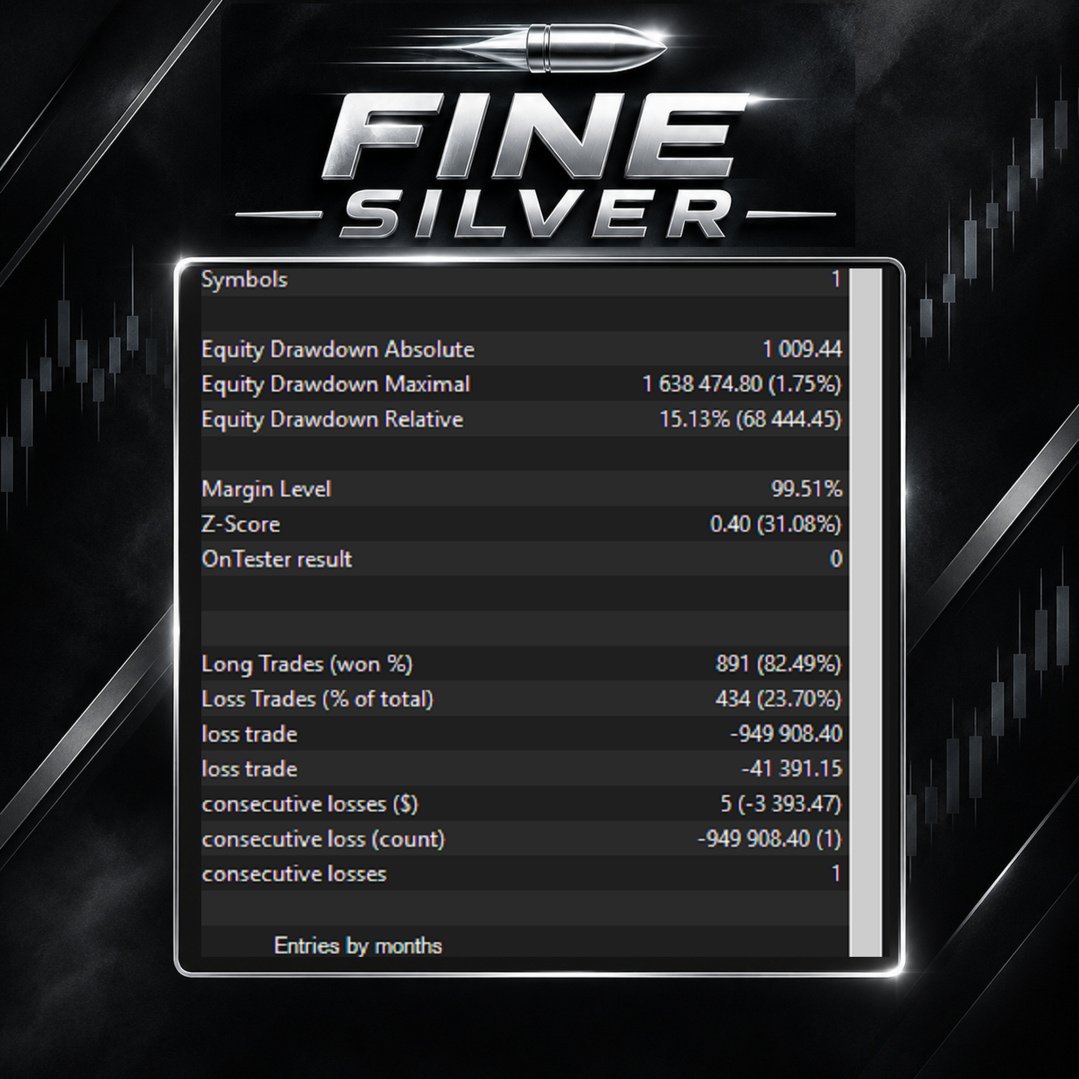
This EA scores shakeouts from volume, rejections, liquidity sweeps, and structure, then changes its behavior from prior trades and market conditions. Recovery adds a further state on top of that. A default MetaTrader test will not reproduce this correctly. To get proper backtest results contact me so I send you guidance and the setting file for a proper backtest. An incorrectly configured test will misstate how the score, the entries, and the recovery sequence behave, including drawdown.
6 ===== AFTER PURCHASE
• Prop firm setfile — contact us after purchase to receive it
• Telegram channel invite — contact us after purchase for the link. Updates, configurations, announcements and other useful material are shared there
Past results do not guarantee future performance.