Neural Networks in Trading: Why AI Systems Are Becoming the New Market Filter

Neural Networks in Trading: Why AI Systems Are Becoming the New Market Filter
For years, traders searched for the perfect signal.
A cleaner entry. A faster indicator. A sharper confirmation. A setup that could tell them where the market was going before everyone else saw it. The dream was always the same. Find the signal that removes uncertainty.
But the longer you trade, the more that dream starts to fall apart.
The market is not only a signal problem. It is a context problem.
A buy signal can be strong in one environment and dangerous in another. A breakout can be powerful when volatility expands cleanly, but completely unreliable when the market is trapped in noise. A trend setup can work beautifully when momentum is aligned, then fail repeatedly when the market shifts into compression. A Gold trade can look technically perfect until macro data changes the entire structure. A Bitcoin move can look like continuation until liquidity disappears and price snaps back violently.
That is where traditional trading logic starts to reach its limits.
Most indicators are designed to answer one narrow question. Is price above or below a moving average? Is momentum rising or falling? Is volatility expanding or contracting? Is the market overbought or oversold? These questions can be useful, but they are incomplete. They do not understand the full environment. They do not weigh how different conditions interact. They do not naturally adapt when the market changes character.
This is why neural networks in trading are becoming more important.
Not because they magically know the future. That is the wrong conversation. Any serious trader should be skeptical of anyone selling AI as a crystal ball. Markets are too complex, too reactive and too uncertain for that kind of fantasy. Liquidity shifts. News changes conditions. Volatility expands without warning. Market regimes rotate. No intelligent system should be presented as if it can remove uncertainty from trading.
The real value of neural networks is more practical and far more powerful.
They can act as market filters.
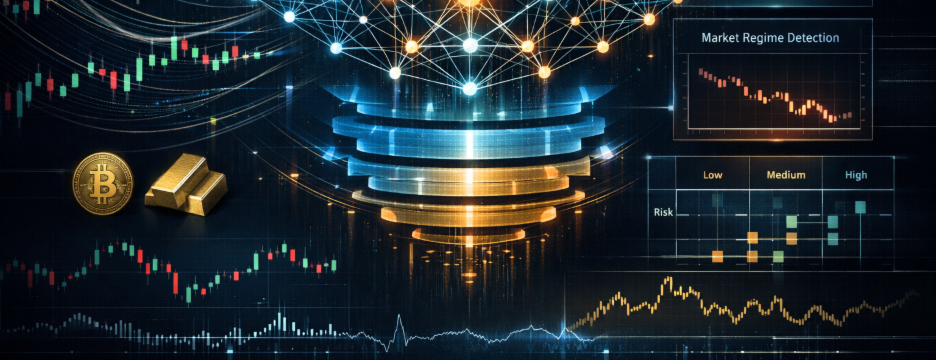
A neural network can process multiple conditions at once. It can help evaluate whether a setup has enough quality to justify risk. It can support AI confidence scoring, market regime detection, multi timeframe analysis, volatility interpretation, signal filtering and automated decision support. When this intelligence layer is connected to proper risk management and professional Expert Advisor architecture, it becomes part of a more disciplined trading framework.
That is the new direction of serious AI trading systems.
Not prediction without risk.
Not automation without context.
Not signals without structure.
A neural network does not need to replace the trader’s intelligence. Its better role is to protect the trading process from shallow decisions, emotional reactions and one dimensional signal logic.
Because in modern markets, the edge is no longer only in finding movement.
The edge is in knowing which movement deserves execution.
The Market Is Too Complex For One Dimensional Signals
A lot of trading systems are not completely wrong. They are simply too thin.
They are built around one condition, one indicator, one entry pattern or one technical event, and then they are expected to survive in an environment that is constantly changing. That is a difficult expectation. A moving average can show direction, but it does not understand whether volatility is stable. A momentum indicator can show strength, but it does not know whether the move is occurring near a major news event. A breakout rule can detect expansion, but it does not always know whether the market is clean or chaotic.
This is the weakness of one dimensional trading logic.
A trade is never just a signal. A trade is a combination of trend, volatility, timing, spread, risk, market regime, higher timeframe context, news environment, recent system exposure and trade management. When these elements align, a setup may deserve attention. When they conflict, the same setup can become low quality even if the entry trigger appears valid.
Manual traders often sense this intuitively. They know that two trades with the same pattern can feel completely different depending on the environment. They know that a setup can look technically correct but still feel structurally weak. They know that BTC during aggressive momentum is not the same as BTC during unstable chop. They know that Gold before a macro release is not the same as Gold during a clean technical session.
The problem is that intuition is unstable.
It changes after a loss. It changes after a win. It changes when the trader is tired, impatient, overconfident or emotionally exposed. What feels like experience in one moment can become bias in the next.
Neural networks offer a more structured way to handle that complexity.
Instead of relying on a single condition or emotional interpretation, an AI trading system can evaluate multiple inputs and build a broader assessment of the market state. It can help distinguish between a raw signal and a higher quality trading opportunity. It can support the system in asking a more professional question.
Not simply, “Is there a trade?”
But, “Is this trade worth taking under these conditions?”
That question is where serious trading begins.
A basic trading bot reacts when a trigger appears. A professional Expert Advisor should do more. It should validate the environment, check risk, evaluate context, respect news conditions, manage execution quality and filter the setup before capital is exposed. This is where neural networks become useful inside automated trading. They help move the system away from blind reaction and toward structured decision quality.
Why Neural Networks Matter In Modern Expert Advisors
A neural network becomes valuable in trading because it can identify relationships between inputs that are difficult to define with simple fixed rules.
Traditional rule based logic usually works through clear conditions. If this happens, then do that. If price crosses a level, if volatility reaches a threshold, if momentum confirms, then the system takes action. There is nothing wrong with that. In fact, serious trading systems still need hard rules. Risk has to be defined. Execution has to be controlled. Position sizing has to be structured. Stop loss logic, take profit logic, cooldowns and daily limits cannot be replaced by vague intelligence.
But markets are not always clean enough for simple conditions to tell the whole story.
A signal may appear while the broader environment is weak. A technical setup may trigger while volatility is unstable. A trend may look valid on one timeframe while higher timeframe structure is conflicted. A trade may appear attractive, but spread conditions, news risk or recent portfolio exposure may make execution inefficient.
This is where a neural network can add value.
It can help evaluate quality, not just occurrence.
That distinction matters. A weak system only asks whether something happened. A stronger AI trading system asks whether what happened is meaningful enough to justify risk.
This is especially important in Expert Advisors because automation can amplify both strength and weakness. If the logic is strong, automation can execute it consistently. If the logic is weak, automation can repeat poor decisions faster than a human ever could. That is why neural networks should never be treated as decorative technology. They need to serve a specific function inside the architecture.
The role of the neural network is not to make the system mysterious. The role is to make the system more selective.
It should help filter. It should help score. It should help classify context. It should help the Expert Advisor understand whether current conditions support execution or whether the better decision is to wait.
This is where a framework like Neurocore AI becomes relevant. The idea is not to turn AI into a marketing phrase. The idea is to build a decision layer that can evaluate confidence, market context, symbol behavior and trade quality before execution. When this is connected to structured risk management, news filtering, market condition validation and trade lifecycle control, AI becomes part of the operating system.
That is the difference between using AI as a label and using AI as infrastructure.
AI Confidence Scoring Is More Valuable Than Prediction
The most credible use of AI in trading is not prediction.
It is confidence scoring.
That may sound less dramatic, but it is far more professional. Prediction invites fantasy. Confidence scoring supports discipline.
A neural network does not need to claim that price will go up or down with certainty. It can instead help evaluate whether current conditions are strong enough to support a specific trading idea. It can estimate setup quality. It can weigh market features. It can classify whether the environment is clean, unstable, aligned, conflicted or too uncertain.
This creates a better decision process.
A setup may trigger, but confidence may be too weak. The system may detect direction, but volatility may be too unstable. Momentum may appear strong, but the broader market regime may not support continuation. A Gold setup may look clean technically, but news risk may reduce its quality. A BTC signal may appear powerful, but spread, liquidity or exposure conditions may not justify entry.
This is where AI confidence scoring becomes important.
It does not remove uncertainty. It does not guarantee outcomes. It does not replace risk management. But it gives the system another layer of evaluation before execution. That layer can help prevent the system from treating every technical signal as equal.
Manual traders struggle here because emotional confidence often feels similar to structured confidence. A trade feels strong because price is moving fast. A setup feels obvious because the last similar trade worked. A breakout feels urgent because the trader does not want to miss it. But emotional confidence is not the same as market quality.
Structured confidence is different.
It is built from conditions. It considers trend context, volatility, market regime, momentum, spread, news risk, higher timeframe alignment, risk state and trade quality. It asks whether the trade deserves exposure, not whether the trader feels convinced.
Inside systems like ICONIC AI SIGNAL and ICONIC NEUROCORE AI+, this distinction matters deeply. AI should not overpower the risk engine. It should support the decision layer while the risk framework controls exposure. A confident signal without risk control is still dangerous. A neural network without execution rules is not a trading system. Intelligence becomes professional only when it operates inside constraints.
Confidence without control is noise.
Confidence inside structure becomes useful.
Market Regime Detection Turns AI Into Strategy
Markets do not behave the same way every day.
They trend. They range. They compress. They expand. They become clean, then unstable. They respect structure, then ignore it. They move technically, then react violently to external catalysts. Any trader who has spent enough time with BTC or Gold knows this. The same strategy can feel precise in one market phase and completely ineffective in another.
That does not always mean the strategy is broken.
Sometimes it means the regime has changed.
This is why market regime detection is so important in AI trading systems. A signal only has meaning inside its environment. A breakout model needs expansion. A trend model needs follow through. A reversal model needs exhaustion. A scalping approach needs execution efficiency. If the system does not understand the market state, it may apply the right logic at the wrong time.
That is where neural networks can become strategic.
They can help evaluate whether current conditions resemble trend, range, compression, expansion, instability or transition. They can support the system in recognizing when the environment has changed enough that the usual signal should be treated differently. Instead of blindly repeating the same rule, the system can begin to filter the rule through context.
A buy signal during clean trend continuation is not the same as a buy signal inside a noisy range. A Gold setup during stable liquidity is not the same as a Gold setup moments before a macro release. A BTC continuation signal during structured momentum is not the same as one during erratic sentiment and sudden liquidity shifts.
Market regime detection helps protect the system from blind repetition.
This is where the difference between automation and intelligence becomes clear.
Automation executes.
Intelligence filters.
A serious Expert Advisor should not only ask whether a condition exists. It should ask what kind of market that condition exists inside. This is the logic behind a more advanced AI driven framework. It does not make the system complex for the sake of complexity. It makes the system more aware of the environment it is operating in.
A market is not just price.
It is behavior.
And behavior changes.
Why BTC And Gold Need Different AI Logic
One of the strongest arguments for AI driven trading systems is that different markets do not behave the same way.
Bitcoin and Gold are both highly attractive markets for automated trading, but they are not the same mathematical problem. They do not move for the same reasons. They do not react to risk in the same way. They do not express volatility in the same structure.
Bitcoin often moves with speed, sentiment, liquidity bursts and aggressive momentum. It can accelerate quickly and reverse with equal violence. It creates urgency. It tempts traders into chasing. It punishes hesitation, but it also punishes impulsive entries. A BTC Expert Advisor needs to respect volatility, structural breaks, sentiment driven movement and exposure control.
Gold has a different personality. XAUUSD is deeply connected to macroeconomic information, USD strength, inflation expectations, interest rate narratives, geopolitical tension and liquidity windows. Gold can respect technical structure beautifully, but it can also change character quickly around economic releases or macro events. A Gold Trading EA needs to understand news sensitivity, spread behavior, volatility expansion and timing.
This is why generic automation is dangerous.
A system that treats BTC and Gold as if they are the same market is not disciplined. It is simply convenient. The same technical signal can carry different meaning depending on the instrument. The same volatility reading can have different implications. The same market movement can be opportunity in one environment and risk in another.
This is where AI systems need market specific architecture.
ICONIC BTC AI+ is designed around Bitcoin specific behavior, where volatility, speed and sentiment driven movement require controlled execution and intelligent filtering. ICONIC GOLD AI+ is structured around the Gold environment, where macro sensitivity, liquidity behavior, news awareness and volatility control matter deeply.The point is not to make trading unnecessarily complicated.
The point is to respect the instrument.
Markets have personalities. Serious systems should be built with that in mind.
Multi Timeframe Analysis Gives AI A Wider Field Of Vision
One of the most common weaknesses in manual trading is tunnel vision.
A trader watches one chart for too long, and eventually that chart becomes the whole truth. A candle looks strong. A wick looks meaningful. A breakout looks urgent. The immediate movement becomes emotionally dominant, and the trader forgets that the market is layered.
One timeframe rarely tells the full story.
A lower timeframe buy signal may appear directly below higher timeframe resistance. A short term breakout may be nothing more than noise inside a larger consolidation. A pullback may look dangerous on one chart but completely normal on another. Without context, the trader can mistake local movement for real opportunity.
This is why multi timeframe analysis matters for AI trading systems.
A neural network becomes more useful when it is not limited to one isolated view. If the system can evaluate structure across multiple timeframes, it can build a more complete picture of trade quality. It can help identify whether short term movement is aligned with broader trend context or fighting against it.
For BTC, this matters because fast intraday momentum can look convincing even when the larger structure remains vulnerable. For Gold, this matters because a lower timeframe setup can appear clean while higher timeframe macro pressure suggests caution. A system that only sees one layer is more likely to overreact. A system that sees multiple layers can become more selective.
The ICONIC AI SIGNAL system supports this kind of thinking through multi timeframe edge analysis, signal generation, trend context, alerts and dashboard visibility. That matters because traders do not need more random signals. They need better interpretation of signals.
A signal without context is movement.
A signal with context becomes a decision candidate.
That is the kind of distinction neural networks can help support when they are placed inside a broader trading architecture.
Neural Networks Need Risk Management To Become Trading Systems
A neural network is not a trading system by itself.
This point matters.
A model can score confidence. It can classify market conditions. It can identify patterns. It can support decision making. But unless it is connected to risk management, execution rules, trade management and market filters, it remains incomplete.
Trading is not only about identifying opportunity.
It is about controlling exposure.
This is where many AI trading narratives fail. They focus on intelligence and ignore survival. They talk about prediction, learning, adaptation and advanced models, but they fail to explain how the system protects capital when conditions turn hostile. That is not professional trading. That is technology without architecture.
A serious Expert Advisor must know how much risk is allowed per trade. It must understand when trading should stop for the day. It must control trade frequency. It must validate market conditions. It must account for spread and volatility. It must manage stop loss and take profit behavior. It must use trailing and break even logic consistently. It must know when news risk changes the quality of execution.
Without these layers, AI can become dangerous.
It can make a trader feel sophisticated while the risk framework remains weak.
The ICONIC systems are positioned differently because the AI layer exists inside a broader structure. Risk settings, daily limits, cooldown behavior, market condition validation, news filtering, trade management and portfolio coordination are part of the operating logic. This is what turns an AI concept into a more complete trading framework.
Neural networks can support decisions.
Risk management decides whether those decisions deserve capital.
That relationship must never be reversed.
Adaptive Learning Must Be Controlled, Not Worshipped
The idea of adaptive learning is attractive because markets change.
Traders want systems that can evolve, adjust and improve. That desire makes sense. A static system can struggle when market behavior shifts. A framework that can learn from outcomes, adjust confidence or refine weighting may become more resilient over time.
But adaptation can also become dangerous if it is not controlled.
A system that adapts without boundaries can overreact to recent outcomes. It can mistake short term noise for meaningful change. It can shift too quickly and lose structural consistency. In trading, learning must be disciplined. Otherwise it becomes another form of automated emotion.
The right approach is not unlimited freedom.
The right approach is measured evolution.
The AI layer can support refinement, but the risk engine must control exposure. Market filters must define permission. Trade management must control behavior after entry. The operator must review performance over meaningful samples instead of reacting to every individual outcome.
This is how adaptive AI becomes professional.
Not constant change.
Not uncontrolled adjustment.
Not a system that reinvents itself after every losing streak.
A neural network should not become the ego of the system. It should become one disciplined layer inside the architecture.
The Neurocore concept fits this direction because AI state, decision logic, learning behavior, confidence thresholds and trade outcome processing are not meant to replace the entire trading framework. They are meant to exist inside it.
That is the difference between intelligent adaptation and unstable automation.
News Filtering Protects AI From False Patterns
AI models can be powerful, but they still need context.
A technical pattern may appear valid until a news event changes the environment. A neural network may identify a setup based on historical relationships, but if the market is entering an abnormal volatility window, the usual pattern may no longer apply.
This is why news filtering matters in AI trading.
A system should not assume every market minute is equal. Some periods behave normally. Others are distorted by economic releases, macro events, central bank communication, geopolitical tension or sudden sentiment shifts. Around these periods, spread can widen, volatility can expand and liquidity can behave differently.
Gold is especially sensitive to this. XAUUSD often reacts to macroeconomic information, USD movement, inflation expectations, interest rate sentiment and geopolitical uncertainty. A Gold Trading EA must respect those conditions because a technically clean setup can become dangerous when the macro environment shifts.
Bitcoin also exists inside a broader risk environment. BTC may react to liquidity, regulatory narratives, sentiment shocks, macro pressure and sudden market wide changes. It may not behave exactly like Gold or traditional FX markets, but it is not isolated from global risk psychology.
A neural network without news awareness may mistake abnormal conditions for normal opportunity.
A serious system should not let that happen.
News filtering does not need to predict the outcome of a news event. Its purpose is simpler and more professional. It recognizes when the environment becomes structurally less reliable and allows the system to reduce activity, pause execution or apply stronger filtering.
That is not fear.
That is system discipline.
Portfolio Coordination Is The Next Level Of AI Trading
Most traders think in single trades.
A more advanced AI system thinks in exposure.
This distinction becomes important when trading multiple instruments, especially markets like BTC and Gold. A Bitcoin setup may look valid. A Gold setup may also look valid. But the total portfolio may be carrying more stress than the trader realizes. Multiple systems may be active during the same volatile environment. Several trades may create overlapping risk even when the charts look separate.
Portfolio coordination adds a higher layer of intelligence.
It asks whether exposure is appropriate across symbols. It considers whether the combined risk state is acceptable. It helps prevent the trader from evaluating every trade in isolation while ignoring the broader operating environment.
The ICONIC NEUROCORE AI+ framework includes this type of thinking through multi symbol trading, portfolio coordination, cross symbol risk awareness, AI supported decision making and trade lifecycle control. This matters because the future of AI trading is not only about better signals.
It is about better coordination.
A single trade can be valid, but the total system can still be overexposed. A signal can be strong, but the portfolio may already be under stress. A market may offer opportunity, but risk conditions may demand restraint.
That is the type of decision a mature AI trading system should support.
Not only what to trade.
But whether the broader operating environment can responsibly support more exposure.
The ICONIC Perspective: Neural Networks As Trading Infrastructure
The strongest way to understand neural networks in trading is not as a replacement for strategy.
It is as an intelligence layer inside trading infrastructure.
Infrastructure means every layer has a job. Signal logic identifies opportunity. Neural networks support confidence and context. Market regime detection evaluates the environment. Multi timeframe analysis adds perspective. News filtering protects against abnormal conditions. Risk management controls exposure. Trade management handles the position after entry. Portfolio coordination evaluates the larger system state.
No single layer is enough alone.
Together, they create a more professional operating framework.
This is the philosophy behind the ICONIC ecosystem. ICONIC BTC AI+ is designed around Bitcoin specific behavior, where speed, volatility and sentiment driven movement require controlled execution and intelligent filtering. ICONIC GOLD AI+ is structured around Gold’s macro sensitive environment, where news awareness, liquidity behavior, volatility control and timing matter deeply.
ICONIC AI SIGNAL adds signal generation, trend context, multi timeframe edge analysis, alerts and dashboard visibility. ICONIC NEUROCORE AI+ connects AI supported decision making, multi symbol coordination, portfolio awareness, risk management and trade lifecycle control.The purpose is not to sell AI as magic.
The purpose is to build a system where AI has a defined role.
A neural network should not be the entire trading strategy. It should be part of the decision architecture. It should help the system filter better, evaluate better and avoid lower quality conditions with more consistency than emotional manual execution can usually provide.
That is where AI becomes serious.
Not when it sounds futuristic.
When it improves the structure of the process.
Final Thought: The Future Of AI Trading Is Not Prediction. It Is Precision.
The future of AI trading will not be defined by the loudest claims.
It will be defined by the systems that can turn complexity into disciplined execution.
Markets are not simple. Bitcoin is not simple. Gold is not simple. Volatility, news, liquidity, market regimes, trader psychology, risk and execution quality all interact in ways that cannot be reduced to one basic signal.
That is why neural networks matter.
They offer a way to process complexity with more structure. They can support confidence scoring, regime detection, signal filtering, multi timeframe context and adaptive learning. But they become valuable only when connected to the harder parts of trading: risk control, execution discipline, trade management, news awareness and portfolio coordination.
AI without structure is not a system.
It is just another layer of noise.
But AI inside architecture can become powerful.
It can help the trader move beyond emotional interpretation and toward measured decision making. It can help the system stay selective when the market becomes tempting. It can support discipline when human confidence becomes unstable. It can help separate movement from opportunity.
That is the real evolution.
Not from human to machine.
From reaction to architecture.
From signals to systems.
From prediction fantasy to decision quality.
Neural networks do not need to know the future to be valuable. They need to help the system make better decisions before risk is placed.That is where the next generation of AI trading begins.
Move From Signals To Neural Trading Infrastructure
If your trading still depends only on single indicators, manual interpretation and emotional conviction, your process may be too exposed to noise.
The next step is not necessarily more signals.
It is better filtering.
ICONIC was built for traders who want to move into AI supported trading infrastructure with neural network logic, Neurocore AI, Expert Advisors for BTC and Gold, confidence scoring, market regime detection, multi timeframe analysis, risk management, news awareness, automated execution and portfolio coordination.Not as hype.