
Hi traders.
I have been trading for over six years and developing Expert Advisors for more than three, most of that work on Gold. Building these systems means spending a lot of time on the parts nobody puts on a sales page — where they break, and why.
Today I want to look at this from the other side of the table — not as someone who builds these systems, but as someone buying one. If I were choosing a Gold bot with my own money, this is what I would check, and in this order.
Because that is exactly where beginners lose money — trusting a pretty equity curve, a big number in the description, a screenshot that looks convincing enough.
Timing matters here. Gold is currently the most volatile instrument most retail traders will ever touch — according to the World Gold Council, volatility in 2026 reached the top 5% of all data since 1971, putting this year in the same category as the 2008 financial crisis and the COVID shock of 2020.
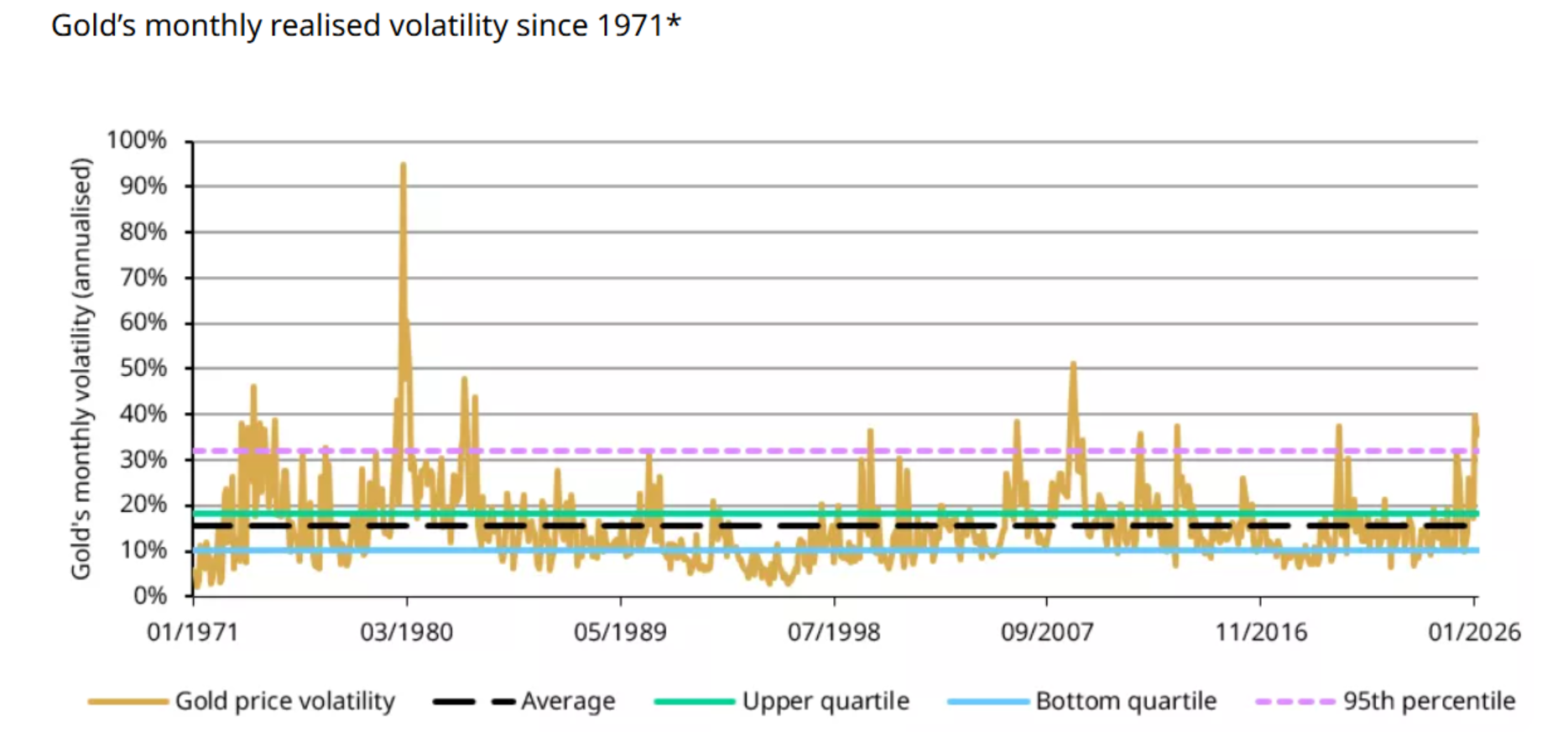
A system that looked flawless for eight months can be gone in a week in a market like this.
So here are the four checks I would run on any Gold system — mine are not exempt :
1. Look at how many longs it has taken
Open the signal and find the long/short distribution. This is the first thing I check, and it takes ten seconds.

If 80% or more of the trades are buys, you are not looking at a strategy. You are looking at a system that has been riding a trend.
Gold has been in a historic bull run.
In that environment a bot that mostly buys will produce a beautiful equity curve — not because the logic is good, but because the market only went one way. The direction did the work, not the algorithm.
The question is what happens on the first serious correction. And that is not an if. Gold does not go up forever, and when it turns, a long-only system has nothing to fall back on.
A system that trades both directions with roughly comparable results has at least proven it can function when the trend flips.
2. Check the broker before you check anything else
This one gets ignored constantly, and it matters more than almost everything else on the page.
Before you study a single number, find out which broker the signal runs on and what license that broker holds. Then look that broker up — the regulator's register, Trustpilot, whatever public record exists.

Every number on a signal page comes from the broker's server. If the broker is not accountable to anyone, neither is the number.
An offshore broker with no meaningful supervision has no obligation to report anything accurately.
Account status, spreads, execution — all of it is written by a server that nobody audits. If that broker also happens to sit in the same marketing chain as the seller, you can work out the rest.
This is not a conspiracy theory. It is simply what happens when nobody is required to verify anything.
If you have any kind of audience in this space, you will eventually get these offers yourself — I can show exactly how that conversation goes in a separate post if there is interest.
FCA, ASIC, CySEC and other tier-1 regulators change this completely. They do not guarantee performance — they guarantee that what you are looking at actually happened.
So the order matters. Broker first, numbers second. If you cannot find the license, everything above it is marketing material.
3. Take a look at the signal numbers
Do not read the headline figure in isolation. Put the numbers next to each other and see whether they agree.
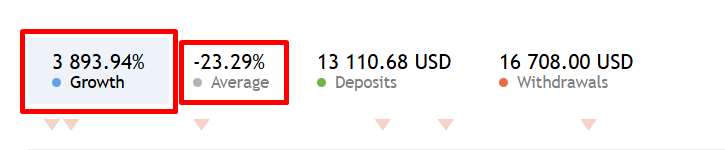

Here is the kind of thing I mean. A signal shows growth of +3000%, and right below it the average monthly return sits at -24%. How is that possible?
Those two numbers cannot both describe the same trading.
Growth and monthly returns are calculated in different ways, and the growth figure reacts to changes in the account balance. When they disagree this badly, money has usually been moving in or out of the account — and the headline number is describing those transfers rather than the performance of the algorithm.
The same page has one more number worth your attention — Algo trading.
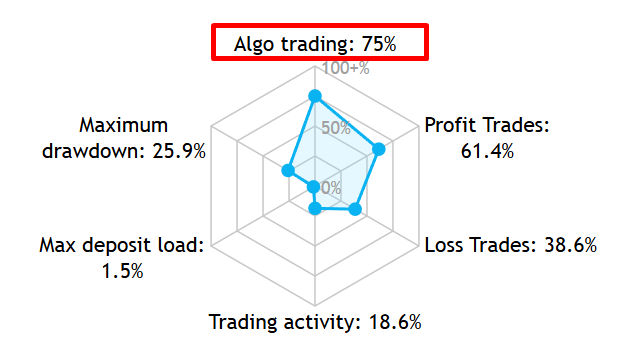
You are buying an automated system. If the signal shows 85% algo trading, then 15% of those results were produced by a human.
Look for 98% or higher. Above 97% is acceptable — small gaps happen when a position has to be closed manually during maintenance or a platform issue.
Anything below that means the seller was intervening. Closing trades early, skipping entries, managing positions by hand. And that changes what you are actually buying: the results on that page were produced by the algorithm plus a person watching it — and the person is not included in the purchase.
You will be running the version without them.
If something feels off, it usually is. Ask the seller to explain it — how they answer will tell you a lot.
4. On Gold, an uncontrolled grid is a red flag
Grid and martingale are not evil by default. On some instruments, like crosspairs, with a hard cap and a basket stop, they are a legitimate tool.
Gold is not one of those instruments.
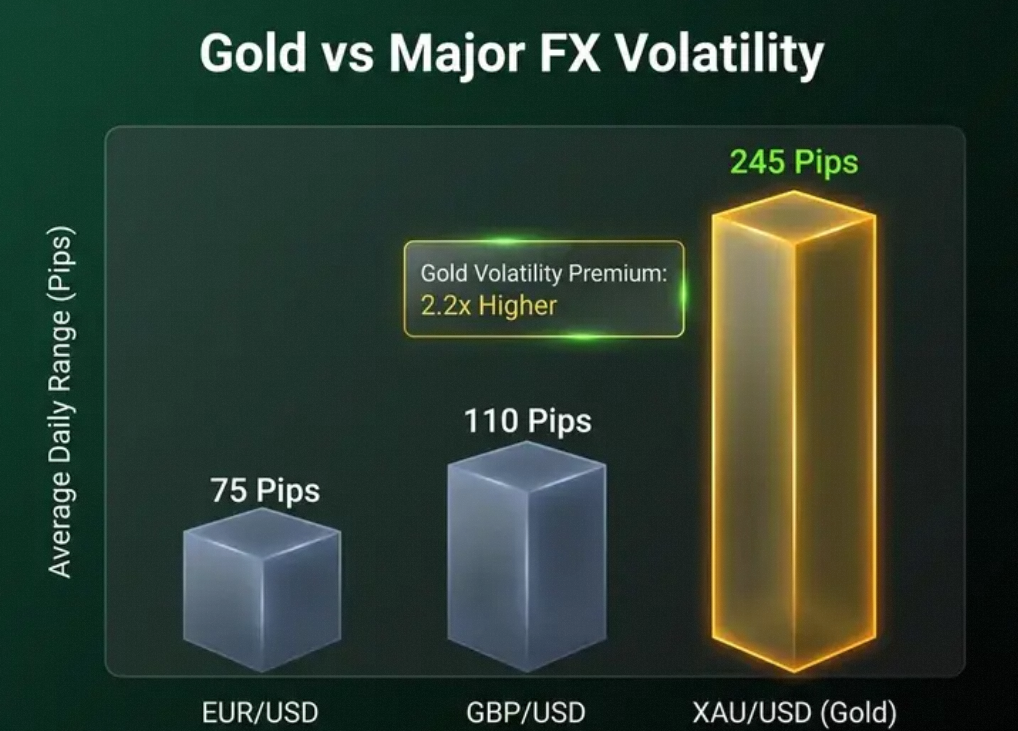
Gold does not correct politely. It drops three to five percent in a day and keeps going — and an averaging system with no limit has exactly one outcome on an asset that moves like that.
The uncomfortable part is that these systems look their best right before they fail.
Months of a smooth rising curve, high win rate, small drawdowns. Then one week where the market does not come back.
We have all seen this happen recently to systems that were sitting at the top of the market.
Nothing is permanent, and superprofits always come attached to superrisk. If you cannot see where the risk is capped, assume it is not capped.
And one more thing — test it properly
Do not test only the last year or two. Anything can look good on the last two years of Gold. Load the full history and see how the system behaves in markets that were nothing like this one.
Use real tick data — Tick Data Suite, Strategy Quant, whatever you prefer, as long as it is not the broker's default modelling. Then push it:
- Raise the spread well above what your broker actually gives you
- Add commission and slippage
- Run separate periods instead of one long test — ranging years, crisis years, trending years
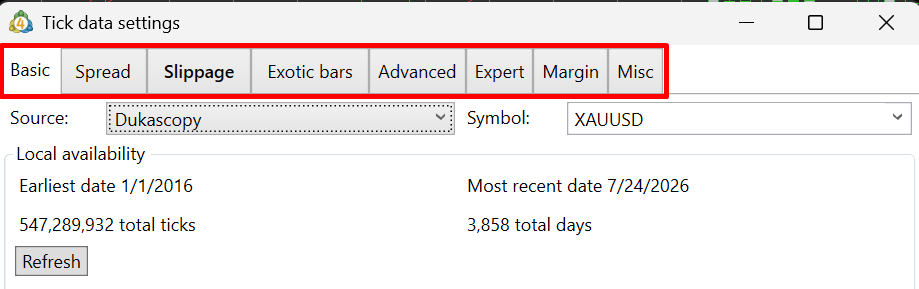
Gold behaved very differently in 2017, in 2020 and in 2026.
A system with a real edge survives all three, even if the numbers vary. A curve-fitted one falls apart the moment you separate the periods, because the good years were covering the bad ones.
There is no rule that says Gold has to keep rising. A correction is a normal part of any market cycle. The bot you buy today should be one you would still be comfortable running when that happens.
The short version
Check the long/short balance. Check the broker's license before anything else. Cross-check the numbers on the signal page, including the algo trading percentage. Find out whether the risk of one cycle is capped.
Then test it yourself, on real ticks, across the full history.
Four checks, fifteen minutes. Most of the systems that eventually blow up would have failed at least two of them on day one.
Written by Vladimir Babak — algorithmic trading developer.
More info about my product: Aero EA on MQL5