
Trinity Zones
- 指标
-
Ottaviano De Cicco
 最好的交易已经在你的图表上。
你只是还看不到它们。
Merkava Labs:机构级MT5系统,解码
价格已经揭示的信息。
🌐 merkavalabs.com → 洞察结构。
📧 contact@merkavalabs.com - 版本: 2.1
- 更新: 10 七月 2026
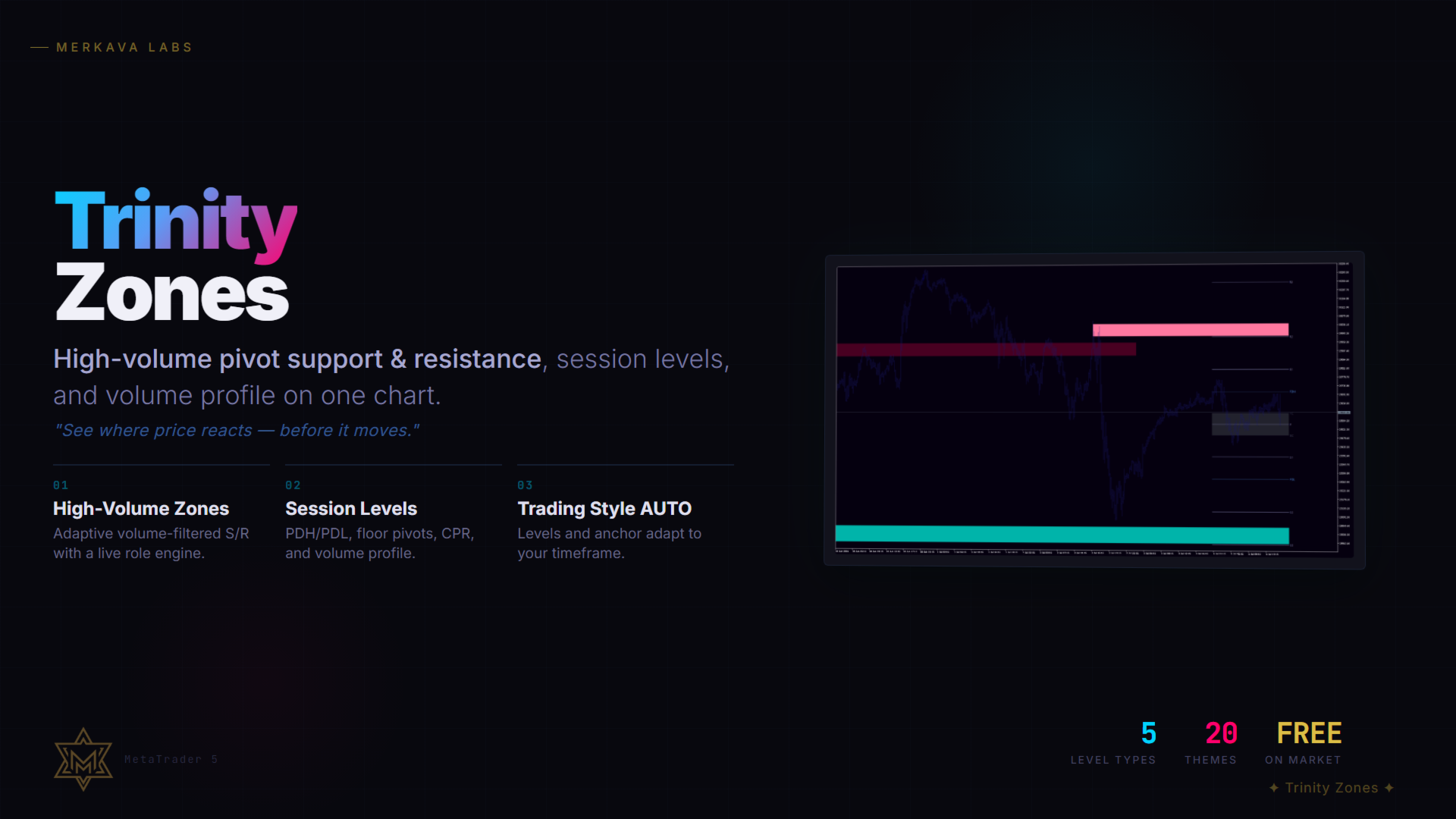
Trinity Zones:适用于 MT5 的高成交量枢纽支撑与阻力,附盘中参考位
概述
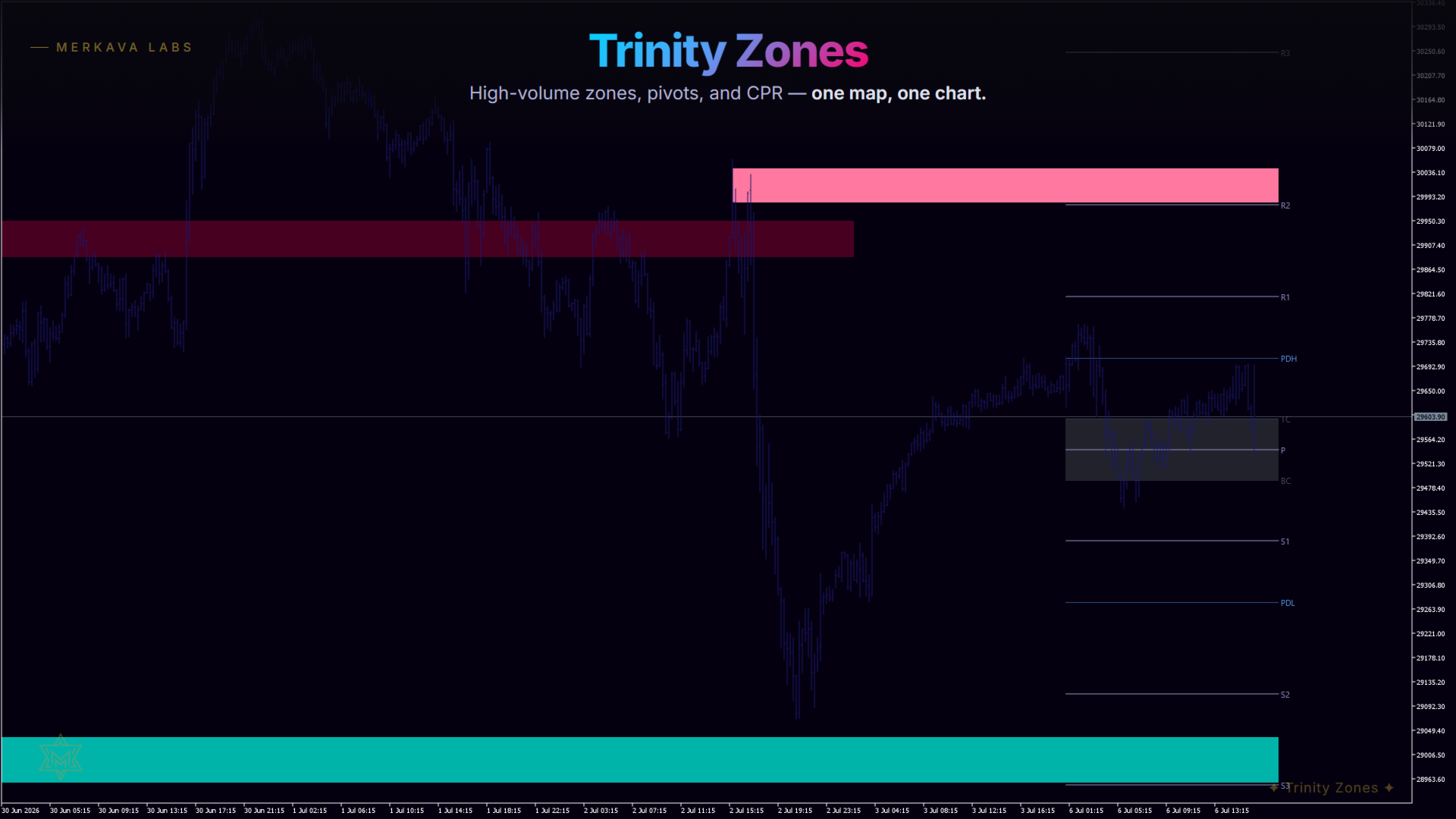
Trinity Zones 是由 Merkava Labs 推出的支撑/阻力映射指标。它标记出高成交量枢纽形成的价格区域,跟踪每个区域在价格与之互动时的表现,并叠加专业交易者关注的盘中参考位——前日高/低点、经典枢纽点、Central Pivot Range 以及可选的 Volume Profile。一张图,一张价格可能做出反应的位置地图。
这是一份「位置优先」的地图,为希望在决策前先看清结构与背景的交易者而设。
免费。
1. 功能简介
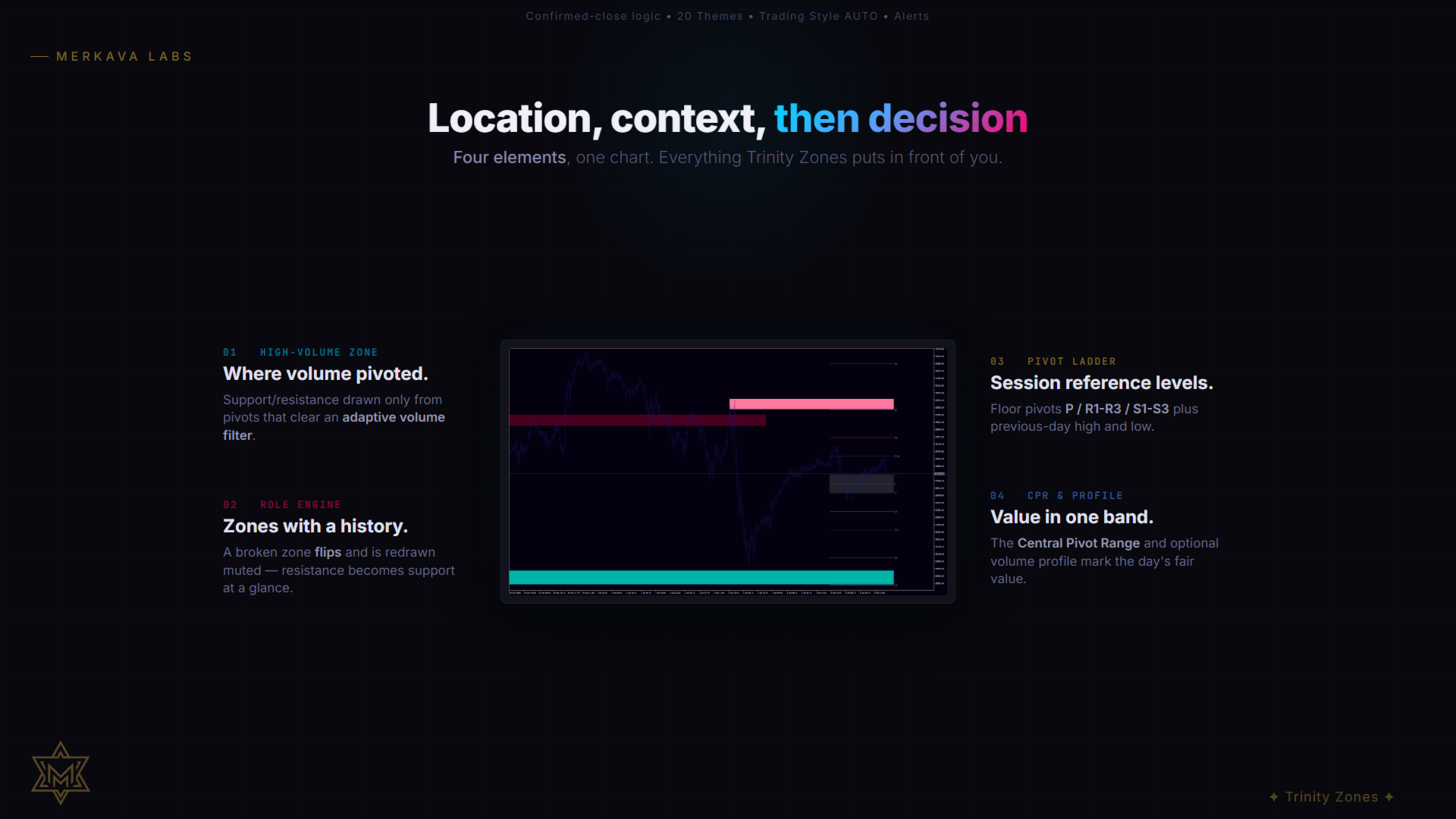
Trinity Zones 检测 高成交量枢纽点,并围绕每个点绘制一个支撑或阻力区域。只有当枢纽点的成交量超过自适应阈值时,它才会成为区域,因此图表显示的是真正发生重要活动的区域,而非每一次微小的摆动。
随后,每个区域都承担一个 角色。价格尊重的区域保持活跃。价格收盘突破的区域会发生翻转(flip)——阻力变支撑,支撑变阻力——并以暗淡色调重新绘制,让你一眼看清其历史。重叠的旧区域会被最新的区域取代,使图表保持清晰而非凌乱。
2. 核心功能
- 高成交量枢纽区域 — 仅由通过自适应成交量过滤的枢纽点构成的支撑/阻力框。
- 角色引擎 — 每个区域都被跟踪为活跃、已翻转、已收复或已耗尽,配以显示其状态与历史的颜色层级。
- 收盘确认逻辑 — 突破在K线收盘时确认,而非根据盘中影线,以减少噪声。
- 盘中参考位 — 前日高/低点(PDH/PDL)、经典枢纽点(P、R1–R3、S1–S3)以及 Central Pivot Range(TC/BC 带),几个都仅在有意义的位置绘制。
- Volume Profile — 在符合风格的窗口内提供可选的 POC、VAH 和 VAL,并带有预热保护,仅在统计上稳定时才显示剖面。
- 机构基准价 — 为 FX 工作流提供可选的东京、伦敦(英国 16:00)和纽约参考价格,并自动检测经纪商时区。
3. 交易风格引擎
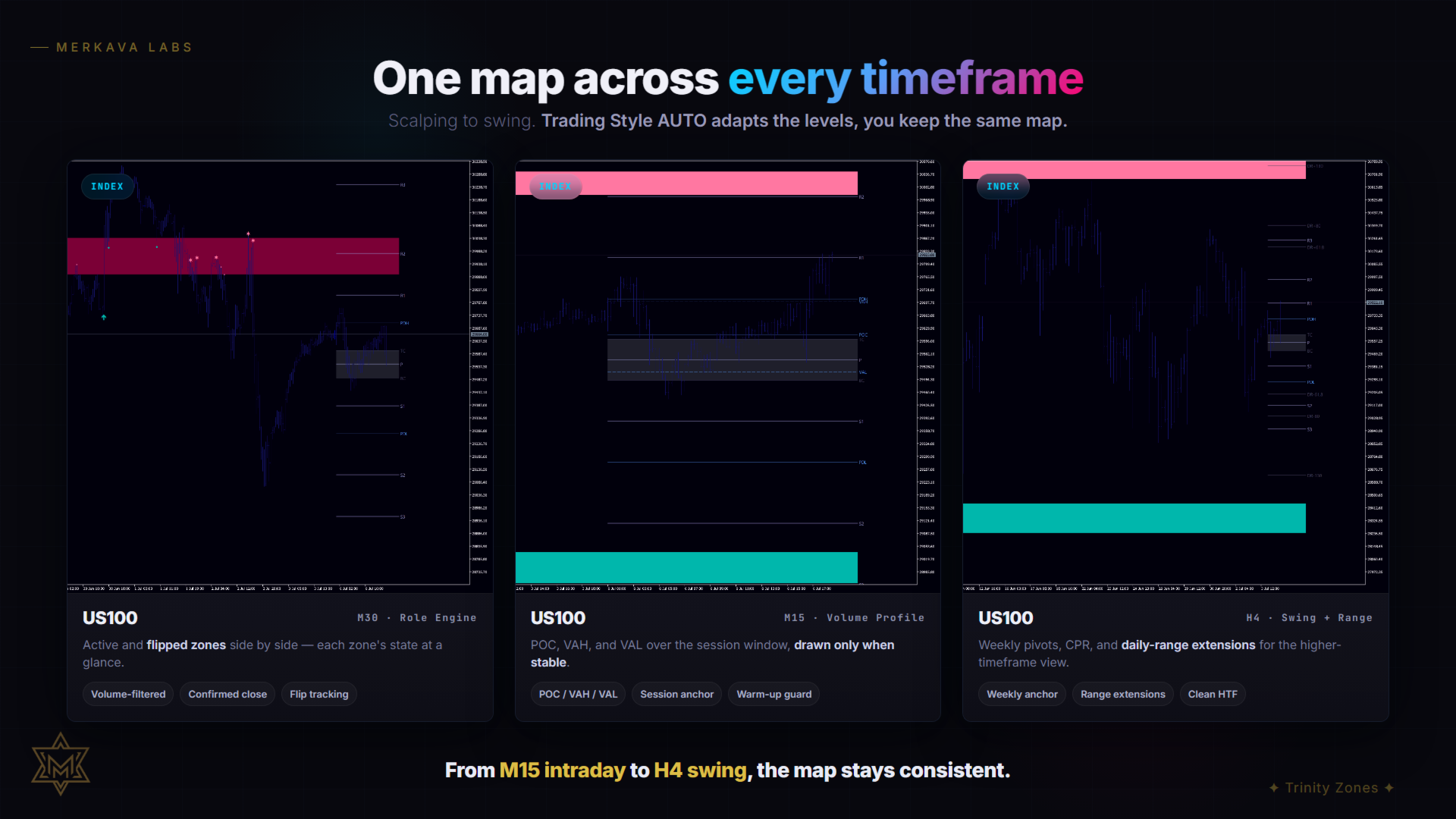
Trinity Zones 会根据你的交易方式调整显示内容。将 Trading Style 设为 Auto,指标便会读取图表周期,并自动配置相应的位置与锚点:
- 剥头皮(M1–M5) — 前日位置和以日为锚点的枢纽点。
- 日内(M6–M30) — 前日位置、日线枢纽点和 Central Pivot Range。
- 周内(H1–H3) — 以周为锚点的枢纽点和区间,仍显示前日位置。
- 摆波(H4 及以上) — 以周为锚点的枢纽点和区间,隐藏仅日内的位置,保持高周期图表清晰。
更喜欢完全控制?选择 Custom,每一个位置开关和锚点都由你手动设置。
4. 提醒
针对最重要的两个事件提供可选提醒:确认的区域突破 和 确认收盘穿越中枢纽点。提醒在收盘K线上每个事件仅触发一次——指标加载时绝不在历史K线上触发——并发送至弹窗、推送通知或邮件。设计上不会有回踩重测的刷屏提醒。
5. 跨品种
同一工作流适用于 外汇、加密货币、指数、金属和股票。区域灵敏度会根据每个品种的波动性自适应,位置集合也会根据品种和周期做出调整。(注:基于成交量的功能使用逐笔成交量,在 FX 等去中心化现货市场中它是一个近似值——在中心化品种上最具代表性。)
6. 设计与兼容性
Trinity Zones 是 Merkava Labs 指标家族的一员,共享相同的设计系统:20 种颜色主题 和相同的 Trading Style 术语,因此在同一图表上与其他 Merkava Labs 工具外观一致、行为一致。
- 平台:MetaTrader 5
- 品种:外汇、加密货币、指数、金属、股票
- 20 种颜色主题 — Trading Style 自动配置 — 可选图表背景
- 收盘确认逻辑 — 核心提醒系统(弹窗、推送、邮件)
- 多实例安全 — 支持 VPS — 无 DLL
Trinity Zones — 在你决策前,看清价格会在哪里做出反应。
重要提示:Trinity Zones 是一款市场分析工具。区域和位置标记出值得关注的区域,交易时需要你自己的背景判断和决策。交易存在重大亏损风险。请始终使用适当的风险管理。
支持 通过 MQL5 产品评论和私信 提供。包含更新。




























I've always focused on finding good trade entries, but Trinity Zones has helped me put the same amount of attention into planning how I manage my trades. I now try to make sure that both my Stop Loss and profit targets are built around price levels where I genuinely expect the market to react.
One of the things I've liked most is the way it brings everything together in one place. Instead of analysing support, resistance and other key reference levels separately, everything is organised into a single view that makes reading the market much easier.
In my own trading, I mainly use Trinity to identify logical areas for protecting a position, setting profit targets and highlighting where I expect price is most likely to react. Of course, that doesn't guarantee the market will react exactly at those levels—the market will always do what it wants—but I feel much more comfortable knowing my decisions are based on objective reference levels rather than assumptions.
Where Trinity really comes into its own for me is when I use it alongside The Oracle Pro and Azimuth Pro. For me, each one answers a different question. The Oracle Pro helps me validate the broader market context, Azimuth Pro helps me identify the best entry opportunities, and Trinity Zones helps me plan how I'm going to manage the trade. Rather than overlapping, they naturally complement each other as part of the same trading workflow.
If I could suggest one possible direction for future development, I think it would be very useful if Trinity could suggest logical Stop Loss and Take Profit levels based on all the information it already analyses. I also think it would be extremely valuable if those levels could be made available through indicator buffers, opening up plenty of possibilities for developing Expert Advisors capable of automating trade management using the same logic.
Another aspect I've really appreciated is the support. Whenever I've had a question or wanted to better understand a particular feature, I've always received detailed explanations and found a genuine willingness to listen to suggestions. That's something I value a great deal and, personally, I think it makes a real difference.
Overall, Trinity Zones hasn't changed the way I find trading opportunities; it has changed the way I manage them. I now spend much more time planning each trade before I enter the market, making sure both the risk and the profit targets are built around the market structure itself. That simple change has made me much more confident in the way I manage every position.