
One of the most powerful marketing tools in the trading industry is a high win rate. Advertisements often promote systems claiming:
- 80% win rate
- 90% win rate
- 95% win rate
- "Never lose again"
For newer traders, these numbers sound irresistible. After all, if a strategy wins 90% of the time, how could it possibly fail? The reality is that win rate alone tells you almost nothing about whether a trading system is actually profitable. In fact, some of the most dangerous strategies in the market have extremely high win rates. Understanding why requires looking beyond the numbers.
The Win Rate Illusion
Win rate simply measures how often a strategy wins. For example:
- 80 winning trades
- 20 losing trades
equals an 80% win rate. At first glance, that sounds impressive. But win rate does not tell you:
- How much was won
- How much was lost
- How large the drawdowns were
- How much risk was taken
Without those details, the win rate is incomplete. A strategy can win most of the time and still lose money overall.
Why Profitability Matters More
Consider two traders.
Trader A
- Win Rate: 90%
- Average Winner: $10
- Average Loser: $150
Trader B
- Win Rate: 45%
- Average Winner: $300
- Average Loser: $100
Most beginners would choose Trader A. However, Trader A may be consistently losing money despite winning almost every trade.
Trader B can be highly profitable despite losing more than half of all trades. The reason is simple. Profitability is determined by the relationship between risk and reward, not just how often trades win.
The Danger of Small Wins and Huge Losses
Many high win rate systems rely on a dangerous structure:
- Small profits
- Large losses
These systems often generate a long series of winners. Everything appears stable. Then one large loss wipes out weeks or months of gains. This approach is common among:
- Grid systems
- Aggressive recovery systems
- Some martingale systems
- Overleveraged scalping strategies
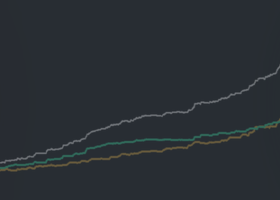
The equity curve looks amazing until it doesn't.
Why Traders Love High Win Rates
Humans naturally dislike losing. A strategy that wins frequently feels comfortable because it provides constant positive reinforcement. Traders enjoy seeing:
- Green trades (Blue in the case of MetaTrader, lol!)
- Frequent profits
- High success percentages
Unfortunately, comfort and profitability are not always the same thing. Some traders become addicted to winning trades instead of focusing on growing their accounts. Professional traders understand that occasional losses are simply part of the business.
The Importance of Risk-to-Reward Ratio
One of the most overlooked trading metrics is risk-to-reward.
For example:
- Risk $100
- Target $300
This creates a 1:3 risk-to-reward ratio. A trader using this approach can remain profitable even with a relatively modest win rate. Many professional systems operate with:
- 40% win rates
- 50% win rates
- 60% win rates
while producing strong long-term returns. The focus is not on winning often. The focus is on winning efficiently.
Why Some Low Win Rate Systems Outperform
Trend-following strategies are a perfect example. Many trend traders experience:
- Numerous small losses
- Occasional large winners
This often produces win rates below 50%. However, when major trends develop, a handful of large trades can generate substantial profits. These systems may appear less attractive psychologically, but they often possess stronger long-term expectancy.
What Professional Traders Actually Measure
Experienced traders rarely obsess over win rate alone. Instead, they monitor:
- Profit factor
- Risk-to-reward ratio
- Maximum drawdown
- Expectancy
- Recovery factor
- Equity curve stability
These metrics provide a much clearer picture of system quality. A strategy with a lower win rate but strong risk-adjusted performance is often preferable to a high win rate strategy with excessive downside risk.
The Hidden Risk of Recovery Systems
Some EAs achieve very high win rates through aggressive recovery techniques. Common examples include:
- Martingale scaling
- Grid averaging
- Position multiplication
- Loss recovery cycles
These methods can produce long stretches of winning trades. The problem is that risk continues building beneath the surface. Eventually, an unfavorable market move can trigger a drawdown large enough to erase months of gains. This is why traders should always ask: "What happens when the strategy loses?" rather than focusing only on how often it wins.
The Real Metric: Expectancy
The most important question in trading is not: "How often do I win?" It's: "How much do I expect to make over a large number of trades?" This concept is known as expectancy. A profitable strategy can:
- Win frequently
- Win infrequently
as long as the overall mathematical outcome remains positive. Winning every trade is unnecessary. Maintaining positive expectancy is what matters.
Why High Win Rates Can Be Misleading
When evaluating any strategy, ask:
- What is the average winner?
- What is the average loser?
- What is the maximum drawdown?
- How is risk managed?
- What happens during losing streaks?
- How sustainable is the performance?
A high win rate without these answers is simply a marketing number. The complete picture matters.
The truth about high win rate strategies is that they are often misunderstood.
A high win rate does not automatically mean:
- Higher profitability
- Lower risk
- Better performance
- Greater consistency
What matters most is the relationship between:
- Risk
- Reward
- Drawdown
- Consistency
- Long-term expectancy
Some profitable traders win only 40% of their trades. Others win 70%. The difference is not the percentage itself. The difference is whether the strategy generates positive results over time while protecting capital. In trading, the goal is not to win the most trades. The goal is to make the most money while surviving long enough to keep trading.
Visit the Ashinton Product Lounge to begin your journey of professional trading.
By AshintonForex.com