
Most Gold Trading Mistakes Happen Before Entry - Here’s the Checklist I Use

I'll be honest - I started writing this at 1am after spending four hours chasing a ghost bug in an EA that turned out to be a spread filter I forgot to update after switching brokers. The filter assumed a max spread of 30 points. The new broker was running 60 - 80 during London overlap. Every "failed" entry was actually just the EA quietly doing its job. I had wasted a full session thinking I had a logic error.
That kind of thing is embarrassing. But it's also how I ended up building most of what I'm going to describe here.
The pre-trade routine I'm going to walk through isn't a philosophy or a discipline framework. It's just the checklist I actually use because I've been burned by not having it. Five tools. I'll tell you what each one does, and more importantly, what happens when you skip it.
🌟 Why Gold Is Different From What You're Used To
Most of the trading education and tooling you'll find online is built around forex majors. EUR/USD, GBP/USD - liquid, predictable spread behavior, decent fills during normal sessions.
Gold is not that.
I've watched XAUUSD spreads go from 15 points to 280 in a single tick during a CPI release. I've had EAs that ran clean on EUR/USD for months start returning partial fills and requotes on the same broker the moment I pointed them at Gold. The tick velocity is different. The liquidity profile at specific hours is genuinely worse. And a lot of retail brokers have stop level restrictions on Gold that don't apply to their FX pairs - meaning your stop can't be placed where you actually want it.
None of this is a reason not to trade it. I've been trading XAUUSD for years. It's just a reason to check more things before you click.
🚀 Tool 1: Gold Candle Timer - Seriously, Just Know Where You Are in the Candle
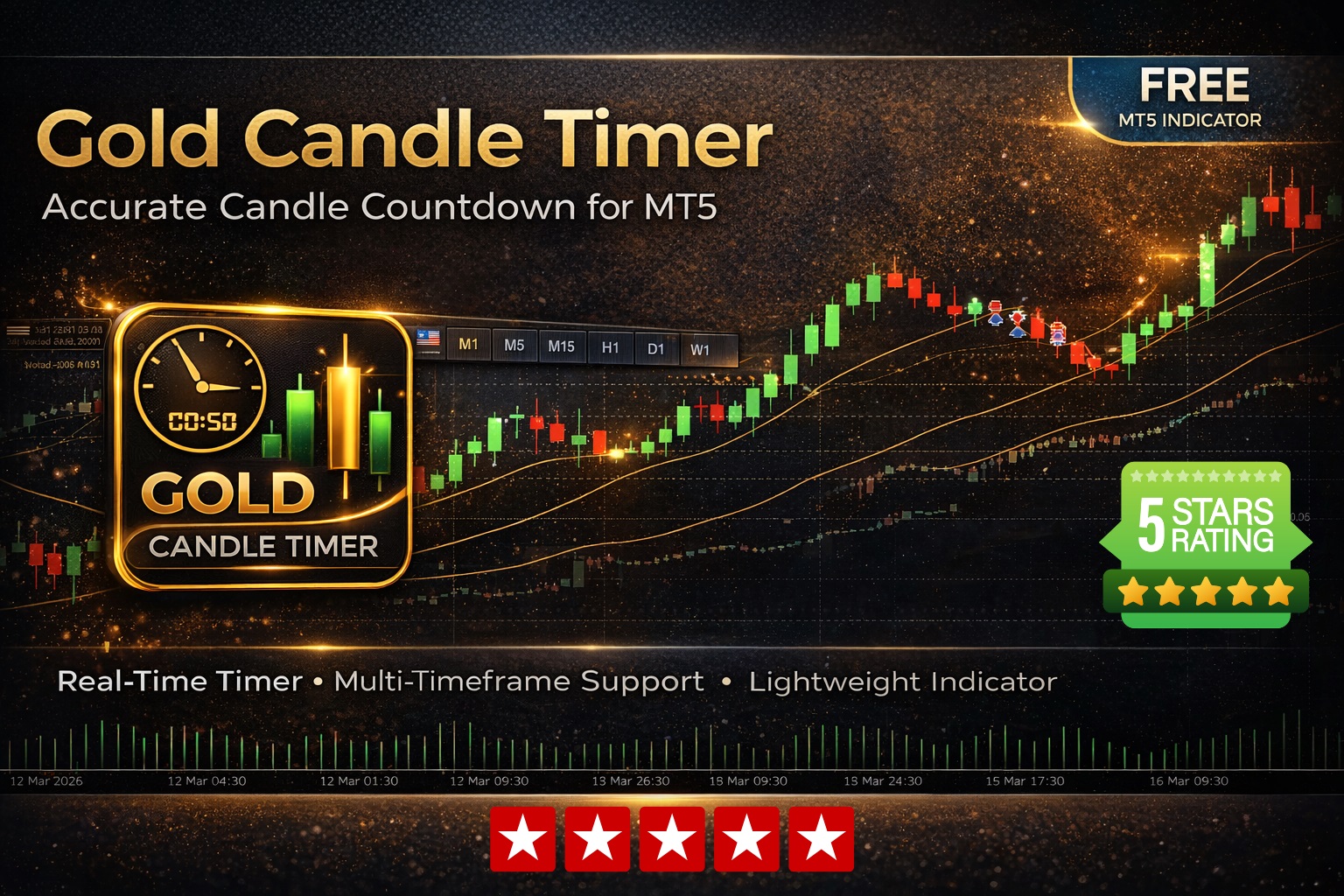
This one seems too simple to bother mentioning. I thought so too. Then I went back through six months of losing trades and noticed how many of them were entered in the last 30 - 45 seconds of a candle.
Not because I planned to. Just because that's when the setup "completed" visually and I clicked.
On Gold specifically, moves that look like breakouts in the final seconds of an M15 candle have a really annoying tendency to reverse at candle open. It's not a hard rule, but it's consistent enough that it's changed how I enter. The classic London session fake breakout - price spikes above a level in the last 10 - 15 seconds of the candle, triggers late entries, then immediately pulls back as the new candle opens flat or reverses. You see this pattern on XAUUSD M15 more than almost any other instrument. If there's less than 20% of the candle left, I wait. Most of the time the setup is either still valid at open, or it was a liquidity sweep and you're better off not being in it.
Gold Candle Timer just shows you the countdown. Percentage remaining, time left, updates live. Free.
I built it partly because MetaTrader's native display is not great for this - you're squinting at the bottom of the screen, doing mental math, sometimes forgetting which timeframe you're on after switching around.
I'd bet anyone reading this has clicked BUY on a Gold M15 setup with under 10 seconds left on the candle, watched it close, then watched the next candle open with a wick straight into their stop. That's not bad luck. That's providing liquidity to whoever was on the other side of that move. The Candle Timer doesn't prevent that trade. But it makes you look at the clock before you click, which is the entire point.
🚀 Tool 2: Gold Spread Monitor - The Cost You're Not Checking
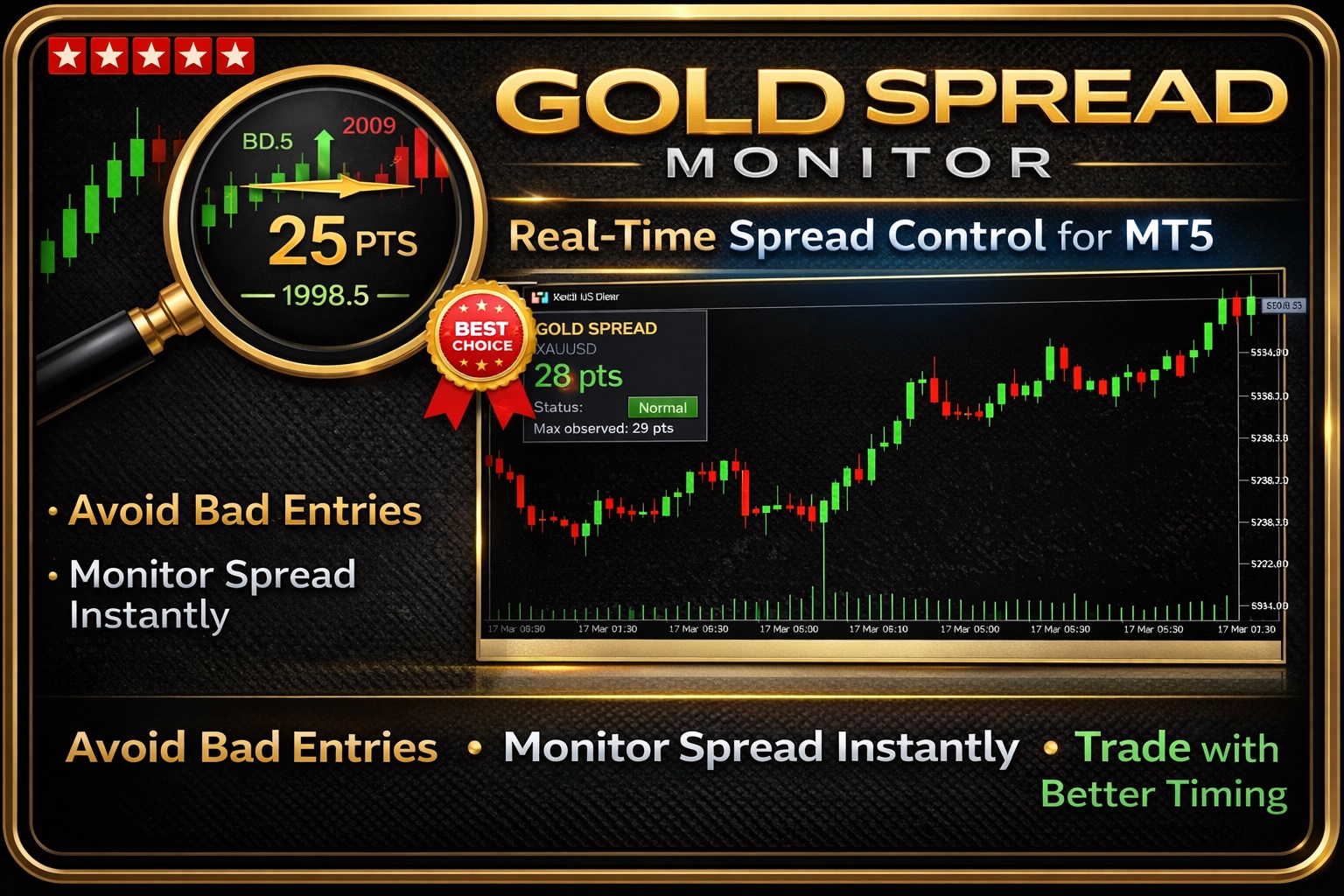
Most traders check the spread once when they set up their broker and basically never again.
On Gold, that will cost you eventually.
The spread is not stable. It shifts by session, by news proximity, and some brokers quietly widen it during slow liquidity windows and narrow it back before end of day. You won't notice unless you're watching it with history. I didn't notice for longer than I want to admit on one broker around 2022. Went back through the trade log afterward and realized I was consistently entering at 50 - 70 point spread on what I thought was a 20-point instrument. The scalp TPs were mathematically broken from the start. I blamed my entry logic for months before I actually looked at the spread numbers.
For context on what "normal" looks like: on a decent ECN broker, XAUUSD during standard London hours sits around 15 - 25 points. Pre-NFP Friday it can hit 120 - 200 before the release. During CPI it can blow past 300 for a few seconds. If your MaxSpread filter is copied from a EURUSD setup and not recalibrated for Gold, you're either trading into wide spread or getting blocked from entries you should be taking - and the tester won't show you which.
Gold Spread Monitor shows live spread, session high/low range, and alerts when it crosses a threshold. I run mine at 45 points for normal sessions. Above that I don't trade, or I look at why it's elevated before doing anything.
The session history is what most people ignore. After a week of watching it you start to see your broker's specific patterns - when they widen, by how much, at what time of day. That's more useful than any general rule about avoiding news.
🚀 Tool 3: Gold Risk Calculator - Stop Eyeballing the Lot Size
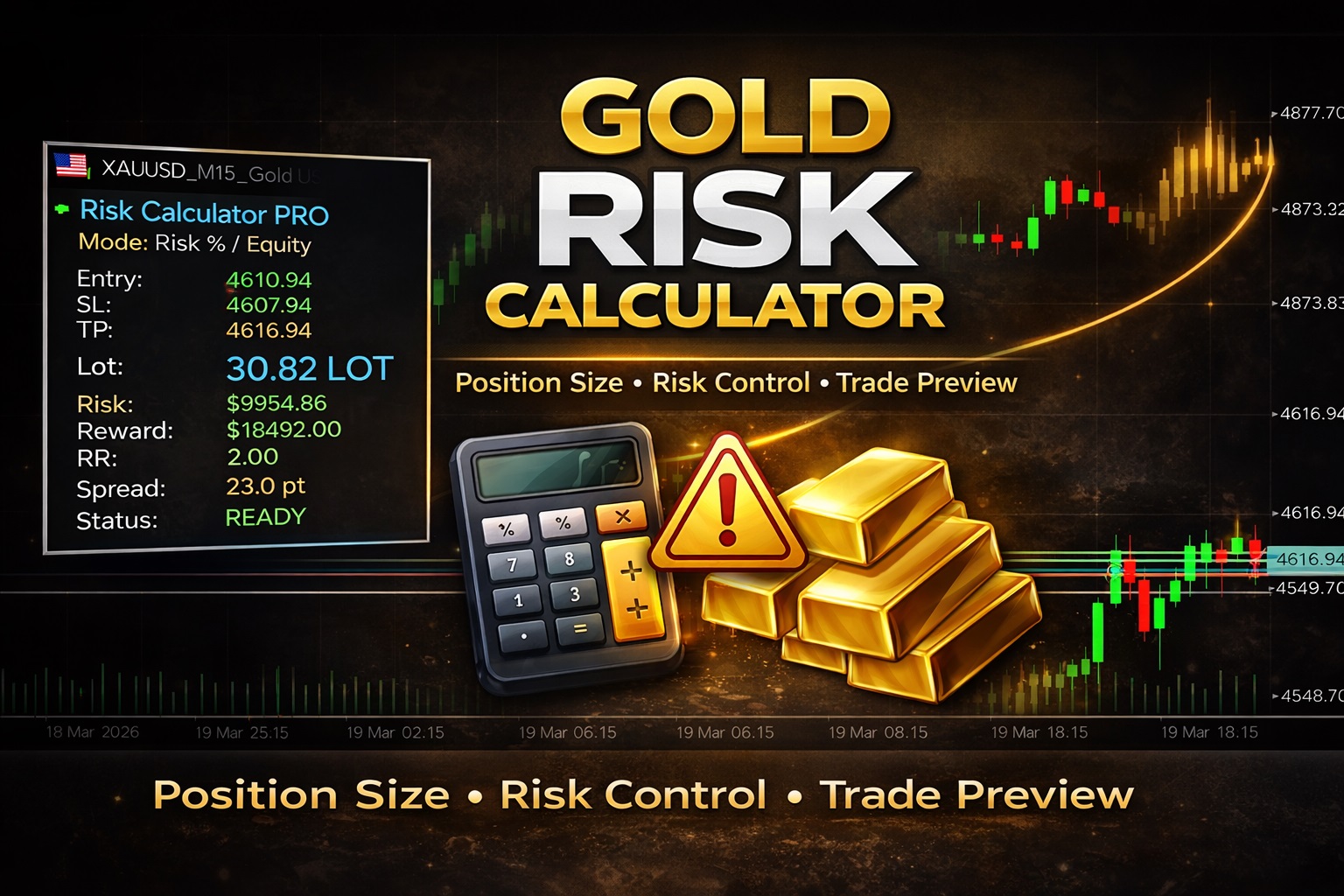
Early in my trading I sized positions based on feel. Not completely wild - I had a rough percentage in my head - but I was basically estimating. "This feels like a 0.10 lot trade." Sometimes it was right. Sometimes it wasn't.
The problem isn't that manual estimation is always wrong. Sometimes it's close. The problem is inconsistency. Inconsistent position sizing is one of the main reasons account equity curves look random even when entry logic is decent.
Gold Risk Calculator takes your current balance, your risk percentage, and your stop distance and outputs the correct lot size in real time. It also shows the dollar amount at risk.
The dollar figure matters more than I expected. When I was working in percentages only, 2% felt abstract. Seeing "this trade risks $340" is different. It makes you actually think about whether you want to be here.
Worth saying directly because traders moving from forex don't always register this: 1 lot on XAUUSD is not 1 lot on EURUSD in the way that matters. Yes, the pip/point value is similar in dollar terms at a surface level - but Gold's average daily range runs 150 - 200 points on a quiet day, and during CPI it can print 300 - 400 in a few minutes. The volatility profile is different enough that sizing instincts developed on forex pairs will misbehave on Gold until you consciously recalibrate. The calculator forces that recalibration on every trade, not just when you remember to think about it.
One caveat that I'll say once: the tool is only as good as your stop placement. I've seen traders run a calculator with stops at round number levels instead of actual structure - so the output is precise and the trade is still badly sized relative to real risk. The calculator handles the math. You still have to handle the thinking.
🚀 Tool 4: Gold Decision Assistant - The Check You Skip When You're Confident
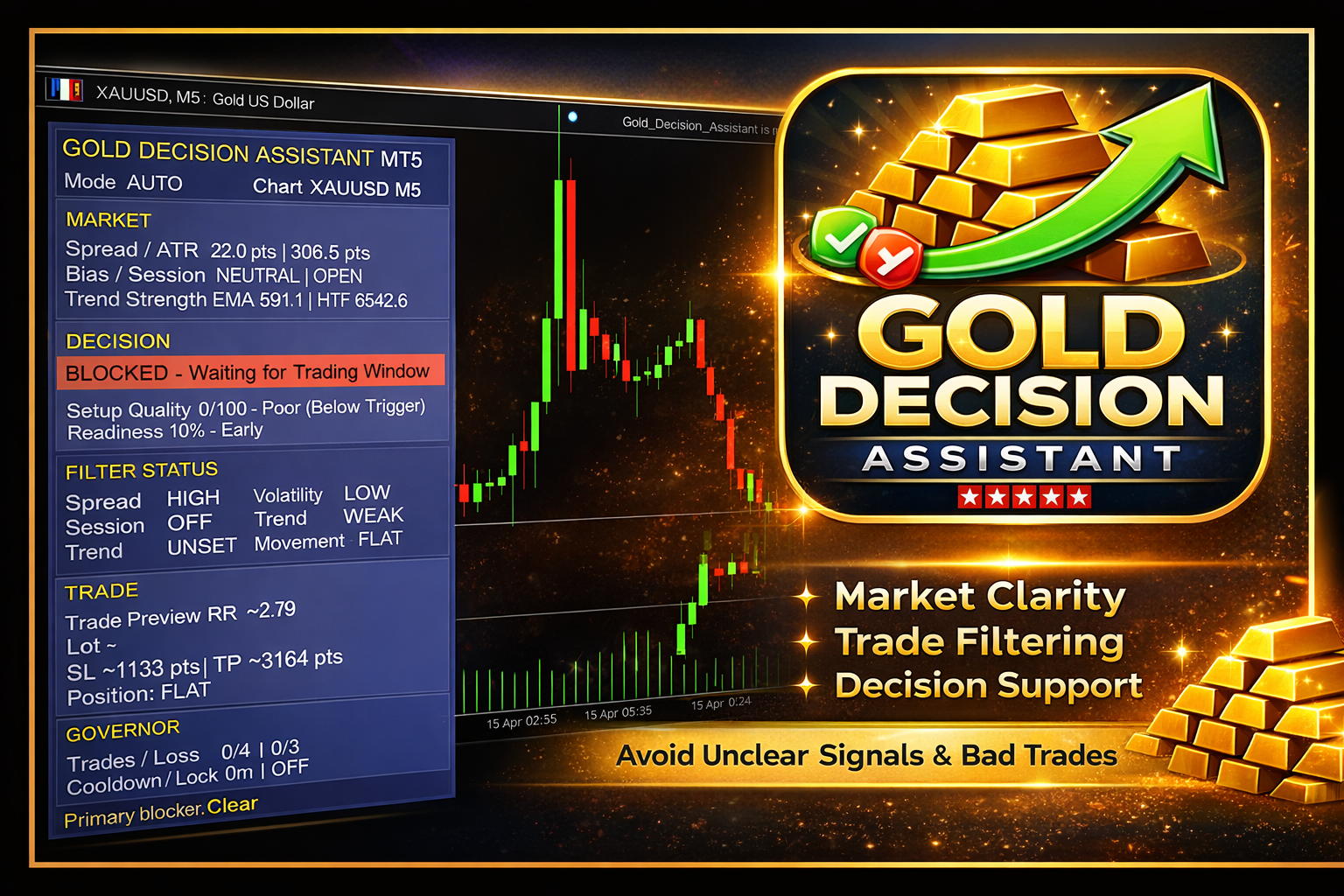
I once sat watching a setup build for 45 minutes. By the time it triggered I was so committed I basically wanted to marry the trade. Clicked without checking the spread. Didn't notice it was 2am London time with basically zero liquidity. R:R had drifted to 1.1 while I was staring at structure. Entered anyway. You can guess how it ended.
That's the failure mode this tool exists for. Not ignorance - overconfidence. The setup looks so good you stop checking things.
Gold Decision Assistant runs a pre-entry summary before you click: session timing, spread state, HTF alignment, R:R. It doesn't tell you what to do. It just shows you the conditions you're actually trading into, not the conditions you think you're trading into.
Most of my bad trades had warning signs I technically saw but didn't weight correctly because I was already mentally in the trade. The tool interrupts that. Adds maybe 30 seconds. Sometimes you see the summary and still take it - fine, at least it's a conscious decision. Sometimes you see it and close the chart.
Does it stop all bad trades? No. Nothing does. But there's a meaningful difference between "I ignored the warning" and "I never looked."
🚀 Tool 5: Gold Trade Manager MT5 - Because Live Management Is Harder Than It Looks
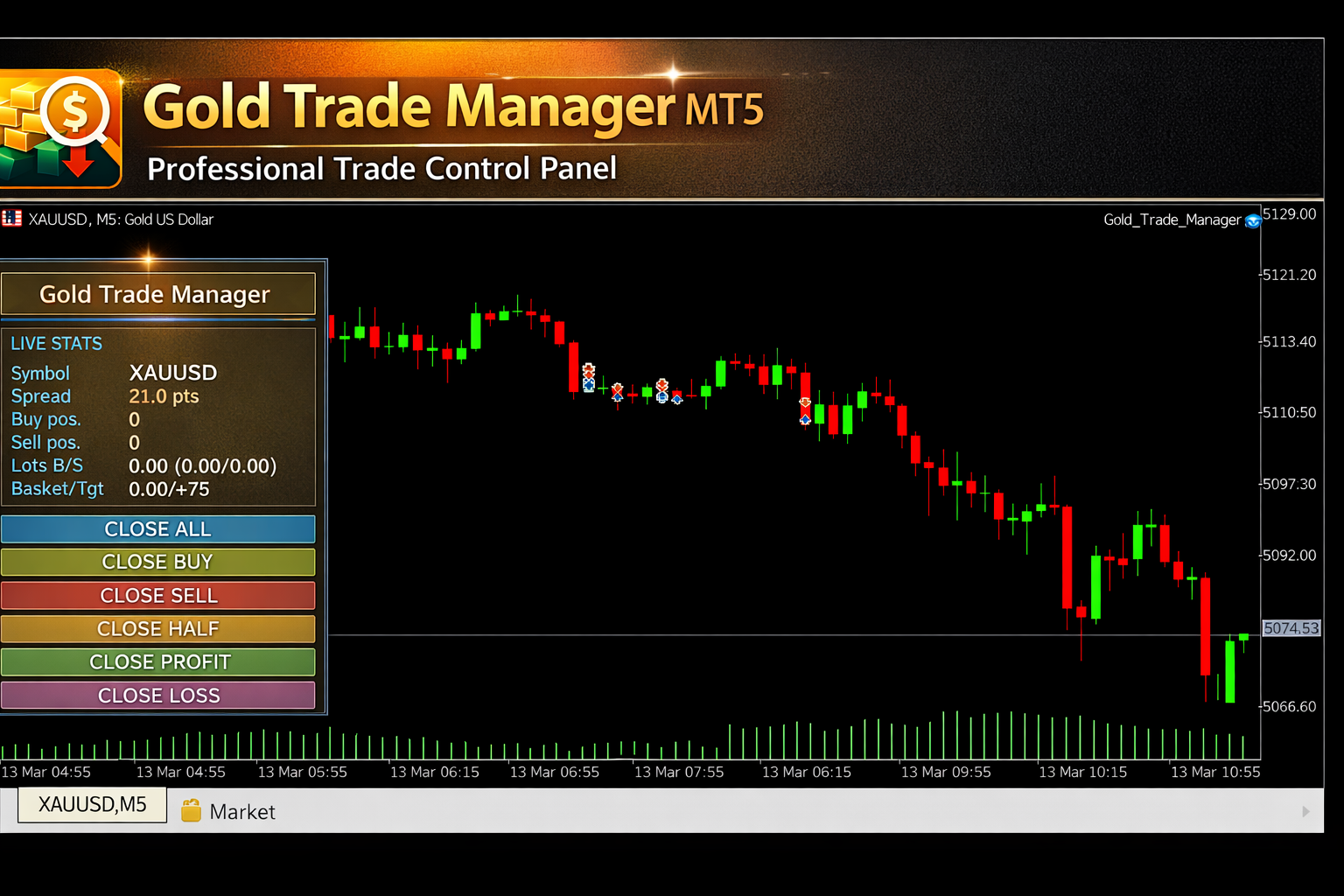
Assuming the checklist cleared and the trade is on - now you have to actually manage it.
This is where I see a lot of traders with decent entry logic give back gains. On Gold it's easy to make management errors because the moves are fast, the windows for partial closes and breakeven moves are short, and MetaTrader's default interface was not designed for active position management under pressure. It's designed to be technically complete. That's a different thing.
I've personally closed 100% of a position when I meant to close 50%. Twice. In the same week. Too many windows open, price moving 80 points in 90 seconds, and your hands do things your brain didn't exactly authorize.
Gold Trade Manager MT5 handles the management side from a single panel on the chart: one-click TP/SL, partial closes at preset levels, breakeven with a configurable buffer, trailing stop. No digging through the terminal while price is moving.
The trailing stop is worth a separate mention. Generic trailing stops fail on Gold regularly because they don't account for wick behavior. XAUUSD routinely spikes 15 - 25 points beyond a level and immediately retraces - a tight generic trail gets stopped out on the wick, price comes back, and you're watching the move you were right about from the sidelines. The manager's trailing logic is calibrated around Gold's actual volatility profile rather than being a points-based trail copied from an FX setup.
Honest caveat: broker-side issues are a different problem. High latency VPS, minimum stop distance restrictions that override your placement, connection drops during fast moves - the tool handles your side cleanly, but your side and the broker's side are not the same thing in live trading. Know your broker's Gold behavior before you depend on automated management during news.
🌟 The Sequence
Candle Timer → Spread Monitor → Risk Calculator → Decision Assistant → Trade Manager.
That order is not arbitrary. Candle Timer and Spread Monitor are filters - they determine whether the entry context is acceptable at all. Risk Calculator sets the size before you're emotionally invested in a specific number. Decision Assistant is the final sanity check before you click. Trade Manager handles execution after.
The temptation is to skip the middle three when the setup looks strong. That's exactly when you shouldn't skip them. A convincing setup in bad conditions is still a bad trade - it's just a bad trade you feel good about.
🌟 On Automating This
Some people will read this and immediately want to build an EA that runs all five checks automatically. That's a reasonable goal. I've done it.
Just know where automation actually breaks. Spread data in the strategy tester is synthetic - it won't replicate a broker blowing out to 180 points for 3 seconds during a liquidity sweep while your MaxSpread filter silently freezes the EA mid-cycle. In live conditions I've had OnTick() grind near-halt during fast Gold moves because the pre-trade validation loop was doing too much work per tick - EA alive, effectively deaf, for a few seconds at exactly the wrong moment. And any news filter that calls an external API is one connection timeout away from blocking the entire decision chain with no error, no log entry, nothing.
These don't show up in backtests. The logic looks fine. The failure modes don't.
Manual first. Automate once you've seen it work live and know which specific edge cases to defend against.
🌟 Last Thing
I'm not going to tell you these tools will make you profitable. They won't, not on their own.
What they do is close the gap between your best decisions and your worst ones. Eight years in, most of the trades I regret had a specific, findable cause. Entered the last 40 seconds of a candle. Didn't check spread before a scalp. Sized by feel on three correlated setups. Watched a setup for an hour and clicked without looking at the session. Closed the wrong position size under pressure.
Each tool on this list exists because one of those mistakes cost me real money. Not hypothetically. Actually.
Start with the Candle Timer. Free, zero setup, you'll notice the difference within a few sessions. Add the Spread Monitor if you've ever been surprised by your actual fill cost on Gold. Work through the rest as you figure out which failure point is eating your P&L the most.
That's how this stack got built. One painful lesson at a time.
These five tools are 8 years of mistakes compressed into a checklist. The Candle Timer is free - grab it, use it for a week, and see if it changes how you think about entry timing. The rest are on MQL5 Marketplace. If any of them solve a problem that's been costing you real money, that's what they're there for. Questions about the logic or how any of it works in practice - reach me through MQL5. I actually read the messages.
🎁 New to Gold Algo Lab?
Start with the Gold Algo Lab Tool Map - a practical guide that organizes our MT5 tools into 6 connected stages: market context, setup selection, risk planning, trade execution, position management and account protection.
→ Gold Algo Lab Tool Map: Where to Actually Start With MT5 Tools for XAUUSD
https://www.mql5.com/en/blogs/post/771930
Do not choose a tool by its name alone. Start with the part of your trading process that needs the most control, then build your workflow one layer at a time.
Gold Algo Lab builds practical, risk-first MT5 tools for serious XAUUSD traders, shaped by 8 years of developing and trading real systems to help traders identify clearer setups, manage risk with greater confidence and execute with more discipline.


