Balance-Based vs Equity-Based Daily Loss: The Difference That Kills Funded Accounts

Ask ten funded traders how their daily loss limit is calculated, and most will give you a number. Ask them whether that number is anchored to balance or equity, and the room goes quiet.
The difference is not academic. Balance-based means the limit is fixed from your day-start balance — open profit gives you no extra room. Equity-based means floating PnL moves your ceiling in real time — an open winner temporarily raises it, an open loser eats it while you are "still waiting".
The deadly scenario: you are +2% in open profit, feel safe, and add risk. On a balance-based account, that cushion does not exist for the rule. The market turns, your open profit evaporates, and you breach a limit you thought was far away — without a single closed losing trade.
Every firm anchors this differently, and some even mix models between challenge and funded phase. The rule you memorized in the challenge may not be the rule guarding your funded account.
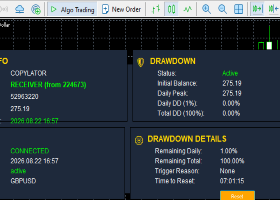
Two ways to never be surprised: know your firm's exact definition (read the actual terms, not a YouTube summary), and keep the live number in front of you. The free Prop Risk Meter shows your real remaining buffer on the chart, calculated the way your firm calculates it. If you want a hard stop instead of a warning, Challenge Guardian halts trading before the breach.
Not knowing your anchor is not a trading mistake. It is an unread contract — and the market charges full price for those.