HBT Bitcoin
- Эксперты
- Версия: 1.45
- Активации: 10

1. Quick start
The EA is designed for BTCUSD on MetaTrader 5. Confirm the BTCUSD symbol name used by your broker and use a hedging account.
2. Install the EA in MT5
-
Install HBT Bitcoin in MetaTrader 5.
-
Open your broker's BTCUSD chart, attach the EA, and review the Common and Inputs tabs.
-
Attach the EA to the chart.
-
Enable Algo Trading and allow automated trading in the EA settings.
-
Keep Symbol Overrides empty for automatic routing unless the broker requires an exact name
-
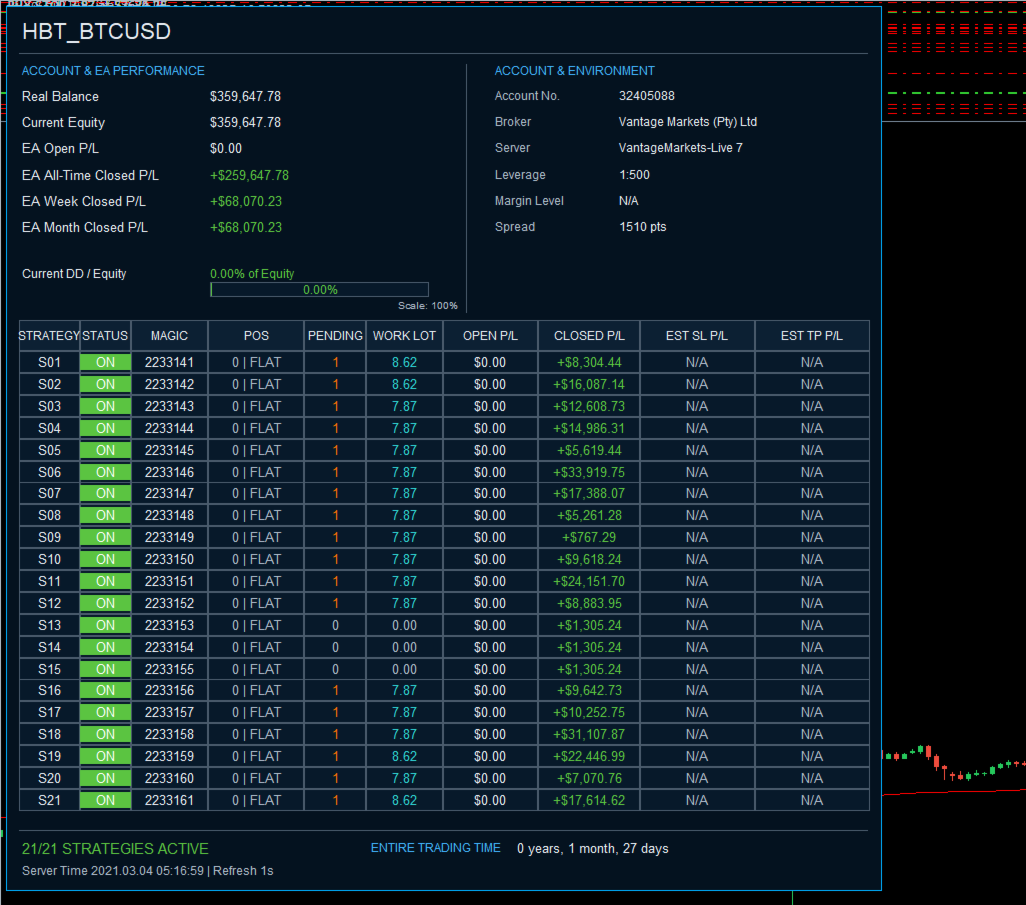
Confirm the panel shows the expected resolved symbols and ENTRY ON count.
-
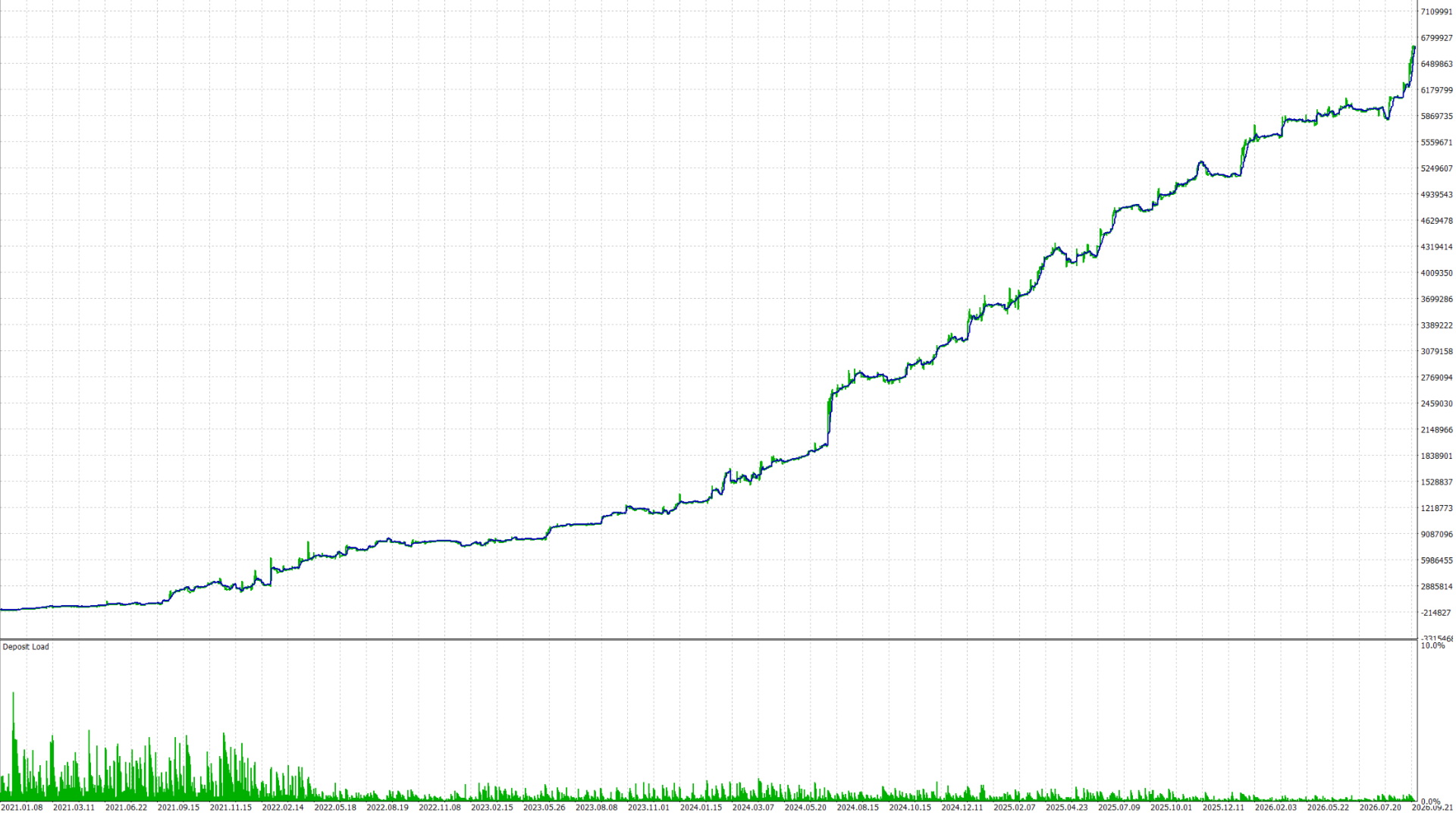
Backtest and forward-test on demo before considering live deployment.
3. Main Input groups
Start with the default configuration. Change one Input group at a time so that you can assess the result.
Group How to use it Portfolio selection Keep the default list to run the full portfolio. To select individual components, enter the permitted numbers separated by commas. Trade direction Use the corresponding switches to enable or disable buy and sell trades. Position size Select Manual lot size for a fixed lot or Lot per balance step to let the EA adjust with account capital. StartLots sets the starting lot; MaxLots sets a lot limit when configured. Risk adjustment RiskMultiplier changes trade size where the selected sizing mode applies. The default is 1.0 . Test any change with historical data and on a demo account. Capital reference Balance/equity selection, capital-based updates, upward-only sizing, and margin protection can affect position size. Keep the defaults unless you have a tested configuration. Trading hours Enable or disable weekly and daily windows. Time settings use the trading server's clock. Check your broker's server time before changing them. Economic events On demo/live accounts, MT5 calendar data and event filters can be used. The related options may close positions or cancel pending orders when an enabled filter is triggered. Account rules Daily loss and pending-order limits are optional. Enable them only after confirming the limits that apply to your account. Chart panel Panel Inputs control visibility, chart corner, position, scale, and refresh frequency.