Break-even, partial take-profit and trailing stop: how to manage a trade like a robot in MT5
6 November 2026, 23:34

0
11
Most traders spend hours on entries and almost no time on what happens after the entry. Yet trade management decides a lot: when to bank profit, when to protect the trade, and when to let it run. Here is a simple, rule-based way to do it, and how to automate it in MetaTrader 5.
1. Start with the risk, not the lot
Decide how much you are willing to lose on the trade (for example 1% of the balance), then place the stop-loss where your idea is wrong. The lot follows from those two numbers. The distance from entry to stop-loss is called 1R. Everything below is measured in R, so the same rules work on gold, forex and indices.
2. Partial take-profit at +1R
When the trade is 1R in profit, close part of it (for example 50%). You bank real money, and the rest of the trade can run with much less pressure. Note: you need at least two minimum lots to split a position (0.02 when the minimum is 0.01).
3. Break-even, and the "too early" trap
Moving the stop-loss to the entry price means a trade that turns around closes at about zero instead of a full loss. That is the good part.
The trap: if you move it too early, after a few points of profit, normal market noise touches your entry and closes the trade at zero, often right before the real move. A practical rule is to move to break-even only after a solid profit (for example +1R), or right after the first partial take-profit, and to lock a few points beyond the entry so spread and commission are covered.
4. Trailing stop: three common methods
- ATR distance: the stop follows the price at a multiple of the ATR. It adapts to volatility.
- Behind the last candles: the stop sits below the lowest low (buys) or above the highest high (sells) of the last few closed candles. It follows market structure.
- Fixed distance: simple, but the same distance is too tight on volatile days and too wide on quiet days.
Whichever you use, start trailing only after the trade is clearly in profit (for example +1.5R), and only ever move the stop in your favour.
5. Why automate it
Rules are easy to write and hard to follow live. Fear moves the stop to break-even too early; hope stops you from taking partial profit. A tool that applies the same rules every time removes that, keeps working while you are away from the screen, and remembers what it has already done after a restart.
A simple starting plan
- Risk 1% per trade, stop-loss at the level where the idea is wrong
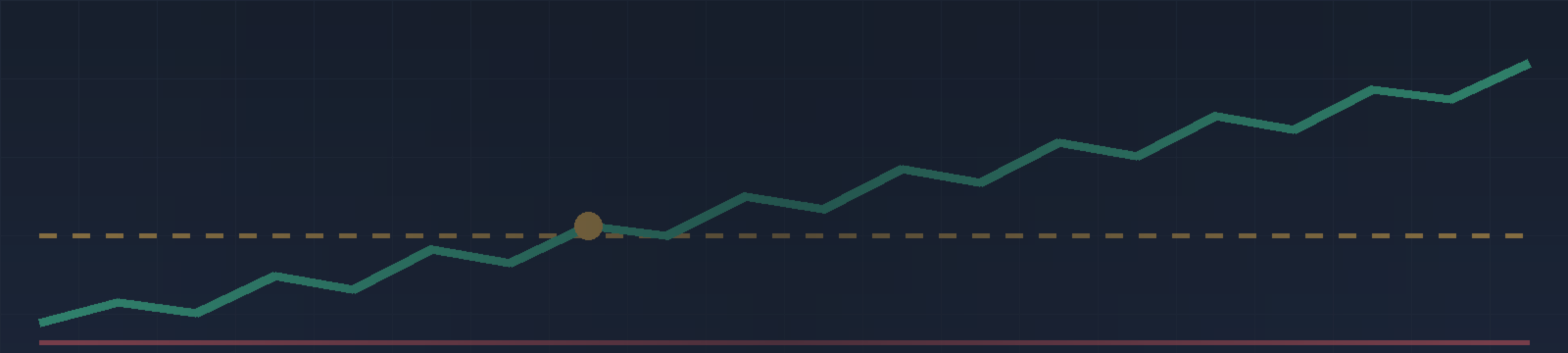
- At +1R: close 50% and move the stop-loss to entry + a few points
- From +1.5R: trail the rest (for example 1 x ATR)
- Final take-profit at your target, or let the trailing stop close it
Test any plan on your own market and timeframe before using it with real money.
How I built this into a tool
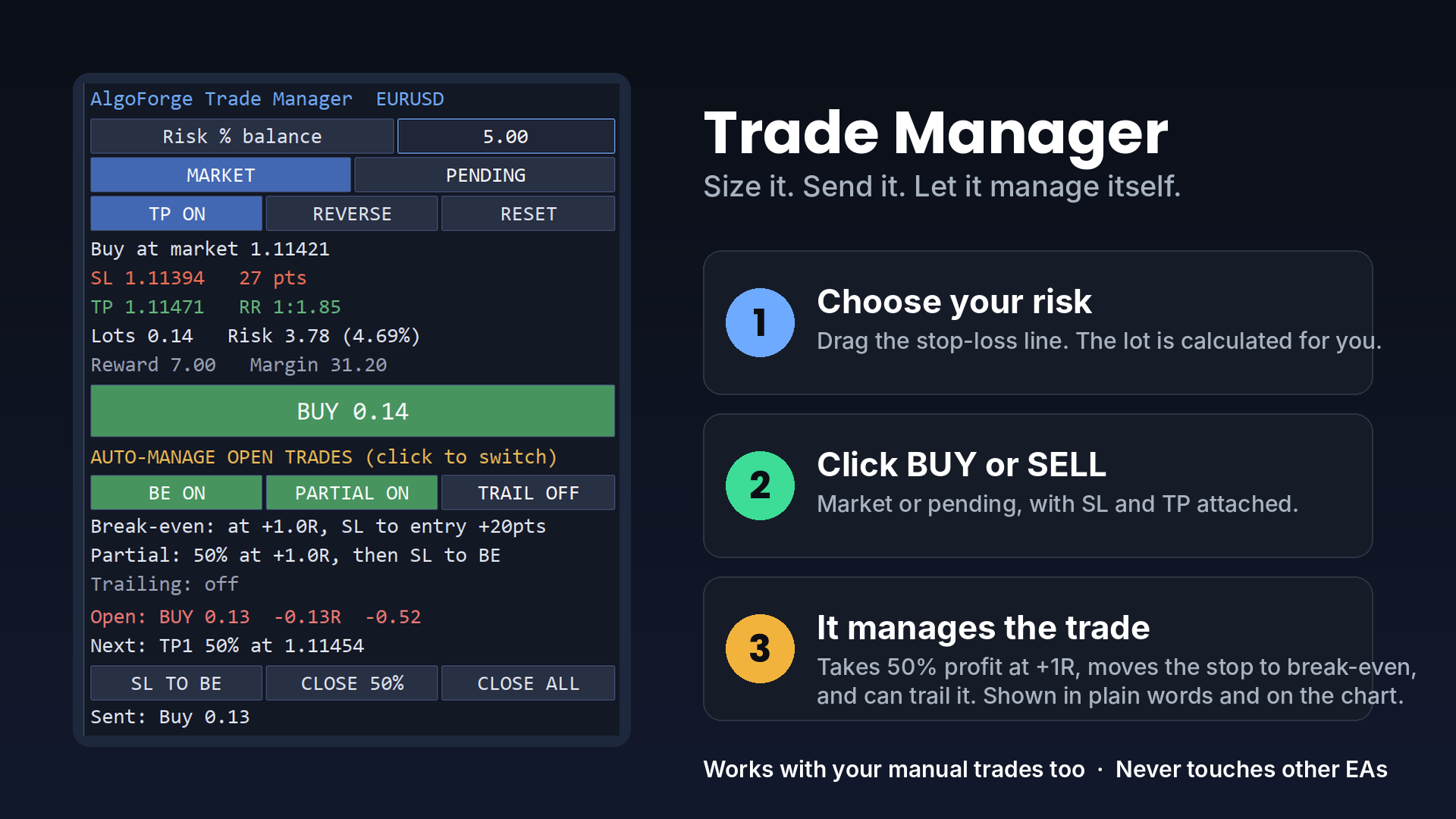
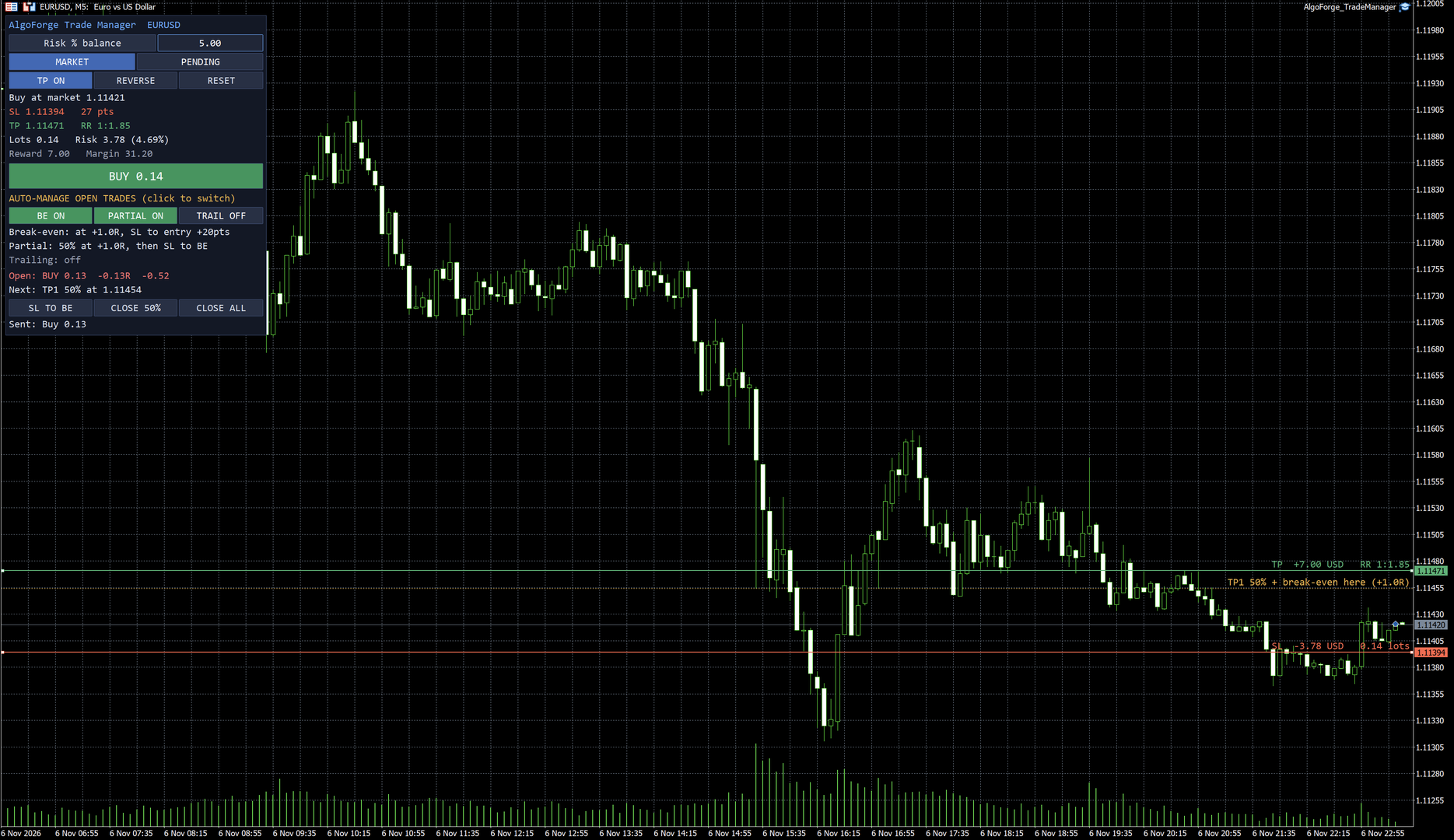
I put exactly this workflow into AlgoForge Trade Manager for MT5. You drag the stop-loss and take-profit lines, it calculates the lot from your risk, and after the trade opens it handles the partial take-profit, break-even and trailing stop. The panel shows the rules in plain words ("Partial: 50% at +1.0R, then SL to BE") and what happens next ("Next: TP1 50% at ..."), and dotted lines on the chart show where each step will happen. It manages panel trades and, if you want, your manual trades, and never touches other Expert Advisors.
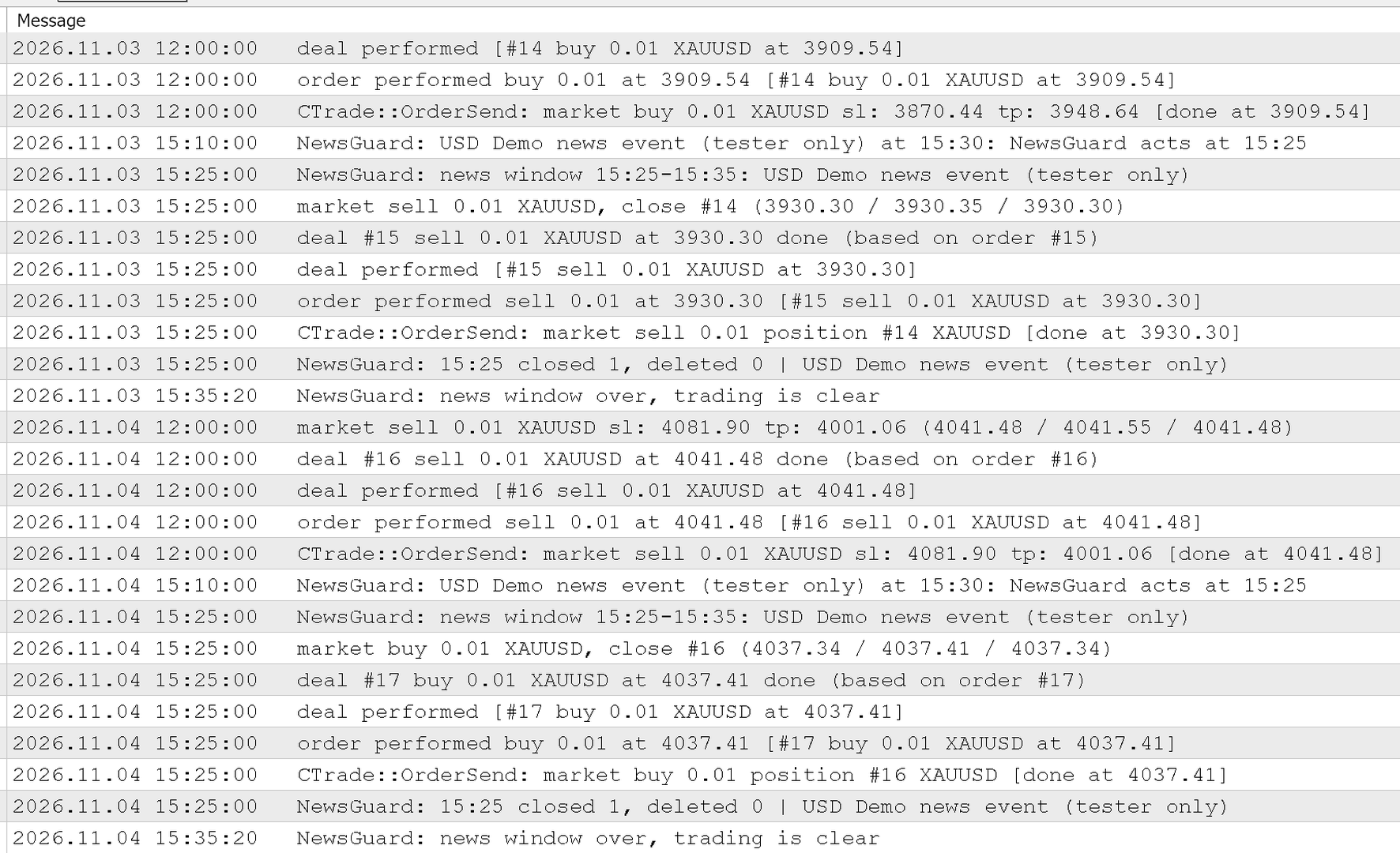
You can try the free demo in the Strategy Tester: https://www.mql5.com/en/market/product/206703
Launch price $39, rising to $49 after the first 10 copies.
Questions or ideas for new features are welcome in the comments.
Trading involves risk. This post is educational and not financial advice.
Files: