AI-generated illustration by EdgeDriven Algo. Product structure, not performance.
“Multi-asset” tells you where an EA trades. It does not tell you how the portfolio is put together.
For EdgeDriven Multi Asset Portfolio, the structure is six markets, eleven fixed strategy modules and one EA on one chart. The practical benefit is that you can run the intended combination without installing and coordinating eleven separate robots.
Here is what sits inside that single installation.
Six markets does not mean six equal shares
USDJPY has four modules and BTCUSD has three. EURUSD, GBPUSD, XAUUSD and US100 each have one. The modules reference H1, H2 and H4 data internally.
The initial risk budget is allocated equally across the eleven modules. It is not divided into six equal market budgets. That is a small detail with a large effect on how you should read the portfolio's name: market count is not an exposure map.
These allocations also do not describe realised risk contributions. Different modules can be active at different times, and different markets can lose together. The combined trading results still need to be assessed as a portfolio.
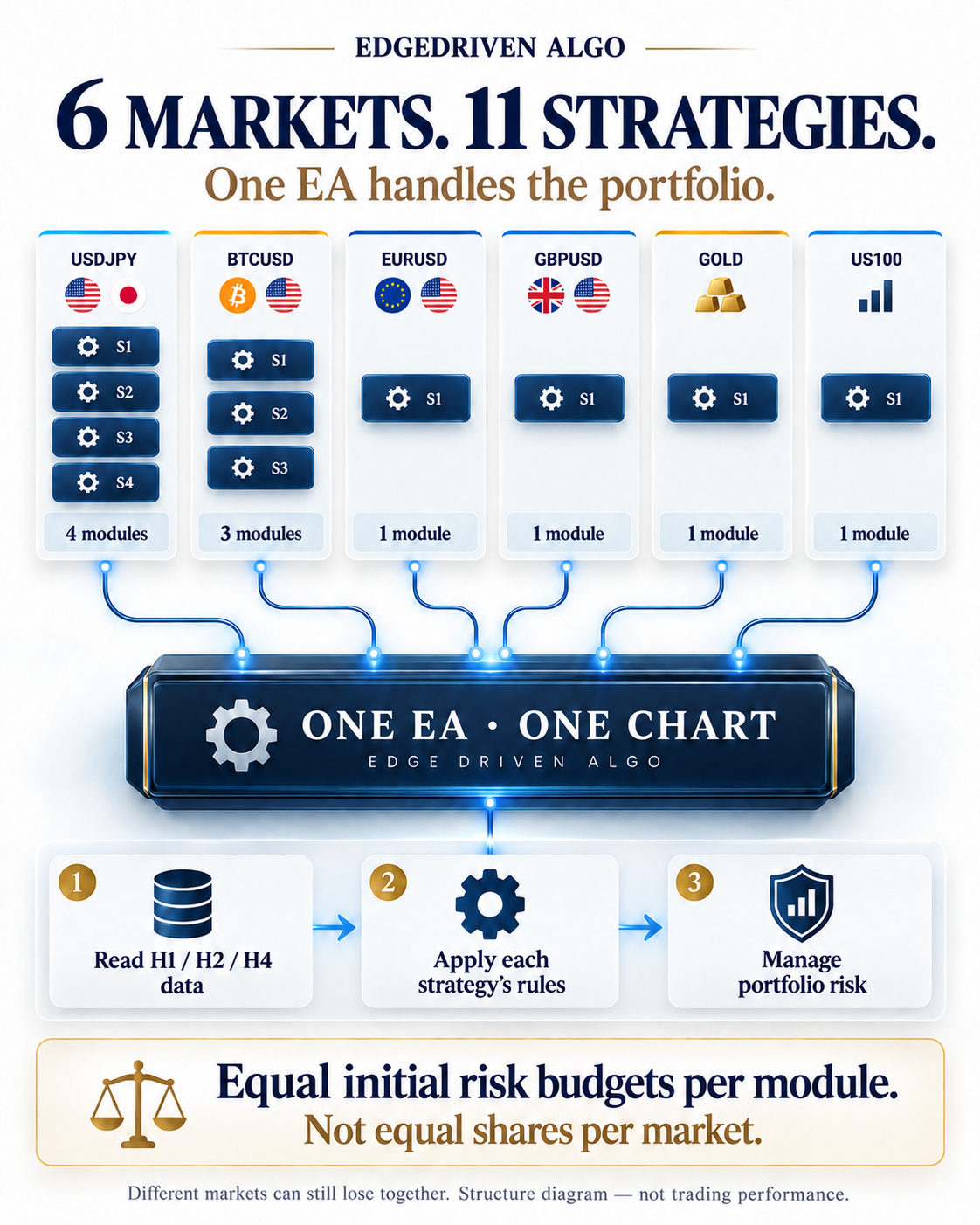
AI-generated diagram based on the published v1.12 specification. Counts and budgets do not represent realised performance.
What one EA changes in day-to-day operation
The platform requirement is MetaTrader 5 with a hedging account. One chart hosts the EA, which reads the required data and manages portfolio risk. Position sizing is risk-based rather than fixed-lot. There is no martingale sizing or grid averaging.
The full portfolio needs the broker to provide the required markets. If a symbol is unavailable, its modules stay inactive and their risk budget is not passed to other modules. If a minimum lot would exceed the permitted risk for a trade, that trade is skipped.
Those two behaviours are worth checking in the free Market demo. They explain why a compatible-looking account can still take a different set of trades. Use the MT5 Strategy Tester to check the broker's symbols and trade sizes before comparing the resulting report with the published reference.
Read the backtest conditions before comparing the totals
The public page separates current risk-preset backtests from the earlier development and validation results. The risk settings differ. They should not be presented as directly comparable profit totals. There is no dedicated public live or forward record for this product yet.
The right starting question is therefore not “does six beat one?” It is “does this combination fit the role I want an EA to take?” For someone who wants several markets in one operating unit, that is a concrete reason to investigate the portfolio—without treating its structure as a guarantee of smoother returns.
I develop and sell this product. The product page contains the full specification and reference backtests. The demo guide explains the first test, and the portfolio comparison puts Multi Asset alongside Gold and Dollar Yen.
Specifications checked against version 1.12 on September 29, 2026. Diagrams explain the structure; they are not performance charts. Historical backtests do not guarantee future returns. Leveraged trading involves risk of loss.