
Gold Plunges to $4,150: Is Trying to Pick the Bottom a Risky Trade?


When gold falls sharply, social media quickly fills with comments such as “Buy here” or “Pick it up after the drop.”
Of course, gold can rebound after a sharp decline.
But if we already knew exactly where the rebound would begin, far fewer people would struggle with trading.
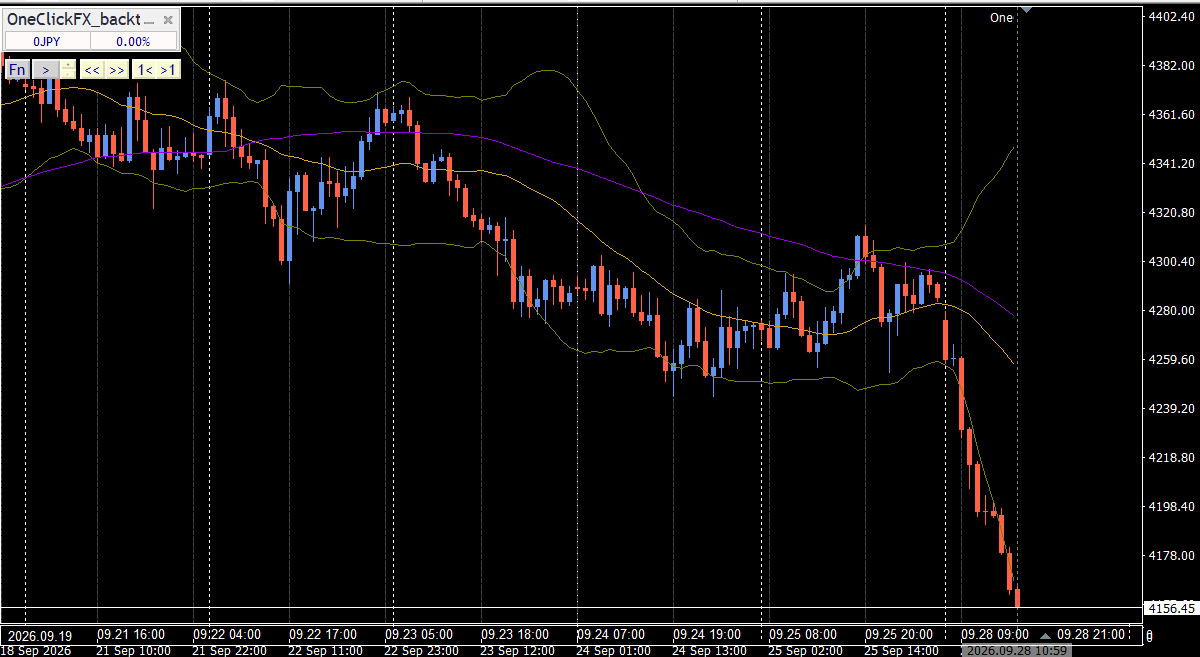
On September 28, 2026, gold plunged from the weekend close in the $4,280s to around $4,150, breaking below the $4,200 level.
So, do we really need to try to pick the bottom here?
🤔 Was the Gold Drop Just a Wave of Panic Selling?
The latest decline has been driven by several factors, including inflation concerns caused by higher oil prices, rising U.S. interest rates and expectations of further rate hikes.
Gold does not generate interest income, so its relative appeal tends to decline when interest rates and bond yields rise. If we simply assume that “gold must rise because there is a war or geopolitical risk,” the current market shows why the relationship is not that simple.
The chart itself is also important.

The break below $4,200 matters because a price level that previously provided support can potentially become resistance when the market rebounds.
Before looking at the news and thinking, “Therefore, I should buy,” it is important to see how the market is actually responding on the chart.
That order of thinking can be important in trading.

😟 “Buy the Dip” Sounds Easy. But How Far Can It Fall?
Social media is full of comments saying that this decline is a buying opportunity or that a rebound should be targeted from here.
Some posts even make it sound almost like a chance to make a fortune.
Of course, gold could rebound from here.
But the real question is:
Where exactly will the rebound begin?
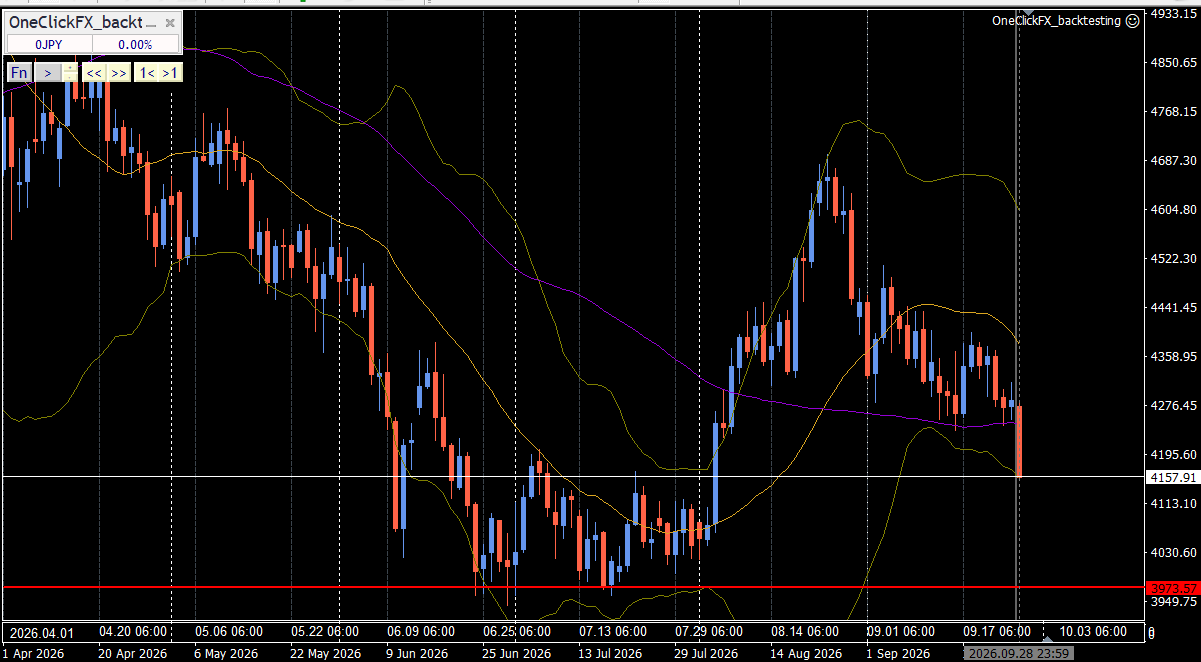
Gold has already traded below $4,000 this summer.
That means another decline from $4,150 cannot be considered completely unexpected, at least from a chart perspective.
Suppose a trader keeps averaging down:
“Buy at $4,200 → buy more at $4,100 → buy more at $4,000.”
The average purchase price becomes lower.
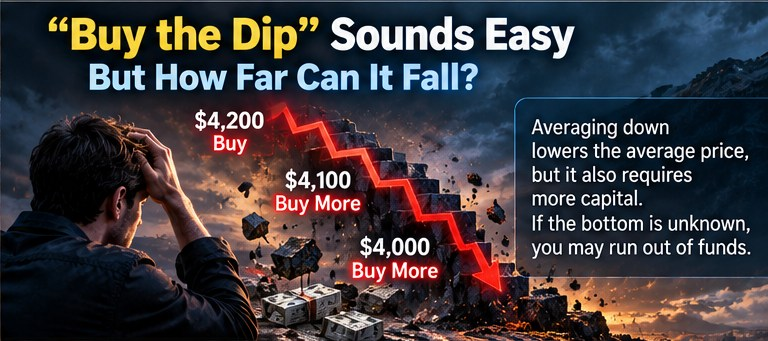
But at the same time, the amount of capital required also increases.
As long as the bottom is unknown, continuing to average down can eventually consume the available capital. Once the money is gone, the trade is over.
Countertrend trading is difficult because it attempts to catch a reversal while the market is still falling.
At the same time, simply following the decline aggressively is not necessarily easy either.

📉 Following the Trend Does Not Mean Chasing the Market
In general, trend-following attempts to trade in the direction of an established market trend rather than trying to predict a reversal.
This can make it easier to identify the market's direction than attempting to catch a falling market at its exact bottom.
But that does not mean you have to enter immediately.
If you start thinking, “I will lose money if I miss this opportunity” or “I have to get in now,” it may be better to step back and calm down first.
If we could reliably identify the exact bottom, everyone would be rich.

🤔 Be Careful About Following the Hype on Social Media
Social media is full of explanations that become obvious only after the market has already moved.
Some information can certainly be useful.
But there is no need to take every opinion at face value.
After a sharp gold sell-off like this one, rather than deciding that “this must be the bottom,” it may be more important to give the market time to show whether it will rebound or continue falling.
Both countertrend and trend-following trades carry risks when entered impulsively.
When you feel that you absolutely have to get into the market, that may be exactly when you should slow down.
The market is not going anywhere.