
Product link:
https://www.mql5.com/en/ market/product/191385
One of the most common challenges when using an MT5 Trade Copier across multiple brokers is the difference in symbol naming conventions.
A sender account may trade XAUUSD, while the receiver broker may identify the same instrument as XAUUSDm, GOLD, XAUUSD.pro, or another broker-specific symbol.
If the copier cannot identify the corresponding receiver symbol, the trade may not be copied. This is where manual symbol mapping becomes an important configuration option.
What Is Symbol Mapping?
Symbol mapping tells the trade copier which receiver symbol corresponds to a specific sender symbol.
Sender Symbol : Receiver Symbol
For example:
XAUUSD:XAUUSDm
This tells the copier:
- Sender trades XAUUSD
- Receiver broker uses XAUUSDm
- Copy the sender's XAUUSD trade to the receiver's XAUUSDm symbol
This is particularly important when the sender and receiver accounts are hosted with different brokers.
Why Automatic Symbol Mapping Can Fail
Modern trade copiers can attempt to identify matching symbols automatically. However, broker naming conventions are not standardized across the industry.
The same underlying instrument can have completely different names at different brokers.
| Sender | Receiver | Possible Reason |
|---|---|---|
| XAUUSD | XAUUSDm | Broker suffix |
| XAUUSD | GOLD | Different instrument name |
| EURUSD | EURUSD.pro | Broker suffix |
| GBPUSD | GBPUSD.m | Account/server suffix |
| US30 | US30USD | Different index naming convention |
| BTCUSD | XBTUSD | Different crypto symbol convention |
Automatic mapping can work very well for standard symbols, but unusual naming structures may require explicit instructions.
When Should You Use Manual Symbol Mapping?
Manual mapping is especially useful in the following situations.
1. Automatic Mapping Displays a Warning
If the copier reports that a sender symbol cannot be matched with a receiver symbol, the first step should be to check the warning and verify the available symbols in the receiver terminal.
Rather than assuming that the symbols are identical, confirm the exact broker-specific name.
2. Different Brokers Use Different Naming Conventions
This is one of the most common reasons for manual mapping.
Broker A: XAUUSD Broker B: XAUUSDm
The underlying instrument may be similar, but the symbol names are different.
3. Indices and Commodities
Indices and commodities frequently use broker-specific names.
US30 → US30USD
XAUUSD → GOLD
XAGUSD → SILVER
For these instruments, manually defining the relationship can remove ambiguity.
4. Cryptocurrency Symbols
Cryptocurrency symbols can also vary between brokers.
BTCUSD → XBTUSD
Before creating a mapping, always verify that the receiver symbol actually represents the intended instrument and has compatible trading specifications.
Common Manual Mapping Examples
Here are several typical examples:
XAUUSD:XAUUSDm
US30:US30USD
GBPUSD:GBPUSD.m
BTCUSD:XBTUSD
These are examples only. The correct receiver symbol must always be confirmed in the actual MT5 terminal.
How to Find the Correct Symbol Name
Before creating a manual mapping, open the receiver MT5 terminal and check the broker's available instruments in Market Watch.
Do not rely only on the instrument's commonly used name. The exact symbol displayed by the receiver broker is what matters.
A simple workflow is:
Sender Terminal │ │ XAUUSD ▼ COPYLATOR │ │ Manual Mapping │ XAUUSD:XAUUSDm ▼ Receiver Terminal │ ▼ XAUUSDm
Manual Mapping Format
The basic format is:
SenderSymbol:ReceiverSymbol
For example:
XAUUSD:XAUUSDm
When multiple mappings are required, they can be entered as a comma-separated list:
XAUUSD:XAUUSDm,US30:US30USD,
                        GBPUSD:GBPUSD.m
This allows several broker-specific symbol relationships to be defined in one configuration.
Automatic Mapping + Manual Mapping
Manual mapping does not necessarily mean that every symbol needs to be configured manually.
A practical approach is to allow automatic mapping to handle standard symbols and use manual mapping only for symbols that require explicit translation.
Standard Symbols │ ▼ Automatic Mapping │ ├── Match Found → Copy Trade │ └── Match Not Found │ ▼ Manual Mapping │ ▼ Receiver Symbol
This approach reduces unnecessary configuration while still providing a reliable fallback for broker-specific instruments.
Step-by-Step Manual Mapping Checklist
- Check the copier warning. Identify which symbol could not be matched.
- Open the receiver MT5 terminal.
- Check Market Watch or the Symbols list.
- Find the exact receiver symbol name.
- Compare the sender and receiver symbols.
- Add the mapping using SenderSymbol:ReceiverSymbol format.
- Separate multiple mappings with commas.
- Apply the configuration.
- Test the mapping on a demo account.
- Monitor the first copied trades carefully.
Why Exact Symbol Names Matter
A small naming difference can be enough to prevent a trade from being copied.
Sender:
XAUUSD

Receiver:
XAUUSDm

Incorrect:
XAUUSD:XAUUSD

Correct:
XAUUSD:XAUUSDm
The receiver symbol must be the exact symbol available on that broker's MT5 server.
Manual Mapping Does Not Change the Instrument's Trading Conditions
Symbol mapping only establishes the relationship between the sender symbol and the receiver symbol. It does not make the two broker instruments identical in every trading characteristic.
Important differences can still exist in:
- Contract size
- Tick size
- Tick value
- Minimum volume
- Maximum volume
- Volume step
- Trading hours
- Spread
- Margin requirements
Therefore, traders should verify the receiver broker's specifications before copying significant volumes.
Symbol Mapping and Lot Management
Symbol mapping becomes even more important when combined with flexible lot management.
If the sender and receiver brokers use different contract specifications, copying the exact same lot size does not necessarily result in identical monetary exposure.
For accounts with different balances, traders may therefore combine:
- Symbol mapping
- Balance-ratio scaling
- Lot multiplier
- Maximum lot cap
- Broker volume normalization
This provides greater control when distributing trades across multiple brokers and account sizes.
Manual Mapping for Multi-Broker Copy Trading
Manual mapping is especially valuable when one sender account distributes trades to several receiver brokers.
Sender XAUUSD │ ┌────────┼────────┐ ▼ ▼ ▼ Broker A Broker B Broker C XAUUSD XAUUSDm GOLD │ │ │ ▼ ▼ ▼ Trade Trade Trade
Each receiver can have its own symbol naming convention. The mapping configuration allows the copier to translate the sender symbol into the appropriate receiver symbol.
Best Practices
- Use automatic mapping for standard symbols whenever it works correctly.
- Use manual mapping when the copier cannot confidently identify the receiver symbol.
- Always verify the exact symbol name in the receiver MT5 terminal.
- Do not assume that similar names represent identical trading specifications.
- Pay particular attention to commodities, indices, and cryptocurrencies.
- Test new mappings on demo accounts before using them with live funds.
- Review mappings whenever you add a new broker or trading account.
- Combine symbol mapping with appropriate lot-management settings when account sizes or broker specifications differ.
Example Configuration
A multi-broker configuration could look like this:
Manual Symbol Mapping:

XAUUSD:XAUUSDm,
US30:US30USD,
GBPUSD:GBPUSD.m,
BTCUSD:XBTUSD
Before using such a configuration, replace the example receiver symbols with the exact names provided by your broker.
Automatic Detection with Manual Override
A useful trade copier configuration should not force traders to manually map every instrument. Automatic detection can handle common symbols, while manual mapping provides an override when broker-specific naming prevents a correct match.
This combination provides a practical balance between convenience and control.
Conclusion
Manual symbol mapping is an important tool for reliable copy trading across different MT5 brokers.
Automatic symbol detection can handle many standard instruments, but broker-specific prefixes, suffixes, alternative names, and unique instrument conventions can create situations where an explicit mapping is necessary.
By using the SenderSymbol:ReceiverSymbol format, verifying exact symbol names, testing mappings before going live, and reviewing broker specifications, traders can build a more reliable multi-broker copy-trading configuration.
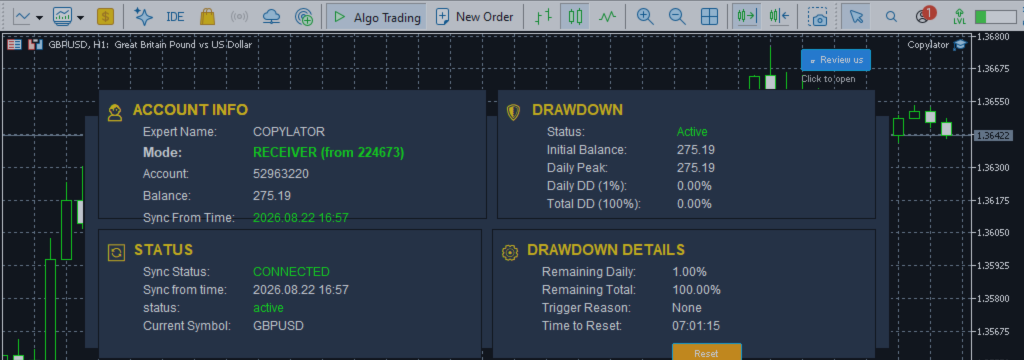
With COPYLATOR, automatic symbol mapping can be used as the first layer, while manual mapping provides additional control whenever an exact sender-to-receiver relationship needs to be specified.
Product link:
https://www.mql5.com/en/ market/product/191385