BTC: The Bounce Failed Before It Started. The Weekly Chart Warned First

BTC: The Bounce Failed Before It Started. The Weekly Chart Warned First
Price fell hard.
The bounce looked ready.
It failed faster every time.
That was the whole week.
The 1H chart showed the execution.
The weekly chart showed why the execution still had room.
Most traders saw the drop and waited for the bounce.
Price looked low.
The move looked stretched.
The reaction looked ready.
But the bounce could not take control.
Each recovery became shorter.
Each hold failed earlier.
Each return pushed price back into lower memory.
That was not random.
It started on the weekly chart.
Chart 1 — Weekly Chart
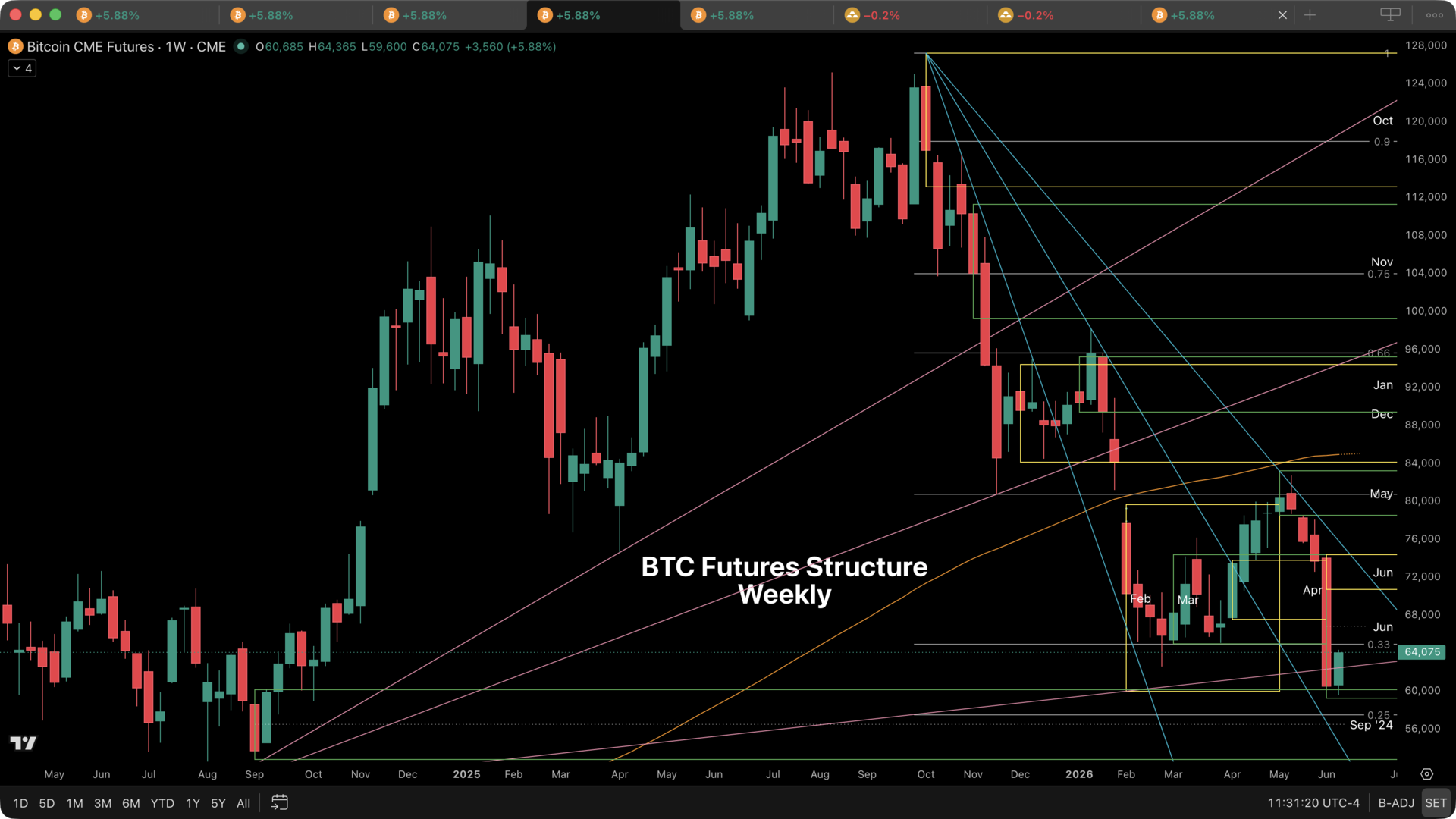
The weekly chart was the main map.
BTC rotated back into old February memory after failing under higher weekly structure. May could not reclaim the upper area. June expanded lower, still inside the old weekly box.
That left space.
So the 1H short was not late just because price had already dropped.
The field above was broken.
The field below was still open.
This is why I never start from the 1H chart.
Monthly.
Weekly.
Daily.
Then 1H.
The 1H gives the trade.
The higher timeframe decides whether the trade has room.
This week, the weekly chart carried the main message.
Compression had already built pressure.
March compressed inside February.
April compressed inside March.
May compressed near the February upper area.
Then May failed.
After that failure, June expanded lower.
Compression gave pressure.
Expansion gave range.
That is why the 1H chart kept pushing lower.
It was not only an intraday selloff.
It was weekly rotation inside old February memory.
The upper weekly area rejected price first.
Then the lower weekly memory became the destination.
That is the part many traders missed.
The market looked too low.
But the weekly chart still had room.
The bounce looked ready because price was already low. But the higher structure had already failed above. The lower weekly memory was still waiting below.
That is why the short was not about chasing weakness.
It was about reading where price still had room to travel.
Full Weekly Lecture
Watch the full BTC weekly structure review here
Chart 2 — Daily Chart
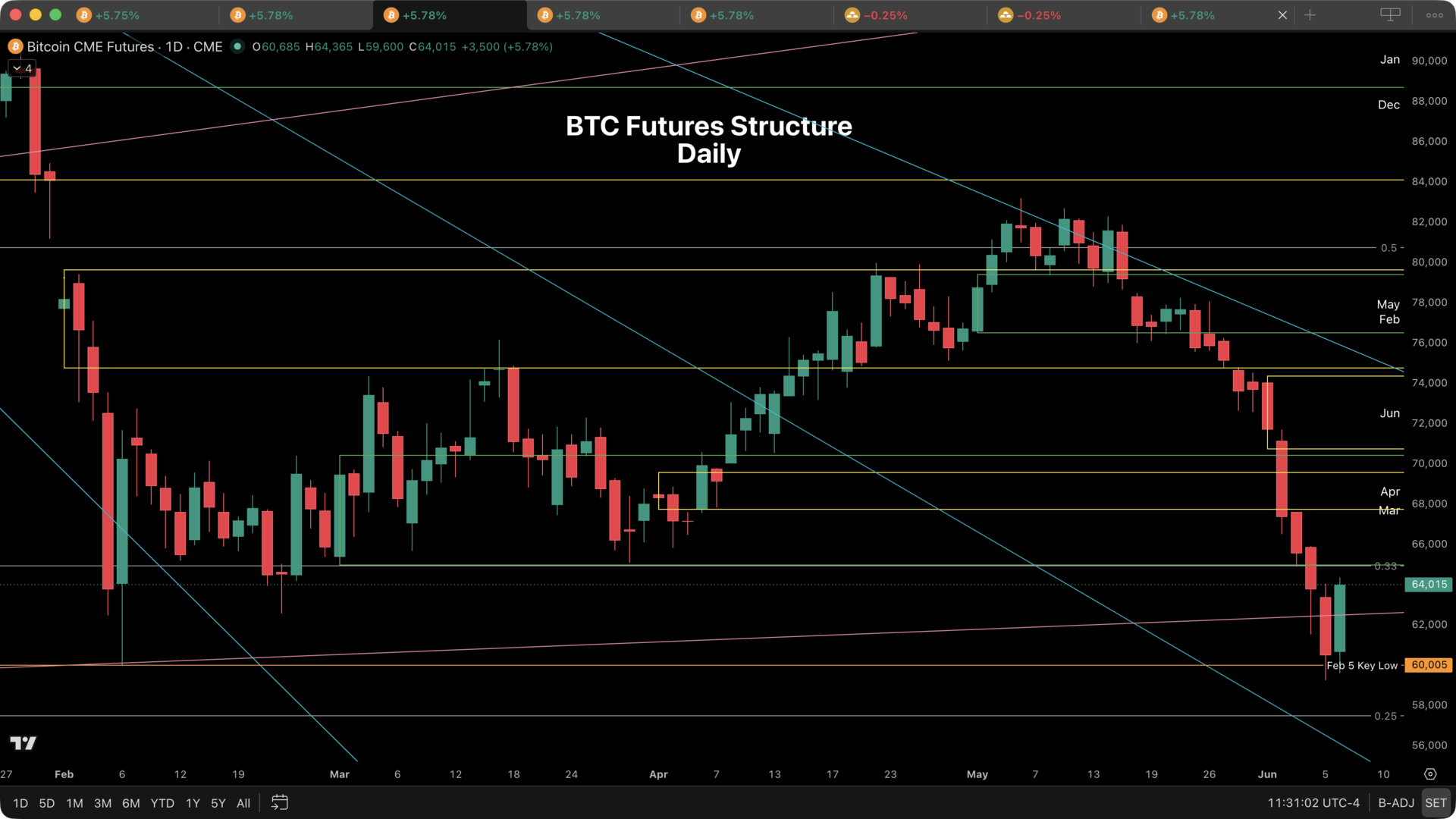
The daily chart confirmed the path.
June formed in the gap between old structures.
Not safely above February.
Not deep inside March.
Between them.
That empty space mattered.
Price broke April memory.
Then it broke March memory.
Then it pushed toward the February 5 key low.
Unfinished travel.
That is why the decline felt fast on the 1H chart.
Price was not falling through calm balance.
It was moving through a daily gap.
But the daily chart was not the main story.
The weekly chart gave the pressure.
The daily chart showed the path.
The 1H chart gave the execution.
This matters because many traders confuse location with entry.
A daily level can explain the move.
But it does not create the trade by itself.
The trade still needs a session line.
It still needs a stop.
It still needs a target.
It still needs enough reward for the risk.
Chart 3 — Monthly Chart
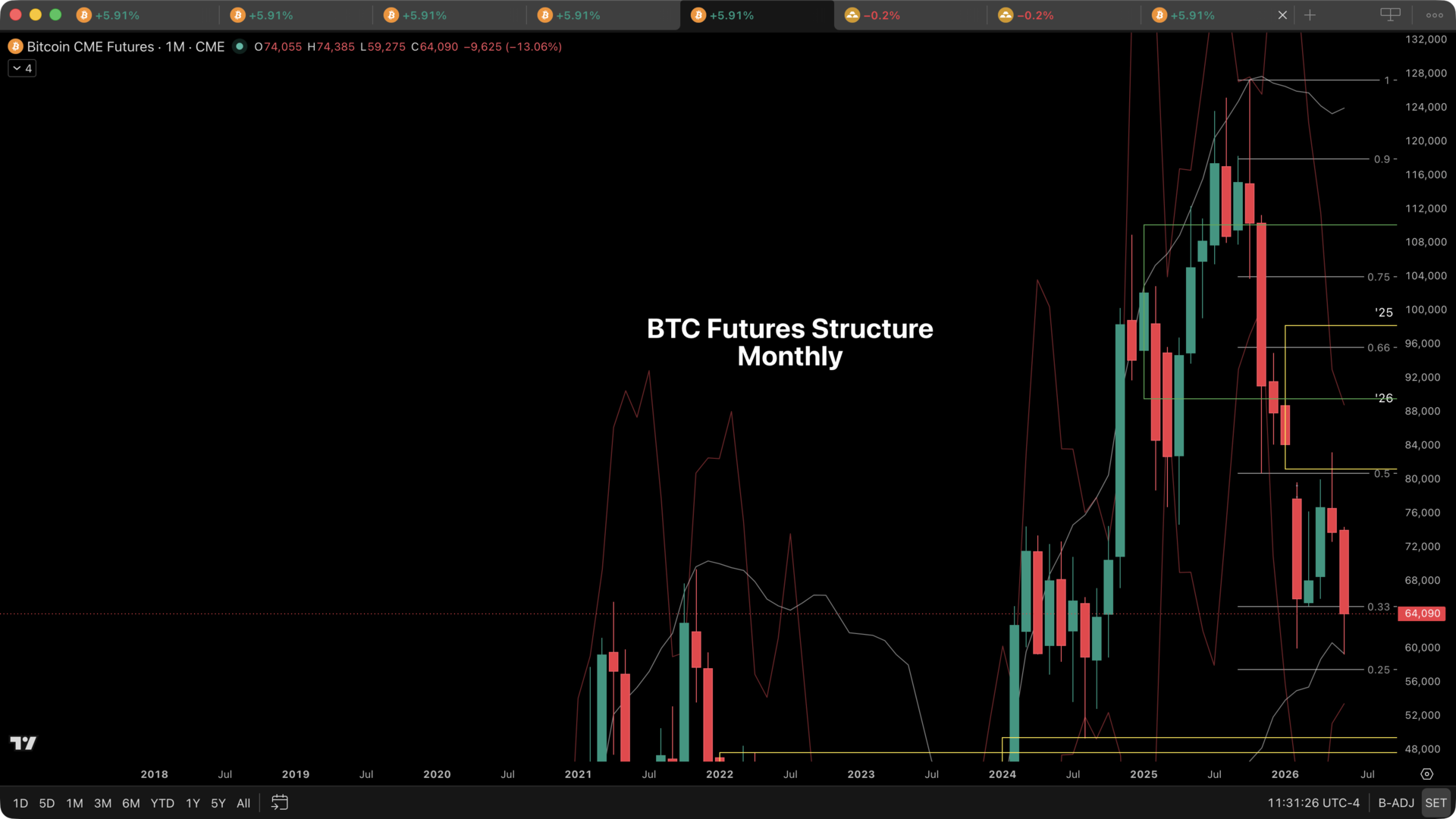
The monthly chart made the week more dangerous.
June tested the February monthly low after May failed near the lower 2026 boundary.
That is a strong reaction zone.
It can also trap early buyers.
Buyers enter too early because the low looks important.
Sellers enter too late because the drop looks strong.
Both can fail.
A monthly low is not an entry.
Price must hold.
Price must reclaim.
Price must build distance.
If price only touches the low, that is not enough.
If price bounces but cannot reclaim higher memory, the bounce can fail again.
If price breaks the low and cannot reclaim it, short pressure can continue.
That is why the next move must stay conditional.
The Real Lesson — Selection
This week was not only about taking shorts.
It was about selection.
A trade was valid only when three lines worked together.
Stop.
Entry.
Target.
If the stop was too wide, the trade was weak.
If the target was too close, the trade was weak.
If the entry came late, the trade was weak.
If price slipped back inside the box, the trade was weak.
Skip it.
A famous level is not a trade.
The February low mattered.
Weekly 0.33 mattered.
Weekly 0.25 mattered.
But none of them were entries by themselves.
Price has to hold.
Price has to reclaim.
Price has to fail.
And the trade has to pay for the risk.
When the box opened too wide and the clean ratio never appeared, the correct action was no trade.
That is not hesitation.
That is execution.
A market can move without giving a clean trade.
A bounce can happen without giving a valid long.
A breakdown can continue without giving a valid short.
The account does not need every move.
It needs the move where risk deserves reward.
Related MQL5 Market Product
This is the same execution discipline I use when studying automated trading logic.
Session structure.
Level memory.
Risk reward filter.
And no trade as a valid output.
View the related MQL5 Market product here
Chart 4 — 1H Execution Chart
Next week stays conditional.
If BTC holds above the February low and reclaims higher memory, the long can be studied.
If BTC breaks below the February low and fails to reclaim it, short pressure can continue.
If BTC rotates between major weekly levels, no trade can still be the best trade.
The higher timeframe does not give the entry.
The session gives the entry.
The higher timeframe decides whether the entry has space.
Price reaches.
It reacts.
It holds or fails.
Only then does the trade begin.