Golden Pocket Indicator Series, Part 3: Common Mistakes, Entry Logic and Risk Planning

Full Blog Series
This is Part 3 of the Golden Pocket Indicator Series.
Part 1 explained the basic Golden Pocket concept and signal-reading workflow. Part 2 explained how ATR Fibonacci Trend Envelopes can make Golden Pocket zones more dynamic.
This final part focuses on trade planning.
A Golden Pocket zone becomes useful only when it is connected to a complete trading plan. The 0.618-0.786 area can help locate a pullback, but it does not decide the entry, stop loss, take profit or position size.
Most bad Golden Pocket trades fail for the same reason: the trader treats a zone as a decision.
A better approach is to treat the zone as the start of a checklist.
1. Mistake: Treating Fibonacci Levels as Magic Prices
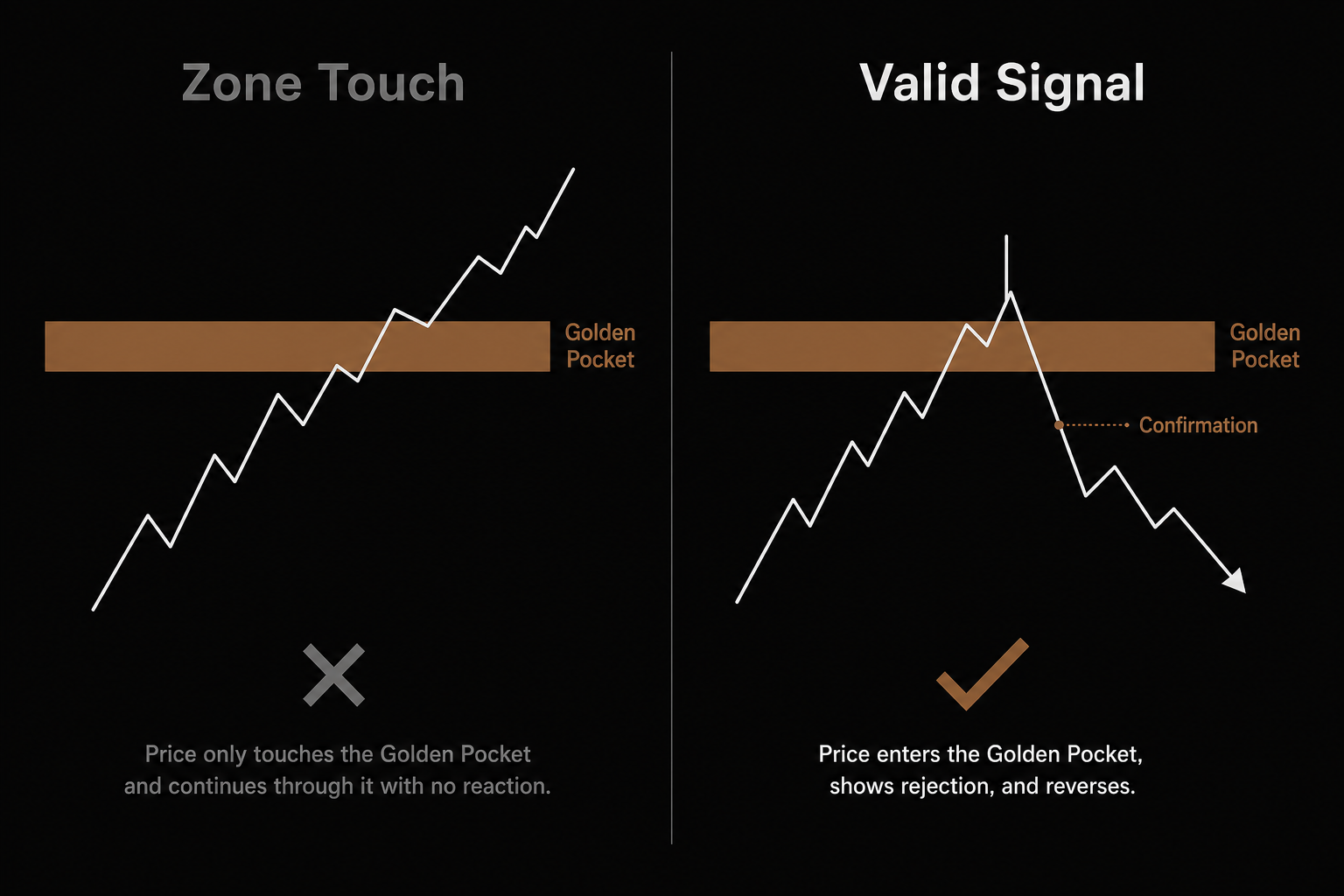
The first major mistake is believing that Fibonacci levels force the market to reverse.
The 0.618 level does not guarantee support. The 0.786 level does not guarantee rejection. The Golden Pocket does not guarantee continuation.
Fibonacci levels are reference areas. They help the trader focus attention, but the market still needs to confirm that the area matters.
A disciplined trader thinks:
"Price is entering a relevant retracement zone. I should evaluate the reaction."
Not:
"Price touched the Golden Pocket. I must enter."
That difference changes everything. The first mindset waits for evidence. The second mindset trades before the setup exists.
2. Mistake: Drawing or Reading Weak Structure
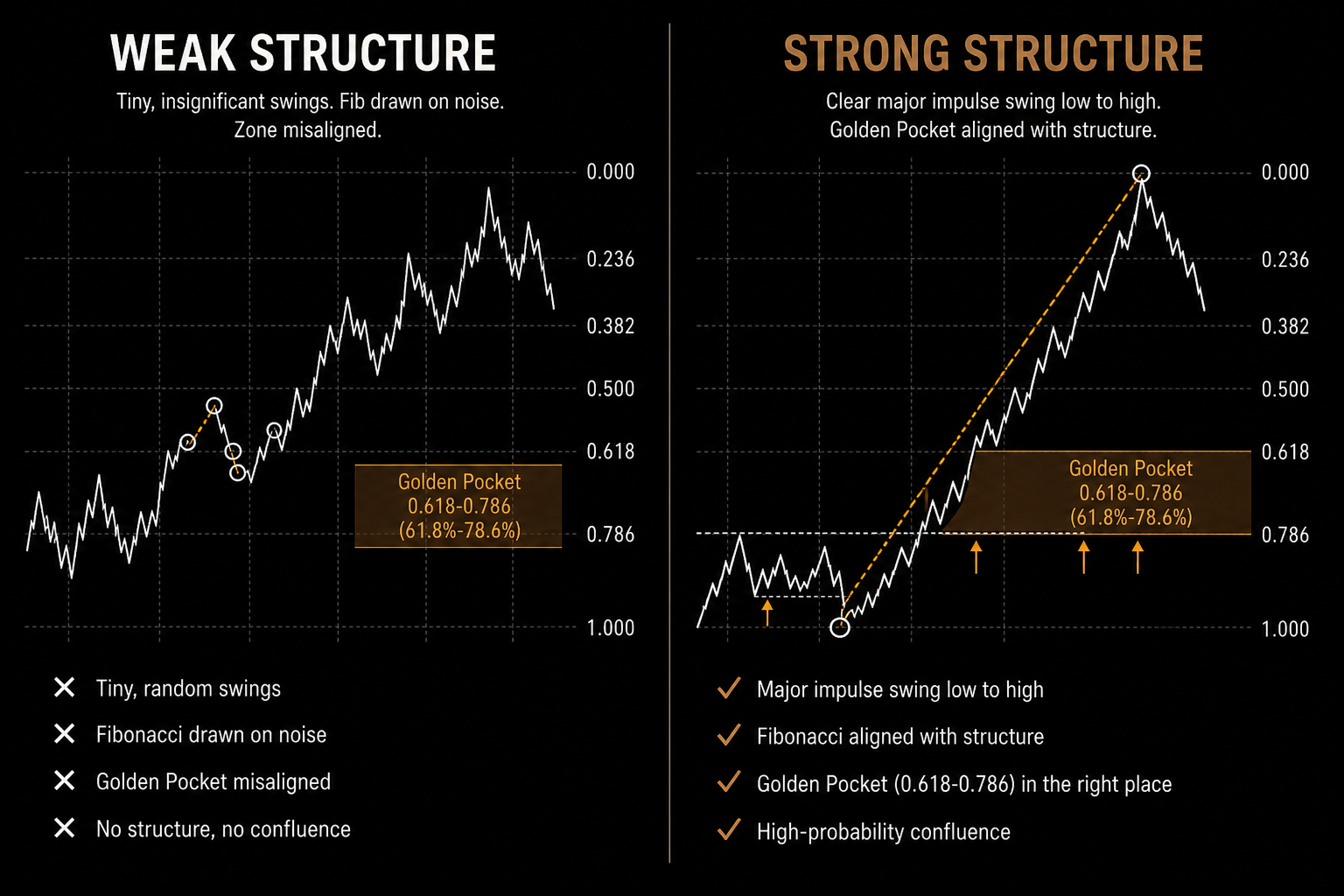
Golden Pocket analysis depends on meaningful structure.
Weak structure can come from poor manual swing selection, but it can also come from reading every small pullback as important. A zone has more value when it is connected to a visible prior move and a clear market context.
Poor setup quality often includes:
- tiny or random swings
- unclear trend direction
- overlapping price action
- forced drawings after the fact
- entries against strong market pressure
- setups in flat or noisy conditions
Better setup quality usually includes:
- a clear prior impulse
- visible bullish or bearish structure
- a controlled pullback
- price reaction from the Golden Pocket
- a defined invalidation area
- enough space to a realistic target
The Pricewerk Golden Pocket Indicator can help make the zone easier to read in MetaTrader 5, but the trader still needs to judge whether the market structure is worth trading.
3. Mistake: Entering Before Confirmation
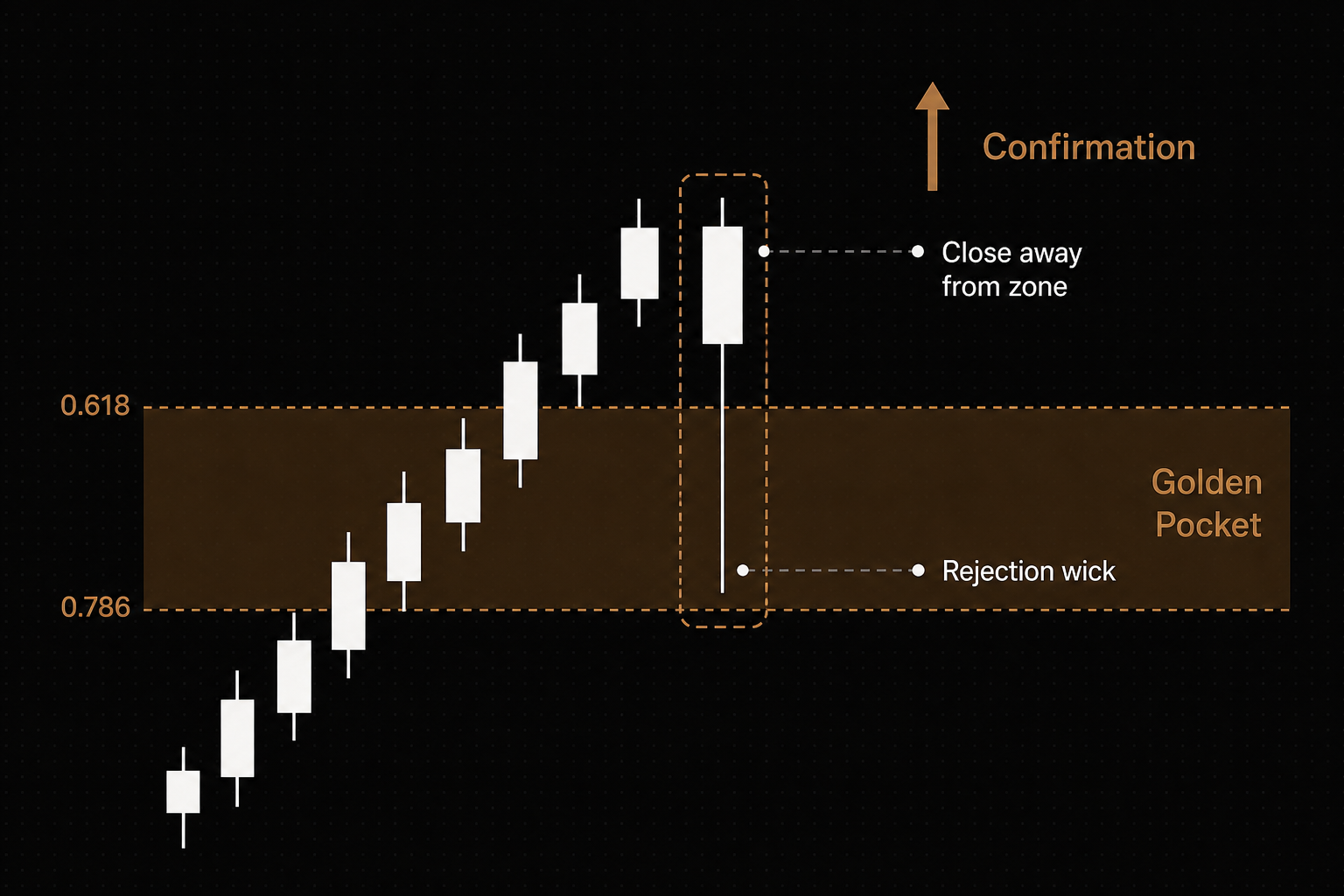
The Golden Pocket is not the entry.
The Golden Pocket is the location where the trader starts paying closer attention.
Confirmation is what turns a zone into a potential setup. Depending on the trader's method, confirmation may include:
- rejection from the zone
- candle close back in the expected direction
- break of a short-term pullback structure
- failure to continue through the zone
- renewed momentum in the trend direction
Aggressive entries may happen closer to the zone, but they usually carry more false-signal risk. Conservative entries wait for more confirmation, but they may enter later and sometimes miss the best price.
Neither approach is automatically better. The important point is consistency. A trader should know which confirmation model is being used before the trade appears.
4. Mistake: Ignoring Invalidation
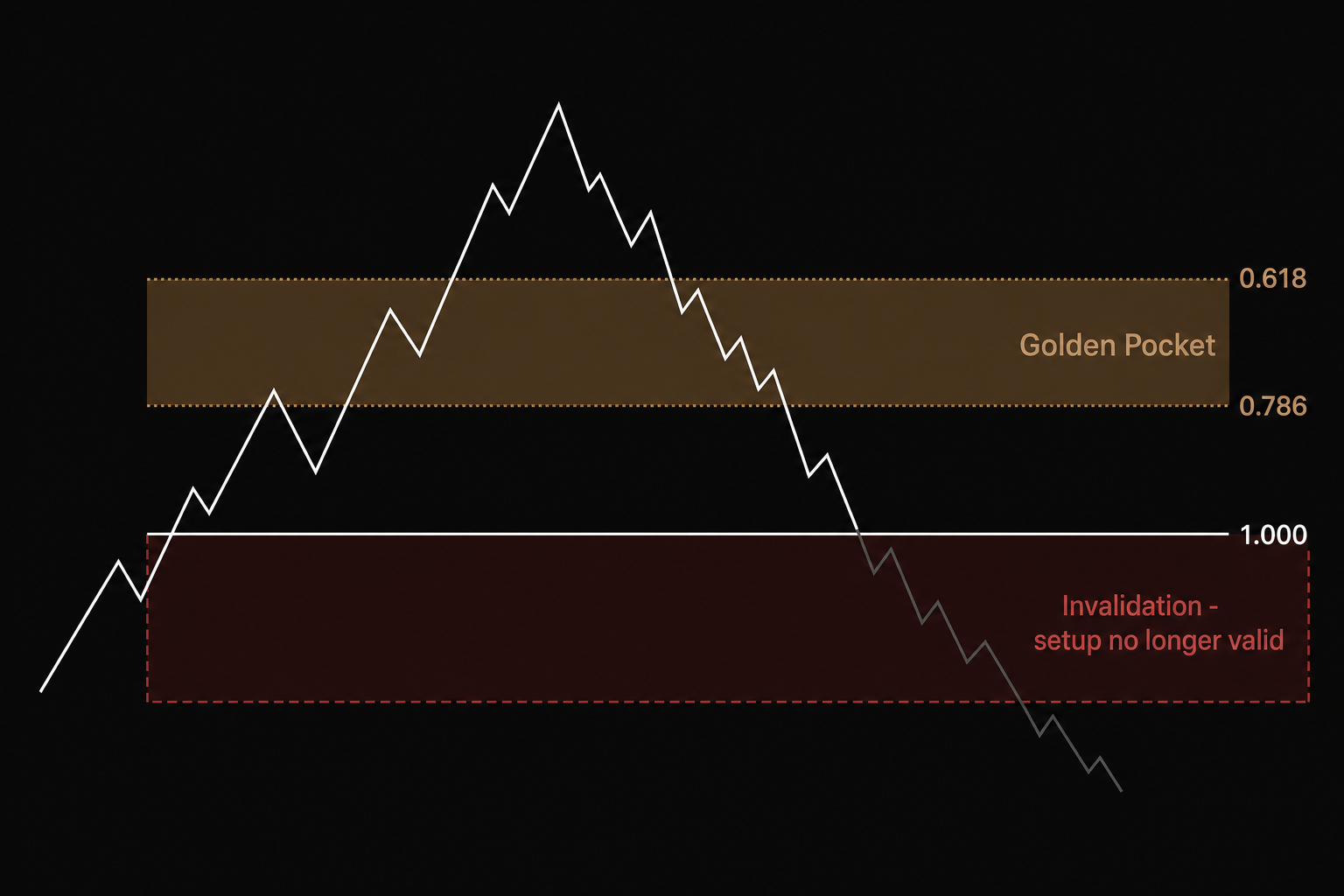
Every setup needs a point where the idea is considered wrong.
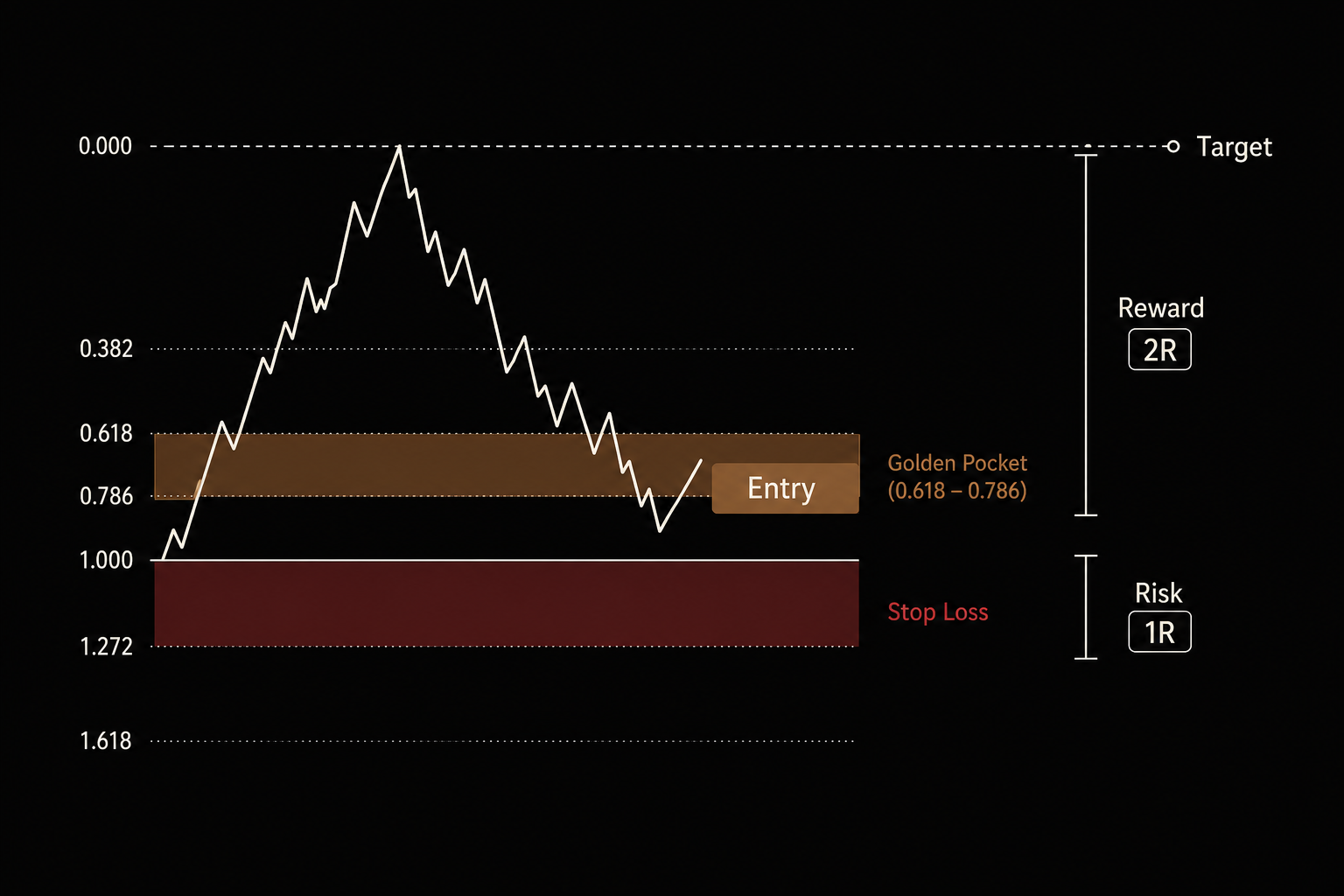
For Golden Pocket setups, the 1.000 level often helps frame invalidation. In a bullish setup, it can represent the origin of the measured upward move. In a bearish setup, it can represent the origin of the measured downward move.
If price moves through the Golden Pocket and breaks the deeper structure, the continuation idea may no longer be valid.
Invalidation is not just about stop placement. It answers a strategic question:
"At what point is my original trade idea no longer true?"
Without that answer, the trader may hold losing trades too long, move stops emotionally or turn a structured setup into hope.
5. Entry Logic for Long and Short Setups
A long Golden Pocket setup usually follows this logic:
- the market creates an upward impulse
- price pulls back into the 0.618-0.786 zone
- the pullback does not destroy the bullish structure
- buyers react from the zone
- bullish confirmation appears
- risk and target distance are acceptable
A short Golden Pocket setup follows the opposite logic:
- the market creates a downward impulse
- price retraces upward into the 0.618-0.786 zone
- the retracement does not destroy the bearish structure
- sellers react from the zone
- bearish confirmation appears
- risk and target distance are acceptable
This keeps the setup directional. The trader is not buying or selling the Golden Pocket itself. The trader is evaluating whether a trend pullback can become a continuation setup.
6. Stop-Loss Planning
A stop loss should be connected to invalidation, not emotion.
For long setups, the stop is often placed below the logical support or invalidation area. For short setups, it is often placed above the logical resistance or invalidation area.
Common stop-loss mistakes include:
- placing the stop too tight because the trader wants a larger position
- placing the stop too wide without reducing position size
- moving the stop after entry without a rule
- using the same stop distance on every symbol
- ignoring volatility
- hiding the stop beyond a random level without structural logic
Stop placement should answer two questions:
- Where is the setup invalid?
- How much can I risk if that invalidation happens?
If the stop must be very far away to make structural sense, the position size should usually be smaller. If the risk-reward becomes unattractive, the trade may not be worth taking.
7. Take-Profit and Risk-Reward Logic
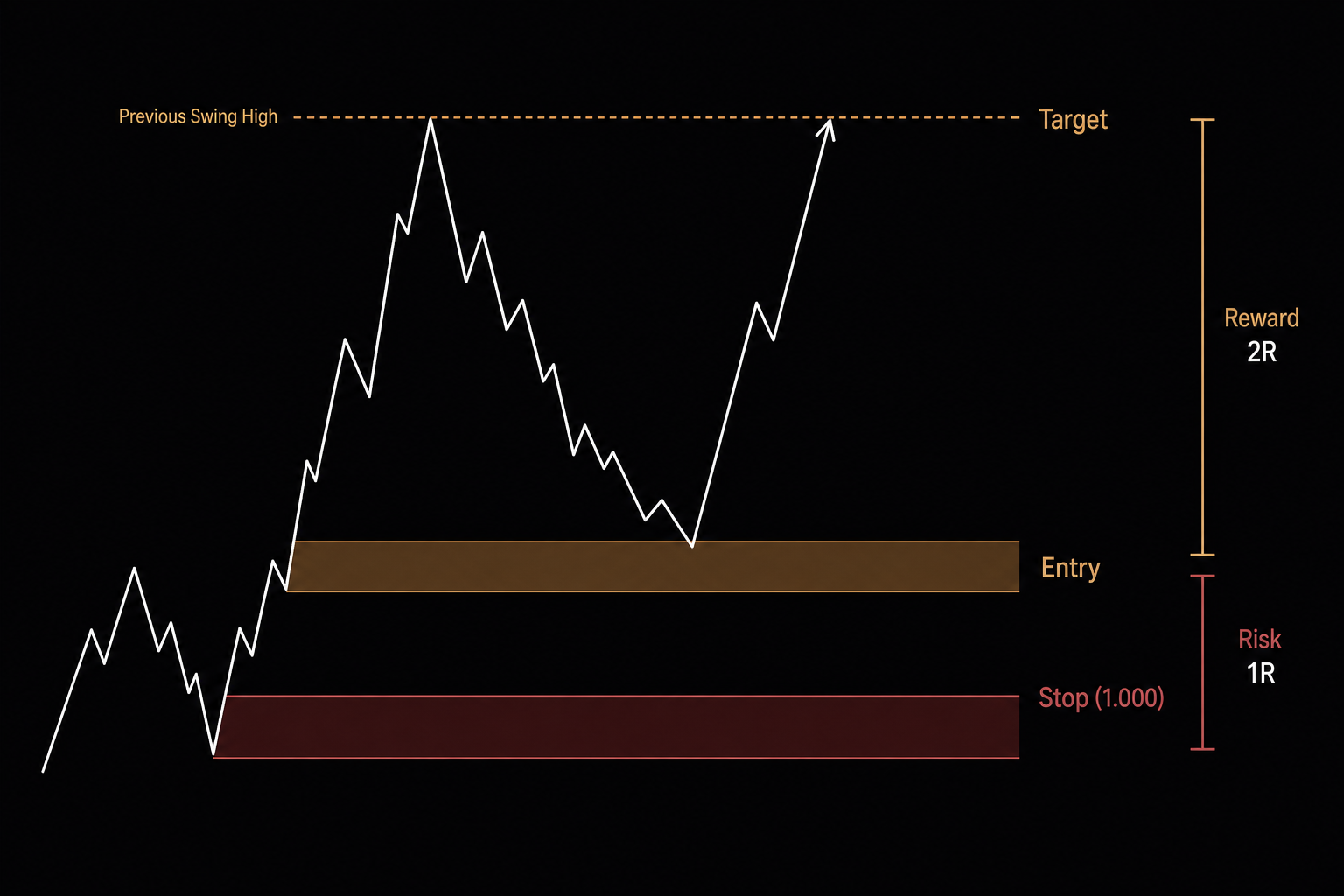
A take-profit target should be realistic.
For long setups, traders often look toward prior swing highs, liquidity areas, resistance zones or fixed risk-reward targets. For short setups, they may look toward prior swing lows, support zones or fixed risk-reward targets.
The target should be evaluated before entry.
A setup can look good at the zone but still be unattractive if the next opposing level is too close. For example, if the potential reward is small and the invalidation distance is large, the trade may not justify the risk.
Useful target planning can include:
- previous swing high or low
- next support or resistance area
- measured-move target
- fixed 1:1.5 or 1:2 risk-reward target
- partial take profit at the first logical level
- break-even rule after price moves far enough
The purpose is not to predict the exact turning point. The purpose is to know whether the opportunity is large enough before taking the trade.
8. Position Sizing and Trade Quality
Position size should be based on risk, not confidence.
Even a clean Golden Pocket setup can fail. The trader should decide in advance how much account risk is acceptable if the stop loss is reached.
A simple risk process is:
- define entry area
- define stop-loss level
- measure the distance between entry and stop
- choose account risk per trade
- calculate position size from that risk
- confirm that the target offers enough reward
This prevents a common error: taking larger trades simply because a setup looks good. A setup can be high quality and still lose. Risk control is what keeps one failed setup from becoming a major account problem.
9. Practical Checklist
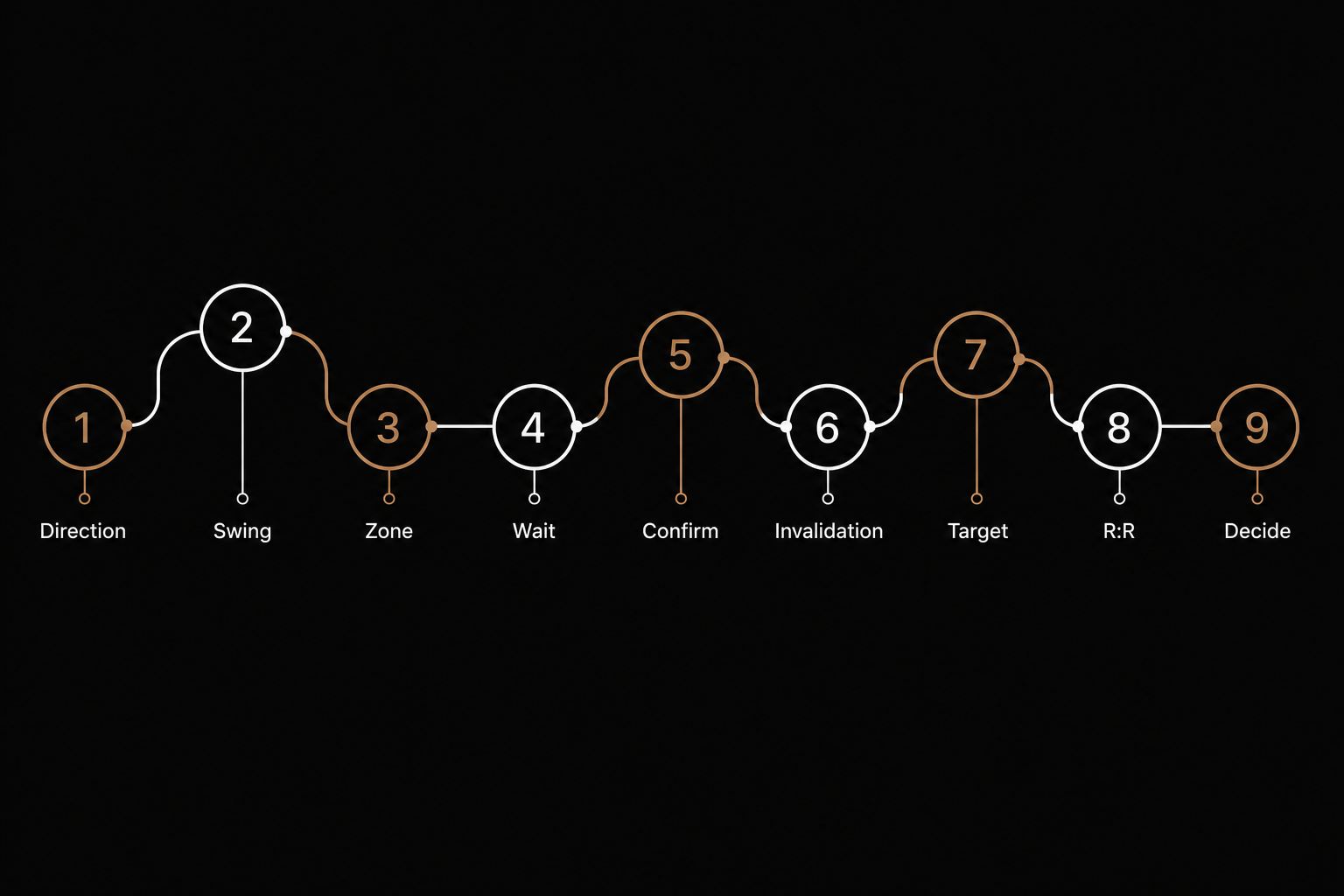
Before taking a Golden Pocket setup, ask:
- Is the market trending or only ranging?
- Is there a clear prior impulse?
- Has price reached the 0.618-0.786 area?
- Is the pullback controlled?
- Did price react from the zone?
- Is there confirmation in the expected direction?
- Where is the setup invalid?
- Where should the stop loss go?
- Is the target realistic?
- Is the risk-reward acceptable?
- Is the position size based on predefined risk?
If several answers are unclear, the trade is probably not ready.
The Pricewerk Golden Pocket Indicator can support this review by making the relevant Golden Pocket and invalidation areas easier to see, but it should not replace the checklist.
10. Final Thoughts
A Golden Pocket setup is only complete when entry, invalidation, stop loss, take profit and position size fit together.
The 0.618-0.786 zone defines the area of interest.
Confirmation provides the decision filter.
The 1.000 level helps frame invalidation.
The stop loss defines risk.
The target defines opportunity.
Position sizing controls damage when the setup fails.
The professional goal is not to catch every reaction from a Fibonacci zone.
The goal is to trade only when the full structure is clear enough to justify the risk.
This completes the three-part Golden Pocket Indicator Series:
- Golden Pocket Basics and Signal Reading
- ATR Fibonacci Trend Envelopes
- Common Mistakes, Entry Logic and Risk Planning
Risk Notice
Trading foreign exchange, CFDs and other leveraged products involves significant risk and may not be suitable for every trader. Fibonacci concepts, Golden Pocket zones, ATR-based envelopes, indicator signals and strategy examples do not guarantee future results. An indicator is a decision-support tool and does not guarantee profitable trades. Always test trading tools carefully in a demo environment before considering live use. Use risk settings that match your personal risk tolerance.