Golden Pocket Indicator Series, Part 1: Golden Pocket Basics and Signal Reading

Full Blog Series
This is Part 1 of 3 of the Golden Pocket Indicator Series.
The goal of this first article is simple: understand what the Golden Pocket is, how traders usually read it, and why a touch of the zone is not enough to justify a trade.
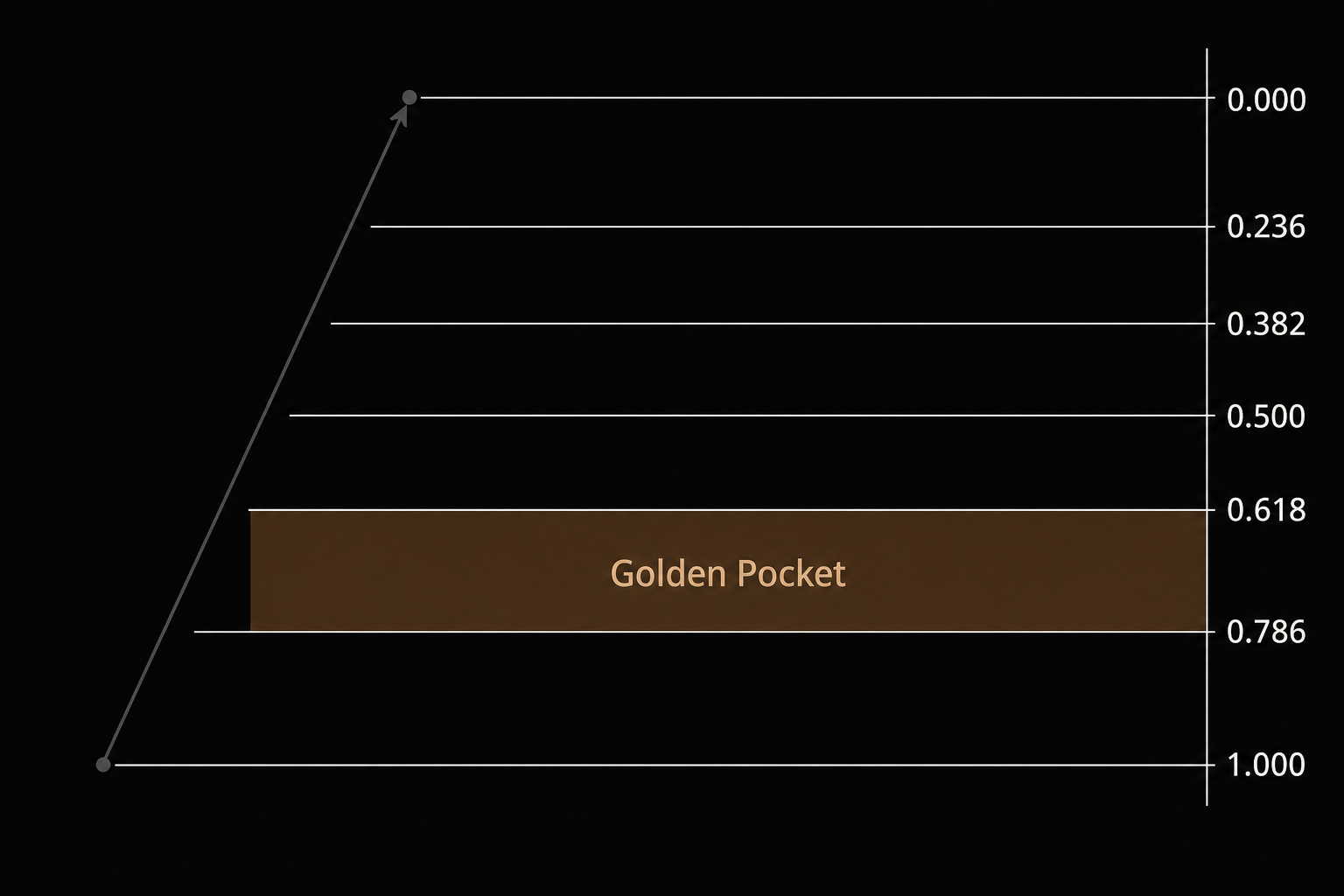
The Golden Pocket is the Fibonacci retracement area between 0.618 and 0.786. Many traders use this zone to evaluate deeper pullbacks inside an existing market move. In a bullish market, price may pull back into the zone before continuing higher. In a bearish market, price may retrace upward into the zone before continuing lower.
That sounds simple, but the important point is this:
The Golden Pocket is a location.
It is not a complete signal.
A professional interpretation still needs trend context, pullback quality, price reaction, confirmation, invalidation and risk planning. The Pricewerk Golden Pocket Indicator is designed to make this workflow easier to read in MetaTrader 5, but the trading decision should still come from a structured process.

1. What the Golden Pocket Represents
Fibonacci retracements measure how far price pulls back after a previous move.
If price moves from a swing low to a swing high, a trader may draw a Fibonacci retracement over that move and watch how deeply price retraces. If price moves from a swing high to a swing low, the same idea applies in the opposite direction.
Common retracement levels include:
- 0.236
- 0.382
- 0.500
- 0.618
- 0.786
- 1.000
The Golden Pocket is the area between 0.618 and 0.786. It is usually treated as a deeper pullback zone. A market that reaches this area has retraced more than a shallow correction, but it has not necessarily invalidated the previous move.
This is why many traders watch the zone closely. It can be a place where the previous trend attempts to continue, but only if the broader structure still supports that idea.
2. Bullish Interpretation
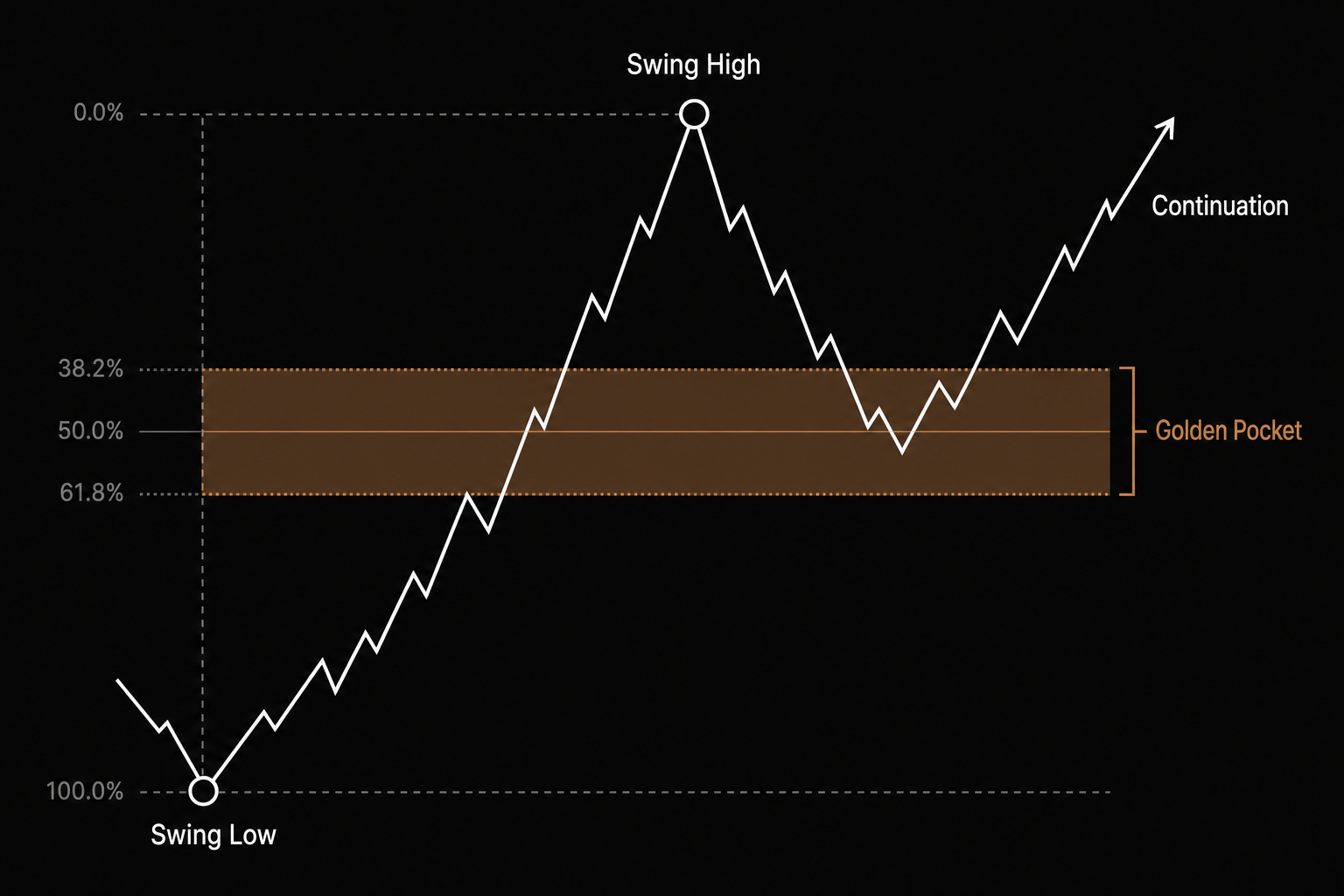
In a bullish context, the Golden Pocket is normally read after an upward impulse.
A typical bullish sequence looks like this:
- price creates a clear upward move
- the market forms a visible swing low and swing high
- price pulls back from the high
- the pullback reaches the 0.618-0.786 zone
- buyers react from the zone
- bullish confirmation appears
- the setup can be evaluated for risk and target potential
The key is that the bullish structure should still be alive.
If price falls into the Golden Pocket and immediately breaks the origin of the move, the setup is weak. If price enters the zone, slows down, reacts and starts to regain bullish structure, the setup becomes more interesting.
Buying only because price touched 0.618 or 0.786 is not a complete method.
3. Bearish Interpretation
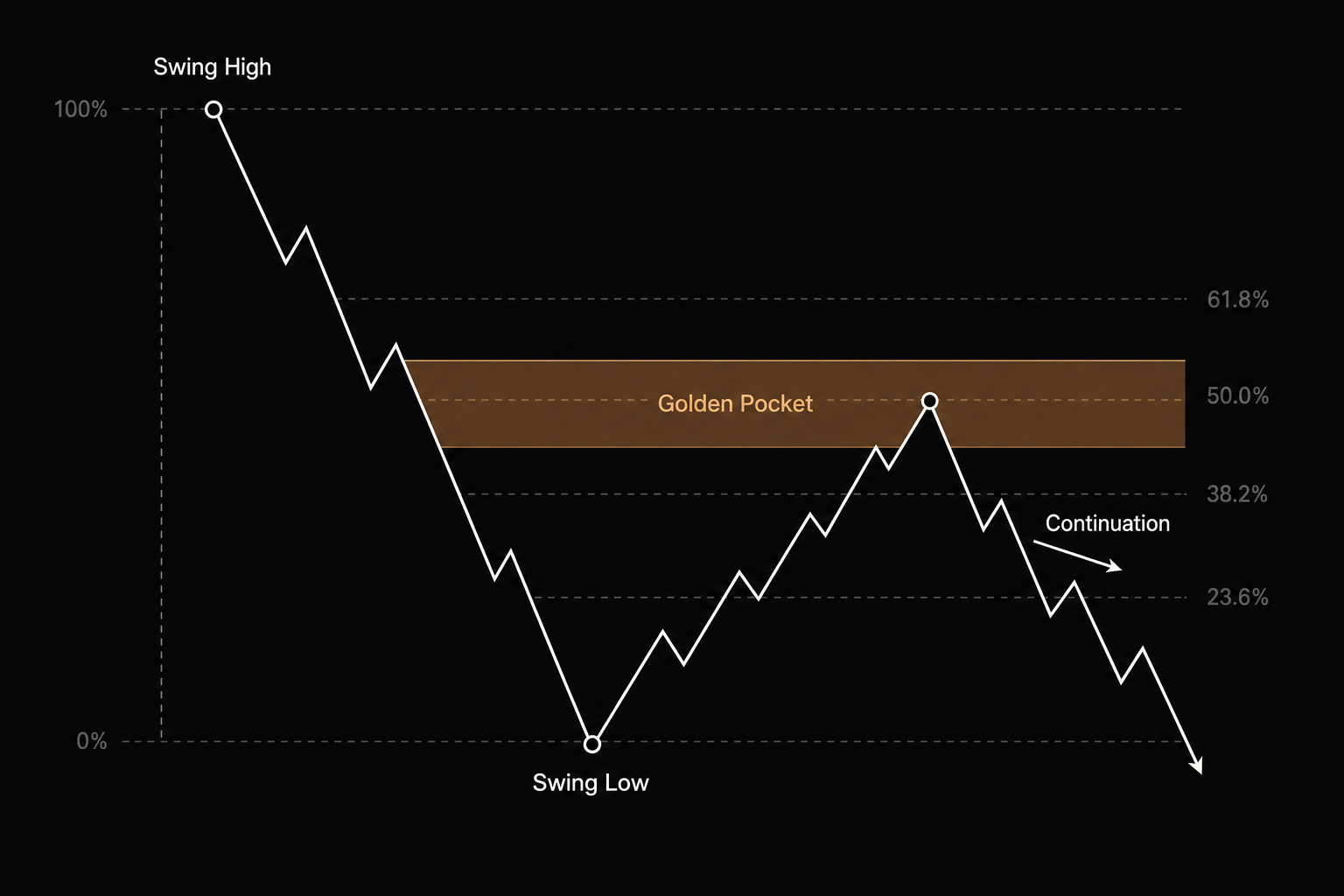
In a bearish context, the idea is reversed.
A typical bearish sequence looks like this:
- price creates a clear downward move
- the market forms a visible swing high and swing low
- price retraces upward from the low
- the retracement reaches the 0.618-0.786 zone
- sellers react from the zone
- bearish confirmation appears
- the setup can be evaluated for risk and target potential
The bearish setup is not about selling every retracement blindly.
It is about asking whether the market is still behaving like a bearish continuation structure. If price reaches the zone but then breaks through the deeper structure, the idea loses quality. If price rejects the zone and sellers regain control, the signal environment improves.
4. Zone Touch vs Valid Signal
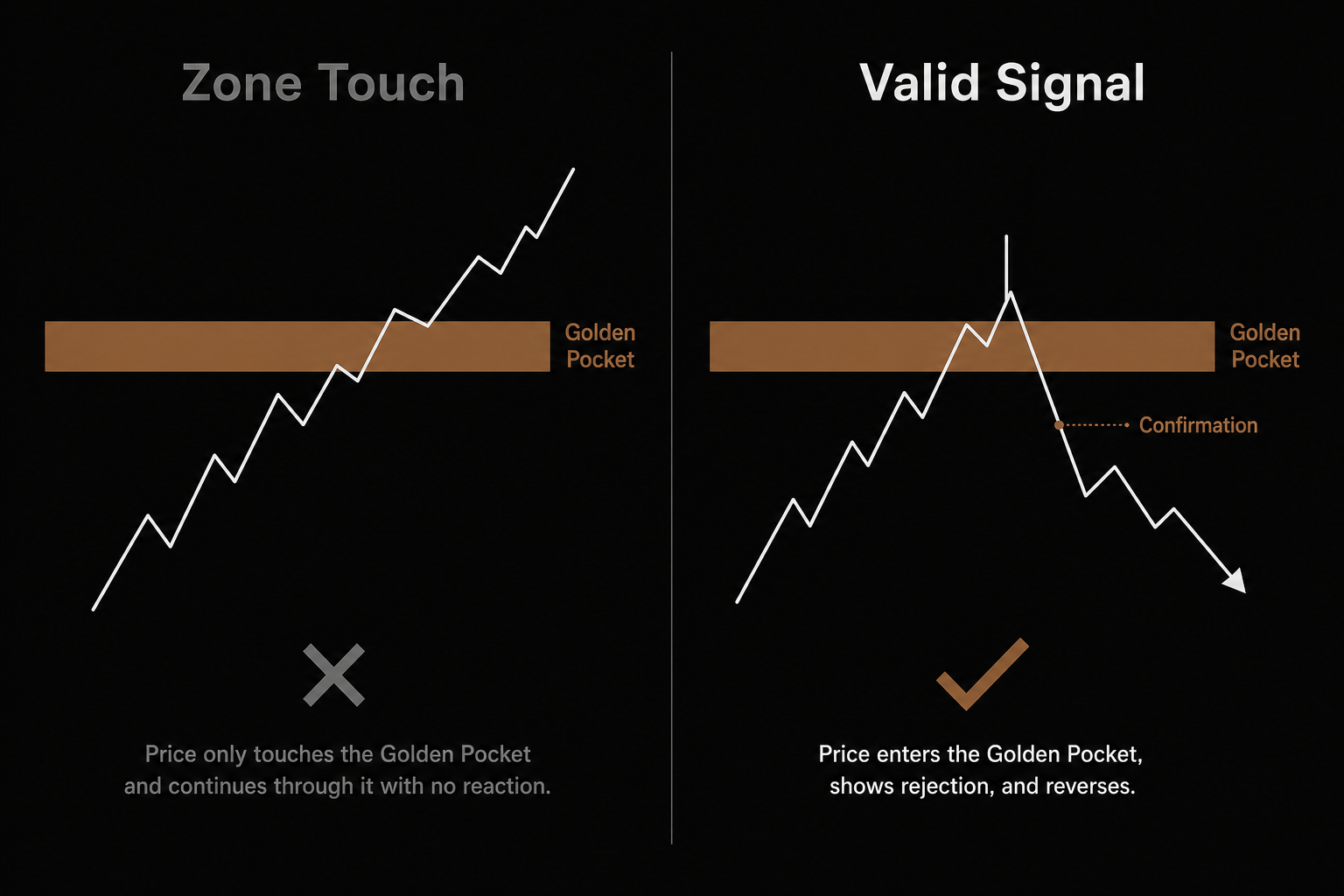
One of the most common misunderstandings is treating a zone touch as a valid signal.
A zone touch means price reached an area of interest. It does not mean the market has confirmed a trade.
A valid signal environment usually needs more evidence, such as:
- price reacting from the zone
- rejection wicks or failed continuation through the zone
- a candle close back in the expected direction
- a shift in short-term structure
- enough distance to a realistic target
- a clear invalidation point
This distinction matters because price can move straight through the Golden Pocket. It can also consolidate inside the zone without producing a clean decision. The trader should not force a setup when the market has not confirmed anything.
The better question is not:
"Did price touch the Golden Pocket?"
The better question is:
"Did price touch the Golden Pocket, react from it, and create a setup with controlled risk?"
5. The 1.000 Level as Invalidation
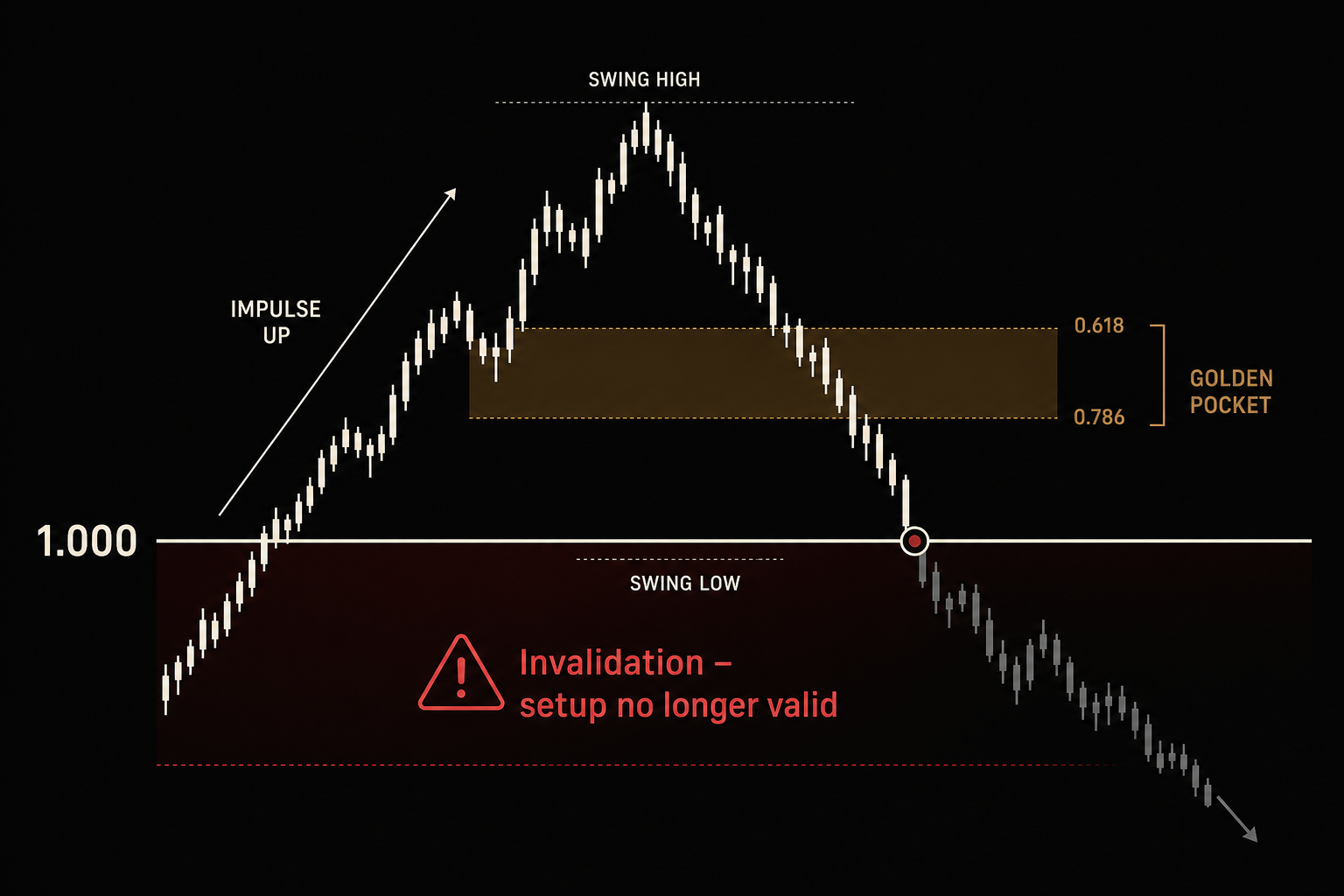
The 1.000 retracement level is often useful as an invalidation reference.
For a bullish setup, the 1.000 level usually represents the original swing low of the measured move. If price retraces all the way back to that area, the previous bullish impulse has been fully retraced.
For a bearish setup, the 1.000 level usually represents the original swing high. If price retraces all the way back there, the previous bearish impulse has been fully retraced.
This does not mean every trade must place a stop exactly at 1.000. It means the level gives the trader a structural reference:
- if the Golden Pocket holds, the setup may remain valid
- if the 1.000 area breaks, the original continuation idea may be damaged
- if invalidation is too far away, the risk-reward may not be attractive
The 1.000 level helps separate a controlled pullback from a move that has already gone too deep.
6. Practical Signal Reading Workflow
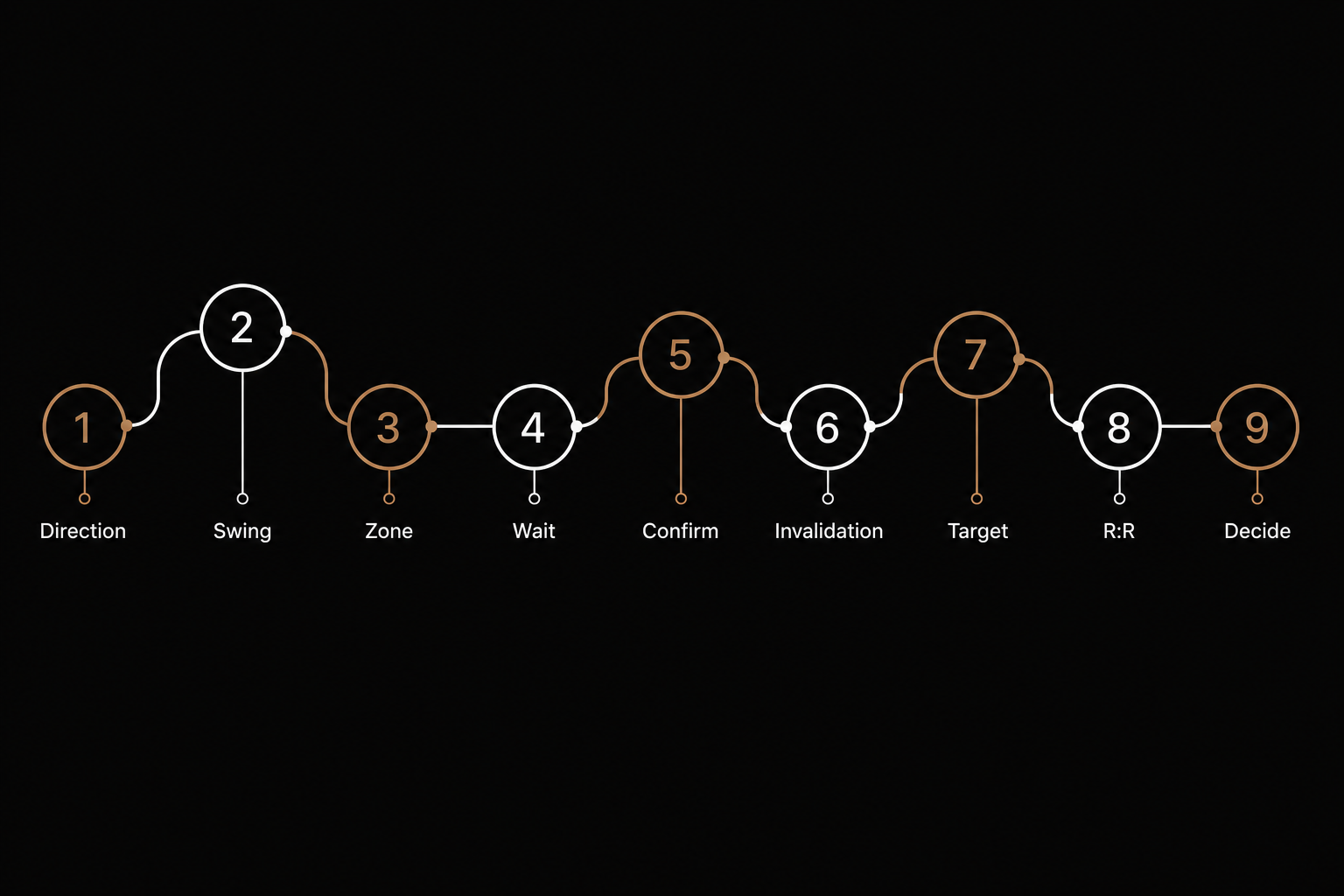
The Pricewerk Golden Pocket Indicator can support a cleaner MetaTrader 5 workflow by making the relevant zones easier to see.
A practical reading process can look like this:
- identify whether the market is trending or ranging
- define the bullish or bearish context
- wait for price to approach the 0.618-0.786 area
- check whether the pullback is controlled or destructive
- watch for price reaction from the zone
- wait for confirmation in the expected direction
- locate the 1.000 invalidation reference
- compare risk distance with realistic target distance
- take the setup only if the full structure makes sense
This workflow keeps the Golden Pocket in its correct role. It creates a map, not a guarantee.
7. Final Thoughts
The Golden Pocket is useful because it gives traders a structured way to evaluate deeper pullbacks. But it should never be treated as a magic reversal area.
A strong Golden Pocket signal needs context:
- trend direction
- meaningful prior movement
- controlled pullback
- reaction from the 0.618-0.786 zone
- confirmation
- clear invalidation
- realistic target potential
- disciplined risk control
The Pricewerk Golden Pocket Indicator can make these areas easier to read in MetaTrader 5, but the trader still needs a complete decision process.
In Part 2, the series moves from classic Fibonacci interpretation to ATR Fibonacci Trend Envelopes, a more dynamic way to read Golden Pocket zones through volatility-adjusted structure.
Risk Notice
Trading foreign exchange, CFDs and other leveraged products involves significant risk and may not be suitable for every trader. Fibonacci concepts, Golden Pocket zones, indicator signals and strategy examples do not guarantee future results. An indicator is a decision-support tool and does not guarantee profitable trades. Always test trading tools carefully in a demo environment before considering live use. Use risk settings that match your personal risk tolerance.